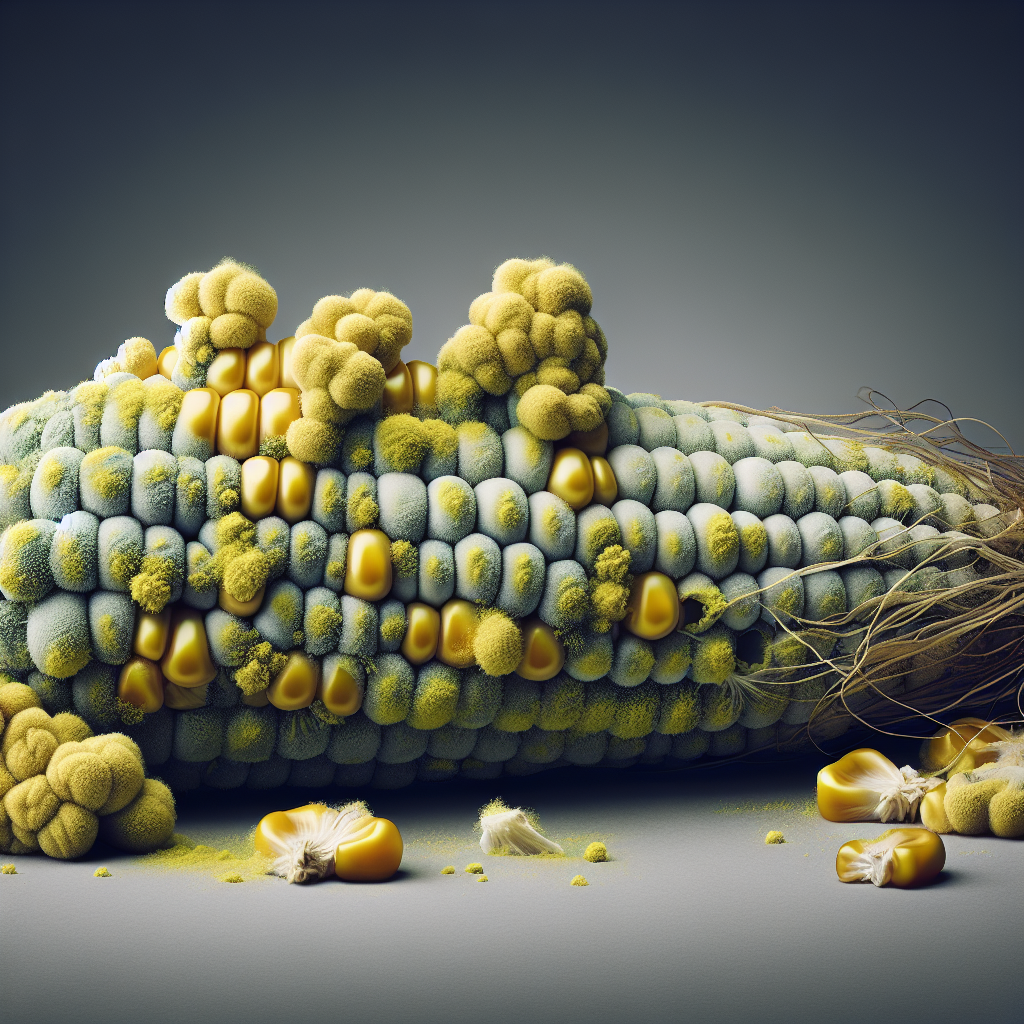
Introduction to Aspergillus flavus
Aspergillus flavus ranks among the most notorious fungal pathogens in global agriculture, primarily due to its production of aflatoxins—potent mycotoxins linked to liver cancer, immune suppression, and acute poisoning in humans and livestock. This opportunistic fungus thrives in warm, arid conditions, infecting crops from flowering through storage, with economic impacts exceeding billions annually in rejected shipments and destroyed harvests. Farmers face dual challenges: visible kernel rot and invisible toxin accumulation, demanding vigilant monitoring and integrated management. Understanding its biology is crucial for corn producers and peanut growers, where contamination thresholds are strictly regulated (e.g., FDA limits at 20 ppb for human food). This definitive guide equips agricultural professionals with diagnostic precision, organic interventions, and proactive prevention to safeguard yields and market access. For small farms optimizing against such threats, check this insightful blog on AI-powered plant identification to catch infections early.
Identifying Symptoms & Damage
Accurate diagnosis hinges on recognizing Aspergillus flavus's hallmark signs across crop stages. Foliar symptoms are subtle—yellowing leaves with chlorotic streaks—but pre-harvest kernel infection reveals dull, chalky grains coated in olive-green to yellow-green powdery spores, often with a musty, earthy odor. In peanuts, pods show dark lesions progressing to brittle hulls filled with bluish-green fungal mats; shelled kernels exhibit 'bright greenish yellow' fluorescence under blacklight (365 nm UV), a rapid field test for aflatoxin suspicion. Post-harvest, storage piles develop hot spots (>35°C) with mycelial webs and rodent-attracting odors, signaling rapid toxin buildup.
Damage quantification is severe: infected corn ears yield 20-50% shriveled kernels, peanuts lose grade (e.g., US #1 to #3), and tree nuts like pistachios suffer 10-30% rejection. Aflatoxin levels escalate exponentially—unaffected kernels at <4 ppb spike to >1000 ppb in 7-10 days under poor storage. Differentiate from mimics like Fusarium (pinkish spores, fumonisins) or charcoal rot (black sclerotia) via microscopy: A. flavus conidiophores are uniseriate, vesicles globose (20-60 μm), phialides ampulliform. Lab confirmation via HPLC quantifies B1/B2 aflatoxins; ELISA kits offer field-speedy results (LOD 2 ppb). Yield losses compound with secondary bacterial invasions and bird/rodent feeding on weakened grains.
Lifecycle and Progression of Aspergillus flavus
Aspergillus flavus's lifecycle is opportunistic, with sclerotia (1-5 mm, hard, spherical) overwintering in soil or debris, germinating under moisture (>15%) and warmth (25-40°C). Conidia (3-6 μm, rough-walled) disperse via wind, insects like corn earworm, or irrigation, landing on silks, pods, or wounds. Germ tubes penetrate directly or via stomata, colonizing vascular tissues within 48 hours; optimal growth at 30-37°C, a_w 0.85-0.99 (drought-tolerant).
Progression unfolds in phases: latent colonization (asymptomatic, 1-2 weeks), sporulation (visible green mold, week 3+), and sclerotial formation under stress (maturity/drought). Aflatoxin biosynthesis peaks late-infection, triggered by oxidative stress; kernels >25% moisture accelerate spread. In storage, conidia revive from dormancy, doubling every 12 hours at 30°C/90% RH, producing 10^6-10^9 spores/g. Annual cycles perpetuate via 1-5% soil sclerotia survival, amplified by tillage exposing inoculum. Interrupt at conidial dispersal via canopy management or at sclerotial stage with deep burial.
Environmental Triggers & Risk Factors
Warm temperatures (28-38°C) and drought stress are primary triggers, with infection surging when kernels crack from moisture deficits (e.g., <500 mm seasonal rain). High humidity (>85% RH) during maturation favors aflatoxin synthesis, especially post-silk (corn R5 stage). Soil factors include neutral pH (6.5-8.0), low nitrogen, and prior crop residue harboring 10^4 sclerotia/g. Insect wounds from fall armyworm or birds provide entry, while poor aeration in storage (O2 <5%) explodes populations.
Risk amplifies in sandy soils (low water-holding), late-planted fields facing heat, and mechanical damage during harvest. Regional hotspots: US Southeast (peanuts), African Sahel (corn), India (groundnuts). Crop rotation with non-hosts like soybeans reduces inoculum 50-70%; irrigation deficits elevate risk 3-5x. Monitor via spore traps (threshold 10^3 conidia/m³ air) and kernel stress indicators like husk desiccation.
Organic Control & Treatment Plans
Organic management integrates cultural, biological, and physical tactics, eschewing synthetics for IPM efficacy >80% reduction. Cultural: At-planting, apply compost teas (Trichoderma viride 10^6 CFU/ml) to soils, reducing sclerotia 60%. Irrigate to maintain 20-25% kernel moisture through fill; narrow rows (60 cm) boost canopy shade, cutting UV-triggered aflatoxins 40%. Harvest at 18-22% moisture, dry to <13% within 48 hours using aerated bins (0.1-0.2 m³/min/tonne airflow).
Biological: Seed-treat with atoxigenic A. flavus strains (e.g., AF36, 10^8 conidia/g seed), outcompeting toxigenic strains 70-90% in fields like Arizona cotton. Bacillus subtilis or Pseudomonas fluorescens suppress via antibiosis; apply 5 L/ha foliar at flowering (10^9 CFU/ml). Physical: UV-C irradiation (254 nm, 100 J/m²) on nuts kills 99% conidia; propane flamers pre-harvest burn residue. Post-harvest, sort fluorescent kernels (blacklight), discard >5%; ozone fumigation (50 ppm, 24h) detoxifies 50-70% without residues.
Integrated Plan: Scout weekly (10 ears/pod samples), apply bi controls at silking, harvest timely, store <12% MC/15°C. Rotate with brassicas; mulch suppresses soil splash. Efficacy: Texas trials show 85% aflatoxin drop.
Preventing Aspergillus flavus in the Future
Long-term prevention builds resilient systems: Varietal Selection: Plant resistant hybrids e.g., corn 'Afla-Guard' (low kernel pericarp permeability), peanuts 'Tifrunner' (hypersensitive response). Crop Rotation: 3-year break with wheat or legumes dilutes soil inoculum 80%; cover crops like clover enhance microbial competition.
Soil Health: Maintain OM >3% via green manures, pH 6.0-6.5 with lime; no-till reduces sclerotia exposure. Irrigation & Fertility: Drip systems prevent drought cracks; balanced NPK (120:60:40 kg/ha) avoids stress. Storage: Climate-controlled silos (<13% MC, 10-15°C, 0.5 m/s ventilation); monitor CO2 (>5% signals activity), apply diatomaceous earth (2 kg/t).
Monitoring Tech: Drone NDVI for stress mapping; IoT sensors track RH/MC. Quarantine new seed; sanitize equipment. Global benchmarks: Australian aflasafe biocon trol achieves <10 ppb consistently. Annual audits ensure compliance.
Crops Most Affected by Aspergillus flavus
Aspergillus flavus targets oilseed and grain crops with high sugar/oil kernels. Maize (corn): 20-50% infection in tropics, aflatoxin hotspots in US Corn Belt. Groundnuts (peanuts): Pods crack under drought, 30-70% contamination. Tree Nuts: Pistachio (early split hulls), almond, walnut—hull rot yields 15-40% loss. Cottonseed (cotton): Bolls support 10^5 conidia/g. Others: sorghum, chili pepper, mango, rice under storage. Tropical/subtropical dominance; chillings <20°C suppress.