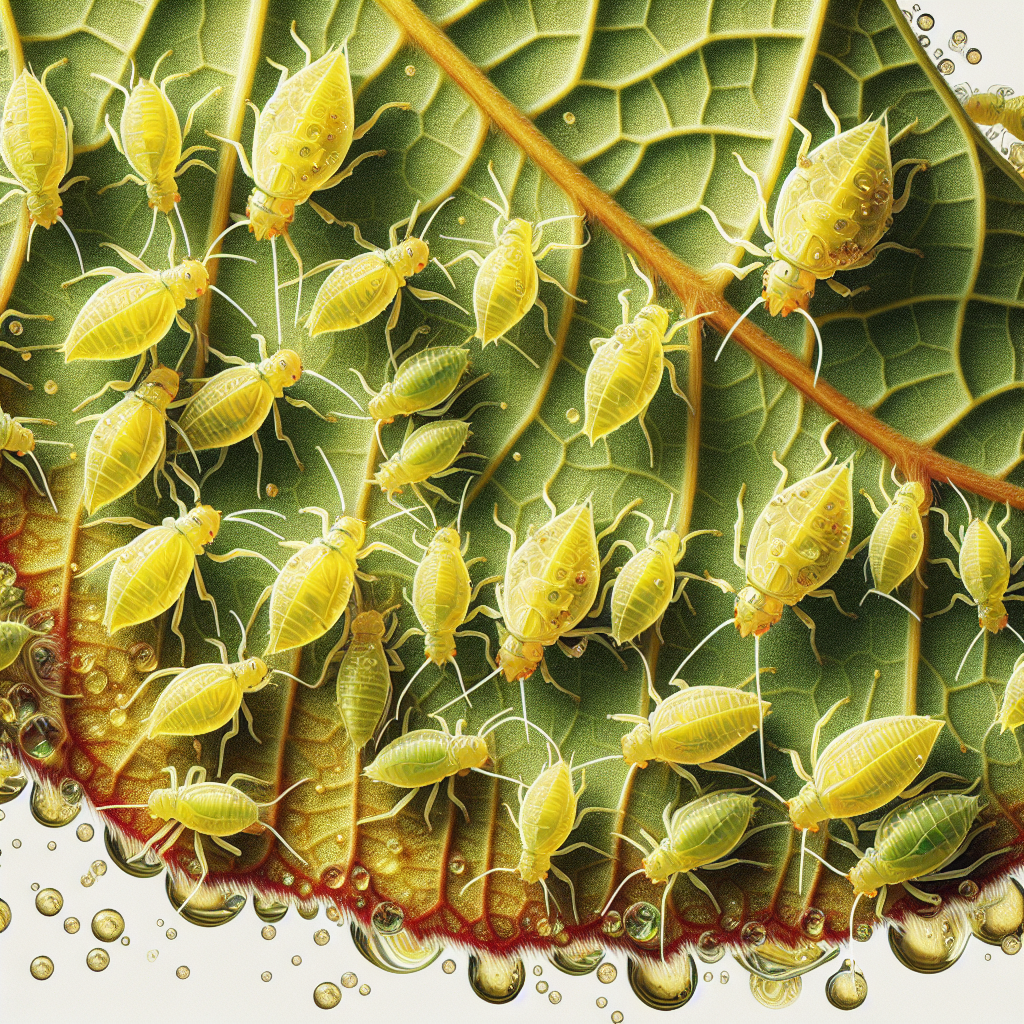
Introduction to Yellow pecan aphids
Yellow pecan aphids (Monellia clypeata), also known as the yellow pecan leaf aphid, are a prevalent pest in pecan orchards across the southeastern United States, particularly in states like Georgia, Texas, and Oklahoma, which dominate Pecan production. These tiny, soft-bodied insects (1.5-2.5 mm long) are pale yellow to yellowish-green with black antennae and leg tips, often clustering on the undersides of tender new leaves and shoots. Unlike their darker relative, the black pecan aphid, yellow pecan aphids are more common and less damaging individually but can explode in population during favorable conditions, leading to widespread defoliation and reduced photosynthesis.
First identified in the early 20th century, these aphids have become a key management target for commercial and backyard Pecan growers. They pierce plant tissues to suck sap, excreting sticky honeydew that promotes sooty mold fungus, blackening leaves and nuts. Heavy infestations can cause leaf cupping, premature leaf drop, and stunted nut development, potentially slashing yields by 20-50% in severe cases. Understanding their biology is crucial for timely intervention. For broader context on aphid pests, see our guide on Aphids.
This definitive guide covers identification, lifecycle, triggers, organic treatments, prevention, and affected crops, empowering growers with professional-grade strategies to protect their orchards. Early scouting and integrated pest management (IPM) are key to minimizing economic losses while preserving beneficial insects.
Identifying Symptoms & Damage
Spotting yellow pecan aphids early prevents escalation. Look for clusters of 10-100 pale yellow insects on new growth, especially leaf undersides. Nymphs resemble wingless adults, while winged forms signal migration.
Primary Symptoms:
- Leaf Curling and Cupping: Tender leaves twist upward, resembling a taco shell, reducing photosynthetic area.
- Honeydew and Sooty Mold: Sticky, clear exudate coats leaves, branches, and nuts; black sooty mold (Capnodium spp.) follows, blocking sunlight.
- Yellowing and Necrosis: Heavily infested leaves turn yellow, brown at edges, and drop prematurely.
Damage Progression:
- Mild Infestation (Threshold: 5-10 aphids/leaflet): Minimal yield impact; cosmetic honeydew.
- Moderate (20-50/leaflet): 10-20% leaf loss; small nuts, poor fill.
- Severe (>100/leaflet): Defoliation up to 50%; alternate bearing cycles disrupted.
Diagnostic Tips:
- Shake branches over white paper; aphids tumble like yellow dandruff.
- Check for predators like lady beetles or lacewings.
- Differentiate from spider mites (webbing, stippling) or scale insects (armored shells).
Scout weekly from budbreak (March-April) through kernel fill (July-August). Use a 10x hand lens for confirmation. Thresholds: Treat if >20 aphids/leaflet with <20% lady beetle larvae.
Lifecycle and Progression of Yellow pecan aphids
Yellow pecan aphids complete 10-15 generations per year in warm climates, with overlapping broods accelerating outbreaks. Lifecycle spans 7-10 days at 75-85°F (24-29°C).
Key Stages:
- Eggs (Winter): Overwinter on bark as black stem mothers.
- Nymphs (1-4 Instars, 5-7 days): Wingless, rapid feeders; molt 4 times.
- Adults (Parthenogenetic Females): Viviparous birth (live young); wingless or winged alates for dispersal.
- Males (Fall): Rare; sexual reproduction for egg-laying.
Seasonal Progression:
- Spring (Budbreak): Stem mothers hatch, colonize buds.
- Summer Peak (May-July): Explosive populations on nuts/shoots.
- Fall Decline (Sept-Oct): Winged forms migrate; sexual phase.
Populations surge with excess nitrogen or drought stress. Winged aphids spread via wind, infesting nearby walnut or almond trees occasionally. Monitor with traps or beat sheets. Check out Spring Pest Patrol: Organic AI Strategies to Shield Your Crops from Common Invaders for timely scouting tips.
Environmental Triggers & Risk Factors
Yellow pecan aphids exploit specific conditions:
Climate Triggers:
- Warm temps (70-90°F); optimal 80°F.
- Low humidity (<60% RH); dry springs favor outbreaks vs. black aphids.
- Mild winters; no hard freezes.
Orchard Factors:
- Excess Nitrogen: Flushes tender growth.
- Drought Stress: Concentrates sap.
- Dense Canopy: Poor airflow, high humidity pockets.
- Weed Hosts: Nearby grasses, composites harbor alates.
Risk Hotspots:
- Young orchards (<5 years).
- Alternate-bearing 'on' years with heavy nut loads.
- Adjacent to Stuart Pecan or Desirable Pecan cultivars, which are susceptible.
Mitigate with irrigation scheduling, balanced fertility (leaf N 2.5-3%), and pruning for airflow. Avoid over-fertilizing post-budbreak.
Organic Control & Treatment Plans
Prioritize IPM: Scout, thresholds, biologicals, then minimal sprays.
Biological Controls (Primary):
- Lady Beetles (Coleomegilla, Hippodamia): Release 1,000/acre.
- Lacewings (Chrysoperla): Eggs/nymphs prey on 50 aphids/day.
- Parasitoids (Lysiphlebus testaceipes): Mummify aphids.
- Fungi (Beauveria, Lecanicillium): Apply at 80% RH.
Organic Sprays:
- Insecticidal Soap (2%): Weekly; covers undersides.
- Neem Oil (0.5-1%): Azadirachtin disrupts molting.
- Horticultural Oil (1-2% dormant oil): Smothers eggs/nymphs; safe to bees post-dry.
- Pyrethrins + PBO: Short residual; evening apps.
Treatment Plans:
- Early Season (Budbreak): Dormant oil + sulfur.
- Peak (Nut Set): Soap/neem if >20/leaflet, low predators.
- Severe: BT + oils; release predators.
Rotate modes; avoid broad-spectrum. Efficacy: 70-90% with predators.
Preventing Yellow pecan aphids in the Future
Long-term success via cultural IPM:
- Resistant Varieties: Pawnee Pecan, Western Schley Pecan.
- Sanitation: Remove debris; destroy volunteers.
- Pruning: Open canopy; remove galls.
- Fertility: Soil tests; avoid N spikes.
- Irrigation: Drip; maintain 1-1.5"/week.
- Trap Crops: Plant clover borders.
- Refugia: 10% unsprayed rows for predators.
Annual scouting calendar: Budbreak (Mar), Nut set (May), Kernel fill (Jul). Monitor weather for dry spells. Combine with Soil Health Mastery: 5 Proven Strategies for Small Farms to Build Fertile Ground Without Breaking the Bank for resilient trees.
Crops Most Affected by Yellow pecan aphids
Primarily Pecan (Carya illinoinensis), all cultivars: Desirable Pecan, Stuart Pecan. Rare spillover to hickory, walnut, almond. No significant impact on annuals like corn or soybeans. Focus management on pecan orchards.