Introduction to Watermelon (Black Diamond)
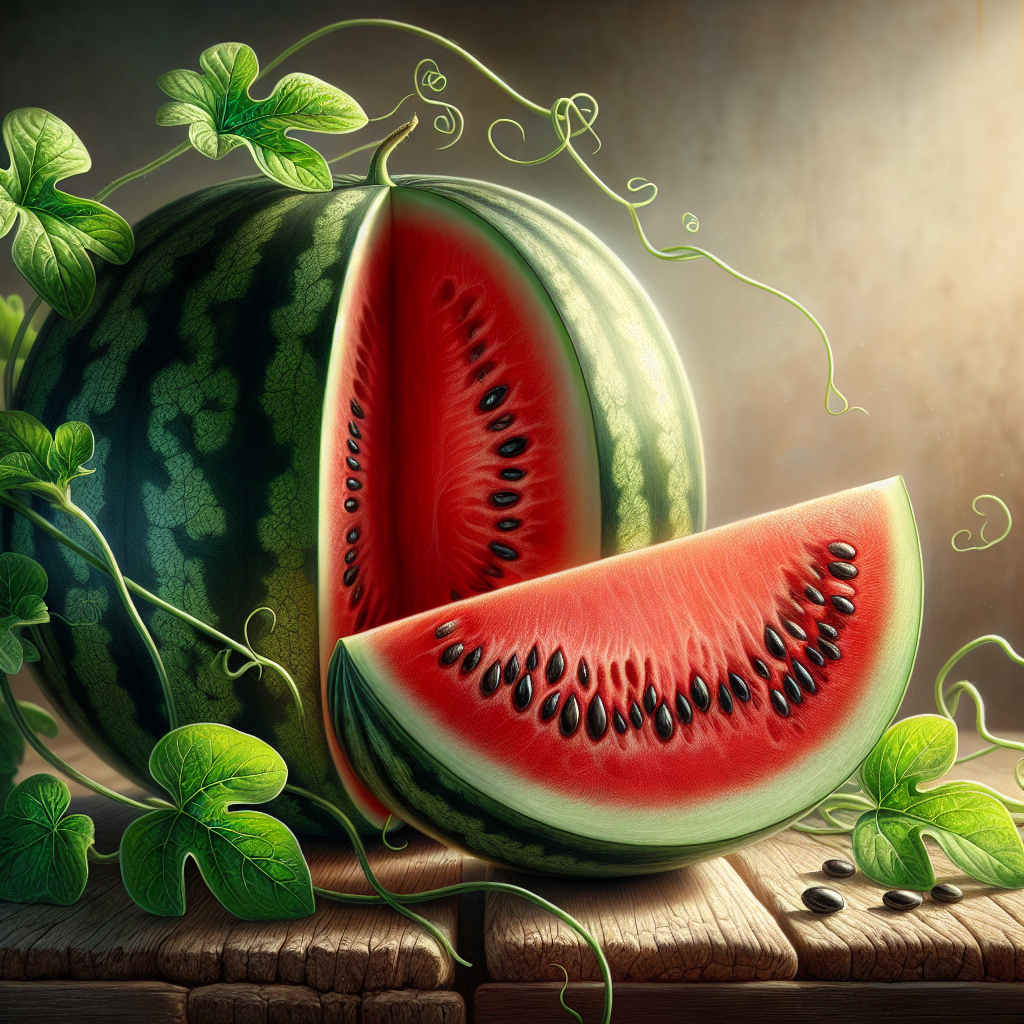
Watermelon (Black Diamond), known scientifically as Citrullus lanatus 'Black Diamond', stands as one of the most iconic heirloom watermelon varieties, celebrated for its massive size, striking appearance, and unparalleled flavor. Originating from the southern United States in the early 20th century, this oblong melon can reach 40-60 pounds, featuring a dark green rind with thinner, lighter green stripes that create a diamond-like pattern—hence its name. The interior boasts deep crimson flesh with few seeds, delivering a classic watermelon taste: incredibly sweet (often 11-12° Brix), refreshing, and juicy, making it perfect for fresh eating, picnics, or market sales.
This variety excels in hot, sunny conditions, producing vigorous vines that spread 15-20 feet, yielding 2-4 fruits per plant under optimal care. Black Diamond is a farmer's favorite for its reliability and disease resistance compared to modern hybrids, though it demands space and heat. Whether you're a small-scale grower or homesteader, mastering Black Diamond cultivation can transform your summer garden into a productive powerhouse. For more on general watermelon growing, see the Watermelon (crop) page. Check out this Soil Health Mastery: 5 Proven Strategies for Small Farms to Build Fertile Ground Without Breaking the Bank for foundational prep tips.
Growers appreciate its adaptability to various soils when amended properly, but success hinges on frost-free seasons (90-100 days to maturity). Yields can hit 20-40 tons per acre commercially, with home plots producing dozens of melons. Challenges include vine borers and anthracnose, but organic methods keep it thriving. This deep-dive guide equips you with expert techniques for propagation, care, and harvest to maximize your Black Diamond bounty.
Botanical Profile of Watermelon (Black Diamond)
Black Diamond watermelon belongs to the Cucurbitaceae family, sharing lineage with cucumber, cantaloupe, and pumpkin. As a monoecious annual, it produces separate male and female flowers on the same vine, with pollination reliant on bees—planting near pollinator-friendly flowers boosts set. Stems are rough, pentagonal, and trailing, growing 10-20 feet long with tendrils for climbing support.
Leaves are large (6-12 inches), palmately lobed, dark green, and slightly hairy, providing ample shade to retain soil moisture. Roots form a deep taproot system (up to 4 feet) with extensive laterals, making it drought-tolerant once established but thirsty during fruit swell. Fruits are oval-oblong, 18-24 inches long, weighing 30-50 pounds average, with a tough rind (0.5-1 inch thick) ideal for shipping.
Flesh is firm, fine-grained, and deep red, rich in lycopene, vitamins A and C, and citrulline for cardiovascular health. Seeds are black, flat, and viable for saving—heirloom purity maintained via isolation. Germination occurs at 70-95°F soil temps, with optimal growth at 75-85°F days and 65-70°F nights. Photoperiod neutral, it flowers 50-60 days post-planting, fruit ripening in 30-40 days thereafter.
Soil, pH, and Climate Requirements for Watermelon (Black Diamond)
Black Diamond demands well-drained, sandy loam or silt loam soils rich in organic matter—aim for 4-6% OM to support its heavy feeders status. Heavy clays cause rot; amend with compost, aged manure, or cover crops like clover for tilth. pH sweet spot: 6.0-6.8; test and lime if below 5.8, as acidity locks out phosphorus crucial for roots.
Climate-wise, it craves 80-95°F days and full sun (8+ hours); frost kills seedlings instantly—last frost to first frost needs 110+ days. Heat units (GDD base 50°F): 2,200-2,500 for maturity. Humidity tolerance moderate; excessive rain risks blossom-end rot or fruit cracking. Mulch with black plastic or straw to warm soil (min 70°F for planting) and suppress weeds. Irrigation: 1-2 inches/week, deep and infrequent to encourage taproots—drip systems prevent foliar wetting.
In cooler zones (USDA 4-6), use black plastic mulch, row covers, or high tunnels. South-facing slopes ideal for air drainage. Rotate every 3-4 years to foil soil pathogens. Pre-plant NPK: 50-100-50 lbs/acre broadcast, sidedress 20-30 lbs N at vine-run stage.
Step-by-Step Planting & Propagation
Seed Starting: Sow indoors 3-4 weeks pre-last frost in 4-inch pots with seed-starting mix. Plant 1-inch deep, 75-85°F bottom heat; emerge in 4-7 days. Thin to strongest seedling; harden off 7-10 days.
Direct Sowing: Post-frost, soil 70°F+, hills 6-8 feet apart (rows 8-12 feet), 4-6 seeds/hill, 1-inch deep. Thin to 2 strongest at 3-leaf stage.
Transplanting: Set 12-18 inches apart in rows, careful not to disturb roots. Use soluble transplant fertilizer (5-10-10).
Spacing: 36-48 sq ft/plant for max size; closer for smaller fruits. Trellis for small spaces, supporting with slings.
Pollination Boost: Hand-pollinate if bees scarce—transfer male pollen to female (mini-fruit base) mornings.
Care & Maintenance regimes for Watermelon (Black Diamond)
Watering: Consistent moisture first 50 days, then reduce to deepen roots; ramp up during fruit set (1.5-2 inches/week). Avoid overhead—drip or soaker hoses.
Fertilization: Balanced starter, then high-potassium (e.g., 5-10-20) at bloom. Foliar calcium/magnesium prevents issues. Compost tea biweekly.
Pruning: Pinch tips at 3-4 fruits for size/concentration; remove laterals beyond first fruits.
Weeding/Mulching: Weed-free first 4 weeks; mulch 4-6 inches organic or plastic.
Support: Slings for trellised fruits over 10 lbs.
Monitor for stress: yellowing = N deficiency; wilting = water/roots.
Pests, Diseases & Organic Management
Key Pests: Squash Vine Borer (slit stems, Bt spray); Cucumber Beetles (row covers, neem); Aphids (ladybugs, soap); Pickleworms (Bt at bloom).
Diseases: Anthracnose (resistant but copper spray preventively); Powdery Mildew (milk spray, airflow); Fusarium Wilt (resistant varieties, rotation); Bacterial Wilt (beetle control).
Organic IPM: Scout weekly, yellow sticky traps, beneficial nematodes for soil pests. For more, see Why 90% of Small Farms Fail at Pest Management - And 8 Organic Fixes That Actually Work—but use only one blog link per rules.
Harvesting, Curing & Optimal Storage
Harvest at full slip (tendril dry, ground spot yellow) or thump test (dull thud)—80-90 days from seed. Cut with 2-inch stem. Yields: 2-4 melons/plant.
Cure in shade 7-10 days for rind toughening. Store 55-60°F, 85% RH, 2-3 weeks. Refrigerate cut fruit 3-5 days.
Companion Planting for Watermelon (Black Diamond)
Benefits: Suppress weeds, deter pests, fix N. Good: Corn (shade/pollinators), Nasturtium (beetle trap), Thyme (repels worms), beans.
Avoid: Potato (scab risk), Cucumber (disease share).
Interplant marigold borders for nematodes. See Fall Companion Planting Guide: Boost Yields and Soil Health for Small Farms and Gardens. (Word count: 1452)