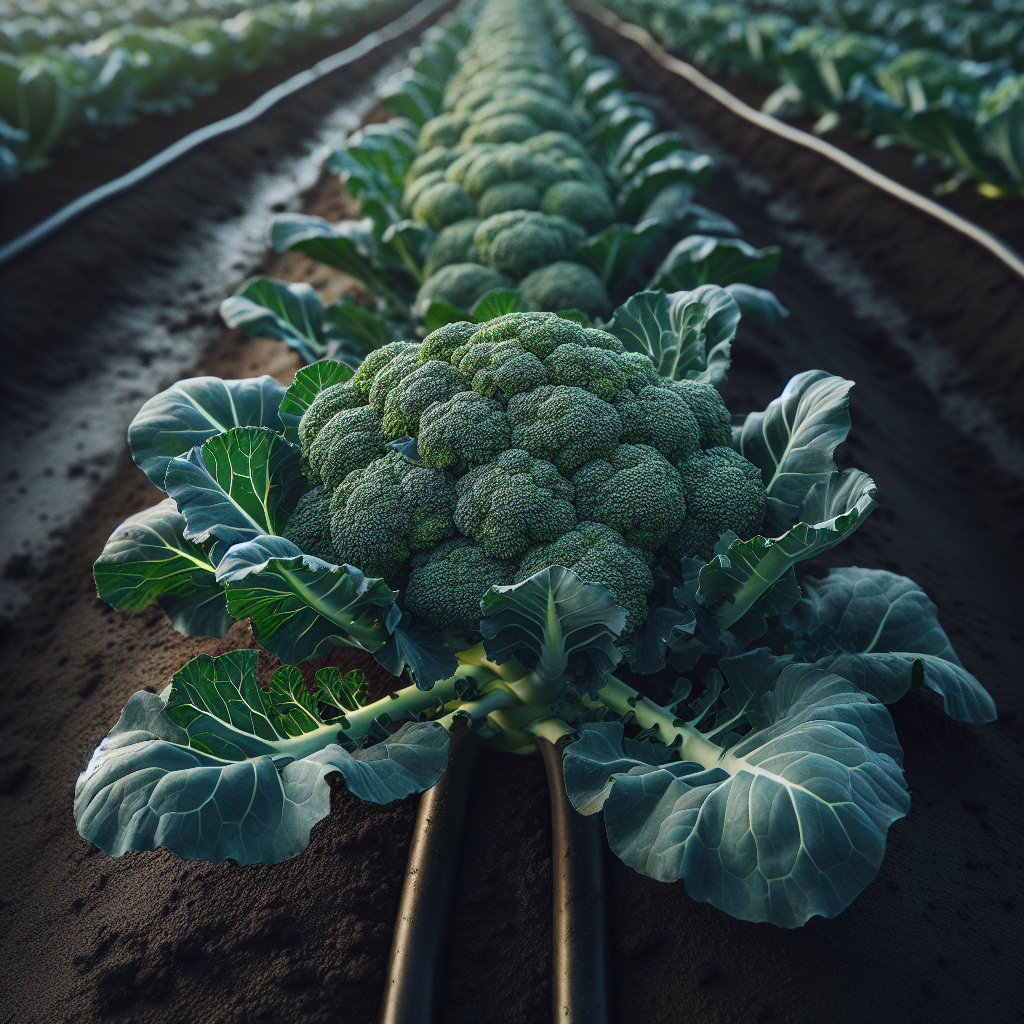
Introduction to Waltham 29 Broccoli
A historic, reliable heirloom-type broccoli, this variety was bred to improve cold hardiness, uniformity, and harvest reliability in regions with short or cool growing seasons. It became especially respected in New England and other temperate areas because it can mature into dense blue-green heads under conditions that cause many other broccoli types to button, stretch, or lose quality.
Unlike some modern hybrid broccoli cultivars that are optimized for one-pass commercial harvest, this selection is valued for both its central dome and its ability to continue producing side shoots after the main head is cut. That makes it especially attractive for gardeners and small-scale growers who want an extended harvest window rather than a single concentrated pick. In flavor, it is typically rich, earthy, and sweet when grown in cool weather, with noticeably better texture and sweetness after light frosts.
Its best performance comes in spring and especially fall plantings, where days are bright but temperatures remain mild to cool. In hot conditions, head quality declines quickly. If you are already familiar with general Broccoli culture, this cultivar follows the same fundamentals, but rewards tighter timing and soil fertility management with exceptional quality.
Botanical Profile of Waltham 29 Broccoli
This cultivar belongs to the species Brassica oleracea, a remarkably variable species that also includes cabbage, cauliflower, kale, Brussels sprouts, and kohlrabi. In the italica group, the edible portion is an immature flowering structure composed of compact green flower buds borne on a thickened stem. If left unharvested, the buds loosen and open into four-petaled yellow flowers typical of the mustard family, after which seed pods form.
Plants form a stout central stem with a waxy, blue-green cast and broad, lobed leaves that may range from slightly smooth to moderately ruffled along the margins. Mature plants commonly reach 18 to 30 inches tall and 18 to 24 inches wide under good fertility. Waltham 29 is known for producing medium to large central heads, often 4 to 8 inches across, followed by numerous smaller lateral shoots if harvested properly.
From a crop physiology perspective, broccoli is a heavy feeder with a relatively shallow but branching root system concentrated in the top 8 to 12 inches of soil. That means the plant responds quickly to both improved fertility and to stress from drying, compaction, or waterlogging. Its head development is closely tied to temperature. Cool, steady conditions promote dense bud formation; high heat accelerates floral development and can produce loose, uneven heads or premature flowering.
Waltham 29 is open-pollinated rather than hybrid. That matters in several ways: seed can be saved if isolation from other flowering brassicas is maintained, plant populations may show slightly more natural variation than hybrids, and growers often appreciate its resilience and flavor over strict industrial uniformity. Because it is open-pollinated, it also has historical importance as a stable variety selected and maintained over generations.
Soil, pH, and Climate Requirements for Waltham 29 Broccoli
This crop needs fertile, well-drained, moisture-consistent soil with high organic matter. The ideal texture is a deep loam or sandy loam enriched with finished compost. Heavy clay can work if well structured and never left compacted, but poorly drained soil sharply increases the risk of root stress, stunting, and diseases such as damping-off or black rot spread under wet foliage conditions.
Target a soil pH of 6.5 to 7.2. Broccoli tolerates slightly acidic ground, but below about 6.2 nutrient uptake becomes less efficient and clubroot pressure increases significantly. If pH is low, apply agricultural lime well ahead of planting, ideally several months in advance, because rapid correction at planting time is less effective. Calcium is particularly important for strong growth and tissue integrity, so a limed, biologically active soil generally performs better than a merely fertilized but acidic one.
Broccoli is a heavy nitrogen user, but quality depends on balanced nutrition rather than excess feeding. Before planting, work in 2 to 3 inches of finished compost and, if soil tests indicate need, a complete organic fertilizer roughly in the range of 4-4-4 or 5-5-5. Nitrogen deficiency first appears as pale older leaves and sluggish growth; too much soluble nitrogen can create lush, weak tissue that attracts aphids and delays heading.
Climate is the decisive factor for this variety. The ideal daytime temperature range is about 60 to 70°F (16 to 21°C), with nighttime temperatures around 45 to 60°F (7 to 16°C). Waltham 29 tolerates light frosts well and can often withstand temperatures into the upper 20s°F for short periods once established, especially in fall. It struggles when daytime highs remain above 80°F (27°C), and quality falls rapidly in prolonged heat over 85°F (29°C). Heat stress may cause buttoning, where small premature heads form on undersized plants, or loose, uneven bead development.
Consistent soil moisture is critical. Aim for soil that feels evenly damp 2 to 4 inches below the surface, never powder-dry and never sticky-saturated for days. A practical target is about 1 to 1.5 inches of water per week from rain or irrigation, but sandy soils may need lighter, more frequent watering while clay soils need slower, less frequent applications. Warning signs of underwatering include bluish dull leaves, midday wilt that persists into evening, slowed growth, and pithy stems. Overwatering often shows up as yellowing lower leaves, stagnant growth despite wet soil, sour-smelling ground, and roots that become brown rather than white and fibrous.
For growers building long-term fertility, crop rotation and organic matter management matter as much as fertilizer bags. See soil health strategies for broader principles that apply well to brassica production.
Step-by-Step Planting & Propagation
This variety is almost always propagated from seed. Direct sowing is possible in mild, cool conditions, but transplanting is usually preferred because it allows tighter spacing control, earlier establishment, and less competition from weeds during the vulnerable seedling stage.
For spring crops, start seeds indoors 5 to 7 weeks before the last expected frost. For fall crops, sow 10 to 14 weeks before the first expected fall frost, adjusting by local climate so the main head matures in cool weather. In many regions, fall is the superior season because plants size up in late summer and head during the cooler days of autumn.
Sow seed 1/4 to 1/2 inch deep in a fine seed-starting mix. Germination is best around 65 to 75°F (18 to 24°C) and usually takes 4 to 10 days. Once seedlings emerge, provide strong light immediately and keep temperatures a bit cooler, around 55 to 65°F (13 to 18°C), to prevent lanky growth. Seedlings should be grown steadily, not forced. If roots circle badly in trays or plants are allowed to stall from neglect, later field performance declines.
Transplant when seedlings have 4 to 6 true leaves and stout stems, usually 4 to 6 inches tall. Harden off for 5 to 7 days by gradually exposing them to outdoor wind, sun, and cooler temperatures. Set transplants deeply enough to anchor the stem but do not bury the crown. Standard spacing is 18 inches between plants and 24 to 36 inches between rows. In intensive beds, 18 by 18 inches works well for fertile ground and hand management. Wider spacing generally improves airflow and head size.
If direct sowing, place 2 to 3 seeds per station 1/2 inch deep, then thin to the strongest plant once true leaves appear. Direct-sown broccoli often develops a strong taproot-like central anchoring root system early, but in practice it is less consistent where flea beetles, crusted soil, or erratic spring weather are common.
At transplanting, water each plant thoroughly to settle soil around the root ball. A dilute fish emulsion or seaweed drench can help reduce transplant shock, but only if used lightly. Immediately after planting, apply 1 to 2 inches of organic mulch once the soil has warmed modestly and seedlings are established. Keep mulch from touching the stem directly to reduce crown rot risk.
Protect young plants with lightweight insect netting or floating row cover if cabbage worms, flea beetles, or root maggot flies are persistent in your area. Remove covers when temperatures rise too much or when plants outgrow them.
Care & Maintenance regimes for Waltham 29 Broccoli
The key to premium heads is uninterrupted growth. Every check in growth, whether from drought, crowding, nutrient shortage, root disturbance, or heat, shows later in smaller heads and reduced side-shoot production.
Water deeply and consistently. In most field soils, one deep irrigation that moistens the top 6 to 8 inches is preferable to daily shallow sprinkling. Drip irrigation is ideal because it keeps foliage dry and supplies water directly to the root zone. During rapid vegetative growth, inspect moisture by hand: if soil at 3 inches depth crumbles dry and does not hold shape when squeezed, irrigation is overdue. If it forms a sticky ribbon and excludes air, the soil is too wet.
Feed side-dress nitrogen about 2 to 3 weeks after transplanting and again when plants begin strong canopy expansion, especially on lighter soils. Good organic options include blood meal used cautiously, feather meal, fish hydrolysate, or composted poultry manure. Apply beside the row rather than directly against stems, then water in. Excess late nitrogen can produce overlarge leafy plants with delayed head maturity, so taper feeding once the central head begins to form.
Weed control is essential early. Broccoli competes moderately well once it has a large leaf canopy, but young transplants are easily set back by weed pressure. Use shallow cultivation only; roots are near the surface and deep hoeing can prune feeder roots. Mulching helps suppress weeds and stabilize soil moisture.
Temperature moderation is often overlooked. In warm spring weather or hot late summers, use light shade cloth during heat spikes above the low 80s°F if practical. Even temporary afternoon shade can reduce stress and preserve head density. Conversely, in fall, light frost protection can extend side-shoot harvests by several weeks.
Physiological disorders often reveal management problems. Hollow stem is commonly linked to overly rapid growth combined with boron deficiency or erratic moisture. Brown bead, where head buds discolor and soften, is often associated with heat and uneven watering. Buttoning usually results from seedlings being too old at transplant, cold shock at the wrong growth stage, or severe nutrient and moisture stress. Preventive management is far more effective than trying to correct these after symptoms appear.
After cutting the main head, continue watering and feeding lightly. Waltham 29 can respond with useful side shoots over several weeks. A modest top-dress of compost or a light liquid feed after the main harvest often supports this secondary production.
Pests, Diseases & Organic Management
Because this is a brassica, many classic crucifer pests target it aggressively. The most common chewing pests are imported cabbageworm, cabbage looper, and diamondback moth larvae. These caterpillars skeletonize leaves, contaminate heads with frass, and tunnel into developing buds. Scout the undersides of leaves at least twice weekly. Hand-pick where feasible, and use Bacillus thuringiensis var. kurstaki (Bt) on small larvae before they burrow into tight head tissue. Apply at dusk and repeat after rain as label directs.
flea beetles are a major threat to seedlings, causing numerous tiny shot holes that can seriously delay establishment. Floating row cover immediately after transplanting is among the most effective organic controls. Vigorous growth helps plants outgrow damage, so maintaining fertility and moisture is part of pest management.
cabbage aphids cluster in leaf folds and within heads, especially in cool dry periods. Their waxy gray-green bodies can be difficult to notice until colonies are dense. Strong water sprays on outer foliage, encouragement of beneficial insects, and insecticidal soap can help, but once aphids pack into heads, market quality falls quickly. Avoid excessive nitrogen that creates soft, aphid-attractive growth.
cabbage root maggot larvae feed below ground, causing wilting despite moist soil, poor growth, and roots with tunnels or decay. Use exclusion collars at transplanting, rotate crops, and avoid planting successive brassicas in the same bed.
Disease pressure is highest where brassicas are grown repeatedly, foliage stays wet, and airflow is poor. black rot causes yellow V-shaped lesions extending inward from leaf margins and blackened veins. downy mildew can create pale leaf patches with grayish fungal growth underneath, especially in cool wet conditions. Alternaria leaf spot causes dark concentric lesions. clubroot causes swollen, distorted roots and severe wilting, particularly in acidic soils.
The strongest organic disease strategy is preventive: rotate brassicas for 3 to 4 years minimum, use clean seed or reputable seed sources, space adequately, irrigate at soil level rather than overhead when possible, and remove crop residues promptly after harvest. Maintain pH above 6.5 to reduce clubroot severity. Never compost heavily diseased roots or stems unless your compost system reliably reaches sanitizing temperatures.
Birds and deer may also damage plants. Birds usually peck young leaves; deer can devastate a planting overnight. Physical exclusion remains the most reliable defense.
Harvesting, Curing & Optimal Storage
Harvest timing determines eating quality more than almost any other factor. The central head should be cut while beads are tight, uniform, and deep blue-green, before any yellow flower petals become visible. Heads that look slightly smaller but very tight are usually superior to larger heads that are beginning to loosen.
Use a sharp knife to cut 5 to 8 inches below the head, taking enough stem for handling but leaving plenty of plant framework for side shoots to develop. Make the cut at an angle if rainy weather is expected so water does not sit on the stump. Harvest in the morning when plants are fully hydrated and field heat is low.
For side-shoot production, continue harvesting frequently. Small secondary heads can size up quickly under cool conditions, and regular cutting encourages more usable shoots. If left too long, side shoots open faster than the main head.
Broccoli is not typically cured in the way onions, garlic, or winter squash are cured. Instead, it should be cooled rapidly after harvest. Remove field heat immediately by placing cut heads in shade, then refrigerating or hydrocooling if available. Ideal storage is 32°F (0°C) with 95 to 100% relative humidity. Under those conditions, quality may hold for 10 to 14 days, sometimes a bit longer. At typical refrigerator temperatures around 36 to 40°F (2 to 4°C), expect best quality within about a week.
Do not store broccoli near ethylene-producing fruits such as apples, pears, or tomatoes. Ethylene accelerates yellowing and senescence. Heads losing freshness first show a softer feel, fading blue-green color, and eventually yellow florets. Minor wilting in stems can often be slowed by high humidity, but once buds yellow, quality is permanently reduced.
For freezing, blanch florets 3 minutes in boiling water, chill immediately in ice water, drain thoroughly, and pack airtight. Properly frozen broccoli keeps good quality for many months.
Companion Planting for Waltham 29 Broccoli
The most useful companions are those that either repel pests, attract beneficial insects, or occupy different rooting and canopy niches without competing heavily. Onion and Garlic are frequently paired nearby because their scent can help confuse some pest activity, while their upright growth does not heavily shade broccoli. Thyme makes a good low-growing aromatic border that supports pollinators and beneficial insects when allowed to flower. Nasturtium can function as a living trap or distraction plant for certain pests and also draws in beneficial predatory insects.
Avoid crowding broccoli with other large brassicas in tight blocks if pest pressure is already high, since that creates a concentrated target for caterpillars and aphids. Also avoid pairing it too closely with heavy feeders that compete strongly in the same root zone. Companion planting works best when it complements, rather than replaces, core agronomic practices such as rotation, sanitation, fertility balancing, and row cover use.
In practical layouts, border plantings of alliums or herbs around broccoli beds are usually more effective than randomly mixing species. Leave enough room for air movement and for scouting access. Healthy companion systems are structured systems, not cluttered ones.