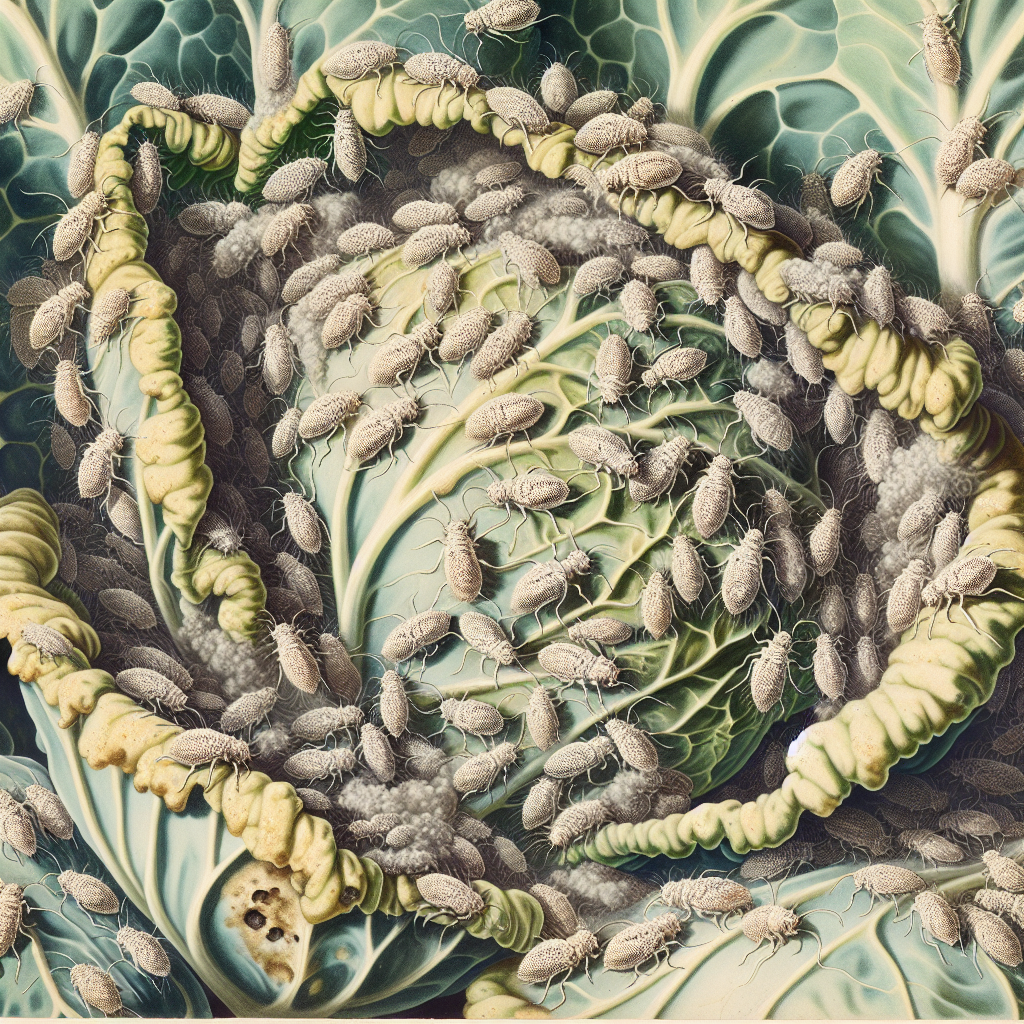
Introduction to cabbage aphids
Cabbage aphids, scientifically known as Brevicoryne brassicae, are among the most notorious pests targeting brassica family crops worldwide. These tiny, sap-sucking insects thrive on plants like cabbage, broccoli, kale, cauliflower, and related vegetables, often forming dense, white-gray colonies that resemble dust or mold from a distance. Native to Europe but now cosmopolitan, cabbage aphids pose a significant threat to organic and conventional growers alike due to their rapid reproduction—females can produce up to 50 offspring per week without mating via parthenogenesis.
What makes cabbage aphids particularly challenging is their host specificity to Brassicaceae plants, where they not only feed on phloem sap but also excrete honeydew, fostering sooty mold fungi that blacken leaves and reduce photosynthesis. Infestations can reduce yields by 20-50% in severe cases, stunt plant growth, and transmit viral diseases. Early detection is crucial, as populations explode in cool, dry conditions. For more on general aphid biology, see the Aphids (pest) page. This guide equips you with diagnostic tools, lifecycle insights, and organic management strategies to protect your brassica harvest effectively.
Identifying Symptoms & Damage
Spotting cabbage aphid damage early can save your crop. Look for these hallmark signs:
Visual Identification: Adults are 1.5-2.5 mm long, pear-shaped, pale green to gray with a white, waxy coating giving a dusty appearance. Nymphs are smaller, wingless versions. Colonies cluster on tender new growth, undersides of leaves, and stems, often curling foliage protectively.
Leaf Symptoms: Curled, crinkled, or distorted leaves, especially young ones. Yellowing (chlorosis) around feeding sites progresses to necrosis. Heavily infested leaves wilt and drop prematurely.
Honeydew and Sooty Mold: Sticky, sugary exudate coats leaves, attracting ants and promoting black sooty mold (Capnodium spp.), which blocks sunlight and invites secondary infections.
Plant Growth Impact: Stunted shoots, reduced head size in cabbage or florets in broccoli, and overall yield loss. Severe cases cause plant death.
Diagnostic Tip: Shake infested leaves over white paper; aphids will fall off and be visible as tiny moving specks. Differentiate from other pests like cabbage worms by their lack of chewing damage—aphids pierce cells without holes.
Use a 10x hand lens to confirm the waxy filaments unique to cabbage aphids. For small farms, check weekly during cool seasons. Learn more organic scouting tips in Spring Pest Patrol: Organic AI Strategies to Shield Your Crops from Common Invaders.
Lifecycle and Progression of cabbage aphids
Understanding the cabbage aphid lifecycle is key to timing interventions. They complete generations rapidly, with 10-20 per year depending on climate.
Egg Stage: Rare in temperate areas; overwinters as eggs on brassica debris or weeds. In mild climates, no eggs—populations persist as live nymphs.
Nymph Stage: Females give live birth to nymphs (viviparity). Four instars last 7-10 days at 20°C (68°F), feeding immediately and molting.
Adult Stage: Wingless females dominate (up to 40 days lifespan), producing 25-50 nymphs weekly. Winged forms (alates) appear under stress, dispersing to new hosts.
Progression: Populations build slowly in spring, peak in cool fall weather (optimal 15-20°C/59-68°F). Decline in heat (>30°C/86°F) or with predators. One female can yield 10 billion descendants in a season unchecked!
Monitor with sticky traps for alates. Lifecycle accelerates in greenhouses, demanding vigilant IPM.
Environmental Triggers & Risk Factors
Cabbage aphids exploit specific conditions:
Temperature: Thrive at 10-25°C (50-77°F); die above 30°C. Cool springs/falls trigger outbreaks.
Humidity: Prefer dry air (<70% RH); high humidity favors fungal epizomes like Pandora neoaphidis.
Crop Factors: Dense planting, nitrogen-rich fertilizers promote tender growth. Weeds like mustard host reservoirs.
Seasonal Risks: Overwinter on crop residue; migrate from wild brassicas. Ants farm aphids, worsening infestations.
Global Spread: Favored by mild winters, climate change extends seasons.
Risk assessment: Scout high-risk fields post-transplant. Avoid excess N; rotate crops.
Organic Control & Treatment Plans
Prioritize IPM for sustainable control:
Cultural Controls: Hand-remove colonies early. Blast with strong water jets (3x/week). Yellow sticky traps catch alates.
Biological Controls: Introduce ladybugs (Coccinella spp.), lacewings (Chrysoperla spp.), hoverflies, and parasitic wasps (Diaeretiella rapae). Release 1,000-2,000 predators/acre.
Organic Sprays: Insecticidal soap (1-2% solution), neem oil (0.5%), or pyrethrins. Rotate to prevent resistance. Apply evenings to spare predators.
Treatment Plan:
- Mild (<10% plants): Water blast + prune.
- Moderate (10-30%): Predators + soaps.
- Severe (>30%): Soaps + neem + BT (if loopers present).
Reflective mulches deter landing. Companion plant with thyme or nasturtiums. Threshold: 5% infested plants.
Preventing cabbage aphids in the Future
Proactive strategies minimize recurrence:
Crop Rotation: 2-3 years away from brassicas.
Sanitation: Destroy residue; weed brassica volunteers.
Resistant Varieties: Choose 'Cabbage Greenback' or hybrids.
Plant Health: Balanced fertility; avoid stress. Mulch suppresses weeds.
Barriers: Row covers until flowering. Encourage predators with flowers.
Monitoring: Weekly scouts; traps. Fall cleanup critical.
Integrated with soil health, per Soil Health Mastery: 5 Proven Strategies for Small Farms to Build Fertile Ground Without Breaking the Bank, builds resilience.
Crops Most Affected by cabbage aphids
Primarily Brassicaceae:
Cabbage (all types: savoy, napa, red).
Broccoli, cauliflower, kale, collards.
Brussels sprouts, kohlrabi, radish (radish), turnip (turnip).
Secondary: Mustard, bok choy, arugula. Rare on non-brassicas. Protect these in polycultures.