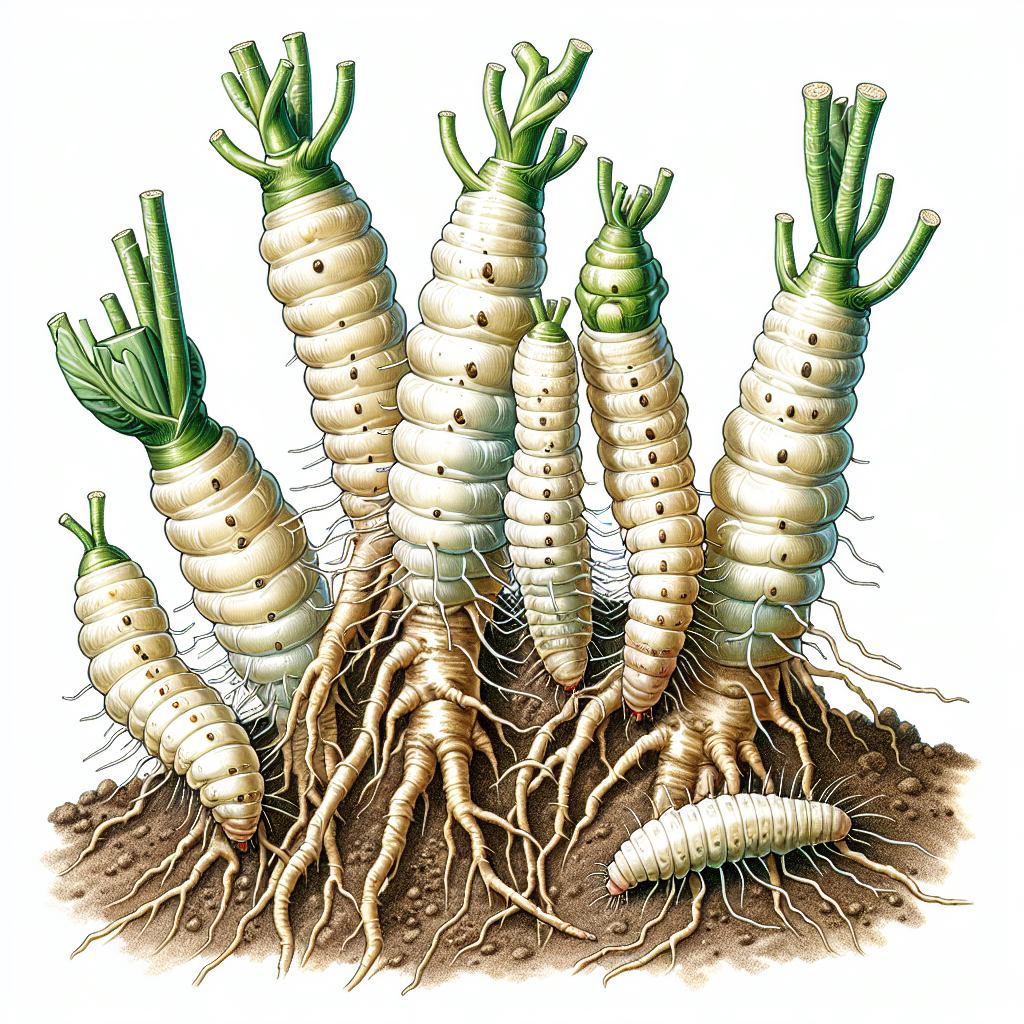
Introduction to cabbage root maggot larvae
Cabbage root maggot larvae (Delia radicum) represent one of the most insidious pests affecting brassica crops worldwide, particularly in temperate regions of North America, Europe, and parts of Asia. These tiny, white, legless grubs, measuring 5-8 mm long, are the larval stage of the cabbage root fly, a grayish fly resembling a housefly but smaller (about 6-7 mm). Females lay eggs at the soil surface near host plants, and upon hatching, the larvae burrow into roots, feeding voraciously and often leading to complete crop failure if unmanaged.
This pest thrives in cool, moist conditions, making early spring and fall plantings especially vulnerable. Damage manifests as wilting seedlings, blue-tinted leaves, and plants that can be easily pulled from the ground due to severed roots. In commercial fields, losses can exceed 50% without intervention, while home gardeners face total stand loss in small plots. Understanding identification, lifecycle, and integrated management is crucial for brassica growers. For broader pest context, see our guide on cabbage worms, a common foliar pest often co-occurring with root maggots.
Farmers report that early detection via yellow sticky traps can reduce populations by 70%, emphasizing the need for proactive scouting. This guide provides definitive diagnostic tools, organic treatments, and prevention strategies tailored for small farms and large operations alike, ensuring sustainable yields from your cabbage and related crops.
Identifying Symptoms & Damage
Accurate diagnosis of cabbage root maggot larvae damage is essential, as symptoms mimic drought stress, nutrient deficiencies, or root-knot nematodes. Early signs include slow growth and wilting during the day, with plants recovering at night. Leaves may turn bluish-purple, especially on the lower foliage, and affected plants often lean or topple easily when tugged.
Inspect the root zone: healthy roots are firm and white, but infested ones show brown, tunneling scars, loose outer layers, and tiny white maggots (1-9 mm) with black mouth hooks. In severe cases, roots resemble a shredded mess, with secondary bacterial infections causing foul odors. Seedlings may yellow and die within 7-10 days of infestation, while mature plants exhibit stunted heads and reduced marketable yield.
To confirm, dig up suspect plants and slice roots longitudinally—maggots are diagnostic. Differentiate from wireworms, which are harder and wire-like, or cutworms, which cut stems at soil level. Use a hand lens for maggot identification; they lack legs and have a pointed rear end. In fields, scout 10-20 plants per 100 sq m, noting >5% with larvae indicates action thresholds. Read our Spring Pest Patrol: Organic AI Strategies to Shield Your Crops from Common Invaders for tech-enhanced scouting tips.
Economic damage thresholds vary: 1-2 larvae per plant for direct-seeded crops, 5+ for transplants. Yield losses average 20-30% in moderate infestations, escalating to 100% in hotspots.
Lifecycle and Progression of cabbage root maggot larvae
The cabbage root maggot completes 2-4 generations annually, depending on climate, with peak activity in spring and fall. Adults emerge from overwintering pupae in soil (5-10 cm deep) when soil temperatures reach 15°C (59°F). Females live 4-6 weeks, laying 50-400 eggs singly or in clusters near plant stems over 2-3 weeks.
Eggs hatch in 3-6 days into L1 larvae, which burrow into roots immediately. Larvae progress through three instars over 2-4 weeks: L1 (0.5 mm), L2 (2 mm), L3 (5-8 mm). Full-grown larvae pupate in soil, forming reddish-brown puparia (4-6 mm). First generation peaks May-June, second July-August, with partial third in mild areas.
Adults are attracted to brassicas via visual cues and host volatiles. Lifecycle duration: 25-40 days at 20°C (68°F). Pupal stage overwinters, with 80-90% survival in moist soils. Monitor with yellow sticky traps (30 cm above soil) at 4-6 per 0.1 ha; 5-10 flies/trap/week signals egg-laying.
Environmental Triggers & Risk Factors
Cabbage root maggots favor cool (15-22°C), moist soils (above 60% field capacity), common in coastal and northern latitudes. Early plantings (before mid-May) coincide with adult emergence, amplifying risk. Poor drainage, high organic matter, and compacted soils retain moisture, boosting survival.
Risk spikes after brassica monocultures or weedy fields with wild mustard. Nearby overwintering sites (last year's stubble) within 1 km serve as reservoirs. Climate change extends generations in warming areas. Acidic soils (pH <6.0) and excessive nitrogen favor populations. Companion crops like onion can deter, but dense plantings (>20 cm spacing) hide eggs.
Organic Control & Treatment Plans
Organic management emphasizes IPM: monitoring, cultural, biological, and targeted treatments. Cultural: Delay planting until after first fly peak (use traps to time); rotate with non-hosts like potato or grains (3-year break reduces pupae 90%). Till soil post-harvest to expose pupae to predators.
Physical Barriers: Row covers (0.5 mm mesh) from transplant to head formation exclude 95% of flies—remove for pollination. Collars (tar paper, aluminum foil) around stems block egg-laying.
Biological: Promote ground beetles and rove beetles (natural predators eat 50% larvae). Nematodes (Steinernema feltiae) applied at seeding (1 billion/ha) kill 70-80% L1 larvae in moist soil.
Organic Insecticides: Spinosad (e.g., Entrust) drench at first signs (0.2-0.4 L/ha), targeting adults/young larvae. Neem oil or pyrethrins for foliar adults. Diatomaceous earth bands around stems desiccate eggs.
Treatment Plan: Week 1: Scout/traps. Week 2: Covers/collars. Infestation >5%: Nematode drench + spinosad. Rotate products to prevent resistance. Expect 80-95% control with integration.
Preventing cabbage root maggot larvae in the Future
Long-term prevention hinges on cultural disruption. Implement 3-4 year rotations excluding all brassicas (broccoli, cauliflower, radish, etc.). Plant after June 1 in cool climates, using transplants hardened off. Use trap crops (early mustard) 10 m from main field to lure flies.
Soil solarization (clear plastic, 4-6 weeks summer) kills 70% pupae. Cover crops like clover or sudangrass suppress via allelopathy. Sanitation: destroy residues, deep plow (>20 cm). Yellow sticky traps (10/ha) + perimeter insecticides reduce migrants 60%.
Resistant varieties (e.g., 'Market Prize' cabbage) show 30% less damage. Monitor soil temps; avoid planting <17°C. Annual planning prevents buildup—integrate with Soil Health Mastery: 5 Proven Strategies for Small Farms to Build Fertile Ground Without Breaking the Bank for resilient fields.
Crops Most Affected by cabbage root maggot larvae
Primarily attacks Brassicaceae: cabbage (all types), broccoli, cauliflower, kale, Brussels sprouts, kohlrabi. Radishes (radish), turnips (turnip), rutabaga suffer highest seedling loss. Mustard, canola, bok choy relatives also vulnerable. Non-crucifers rarely affected, though Chinese cabbage hybrids show tolerance. Seedlings <4 weeks most susceptible; mature plants tolerate low levels.