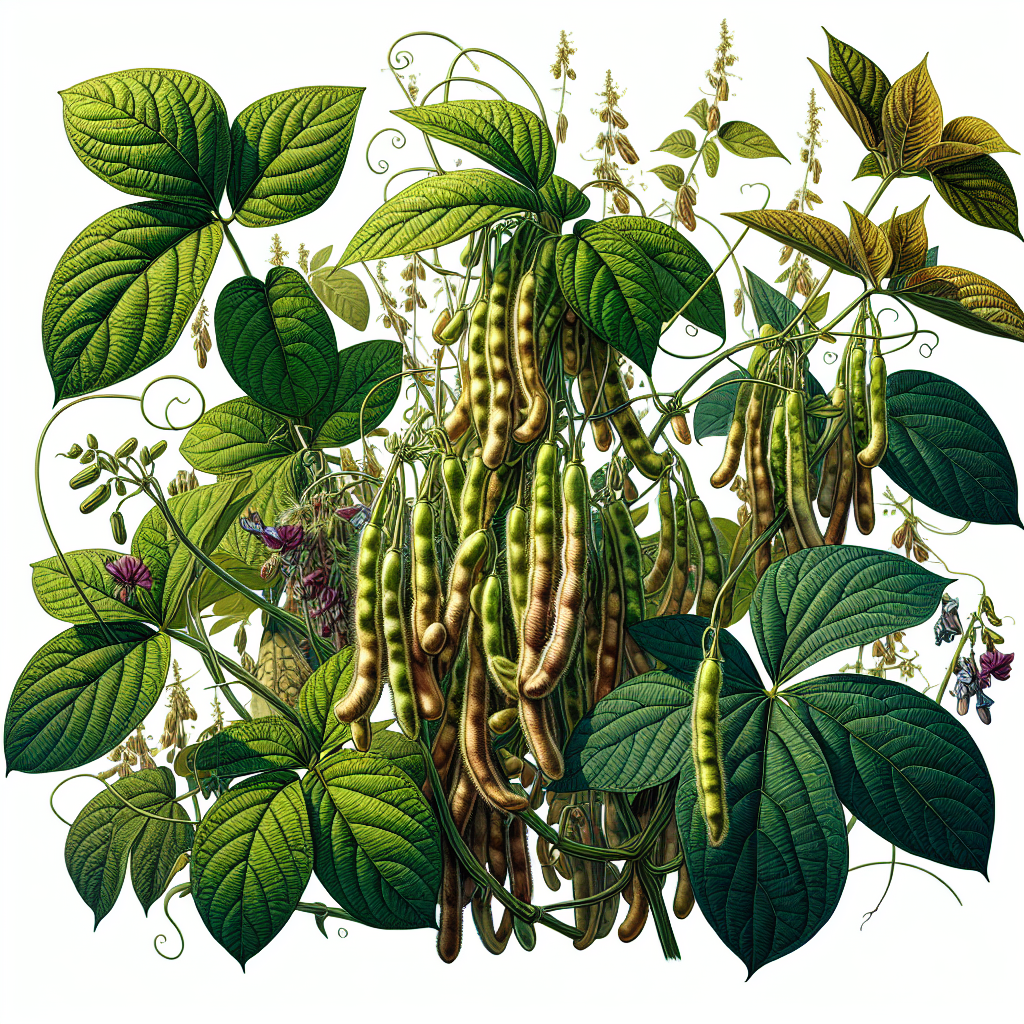
Introduction to velvetbean
Velvetbean, scientifically known as Mucuna pruriens, is a vigorous climbing annual or short-lived perennial legume native to tropical regions of Africa and Asia. Known also as cowitch, cowhage, or kiuk, it has become a notorious agricultural pest in warm climates worldwide, particularly in the Americas, Southeast Asia, and Australia. What makes velvetbean particularly problematic is its dual nature: while it offers benefits like soil nitrogen enrichment and green manure when managed properly, its unchecked growth turns it into a smothering weed that can overwhelm crops, reduce yields by up to 80% in severe infestations, and complicate farm operations.
Farmers first encounter velvetbean as a rapid colonizer in disturbed soils, where its twining vines—reaching 3-15 meters long—form impenetrable mats. The plant's distinctive velvety pods, covered in irritating hairs containing mucunain (a potent allergen), pose not only agronomic challenges but also health risks to workers during harvest or control efforts. Seeds, dispersed by water, animals, machinery, or exploding pods, can remain viable in soil for years, leading to persistent reinfestations. In soybeans fields, for instance, velvetbean competes fiercely for light, water, and nutrients, often outpacing the crop during critical growth stages.
This definitive guide equips agricultural professionals, smallholders, and commercial growers with science-backed strategies to diagnose, manage, and prevent velvetbean. Drawing from entomological, botanical, and agronomic expertise, it emphasizes organic methods to minimize chemical inputs while maximizing crop protection. Early detection is key—scout fields weekly during warm months to catch velvetbean before it vines out. For more on integrated farm planning, check this insightful blog post on leveraging companion strategies against weeds.
Identifying Symptoms & Damage
Diagnosing velvetbean infestations requires keen observation of both plant morphology and crop impacts. The weed emerges as trifoliate seedlings with heart-shaped leaves, quickly developing into robust vines with dark green foliage and purple flowers. Mature plants produce pendulous, inflated pods (4-10 cm long) coated in golden-brown hairs that cause intense itching upon contact— a telltale sign during scouting.
Key Symptoms:
- Vine Overgrowth: Dense mats of twisting stems climbing and smothering crop canopies, blocking sunlight and promoting lodging in corn or rice.
- Competition Indicators: Stunted crop growth, yellowing leaves from nutrient theft, and reduced pod/ear fill due to water stress.
- Seedling Suppression: Velvetbean seedlings shade out young crops, leading to patchy stands and bare ground.
- Pod Contamination: Exploding pods scatter seeds into harvests, contaminating grain or legume yields.
Damage Quantification: In cassava, velvetbean can slash tuber yields by 50-70%; in upland rice, it delays maturity by 2-4 weeks. Look for secondary issues like increased aphids or army worms thriving in the humid microclimate under vines. Use a quadrat sampling method: count velvetbean plants per square meter—if over 5, intervention is urgent. Differentiate from similar climbers like kudzu by the irritating pod hairs and L-DOPA-rich seeds (up to 7% by weight).
Lifecycle and Progression of velvetbean
Understanding velvetbean's lifecycle is crucial for timed interventions. As a warm-season annual in temperate zones or short-lived perennial in tropics, it completes 1-3 cycles per year depending on climate.
Stages:
- Germination (0-14 days): Seeds sprout at 20-35°C soil temps, optimal after rains. Hard seed coat requires scarification for viability.
- Vegetative Growth (2-8 weeks): Rapid vine extension (up to 0.3m/day), nitrogen fixation via root nodules enhances competitiveness.
- Flowering (8-12 weeks): Purple racemes produce 100-400 pods per plant.
- Pod Maturation & Dispersal (12-20 weeks): Pods dehisce violently, propelling seeds 5-10m; others stick to machinery/animals.
- Seed Bank Persistence: 70% viability after 1 year, 20% after 5 years in soil.
Progression accelerates in high humidity (>70%) and fertile soils. Multiple flushes occur if early growth is mowed, making repeated controls essential. Monitor with degree-day models: base 15°C, peak activity at 1,200-1,500 heat units.
Environmental Triggers & Risk Factors
Velvetbean thrives in USDA zones 9-12, requiring 25-35°C days, >1,000mm annual rain, and pH 5.5-7.5. Key triggers include:
- Soil Disturbance: Tillage or flooding exposes seed bank.
- Monoculture Practices: Continuous soybeans or peanuts without rotation.
- Climate Events: Late rains extend growing season; droughts favor it over shallow-rooted crops.
- Proximity Risks: Roadside or fallow land infestations spread via windblown seeds.
High nitrogen soils boost growth; poor weed management in adjacent sugarcane fields amplifies invasion. Risk mapping: score fields 1-10 based on prior history, soil type (loamy preferred), and irrigation.
Organic Control & Treatment Plans
Organic management integrates cultural, mechanical, biological, and thermal tactics for 90%+ efficacy.
Cultural:
Mechanical:
- Mow at 4-6 weeks to prevent seed set; repeat every 2 weeks.
- Hand-pull seedlings (<10cm); flame weed for larger vines.
Biological:
- Release leaf-feeding beetles or fungal pathogens like Colletotrichum spp. (consult biocontrol experts).
- Encourage natural enemies: velvetbean weevils (Gibbigerodes pruriens).
Treatment Plans:
- Early Infestation (Seedling Stage): Solarize soil 4-6 weeks pre-planting.
- Mid-Season (Vining): Roll-chop + cover crop overseed.
- Seed Set: Tarp fields 4 weeks to induce anoxia.
Avoid tillage post-flowering to prevent seed scatter. For detailed organic tactics, explore Spring Pest Patrol.
Preventing velvetbean in the Future
Prevention hinges on IPM: Clean equipment, hot-water seed treatment (60°C/10min), and border sanitation. Plant cover crop mixes with clover to outcompete. Scout biweekly; use thresholds (2 plants/10m²). Long-term: soil solarization + biofumigants like mustard. Certified weed-free seed and buffer zones around high-risk areas. Monitor seed bank via bioassays annually.
Crops Most Affected by velvetbean
Velvetbean plagues tropical/subtropical crops:
- Legumes: Soybeans, peanuts, chickpeas—yield losses 40-80%.
- Cereals: Corn, rice, sorghum—smothering reduces grain fill.
- Roots/Tubers: Cassava, sweet potato—competition halves biomass.
- Others: Cotton, sugarcane, young orchards like mango.
Vulnerable in no-till systems; intercropping mitigates.