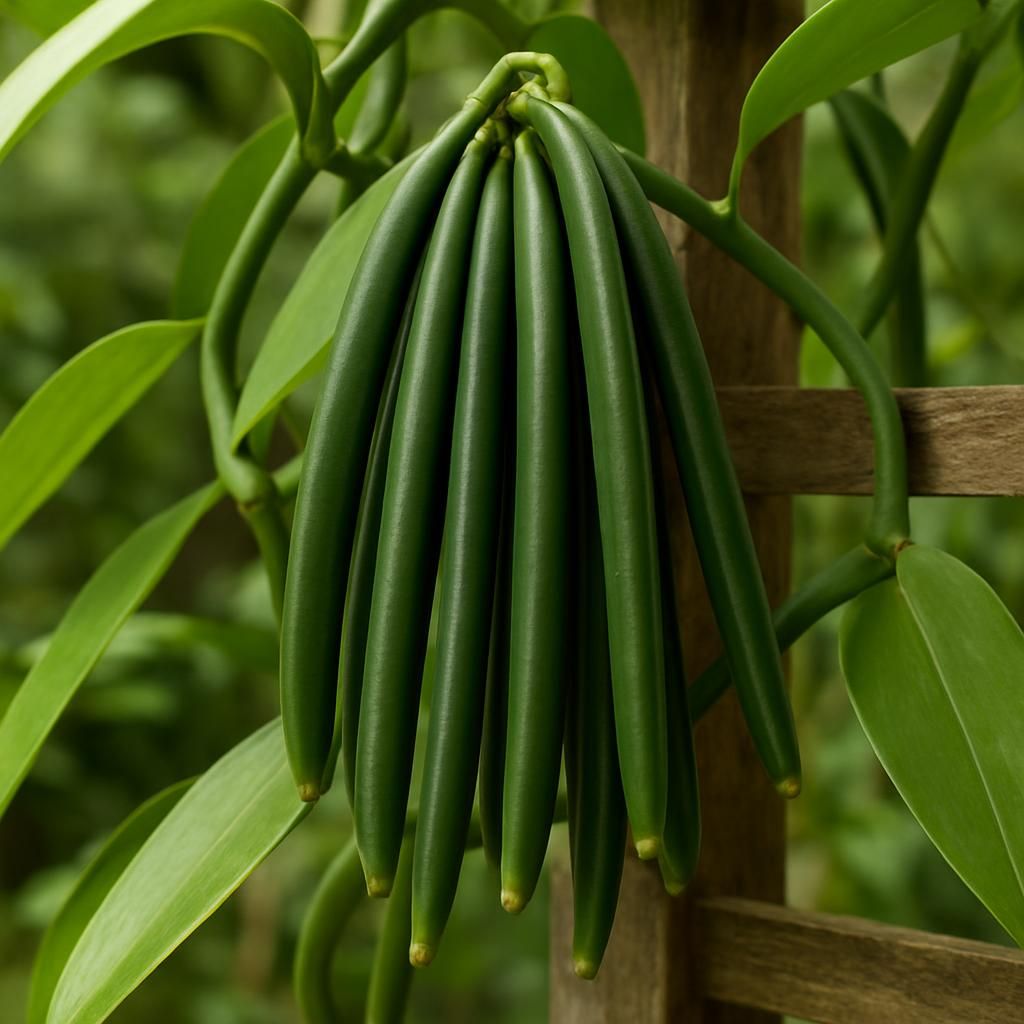
Introduction to Vanilla (Pompona)
Vanilla pompona, often called the "giant vanilla" or "pompona vanilla," is a vigorous climbing orchid native to Central and northern South America. It produces the largest pods among cultivated vanilla species and is valued for its bold flavor profile and resistance to certain environmental stresses. Commercial growers increasingly turn to Vanilla pompona for its higher bean weight and adaptability to marginal tropical soils. The species offers an attractive alternative to the more delicate Bourbon Vanilla and Tahitian Vanilla when disease pressure or climate variability threatens production.
Botanical Profile of Vanilla (Pompona)
Vanilla pompona is a perennial, hemiepiphytic orchid that climbs via aerial roots. Mature vines can reach 10–15 meters in length when supported by living tutors or trellises. Leaves are thick, leathery, and oblong, typically 15–25 cm long. The inflorescence produces 8–15 yellowish-green flowers that open sequentially; each flower lasts only one day. Successful pollination yields elongated pods 20–30 cm long and 2–3 cm wide—significantly larger than standard vanilla species. The pods contain thousands of tiny black seeds embedded in a fragrant, oily mesocarp.
Soil, pH, and Climate Requirements for Vanilla (Pompona)
Vanilla pompona thrives in well-drained, organic-rich soils under 50–70% shade. The following table summarizes optimal growing conditions:
| Parameter | Ideal Range | Notes |
|---|---|---|
| Soil Type | Loamy to sandy loam with high humus | Requires excellent drainage; raised beds recommended |
| Soil pH | 6.0–7.0 | Slightly acidic to neutral; avoid alkaline conditions |
| Temperature | 20–30 °C daytime; 18–24 °C nighttime | Minimum 15 °C; frost will kill vines |
| Relative Humidity | 70–85% | Maintain with misting or shade-house systems |
| Annual Rainfall | 1,500–2,500 mm | Even distribution; supplement in dry season |
| Light | 30–50% full sun (shade cloth or tree canopy) | Excessive light causes leaf scorch |
| Elevation | 0–800 m | Higher elevations slow growth but improve pod quality |
Step-by-Step Planting & Propagation
- Select healthy cuttings 60–90 cm long with at least three nodes from disease-free mother plants.
- Prepare a well-aerated rooting medium of coconut husk, coarse perlite, and composted bark (3:1:1 ratio).
- Plant cuttings at a 45° angle so two nodes are buried; keep the medium moist but never waterlogged.
- Provide 70% shade and maintain 25–28 °C until new roots and shoots appear (6–10 weeks).
- Transplant rooted cuttings into permanent beds or containers with living tutor trees such as Gliricidia or Inga species spaced 2.5–3 m apart.
- Train vines horizontally along trellises 1.5–2 m high to facilitate hand pollination and harvesting.
Care & Maintenance regimes for Vanilla (Pompona)
Consistent moisture, balanced nutrition, and timely pruning are essential for sustained productivity. The following table outlines recommended schedules:
| Task | Frequency | Details |
|---|---|---|
| Watering | 2–3 times weekly in dry season | Apply 2–3 L per vine; allow top 5 cm to dry between irrigations |
| Fertilizer | Every 4–6 weeks (March–October) | Apply 10-5-20 NPK + micronutrients at 15 g per vine; alternate with fish emulsion |
| Pruning | Twice yearly (post-harvest & pre-flowering) | Remove dead stems and excess vegetative growth; maintain 1.8–2 m vine length |
| Mulching | Renew every 4 months | 8–10 cm layer of chopped coconut husk or leaf litter to retain moisture |
| Shade Management | Continuous monitoring | Adjust shade cloth seasonally to maintain 30–50% light penetration |
Pests, Diseases & Organic Management
Vanilla pompona is susceptible to several pests and pathogens common to Vanilla cultivation. Key threats include Aphids, Mealybugs, Spider Mites, Thrips, and fungal diseases such as Fusarium wilt and Phytophthora root rot. Implement integrated pest management by introducing predatory mites, maintaining strict sanitation, and applying neem oil or Bacillus thuringiensis sprays. Improve drainage and avoid over-watering to prevent Root rot. Regular scouting and removal of infected plant material remain the most effective organic controls.
Harvesting, Curing & Optimal Storage
Harvest pods when they turn from dark green to yellow at the distal end, typically 8–9 months after pollination. Clip pods with 2–3 cm of stem attached. The traditional curing process includes:
- Killing: Dip pods in 65 °C water for 3 minutes or sun-kill for 4–6 hours.
- Sweating: Wrap in wool blankets and ferment at 45–50 °C for 24–48 hours daily over 7–10 days.
- Drying: Sun-dry on racks for 2–3 weeks until moisture content reaches 25–30%.
- Conditioning: Store in airtight containers for 3–6 months to develop full aroma.
Properly cured beans should be supple, dark brown, and heavily vanillin-scented. Store at 18–22 °C and 60–70% relative humidity in vacuum-sealed or food-grade plastic containers away from light.
Companion Planting for Vanilla (Pompona)
Vanilla pompona benefits from strategic companion planting that enhances shade, soil fertility, and pest suppression. Recommended partners include nitrogen-fixing Gliricidia, Pigeon pea, and Sesame for ground cover. Aromatic herbs such as Rosemary and Thyme deter Aphids and Thrips. Avoid planting heavy feeders like Banana or Cacao too close, as they compete for nutrients and light. Diverse understory planting also improves biodiversity and long-term farm resilience.
Stop Treating Tomato Blight Like a Spray Problem: Here Is What Works Better