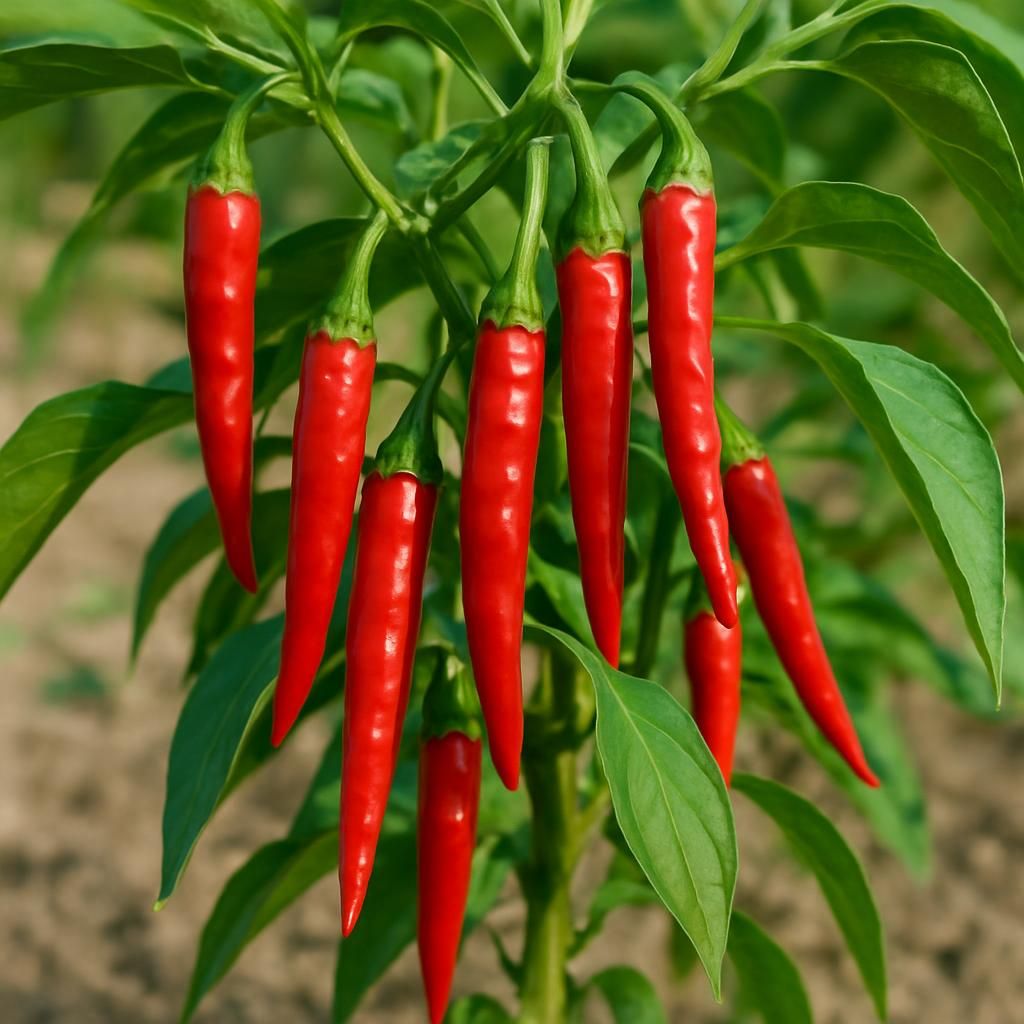
Introduction to Thai Hot Chili
Thai Hot Chili (Capsicum annuum) is a staple in Southeast Asian cuisine and a favorite among home gardeners and commercial growers seeking reliable heat and flavor. The slender, 2–3 inch pods ripen from green to a glossy scarlet and deliver 50,000–100,000 Scoville Heat Units, making them hotter than most jalapeños but milder than Ghost Pepper. Compact plants reach 18–24 inches tall, produce prolifically over an extended season, and adapt well to containers, raised beds, or open-field production.
Commercial interest continues to rise because the cultivar dries and stores exceptionally well, commands premium prices in both fresh and powdered markets, and tolerates the high temperatures common in tropical lowlands. Whether grown for fresh salsas, curries, or commercial dehydration, Thai Hot Chili offers growers a fast turnaround and strong yield potential when cultural practices are optimized.
Botanical Profile of Thai Hot Chili
Thai Hot Chili belongs to the Solanaceae family and shares the same species as bell peppers and many other hot varieties. Plants exhibit an upright, multi-branched growth habit with dark-green, ovate leaves approximately 2–3 inches long. Small, white, five-petaled flowers appear 35–45 days after transplant and are primarily self-pollinating, although bees and other insects can increase fruit set.
Mature pods are thin-walled, pointed, and measure 5–8 cm. They contain 20–40 seeds per fruit and develop their characteristic heat through capsaicinoids concentrated in the placental tissue. The plant’s relatively short stature and dense branching make it ideal for high-density planting and mechanical or hand harvesting.
Soil, pH, and Climate Requirements for Thai Hot Chili
Thai Hot Chili demands well-drained, fertile soil rich in organic matter. Avoid heavy clay or waterlogged sites that promote root diseases. Raised beds or containers with quality potting mixes are excellent alternatives in marginal soils.
| Parameter | Ideal Range | Notes |
|---|---|---|
| Soil Type | Sandy loam to loam | High organic matter improves moisture retention |
| pH | 6.0–6.8 | Slightly acidic to neutral; test annually |
| Temperature (Day) | 75–90 °F (24–32 °C) | Optimal fruit set occurs above 70 °F |
| Temperature (Night) | 60–70 °F (15–21 °C) | Below 55 °F slows growth and may cause blossom drop |
| Sunlight | Full sun, 8+ hours | Supplemental lighting in low-light regions |
| Frost Sensitivity | None | Kill occurs at 32 °F or below |
| Spacing (In-Ground) | 18–24 in (45–60 cm) | Rows 30–36 in apart for airflow |
| Container Size | Minimum 5 gallons | Ensure excellent drainage holes |
Step-by-Step Planting & Propagation
- Start seeds indoors 8–10 weeks before the last frost date. Use sterile seed-starting mix and maintain soil temperature at 80–85 °F for rapid germination (7–14 days).
- Transplant seedlings into 2–4 inch pots once they develop two true leaves; harden off for 7–10 days before moving outdoors.
- Site selection: Choose a location receiving at least eight hours of direct sunlight with protection from strong winds.
- Amend soil with 2–3 inches of well-rotted compost or aged manure plus a balanced organic fertilizer (e.g., 5-5-5) incorporated to 6–8 inches depth.
- Transplant on a cloudy day or late afternoon. Set plants at the same depth as the nursery container and water thoroughly.
- Mulch immediately with 2–3 inches of organic material to suppress weeds and conserve moisture.
Care & Maintenance regimes for Thai Hot Chili
Consistent moisture, targeted nutrition, and timely pruning maximize both yield and fruit quality. Over-fertilization, especially with high-nitrogen formulas, promotes lush foliage at the expense of fruit.
| Growth Stage | Watering Frequency | Fertilizer Type & Rate | Pruning & Training |
|---|---|---|---|
| Seedling (0–4 wks) | Keep evenly moist; never soggy | ¼-strength balanced liquid fertilizer weekly | Pinch growing tip at 4–6 leaves to branch |
| Vegetative (4–8 wks) | 1–1.5 in per week; morning watering | High-nitrogen (e.g., 10-5-5) every 3 weeks | Remove lower leaves touching soil |
| Flowering/Fruiting | Maintain consistent moisture | Switch to high-phosphorus/potassium (5-10-10) every 2–3 weeks | Remove suckers below first fork; stake if needed |
| Late Season | Reduce slightly to encourage ripening | Light compost tea monthly | Cut back ⅓ of foliage after final harvest |
Monitor soil moisture at 2-inch depth; irrigate when the top inch feels dry. Drip irrigation or soaker hoses minimize foliar diseases.
Pests, Diseases & Organic Management
Thai Hot Chili is susceptible to several common Solanaceous pests and pathogens. Early scouting and integrated management keep populations below economic thresholds.
- Aphids: Spray underside of leaves with insecticidal soap or neem oil; encourage lady beetles.
- Spider mites: Increase humidity and release predatory mites; apply horticultural oil.
- Thrips: Use blue sticky traps and spinosad sprays.
- Flea beetles: Row covers during early growth; diatomaceous earth barriers.
- Powdery mildew: Improve airflow, avoid overhead watering, apply potassium bicarbonate.
- Phytophthora: Ensure excellent drainage; rotate crops on 3-year cycle.
- Fusarium wilt: Use resistant rootstocks or soil solarization.
Rotate with non-host crops such as Onion or Garlic to break disease cycles. Remove and destroy infected plant material at season end.
Harvesting, Curing & Optimal Storage
Harvest Thai Hot Chili pods when they reach full red color and firm texture for maximum heat and flavor. Use clean pruners to cut stems, leaving a short calyx to reduce rot. Continuous picking encourages further fruit set.
For fresh use, store unwashed pods in the refrigerator crisper for up to two weeks. To dry, spread single-layer on screens in a warm, well-ventilated area (95–105 °F) or use a dehydrator at 125 °F until brittle (8–12 hours). Store dried chilies in airtight glass jars away from light; whole pods retain potency for 12–18 months, while ground powder should be used within six months.
Companion Planting for Thai Hot Chili
Strategic pairings improve pollination, deter pests, and optimize space. Plant Thai Basil nearby to repel aphids and thrips while attracting beneficial insects. Marigold roots exude compounds that suppress nematodes. Low-growing Lettuce or Radish can serve as living mulch between chili rows, provided they do not compete for light. Avoid planting near Fennel which may inhibit growth.
Interplanting with Tomato or Eggplant works well in larger beds but maintain adequate spacing to reduce shared disease pressure. In small gardens, succession planting after early greens maximizes seasonal productivity.