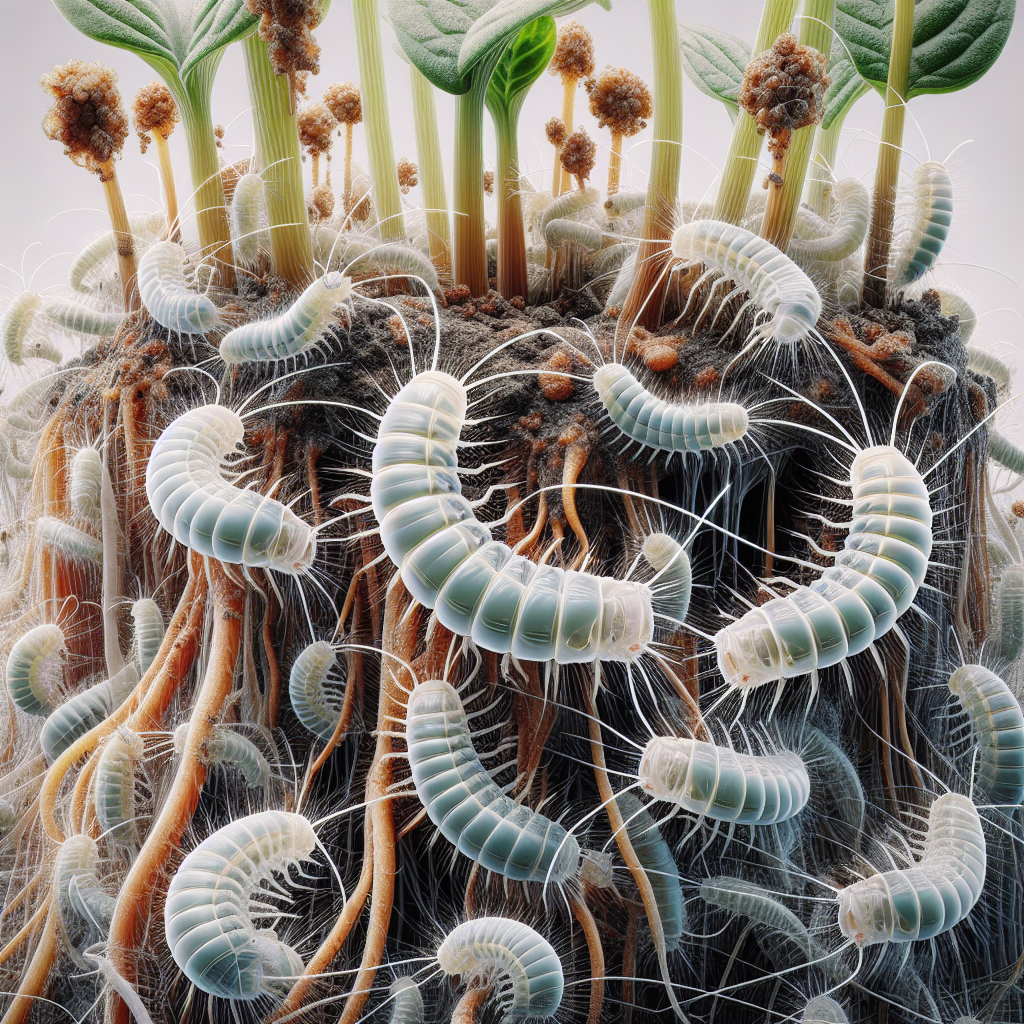
Introduction to Symphylans
Symphylans, commonly known as garden symphylans or soil centipedes, are microscopic soil pests belonging to the order Symphyla. These translucent, worm-like arthropods measure just 2-8 mm in length, with 12-14 pairs of legs and distinctive antennae longer than their body. Despite their small size, symphylans are voracious feeders on fine plant roots, germinating seeds, and decomposing organic matter, making them a significant threat to agricultural production worldwide.
Native to temperate and subtropical regions, symphylans prefer cool, moist environments rich in organic matter. They are particularly problematic in greenhouses, nurseries, vegetable fields, and perennial crops where high soil moisture and organic amendments create ideal conditions. Populations can explode rapidly, with densities reaching thousands per square meter, devastating seedling stands and causing up to 50-100% stand loss in severe infestations. Unlike root-knot nematodes which cause galls, symphylans rasps roots with their poisonous mouthparts, leading to rapid plant decline.
Farmers often overlook symphylans due to their subterranean habits and tiny size, mistaking damage for root rots or nutrient deficiencies. Early detection through soil sampling is crucial, as these pests can persist in soil for years without hosts. This guide provides comprehensive diagnostic tools, lifecycle insights, and proven organic management strategies to protect your crops from symphylan devastation. For small farms battling multiple soil pests, integrating these tactics with Spring Pest Patrol: Organic AI Strategies to Shield Your Crops from Common Invaders can enhance monitoring efficiency.
Identifying Symptoms & Damage
Symphylan damage manifests primarily below ground, making field diagnosis challenging without excavation. Above-ground symptoms include patchy stands, stunted seedlings, and wilting plants despite adequate moisture. Affected plants exhibit sparse, fibrous roots that appear pruned or scraped, with fine root hairs completely devoured. In severe cases, roots are reduced to nubs, mimicking wireworms or Pythium damping-off.
Key diagnostic signs:
- Seedling Loss: Germinating seeds disappear or fail to emerge; cotyledons emerge blackened and shriveled.
- Root Pruning: Fine roots absent; taproots healthy but feeder roots heavily grazed.
- Rapid Wilting: Plants collapse suddenly in moist soils, unlike drought stress.
- Secondary Issues: Increased susceptibility to root rot pathogens due to wounded tissues.
To confirm symphylans, take soil cores from 10-15 cm depth near damaged plants during evening or after irrigation when pests are active. Use a Berlese funnel or floatation method: mix soil with water in a bucket, agitate, and watch for tiny, white, centipede-like creatures swimming rapidly. Adults have 14 leg pairs; juveniles fewer. Differentiate from fungus gnats larvae (maggot-shaped) or plant-parasitic nematodes (thread-like, microscopic).
Damage thresholds vary: in potato fields, >50 symphylans per liter soil warrants action; in greenhouses, even 10-20 can cause losses. Monitor high-risk areas like compacted soils or recent manure-amended fields.
Lifecycle and Progression of Symphylans
Symphylans exhibit a hemimetabolous lifecycle with eggs, juveniles, and adults, all feeding stages. Females lay 20-100 eggs in moist soil clusters, hatching in 1-2 weeks at 15-20°C. Juveniles undergo 6-8 molts over 6-12 months, gaining leg pairs with each instar. Adults live 1-2 years, reproducing parthenogenetically (females only) in many species like Scutigerella immaculata.
Peak activity occurs in spring and fall at soil temperatures 10-25°C. Populations build over winter in organic debris, migrating upward in moist soils to attack seeds. A single female can produce 3-5 generations annually in greenhouses. Dispersal via wind currents carries tiny juveniles long distances, explaining sudden outbreaks.
Lifecycle progression:
- Egg Stage (7-14 days): Clutches in root zones.
- Juveniles (3-9 months): Rapid feeders, most damaging stage.
- Adults: Continuous reproduction, slower but persistent.
Understanding this allows timed interventions: target eggs/juveniles pre-planting. In perennial systems like strawberry, chronic infestations cycle yearly without interruption.
Environmental Triggers & Risk Factors
Symphylans thrive in specific conditions, making certain practices high-risk:
- High Soil Moisture: >60% field capacity; poor drainage.
- Organic Matter: Fresh manure, compost >5%; undecomposed residues.
- Cool Soils: 12-22°C optimal; avoid in hot, dry summers.
- pH Neutral-Alkaline: 6.0-8.0.
- No-Till/Reduced Tillage: Protects populations in surface litter.
Risk factors include over-irrigation, heavy mulching, and continuous cropping without rotation. Greenhouse crops face constant pressure due to stable moisture. Compacted soils limit drainage, exacerbating issues. Adjacent weedy areas with decaying vegetation serve as reservoirs.
Monitor via bait stations: bury germinating peas or radish seeds in suspect soils; check roots after 7 days. Thresholds rise post-manuring or in fields following clover green manures.
Organic Control & Treatment Plans
Organic management emphasizes cultural disruption, biological augmentation, and physical barriers. Avoid broad-spectrum chemicals favoring symphylans.
Immediate Actions:
- Soil Flooding: Saturate to 100% capacity for 2-4 weeks; drowns pests (effective in greenhouses).
- Solarization: Cover moist soil with clear plastic 4-6 weeks summer; heat kills 90%+.
Biological Controls:
- Predators: Ground beetles, rove beetles, predatory mites (Hypoaspis miles).
- Nematodes: Steinernema carpocapsae applied pre-planting.
- Entomopathogens: Metarhizium anisopliae fungal sprays to soil.
Cultural Practices:
- Rotation: 2-3 years to non-hosts like grasses.
- Tillage: Fall deep plowing exposes to desiccation.
- Organic Amendments: Mature compost only; avoid fresh manure.
- Mulch Management: Use coarse materials; till in annually.
Treatment Plan (Step-by-Step):
- Scout and confirm infestation.
- Reduce irrigation; allow soil drying.
- Apply predatory nematodes (10^6/m²).
- Solarize or flood if feasible.
- Plant trap crops (mustard) ahead.
- Monitor post-treatment.
Integrate with entomopathogenic fungi for 70-90% control in potato trials.
Preventing Symphylans in the Future
Prevention focuses on habitat denial:
- Site Selection: Well-drained soils; avoid low spots.
- Crop Rotation: Alternate with grains, brassicas.
- Seedbed Prep: Incorporate solarization; use raised beds.
- Irrigation: Drip systems; avoid overhead.
- Cover Crops: Sudangrass biofumigants suppress populations.
- Monitoring: Annual soil samples; sticky traps for migrants.
Long-term: Build soil structure with gypsum in heavy clays. Threshold-based decisions prevent unnecessary interventions. For greenhouse tomato producers, steam sterilization between crops eliminates reservoirs.
Crops Most Affected by Symphylans
Symphylans target crops with fine roots and high organic needs:
- Vegetables: Potato, carrot, onion, lettuce, cabbage.
- Greenhouse/Nursery: Seedlings of all types, ornamentals.
- Perennials: Strawberry, rhubarb.
- Field Crops: Corn seedlings, beans.
Least affected: Grasses, mature taproot crops. In sweet potato, damage limited to slips.