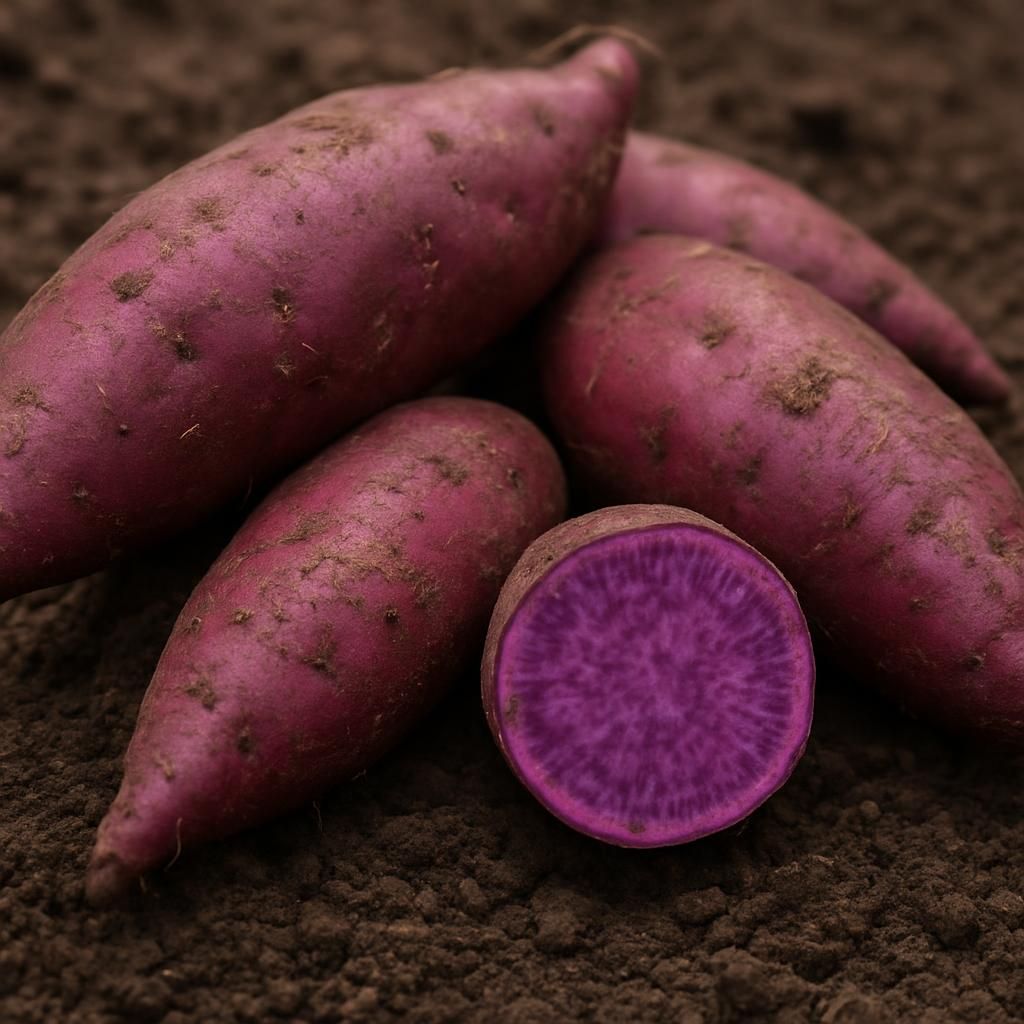
Introduction to Sweet Potato (Murasaki Japanese)
Murasaki Japanese sweet potato (Ipomoea batatas 'Murasaki') is a Japanese heirloom cultivar distinguished by its deep purple skin and rich purple flesh that retains color after cooking. Developed for superior flavor and nutritional density, it offers higher levels of anthocyanins than standard orange varieties, making it a favorite among chefs and health-conscious growers. This comprehensive guide covers every stage from soil preparation to storage, providing actionable, research-backed recommendations for commercial and serious home growers.
The variety performs best in warm climates but can be successfully grown in temperate zones with proper season extension. Its compact growth habit and moderate vine length make it suitable for both raised beds and traditional field production. Because of its striking color and culinary versatility, demand continues to rise in specialty markets and restaurants.
Botanical Profile of Sweet Potato (Murasaki Japanese)
Murasaki is a member of the Convolvulaceae family and produces long, slender storage roots with smooth, dark purple skin. The flesh is uniformly purple with a dense, slightly dry texture that becomes creamy when baked. Vines reach 4–6 feet with moderate branching and heart-shaped leaves that display subtle purple veining. Unlike many sweet potatoes, Murasaki maintains its vibrant color after cooking, making it visually distinctive in culinary applications.
Flowering is infrequent in most climates, but when present, the blooms are pale lavender. The plant is a perennial in USDA zones 9–11 but is grown as an annual in cooler regions. It stores energy in enlarged adventitious roots that form from nodes along the vine. Understanding this morphology is essential for proper propagation and spacing decisions.
Soil, pH, and Climate Requirements for Sweet Potato (Murasaki Japanese)
Murasaki thrives in well-drained, sandy loam soils with high organic matter. Heavy clay soils should be amended with compost and raised beds to prevent waterlogging and root rot. The crop prefers slightly acidic conditions and consistent warmth.
| Parameter | Ideal Range | Notes |
|---|---|---|
| Soil Type | Sandy loam to loam | Excellent drainage essential |
| Soil pH | 5.8 – 6.5 | Avoid alkaline soils above 7.0 |
| Temperature (Day) | 75–95 °F (24–35 °C) | Optimal for tuber bulking |
| Temperature (Night) | 60–70 °F (15–21 °C) | Supports root development |
| Growing Season | 100–130 frost-free days | Longer season improves size and sweetness |
| Spacing | 12–18 in within row; 36 in between rows | Prevents overcrowding and disease |
Adequate soil temperature above 65 °F at planting is critical. Mulching helps maintain consistent moisture and temperature while suppressing weeds.
Step-by-Step Planting & Propagation
- Source disease-free slips from certified nurseries or produce your own by sprouting mother roots in water or moist sand at 75–80 °F.
- Prepare beds by incorporating 2–3 inches of well-rotted compost and ensuring pH is within the target range.
- Plant slips 4–6 inches deep with at least two nodes buried; space 12–18 inches apart in rows 36 inches wide.
- Water immediately after planting and maintain even moisture for the first two weeks to encourage establishment.
- Apply a light layer of organic mulch once vines begin to run to conserve moisture and suppress weeds.
Transplanting should occur after all danger of frost has passed and soil has warmed. Avoid planting in the same location as Potato or other solanaceous crops to reduce shared pest pressure.
Care & Maintenance regimes for Sweet Potato (Murasaki Japanese)
Consistent moisture during the first six weeks promotes rapid vine growth, while moderate water stress later encourages sugar accumulation. Fertilization should be balanced, avoiding excess nitrogen that produces lush foliage at the expense of roots.
| Growth Stage | Water Schedule | Fertilizer Application | Pruning/Maintenance |
|---|---|---|---|
| Establishment (0–4 wks) | 1–1.5 in/week; keep soil moist | ½ rate balanced organic fertilizer (5-5-5) | Remove weeds; no pruning |
| Vegetative (4–8 wks) | 0.75–1 in/week | Side-dress with compost tea or fish emulsion | Tip vines if they root at nodes |
| Tuber Bulking (8–14 wks) | 0.5–0.75 in/week; allow slight drying | Low-nitrogen, high-potassium fertilizer | Minimal pruning; maintain mulch |
| Pre-Harvest (last 3 wks) | Reduce to 0.25 in/week | No additional fertilizer | Cease irrigation 10–14 days before harvest |
Regular scouting for aphids and whiteflies is recommended during the vegetative phase.
Pests, Diseases & Organic Management
Murasaki is susceptible to several common sweet potato pests. Root-knot nematodes can cause galls and reduce yields; rotate with marigold or sunn hemp cover crops. Sweet potato weevil larvae tunnel into roots; use pheromone traps and destroy infested plants. Fungal issues such as black rot and fusarium wilt are managed by using certified slips, avoiding overwatering, and practicing crop rotation.
Organic controls include neem oil for aphids and whiteflies, beneficial nematodes for soil pests, and copper-based sprays for early fungal outbreaks. Maintaining healthy soil biology through compost and cover crops provides the strongest long-term defense.
Harvesting, Curing & Optimal Storage
Harvest when leaves begin to yellow and roots reach desired size, typically 100–130 days after planting. Use a garden fork to gently lift roots, taking care not to bruise the skin. Cure harvested roots at 85–90 °F and 85–90% humidity for 5–10 days to heal wounds and convert starches to sugars.
Store cured roots at 55–60 °F with 85–90% relative humidity. Avoid refrigeration, which causes chilling injury. Properly cured and stored Murasaki roots maintain quality for 4–6 months. Sort regularly and remove any showing signs of rot.
Companion Planting for Sweet Potato (Murasaki Japanese)
Murasaki benefits from strategic companions that improve soil health and deter pests. Bush beans and cowpeas fix nitrogen and provide light shade. Marigold and nasturtium repel nematodes and aphids. Avoid planting near fennel or walnut trees, which can inhibit growth.
Interplanting with okra or pepper creates a diverse canopy that reduces pest pressure. After harvest, follow with a cover crop of crimson clover or hairy vetch to rebuild soil organic matter.
For more on building resilient systems, see Summer Companion Planting: 10 Organic Pairings to Boost Small Farm Resilience.