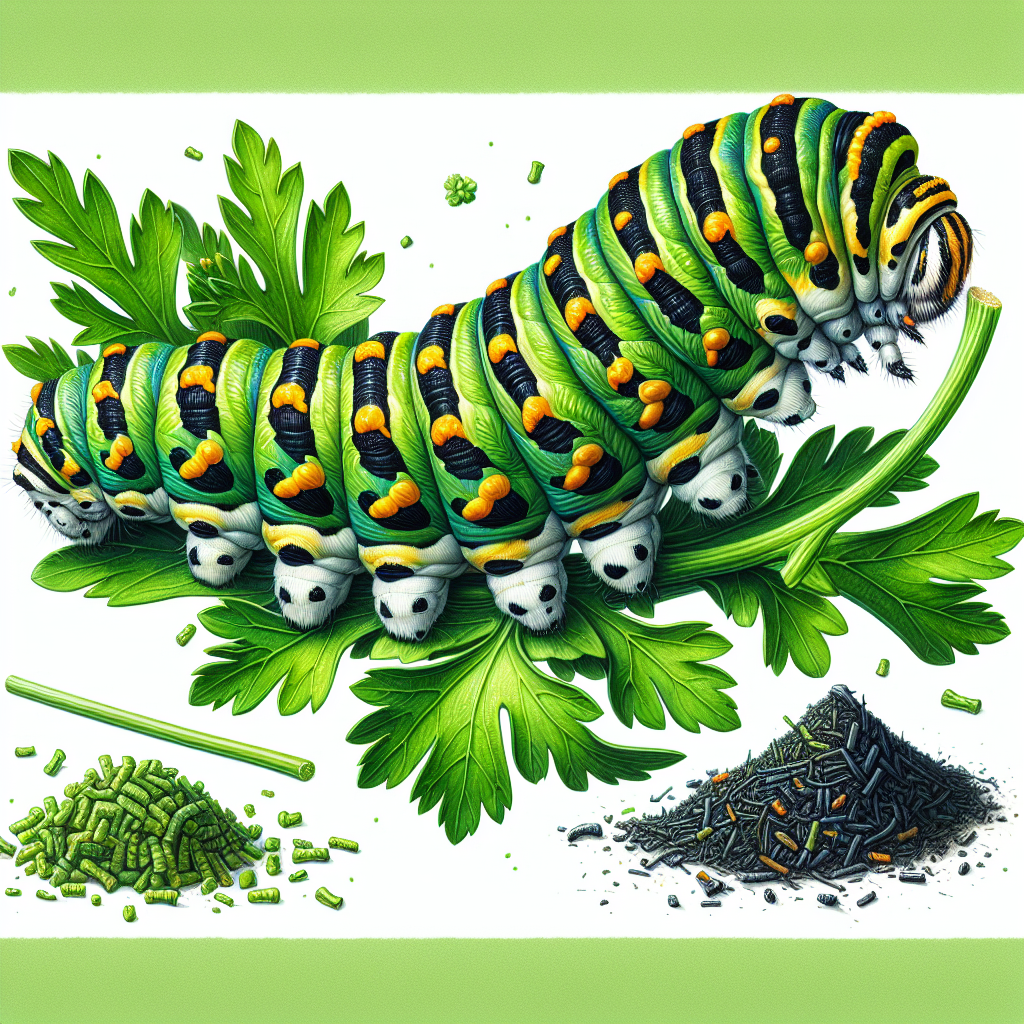
Introduction to Swallowtail larvae
Swallowtail larvae, the caterpillars of various Papilio butterfly species, are striking pests in agricultural and garden settings. These larvae, belonging to genera like Papilio glaucus (eastern tiger swallowtail) and Papilio polyxenes (black swallowtail), are known for their bird-dropping mimicry in early instars, transitioning to vibrant green or brown forms with eye-like spots later. Gardeners and farmers often encounter them on umbelliferous crops such as dill, parsley, fennel, and carrot family plants, as well as citrus in warmer regions. Though adult butterflies are vital pollinators, the larval stage poses a threat by voraciously consuming foliage, potentially defoliating entire plants if populations surge.
In commercial herb production or home gardens, swallowtail larvae can reduce yields by 30-50% in severe cases, particularly during peak egg-laying periods in spring and summer. Their damage is most pronounced on young transplants and tender growth, where rapid feeding leads to stunted development. Understanding their biology is key to effective management, as these larvae are resilient and can rapidly progress through five instars, each hungrier than the last. This comprehensive guide equips growers with diagnostic tools, lifecycle insights, organic controls, and prevention tactics to protect crops like parsley, dill (related herb), and citrus varieties while preserving ecological balance.
Early detection is crucial, as small infestations can explode in warm, humid conditions. Unlike generalist caterpillars, swallowtails are specialists, limiting their impact but making targeted controls highly effective. For small farms, integrating these strategies can minimize losses without synthetic pesticides. Check out this Spring Pest Patrol: Organic AI Strategies to Shield Your Crops from Common Invaders for broader pest management tips.
Identifying Symptoms & Damage
Swallowtail larvae damage manifests as skeletonized leaves, where only veins remain after selective feeding on soft tissues. Early signs include small holes in leaflets, progressing to complete defoliation on heavily infested plants. Look for fresh frass (dark green droppings) beneath plants, a telltale indicator of active feeding. Larvae often rest boldly on leaf undersides or stems during the day, camouflaged as feces in early stages or sporting white, yellow, and black saddle-like markings later.
On herbs like fennel or parsley, expect rapid stripping of tender shoots, leaving bare stems. Citrus growers may notice edge-feeding on new flushes, weakening trees and reducing fruit set. Differentiate from other pests: unlike cabbage worms, swallowtail larvae avoid brassicas; their frass is larger and more granular than aphids honeydew. Use a hand lens to confirm: early instars are black with white saddle, later ones green with orange horns that emit a foul odor when disturbed.
Severity scales with infestation density—single larvae per plant cause minor cosmetic damage, but clusters of 5+ can devastate seedlings. Scout weekly by flipping leaves and checking stems. Yellowing or wilting often follows heavy feeding, mimicking leaf spot diseases. Photograph suspects for identification, as misdiagnosis leads to ineffective treatments. In orchards, monitor lower canopy first, as females lay eggs on understory growth.
Lifecycle and Progression of Swallowtail larvae
Swallowtail larvae complete their lifecycle in 3-6 weeks, depending on temperature and host quality. Adults emerge in spring, laying yellow or orange eggs singly on host leaves. Eggs hatch in 4-10 days into tiny, bird-poop mimics that feed minimally. First instar lasts 3-5 days, followed by four more, each doubling in size and appetite. By the fifth instar (2-3 cm long), they consume entire leaves rapidly.
Pupation occurs on host stems or nearby structures, forming a silk girdle-secured chrysalis that overwinters in temperate zones. In tropics, multiple generations (2-4 per year) occur. Peak activity aligns with host flushing: spring for herbs, summer for citrus. Females prefer isolated plants for oviposition, explaining clustered damage.
Understanding progression aids timing interventions—target eggs and young larvae for best results, as mature ones are harder to control. Lifecycle interruptions via host removal break cycles effectively.
Environmental Triggers & Risk Factors
Warm temperatures (20-30°C) and high humidity trigger egg-laying and rapid development. Over-fertilized, nitrogen-rich plants attract females, as lush growth signals quality hosts. Monocultures of dill, parsley, or fennel amplify risks, as do weedy borders harboring wild hosts like Queen Anne's lace.
Companion planting with non-hosts reduces appeal, but proximity to native stands increases migration. Drought-stressed plants suffer more, as larvae prefer tender tissue. In citrus groves, overlapping with citrus leafminer exacerbates damage through shared wounds. Soil moisture above 60% field capacity speeds larval growth. Risk peaks in USDA zones 7-10 during April-June and August-September.
Organic Control & Treatment Plans
Handpicking is the gold standard for small infestations—wear gloves, drop larvae into soapy water. For larger areas, apply Bacillus thuringiensis (Bt) var. kurstaki weekly at dusk, targeting young larvae (efficacy >90% on instars 1-3). Neem oil (azadirachtin 0.03%) disrupts feeding and molting; apply 2-3x, 7 days apart, avoiding bloom to protect pollinators.
Introduce natural enemies: paper wasps, tachinid flies, and ladybugs prey on larvae. Plant nasturtium as trap crop to lure females away. Horticultural oils smother eggs/larvae; spinosad offers low-residue control for organics. Avoid broad-spectrum sprays to preserve whiteflies predators.
Integrated plan: Scout weekly, prune infested tips, apply Bt/neem at first sighting, monitor 2 weeks post-treatment. Rotate hosts and till soil to expose pupae. For citrus, reflective mulches deter oviposition.
Preventing Swallowtail larvae in the Future
Prevent via crop rotation (2-3 years off Apiaceae), row covers (0.25mm mesh) during egg-lay peaks, and yellow sticky traps for adults. Interplant with repellents like garlic or onions (garlic). Maintain plant vigor without excess N; diversify gardens to dilute hosts. Remove wild Apiaceae nearby. For more on companion strategies, see Why Companion Planting Feels Like Guesswork for Small Farms - And How AI Makes It Foolproof. Monitor with pheromone traps in high-risk areas; encourage birds with perches.
Crops Most Affected by Swallowtail larvae
Primary targets: parsley, dill, fennel, celery, parsnip (Apiaceae); rue, citrus (orange, lemon). Secondary: carrot tops, lovage. Herbs suffer most in gardens; citrus in orchards. Avoid planting these in isolation. Related pests like hornworms hit tomatoes (tomato).