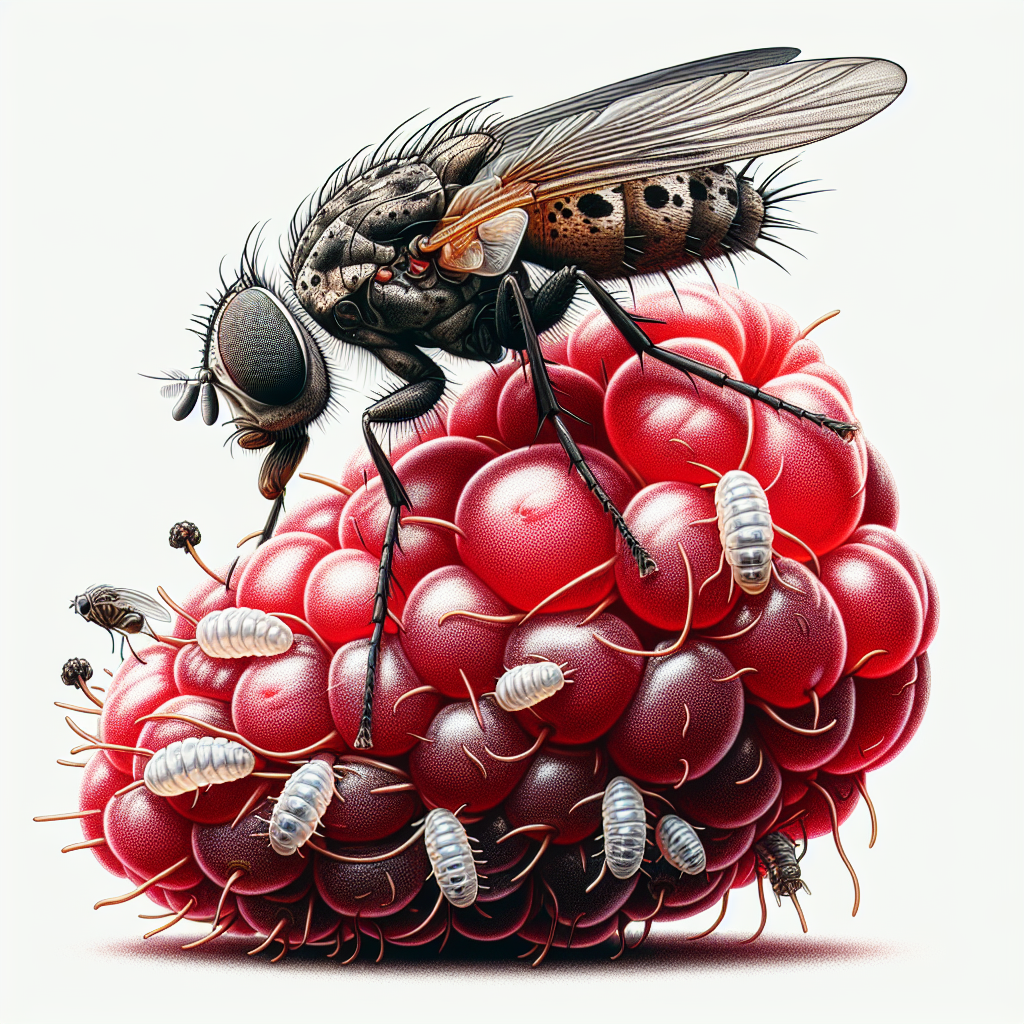
Introduction to Spotted wing drosophila
Spotted wing drosophila (SWD), scientifically known as Drosophila suzukii, represents one of the most devastating pests in modern fruit production. Native to Southeast Asia, this invasive fly was first detected in the United States in 2008 and has since spread across North America, Europe, and South America, decimating crops like strawberry, raspberry, blueberry, cherry, and blackberry. What sets SWD apart from common vinegar flies is its ability to target ripe, marketable fruit rather than just overripe or damaged produce.
Adult females possess a distinctly serrated ovipositor, enabling them to pierce the skin of sound, ripening fruits and deposit eggs directly inside. Larvae hatch and feed internally, rendering fruit unmarketable and facilitating secondary infections from bacteria or fungi. Economic impacts are staggering: in the U.S. alone, SWD causes annual losses exceeding $500 million, particularly in small and organic farms where chemical controls are limited. Early detection and integrated management are critical, as populations can explode under warm, humid conditions. This guide equips growers with professional-grade diagnostics, lifecycle knowledge, organic treatments, and prevention strategies to safeguard yields. For real-world case studies on timing interventions, check this insightful blog post on pest timing.
Identifying Symptoms & Damage
Spotting SWD infestations early is essential for minimizing crop loss. Unlike typical Drosophila species that scavenge fermented fruit, SWD attacks healthy, intact berries and stone fruits at the ripe stage. Key symptoms include:
- Small puncture wounds: Tiny, 0.2-0.3 mm scars on fruit skin from female ovipositor insertion, often clustered around the fruit's equator.
- Larval presence: White, legless maggots (up to 3-4 mm long) visible inside fruit when split open. Infested berries soften rapidly, leak juice, and collapse.
- Discoloration and rot: Fruits turn dark, mushy, and may ooze fluid, attracting secondary pests like ants or sap beetles.
- Adult flies: Males have distinctive wing spots (one per wing); females lack spots but have a large, serrated ovipositor. Both are 2-3 mm long, red-eyed, with tan bodies.
To confirm infestation, use a salt flotation test: Dissolve 1 cup salt in 1 gallon water, submerge suspect fruit for 10-15 minutes—larvae will float to the surface. Damage thresholds vary: in strawberry, even 1-2% infestation can lead to total rejection by packers. In cherries, larvae cause 'pitting' and internal breakdown. Monitor high-risk areas like field edges near woods or wild hosts such as wild blackberries or elderberries.
Lifecycle and Progression of Spotted wing drosophila
Understanding the SWD lifecycle is key to timing interventions. Under optimal conditions (20-25°C), one generation completes in 10-14 days, allowing 10-15 generations per season in temperate climates.
- Eggs: Females lay 200-300 eggs singly or in clusters inside fruit. Eggs are white, banana-shaped (0.5 mm), hatching in 12-72 hours.
- Larvae: Three instars feed for 3-6 days, tunneling through fruit pulp and producing ammonia odors.
- Pupae: Larvae exit fruit to pupate in soil or on fruit surface; pupal stage lasts 3-5 days.
- Adults: Emerge ready to mate; live 2-9 weeks, with females producing 5-15 eggs daily. Overwinter as adults in sheltered sites.
Population peaks coincide with fruit ripening. In cooler springs, development slows; summer heat accelerates it. Track degree-days (base 7°C) for predictions: adults active above 280 DD, oviposition above 500 DD.
Environmental Triggers & Risk Factors
SWD thrives in warm (15-30°C), humid environments with abundant ripening fruit. Key triggers include:
- Temperature: Optimal 20-25°C; extremes above 32°C or below 10°C suppress activity.
- Humidity: Prefers >60% RH for egg survival and adult dispersal.
- Host availability: Proximity to wild fruits like Himalayan blackberry or Asian bush honeysuckle.
- Farm practices: Overripe fruit left in fields, dense canopies retaining moisture, or late-maturing cultivars.
Risk is highest in late summer when multiple fruit crops overlap. Windless, rainy weather aids short-distance flight (up to 1-2 km). Soil type matters minimally, but organic matter-rich soils favor pupal survival. Climate change extends seasons, increasing overlap with crops like late blueberry varieties.
Organic Control & Treatment Plans
Organic management relies on monitoring, sanitation, cultural controls, and biological agents. Avoid broad-spectrum insecticides to preserve predators.
Monitoring
Install sticky traps baited with apple cider vinegar + surfactant (e.g., 10 traps/acre). Threshold: 1 male/5 traps or any females.
Sanitation
Harvest all ripe fruit promptly; drop unmarketable fruit into 5% salt brine (kill larvae, deter adults). Double-cover crops with fine mesh (0.6 mm) excludes flies.
Cultural Controls
- Plant resistant varieties (e.g., early strawberry like 'Seascape').
- Prune for airflow; mulch to bury pupae.
- Use reflective mulches to deter adults.
Biological Controls
Encourage parasitoids like Ganaspidium wasps or predators like ground beetles. Apply Spinosad (OMRI-listed) at 7-10 day intervals when thresholds hit; rotate with pyrethrins. Neem oil suppresses oviposition.
Treatment Schedule
- Pre-bloom: Trap monitoring.
- Bloom/early fruit: Sanitation + exclusion nets.
- Ripening: Biopesticides if >1 fly/trap.
Integrated plans reduce populations 70-90% in trials.
Preventing Spotted wing drosophila in the Future
Prevention beats cure. Start with site selection away from wild hosts. Use border sprays of protein hydrolysate baits. Rotate maturities to avoid peaks. Post-harvest, disk soil to expose pupae to predators. For more on proactive pest strategies, see Spring Pest Patrol. Scout weekly; remove wild brambles within 500m. Cold storage (below 0°C) kills eggs/larvae in harvested fruit. Long-term, breed resistant cultivars and enhance biodiversity with flowering hedges attracting beneficials like hoverflies.
Crops Most Affected by Spotted wing drosophila
SWD targets thin-skinned, sugar-rich fruits:
| Crop | Susceptibility | Key Varieties Affected |
|---|---|---|
| Strawberry | High | Albion, Chandler |
| Raspberry | High | Heritage, Meeker |
| Blackberry | High | Triple Crown, Chester |
| Blueberry | High | Bluecrop, Duke |
| Cherry | High | Bing, Rainier |
| Peach | Moderate | Elberta, Redhaven |
| Plum | Moderate | Santa Rosa |
| Grape | Low-Moderate | Thompson Seedless |
Other hosts: tomato, eggplant. Focus IPM on top berries/stones.