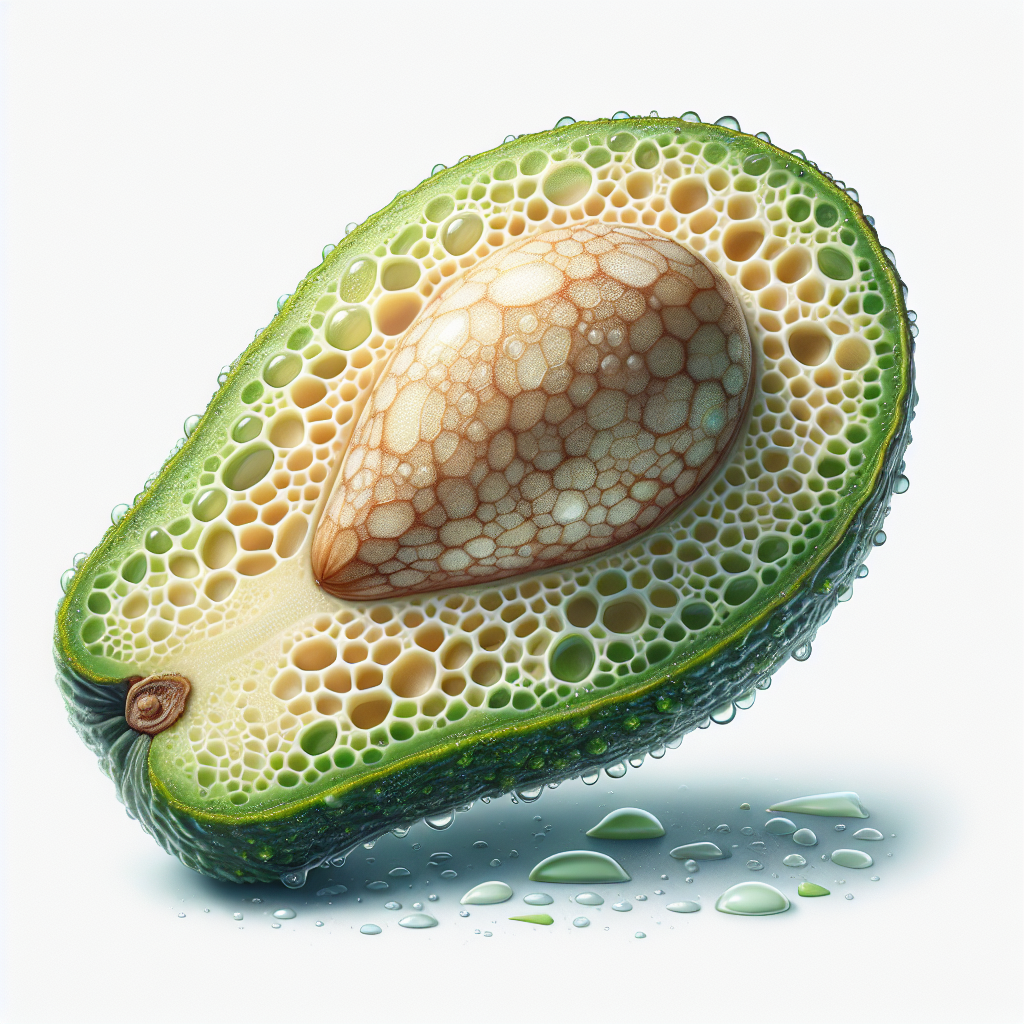
Introduction to Spongy Tissues
Spongy Tissues represents one of the most economically damaging disorders in avocado production, particularly notorious in cultivars like Hass Avocado and Fuerte Avocado. First identified in the 1970s in California and later in Mexico, Peru, and Australia, this condition transforms firm, creamy fruit flesh into a pale, watery, sponge-like mass that collapses under slight pressure. Unlike vascular diseases or pest damage, Spongy Tissues primarily manifests internally, often evading detection until harvest or postharvest inspection.
The disorder's name derives from the fruit's altered cellular structure, where large intercellular spaces form due to disrupted water relations and ethylene accumulation. Yield losses can exceed 50% in severe outbreaks, with affected fruits unsuitable for fresh market, processing, or export. While not contagious like fungal rots, its physiological nature ties it closely to environmental stressors, making it a persistent challenge for subtropical fruit growers. Early diagnosis through cut tests and proactive management are crucial, as no chemical cures exist. This guide equips farmers with professional-grade tools for identification, organic control, and long-term prevention. For insights on optimizing small farm operations amid such challenges, see Why 80% of Small Farms Battle Weather Disasters - And How Hyper-Local AI Forecasts Can Save Your Harvest.
Identifying Symptoms & Damage
Visual diagnosis begins with external cues, though internal symptoms dominate. Affected fruits often appear normal-sized but may show slight skin shriveling or uneven ripening. The hallmark sign emerges upon slicing: the mesocarp (flesh) near the seed exhibits a pale yellow to white, translucent, watery appearance with numerous large air spaces, giving a 'spongy' feel when pressed. Healthy flesh is dense and buttery; spongy tissue compresses like a wet sponge, releasing excess liquid.
Progression varies by severity. Mild cases limit damage to 10-20% of flesh volume around the seed, while severe infections render 80%+ unusable. Advanced stages include off-flavors (fermented or alcoholic notes from anaerobic breakdown) and skin separation from flesh. Differentiate from Phytophthora root rot (external fruit rot, root decline) or anthracnose (dark lesions, spore masses). Conduct longitudinal cuts through 20-30 fruits per tree; incidence above 5% warrants action.
Damage extends beyond aesthetics. Spongy fruits fail postharvest quarantine tests, leading to rejection at packinghouses. Economic impact includes reduced packout (20-60% losses), lower prices for salvageable fruit, and tree stress predisposing to secondary issues like root-knot nematodes. In mango orchards, similar symptoms mimic jelly seed disorder, but avocado-specific sponginess confirms diagnosis. Monitor during fruit fill (4-8 months post-bloom) when symptoms peak.
Lifecycle and Progression of Spongy Tissues
Spongy Tissues lacks a true biological lifecycle, being a non-infectious physiological response. It initiates during rapid fruit growth phases under stress, typically 90-150 days after petal fall. Water imbalance causes mesocarp cells to expand excessively, lysing cell walls and forming lacunae (air pockets). Ethylene surges accelerate breakdown, mimicking over-ripening.
Progression unfolds in stages: Stage 1 (subclinical) - microscopic cell separation, undetectable. Stage 2 (early visible) - seed-proximal pallor on cut fruit. Stage 3 (moderate) - 30-50% spongy volume, slight external dullness. Stage 4 (severe) - fruit collapse, off-odors, total loss. Without intervention, 70% of affected fruits progress to Stage 4 within 2-4 weeks post-onset.
Seasonal patterns align with wet-dry cycles; symptoms amplify post-rain during heatwaves. Unlike Fusarium wilt, no pathogen dispersal occurs, but Phytophthora can invade compromised tissue, hastening decay. Tree-level spread happens via shared stressors, not vectors. Harvest timing critically influences progression—early picking halts advancement in mild cases.
Environmental Triggers & Risk Factors
High temperatures (above 32°C/90°F) combined with fluctuating soil moisture are primary triggers, disrupting xylem function and causing fruit water stress. Shallow irrigation followed by heavy rain creates anaerobic root zones, mirroring root rot conditions. Poor drainage in heavy clay soils exacerbates issues, as does excessive nitrogen promoting vegetative growth over fruit quality.
Risk factors include cultivar susceptibility (Hass Avocado > Fuerte), young orchards (<5 years), and high-density planting limiting airflow. Saline irrigation water (>1.5 dS/m) and low humidity swings (<40% RH) compound risks. Co-infections with mites or aphids via honeydew stress plants further. Map high-risk zones using soil probes and tensiometers; thresholds: soil EC >2.0 dS/m, moisture deficit >20 kPa.
Climate change intensifies outbreaks, with erratic rains and heat domes reported in 30% more cases since 2010. Over-fertilization (N >200 kg/ha/year) correlates with 2x incidence.
Organic Control & Treatment Plans
No curative treatments exist; focus on symptom mitigation and salvage. For mild cases (<20% incidence), early harvest (2-4 weeks ahead) preserves marginally affected fruit for local markets. Prune water sprouts to redirect energy, reducing tree stress by 25%. Apply stress-busting biostimulants: seaweed extracts (1-2 L/ha foliar, weekly) and humic acids (5-10 kg/ha soil drench) improve cell integrity.
Cultural controls dominate: deficit irrigation during fruit fill (reduce to 70% ETc) prevents overhydration. Mulch with 10 cm organic matter to stabilize soil moisture. Introduce Thai Basil as companion plants for microclimate moderation. Biologicals like Trichoderma (10^9 CFU/g, 5 kg/ha) suppress secondary Phytophthora. Postharvest, dip in 1% calcium hydroxide (organic-approved) to firm remaining flesh.
Integrated plan: Week 1 - scout/cut-test 10% crop. Week 2-4 - biostimulants + irrigation audit. Monitor powdery mildew as cofactor. Success rates: 40-60% salvage with timely action.
Preventing Spongy Tissues in the Future
Prevention hinges on site selection and irrigation mastery. Plant on well-drained slopes (mound to 30 cm height), avoiding basins. Install drip systems with tensiometers, targeting 10-20 kPa tension during fruit sizing. Balance nutrition: N:P:K 1:0.5:1.5, calcium >150 ppm via gypsum (2 t/ha pre-plant).
Grafted rootstocks like Dusa or VC 801 resist stress better than standard seedling. Crop load management—thin to 200-300 fruits/tree—cuts incidence 50%. Cover crops (clover) enhance soil structure. Annual audits: soil tests, drainage checks. Rotate with ghost pepper or cover crops to break stress cycles. Long-term: 80% reduction via consistent practices.
Crops Most Affected by Spongy Tissues
Avocados dominate (90% cases), especially Hass (60-80% susceptibility), Fuerte (40-60%), and Reed. Minor reports in mango (jelly endosperm) and dragon fruit (pulp softening). Tropical fruits like papaya show analogs under saline stress. Global hotspots: Mexico (Michoacán), California (Ventura), Peru (La Libertad), Australia (Queensland). Perennial crops with high water demand suffer most; annuals like tomato rarely affected.