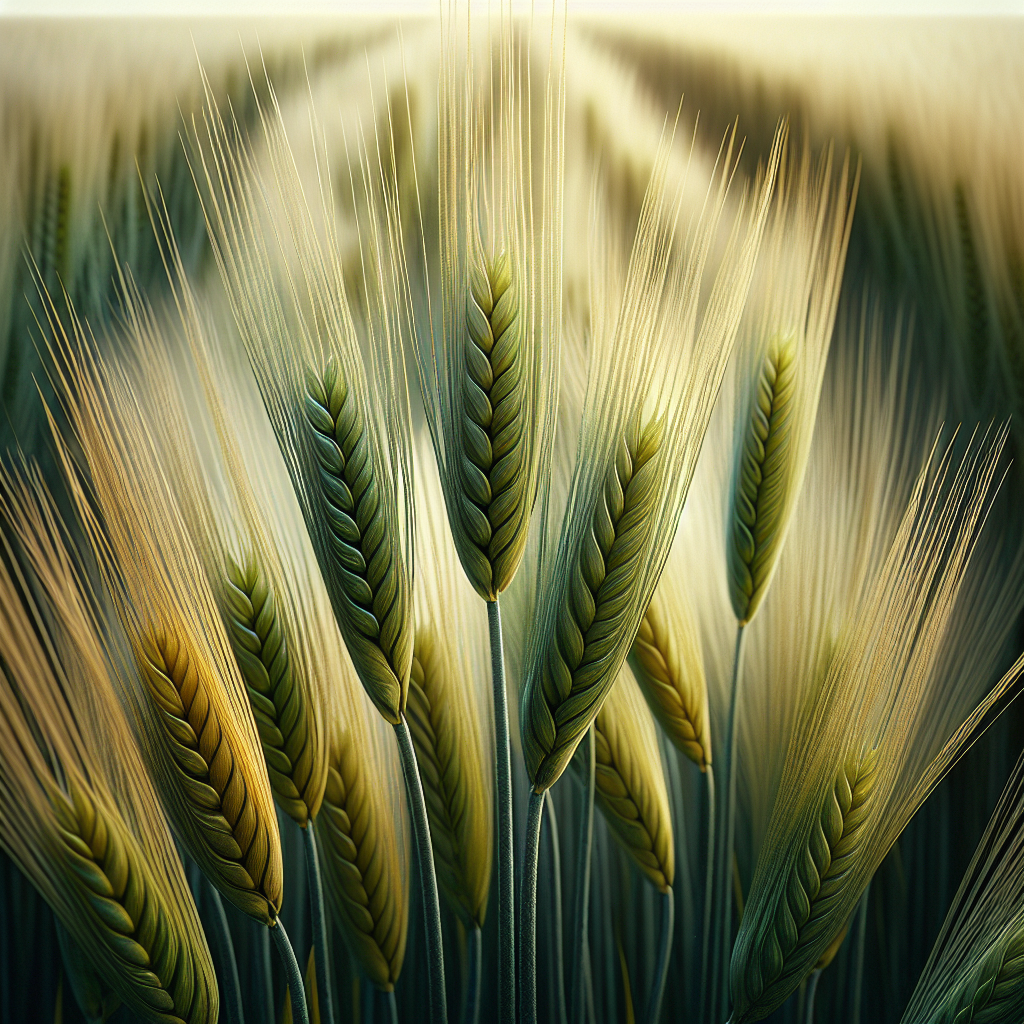
Introduction to Six-Row Barley
A classic cool-season cereal, this barley type is identified by the fertility of all three spikelets at each rachis node, producing six visible rows of grain on the seed head rather than the two rows seen in two-row forms. That structural difference matters agronomically: six-row types often produce more, smaller kernels per head, typically with higher protein and slightly lower starch concentration than two-row types, making them especially important in feed systems and in some traditional North American malting programs.
Historically, six-row barley became deeply established in temperate grain belts because of its broad adaptation, dependable stand establishment, and tolerance of variable soils. It has long been used for livestock feed, green chop, grazing, straw, and brewing. In rotation planning, it also serves as a useful break crop from broadleaf species and can be compared with other temperate cereals such as wheat when evaluating disease cycles, planting windows, and residue behavior.
For growers, the main strengths are fast early growth, modest water demand compared with many grain crops, and the ability to perform in short growing seasons. Its main weaknesses are sensitivity to prolonged waterlogging, vulnerability to lodging under excess nitrogen, and grain quality losses when heat or rain strike during heading and ripening. The most successful production systems focus on uniform emergence, restrained but adequate fertility, and keeping the crop healthy from tillering through grain fill.
Botanical Profile of Six-Row Barley
This crop is an annual grass in the Poaceae family. It produces fibrous roots, hollow culms, alternately arranged leaves, and a terminal inflorescence known as a spike. The defining feature is the ear architecture: at each node of the central stem axis, all three spikelets are fertile, so grains develop in six longitudinal ranks around the head.
Plants generally grow 60 to 120 cm tall depending on cultivar, fertility, moisture, and whether the crop is spring- or winter-sown. Leaves are bluish green to medium green, often glaucous with a waxy bloom that helps limit water loss. Auricles clasp the stem strongly, which helps distinguish barley from oats and some wheats in the vegetative stage. The ligule is relatively short and membranous.
Growth proceeds through distinct cereal stages: germination, seedling establishment, tillering, stem elongation, booting, heading, anthesis, grain fill, and maturity. Tillering is critical because it determines how many productive stems survive to set grain. Under good conditions, one plant can produce several tillers, but only a fraction may become grain-bearing heads if nutrition or moisture becomes limiting.
Six-row types are often selected for higher head fertility, strong early vigor, and resilience in less-than-ideal production environments. Compared with two-row barley, heads may appear more compact and symmetrical. Kernel size tends to be less uniform, and screenings can increase if fertility is excessive, drought hits during grain fill, or disease reduces photosynthetic area.
Botanically, barley is one of the earliest domesticated cereals, with origins in the Fertile Crescent. Its long cultivation history explains its remarkable diversity in awn type, hull adherence, growth habit, and end-use quality. Most six-row grain grown commercially is hulled, meaning the hull remains tightly attached to the kernel after threshing.
Soil, pH, and Climate Requirements for Six-Row Barley
This crop performs best in well-drained loam, silt loam, clay loam, or fertile sandy loam with good structure and moderate water-holding capacity. Ideal soils allow rapid germination yet retain enough moisture to support early tillering. Compacted layers, persistent surface crusting, and poor internal drainage sharply reduce root exploration and increase disease pressure.
The preferred soil pH is 6.0 to 7.5, with an optimum often around 6.3 to 7.0. It tolerates mildly alkaline ground better than many legumes, but strong acidity below pH 5.5 can limit root growth and nutrient availability, especially phosphorus. Acid soils may also intensify manganese or aluminum stress. If liming is needed, apply and incorporate lime well before sowing so pH adjustment stabilizes in the root zone.
Climate should be cool to mild during vegetative growth and dry to moderately dry during ripening. The best temperature range for establishment is roughly 12 to 20°C. Seed can germinate in cool soils near 1 to 3°C, but emergence is faster and more uniform above 8°C. During stem elongation and heading, prolonged heat above 27 to 30°C can shorten grain fill and reduce test weight. Frost tolerance depends on growth stage and growth habit: hardened winter forms tolerate more cold than spring forms, while heads are highly vulnerable once reproductive tissue is exposed.
Rainfall requirements are moderate. A seasonal total of roughly 300 to 500 mm can produce acceptable grain in many regions if moisture is well distributed. Highest water demand occurs from late tillering through boot stage and into early grain fill. Drought during these stages reduces head size, kernels per spike, and final grain plumpness. Conversely, saturated soil for more than 48 to 72 hours in active growth can deprive roots of oxygen, encourage root rots, and produce pale, stunted plants.
For practical moisture management, aim to keep the upper 15 to 30 cm of soil evenly moist, not saturated, from sowing through establishment. In field terms, soil should crumble when pressed, not smear into a sticky ribbon or collapse into dust. Overwatering signs include yellowing lower leaves, slow growth despite available nutrients, shallow rooting, algae on the surface, a sour odor in low spots, and plants that pull easily because roots are damaged. Underwatering signs include bluish cast to leaves, reduced tillering, midday leaf rolling in warm weather, and heads with many pinched kernels.
Avoid fields with severe salinity, especially where salts accumulate at the surface during germination. Barley has moderate salt tolerance compared with some cereals, but stand establishment still drops sharply if the seed zone is saline and dry.
Step-by-Step Planting & Propagation
Propagation is by seed only, and success begins with certified, cleaned seed of an adapted cultivar. Select a spring or winter habit according to your region. Winter forms are planted in autumn where winters are suitable; spring forms are sown as soon as soils can be worked in late winter or early spring.
Prepare the field so the seedbed is firm, level, and fine enough for good seed-to-soil contact. Large clods create uneven depth and irregular emergence. In reduced-till systems, residue should be evenly distributed and not matted over the row.
Test the soil before planting. Base phosphorus and potassium applications on laboratory results, and avoid guessing with nitrogen. Excess fertility is one of the fastest ways to create lush, weak straw and lodging.
Control weeds before sowing. Barley is competitive after canopy closure but less forgiving during the first few weeks. A stale seedbed, shallow preplant cultivation, or a preceding smother crop can greatly improve early-season cleanliness.
Calibrate seeding rate carefully. Typical grain production rates are about 80 to 120 kg seed per hectare, but final rate should be adjusted for thousand-kernel weight, germination percentage, target plants per square meter, planting date, and moisture regime. Later sowings usually need slightly higher rates because tillering potential drops.
Sow to a depth of 2.5 to 4 cm in most mineral soils. Use the shallower end in heavy, cool soils and the deeper end in lighter soils or when the surface is drying. Planting deeper than about 5 cm often delays emergence and weakens seedlings.
Use row spacing of 15 to 20 cm for standard grain production. Narrow rows close canopy faster and improve weed suppression, while wider rows may be used in low-rainfall systems or where mechanical inter-row management is planned.
After drilling, ensure the soil is firm around the seed. A lightly packed seedbed helps retain moisture and produces more even emergence.
If irrigation is available and the seed zone is dry, apply a light irrigation after sowing to wet the top 5 to 8 cm evenly. Avoid heavy irrigation that crusts the surface or floods low areas.
Expected emergence is usually 5 to 10 days in warm early spring conditions and 10 to 20 days in colder soils. Uniformity matters more than speed; a field emerging over 3 days generally performs better than one stretched over 2 weeks.
For growers improving broader grain rotations and soil resilience, crop sequencing principles discussed in soil health strategies are especially useful when fitting barley after legumes or before heavy-feeding summer crops.
Care & Maintenance regimes for Six-Row Barley
Early management centers on stand counts, nutrient balance, and moisture conservation. Assess emergence when seedlings have one to two leaves. Thin, patchy stands often trace back to seeding too deep, seedling blight, crusting, or insect feeding. If stand loss is severe and growth stage is very early, replanting may be justified; otherwise, a slightly thinner but uniform stand can still compensate through tillering.
Nitrogen management should be deliberate. For modest-yield grain systems, total available nitrogen often falls in the 50 to 100 kg/ha range depending on soil reserves, previous crop, and yield target. Lower rates are preferred where lodging risk, high residual fertility, or malting quality considerations are important. Too little nitrogen causes pale leaves, weak tillering, and low protein only in severely deficient feed systems; too much produces rank growth, delayed maturity, and soft stems prone to flattening.
Phosphorus is especially important for root establishment and early vigor. Deficiency often shows as stunting and dull, dark foliage. Potassium supports water regulation and stem strength. Sulfur may be needed on sandy or low-organic-matter soils, particularly where rainfall leaches nutrients.
Water management depends on rainfall pattern and soil type. In irrigated production, total supplemental water commonly ranges from 75 to 200 mm. The most critical windows are crown root initiation, tillering, booting, and early grain fill. Irrigate when 40 to 50% of available water has been depleted from the active root zone rather than waiting for visible stress. As a practical rule, if the top 10 cm is dry and the 15 to 20 cm layer is only slightly moist, the crop is approaching a decision point on lighter soils. Avoid frequent shallow watering, which encourages shallow roots and disease.
Lodging prevention is a central maintenance task. Contributing factors include excessive nitrogen, dense stands, high-yield irrigated conditions, tall susceptible cultivars, and storms near grain fill. To reduce lodging, keep nitrogen moderate, avoid over-irrigating after stem elongation, and maintain balanced potassium. Once stems begin to lean broadly across the field, harvest becomes slower and grain quality declines rapidly.
Weed management is most important from emergence through early stem elongation. A vigorous stand is your first defense. Rotary hoeing or tine weeding can work in small-scale systems when timed at white-thread weed stage, but aggressive passes after the crop is well rooted can damage shallow roots in wet soil. Late weed escapes matter not only for competition but also because they contaminate harvested grain and raise drying costs.
Pests, Diseases & Organic Management
Common insect issues include aphids, armyworms, wireworms, cereal leaf beetle, and occasionally Hessian fly or grasshoppers depending on region. aphids are especially important because they can vector barley yellow dwarf virus. Scout weekly from seedling stage through heading by examining multiple locations across the field, including edges near grasses.
Organic prevention begins before planting: use clean seed, balanced fertility, good airflow, and rotations that break cereal-on-cereal cycles. Avoid planting adjacent to unmanaged grassy hosts where virus-carrying aphids can build. Encourage beneficial insects with habitat strips that include flowering species such as clover and yarrow nearby rather than within the dense grain stand.
Disease pressure varies by climate but commonly includes powdery mildew, net blotch, spot blotch, scald, rusts, Fusarium head blight, root rots, and smuts. Seed-borne diseases can be especially damaging because infection begins before the stand is established. Hot-water treatment is rarely practical on a farm scale for barley seed, so organic producers often rely on high-quality disease-free seed, long rotations, and field sanitation.
powdery mildew appears as white floury growth on leaves under cool, humid conditions with dense canopies. net blotch creates elongated brown lesions with net-like patterns. scald produces water-soaked lesions that bleach and spread under cool wet weather. Fusarium head blight is favored by humid flowering periods and can reduce yield while contaminating grain with mycotoxins.
For organic disease management, rotate out of cereals for at least two years where serious leaf or head disease is common, bury or speed decomposition of infected residue where appropriate, avoid excessive nitrogen, and select resistant cultivars whenever available. Improve airflow by avoiding overly lush stands. Irrigate early in the day if overhead systems are used, though furrow or sprinkler scheduling that minimizes prolonged leaf wetness is better.
smuts and bunts are managed primarily through seed health and rotation. root rots worsen in compacted or waterlogged ground; drainage correction is often more effective than any in-season intervention.
Bird feeding can become significant as heads mature, especially in small plots. Uniform larger blocks suffer less damage than narrow strips, and timely harvest is the best protection.
Harvesting, Curing & Optimal Storage
Harvest timing depends on end use, but grain is typically cut at full maturity when kernels are hard and straw has largely turned golden. Moisture at direct combining is ideally around 12 to 14.5%. Above this, grain can be harvested safely only if drying capacity is available soon after cutting. Delaying harvest too long increases shattering, lodging, weather staining, and pre-harvest sprouting in wet conditions.
To check readiness, press a kernel with a fingernail. At hard dough to mature stage, it should be firm and no longer milky. Heads should bend less, awns become dry, and green tissue should be limited mostly to the lowest stem portions if conditions are uneven.
For small-scale harvest, plants can be cut with a scythe or sickle, bundled, and shocked upright in the field to finish drying if weather is stable. Thresh only when grain is sufficiently dry to separate cleanly. If hand-harvested grain is still above safe storage moisture, spread it thinly in a shaded, well-ventilated area and stir regularly until moisture falls to about 12% for short-term storage or closer to 10 to 11% for long-term storage.
Clean grain thoroughly after threshing. Remove chaff, weed seeds, cracked kernels, and green material because these raise respiration and mold risk in storage. Store in cool, dry, rodent-proof bins. Grain temperature should ideally remain below 15°C for long-term holding, and lower is better. Aeration is valuable where humidity fluctuates.
Monitor stored grain every 2 to 3 weeks at first, then monthly. Warning signs of trouble include condensation under lids, sweet or sour odor, warm pockets in the bin, insect activity, or clumping. Because barley hulls can trap a little surface moisture, grain that seems dry externally may still heat if binned too soon after harvest.
Straw can be baled after adequate field drying. However, if the crop had Fusarium or other head diseases, use caution when feeding straw because dust and residues may affect livestock health.
Companion Planting for Six-Row Barley
In broadacre grain systems, companion planting usually means understory species, border strips, or rotation partners rather than close mixed planting intended for hand-garden culture. The best companions are species that support pollinators and beneficial insects, protect soil, or contribute nitrogen without aggressively competing during barley establishment.
Clover is one of the best companions when frost-seeded or underseeded lightly after the barley stand is established. It can fix nitrogen, reduce erosion, suppress later weeds after grain harvest, and leave a biologically active root system in the field. Keep seeding rates conservative so the understory does not compete strongly for moisture in dry springs.
Peas are valuable in rotation ahead of barley because they contribute residual nitrogen and often improve soil tilth, though they are usually better used as a preceding crop than an in-row companion in grain production. In mixed forage systems, barley-pea combinations can produce highly palatable silage or green chop if harvest occurs before the barley lodges.
yarrow and thyme are most useful on field margins, insectary strips, and nearby habitat plantings. They attract predatory insects and parasitoids that can help reduce aphid and caterpillar pressure. They should not be expected to transform pest pressure alone, but they are excellent pieces of a diversified organic system.
Avoid pairing the crop too closely with aggressive broadleaf companions that grow faster in spring and interfere with harvest uniformity. For grain production, the cleanest strategy is usually a monocrop stand with well-managed companion habitats on edges or a low-competition undersown legume that accelerates after grain harvest.