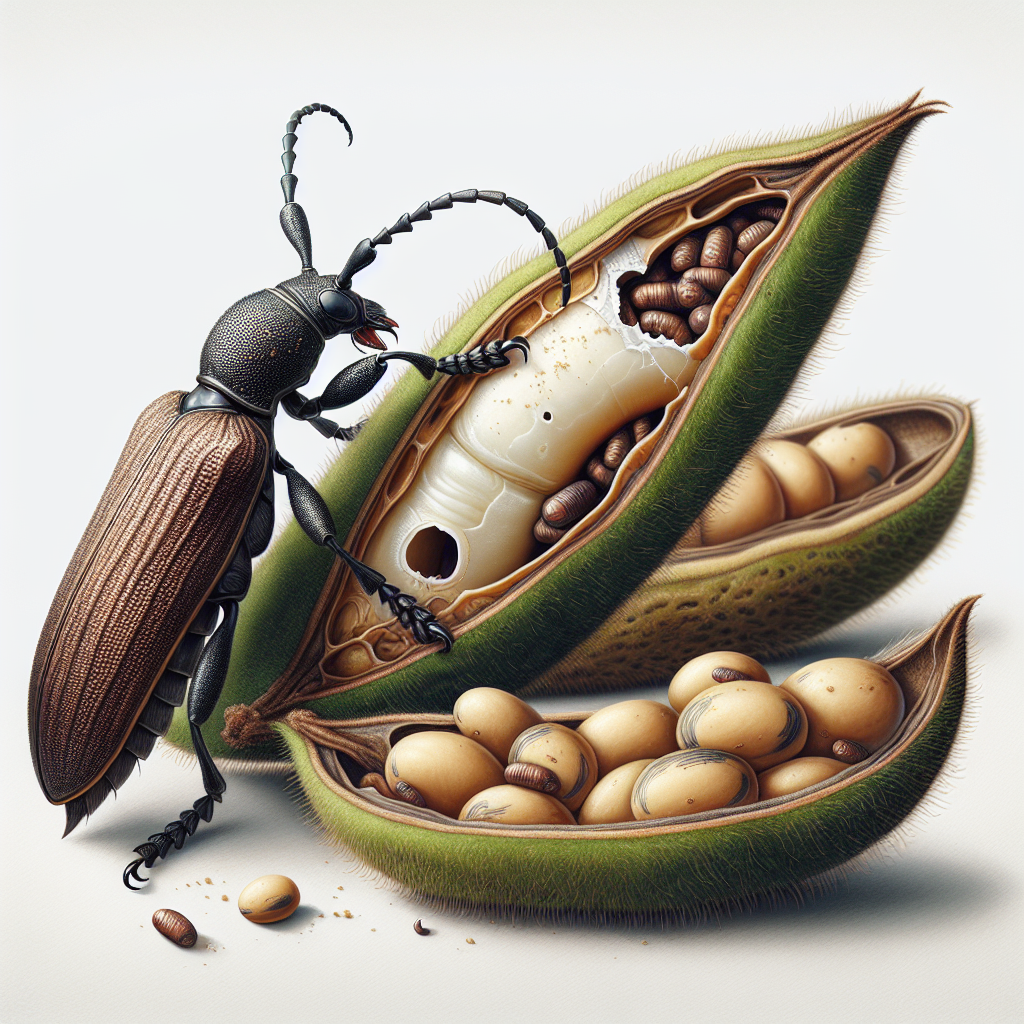
Introduction to Seed-feeding beetles
Seed-feeding beetles, commonly known as bruchids or bean weevils, represent a critical threat to global agriculture, particularly in legume and grain production. Belonging to the family Bruchidae, these pests infest developing seeds, rendering them unfit for consumption, planting, or sale. Farmers worldwide lose millions in revenue annually due to seed damage, with outbreaks devastating crops like soybeans, peas, and chickpeas. Understanding their biology and implementing targeted controls is essential for protecting yields.
These beetles are small, typically 2-5 mm long, with humpbacked bodies and long antennae. Adults emerge from infested seeds in storage or fields, seeking fresh pods to lay eggs. Unlike generalist beetles, seed-feeders specialize in leguminous seeds, making them a focused yet formidable adversary. Early detection prevents exponential population growth, as a single female can produce hundreds of offspring. This guide provides comprehensive diagnostics, lifecycle insights, and proven management strategies to safeguard your crops. For more on integrated pest management timing, check this insightful blog post.
Identifying Symptoms & Damage
Recognizing seed-feeding beetle damage early is key to minimizing losses. Adult beetles chew neat emergence holes in pods, but the real devastation occurs inside: larvae tunnel into seeds, leaving hollowed-out husks filled with frass (insect waste). Infested seeds appear shriveled, discolored, or riddled with 1-2 mm exit holes from which adults emerge.
Field symptoms include:
- Pods with small, round entry punctures where females laid eggs using their ovipositors.
- Premature pod drop or yellowing due to larval feeding stress.
- Reduced seed fill, with affected seeds weighing 50-90% less.
- Secondary infections from fungal blights entering through chew marks.
In storage, signs escalate: powdery frass around bins, rattling sounds from adult movement, and a musty odor from mold on damaged seeds. Severely infested batches can lose 30-100% viability. Differentiate from storage beetles by the characteristic 'H'-shaped exit hole on seeds. Use a float test: healthy seeds sink in water; infested ones float due to internal voids. Magnification reveals creamy-white larvae or pupae inside. Prompt inspection during pod fill stages (R5-R6 in soybeans) prevents spread to adjacent fields.
Lifecycle and Progression of Seed-feeding beetles
Seed-feeding beetles undergo complete metamorphosis: egg, larva, pupa, adult. Females lay 50-100 eggs singly on pod surfaces or directly into cracks, preferring young, tender pods. Eggs hatch in 5-10 days into legless larvae that bore into seeds, feeding on cotyledons for 2-6 weeks depending on species and temperature.
Larvae develop through 3-4 instars, molting inside the seed. The final instar pupates, forming a thin window for adult emergence. Adults live 1-2 weeks, mating immediately and seeking new hosts. There are 1-4 generations per season, with diapause (dormancy) in cooler climates allowing overwintering in seeds.
Peak activity aligns with crop flowering to pod set. For example, in cowpea weevils (Callosobruchus maculatus), development completes in 25 days at 30°C. Monitor using sticky traps or seed dissection. Lifecycle knowledge enables precise interventions, like pod treatments at egg-laying peaks. Related pests like bean weevils follow similar patterns but target stored grains.
Environmental Triggers & Risk Factors
Warm, humid conditions (25-35°C, 60-80% RH) accelerate seed-feeding beetle reproduction, with optimal outbreaks in tropical/subtropical regions. Risk spikes during prolonged rainy seasons, which soften pods for easier egg penetration. Poor field sanitation—leaving infested debris—provides reservoirs for reinfestation.
Crop-specific vulnerabilities include dense plantings reducing airflow and high-nitrogen soils promoting lush pods. Volunteer plants or weed hosts like clover harbor pests. Global trade spreads viable infested seeds, introducing new biotypes resistant to controls. Drought stress weakens plants, making seeds softer targets. Integrated with aphids, beetles exacerbate damage via honeydew-facilitated sooty molds. Risk mapping via historical data predicts hotspots; rotate with non-hosts like corn to disrupt cycles.
Organic Control & Treatment Plans
Organic management emphasizes prevention and biologicals over chemicals. Cultural Controls: Harvest early to disrupt larval development; destroy volunteer plants and border weeds. Deep plow post-harvest buries pupae. Solarize soil (cover with plastic in sun) kills overwintering stages.
Biological Controls: Release parasitic wasps like Anisopteromalus calandrae or Uscana mukerjii, which target larvae/pupae with 70-90% efficacy. Encourage native predators: birds, ants. Neem oil (azadirachtin) deters egg-laying; apply at 5-10 ml/L weekly during pod set.
Mechanical: Hand-pick adults in small plots; use burlap traps at plant bases. Vibratory plates shake beetles onto soapy water. Thresholds: Treat at 5-10% pod infestation.
Treatment Plan: Week 1: Scout and remove hotspots. Week 2-4: Neem + BT (Bacillus thuringiensis) sprays. Post-harvest: Clean seed with heat (50°C for 30 min) or sieve. Combine with trap crops like early cowpeas. Monitor efficacy via seed dissections. For spring strategies, see Spring Pest Patrol. Avoid root-knot nematodes confusion by focusing on pod symptoms.
Preventing Seed-feeding beetles in the Future
Long-term prevention builds resilient systems. Plant resistant varieties: e.g., 'Iron Clay' cowpea or early-maturing soybeans. Time sowing to avoid peak beetle flights (scout regional data). Intercrop with repellents like marigold or thyme, which mask host volatiles.
Crop rotation (2-3 years non-legumes) starves populations. Use seed protectants: diatomaceous earth coats or inert dusts abrade exoskeletons. Hermetic storage bags (e.g., PICS) suffocate adults via CO2 buildup. Field borders with nasturtium trap beetles. Regular scouting (weekly) with pheromone traps forecasts infestations. Clean equipment prevents spread. Educate on quarantine; inspect imports. Sustainable practices reduce reliance on inputs, yielding 20-40% higher net profits.
Crops Most Affected by Seed-feeding beetles
Seed-feeding beetles devastate legumes primarily, targeting protein-rich seeds. Top victims:
- Legumes: Soybeans (up to 50% loss), peas, chickpeas, lentils, mung beans, cowpeas.
- Grains/Pulses: Peanuts, pigeon peas.
- Vegetables: Beans (various), okra pods.
Secondary hosts include stored wheat and corn. Tropical crops like black pepper suffer pod infestations. Global staples like adzuki and fava beans report 20-80% damage in unmanaged fields. Prioritize monitoring in these high-risk crops.