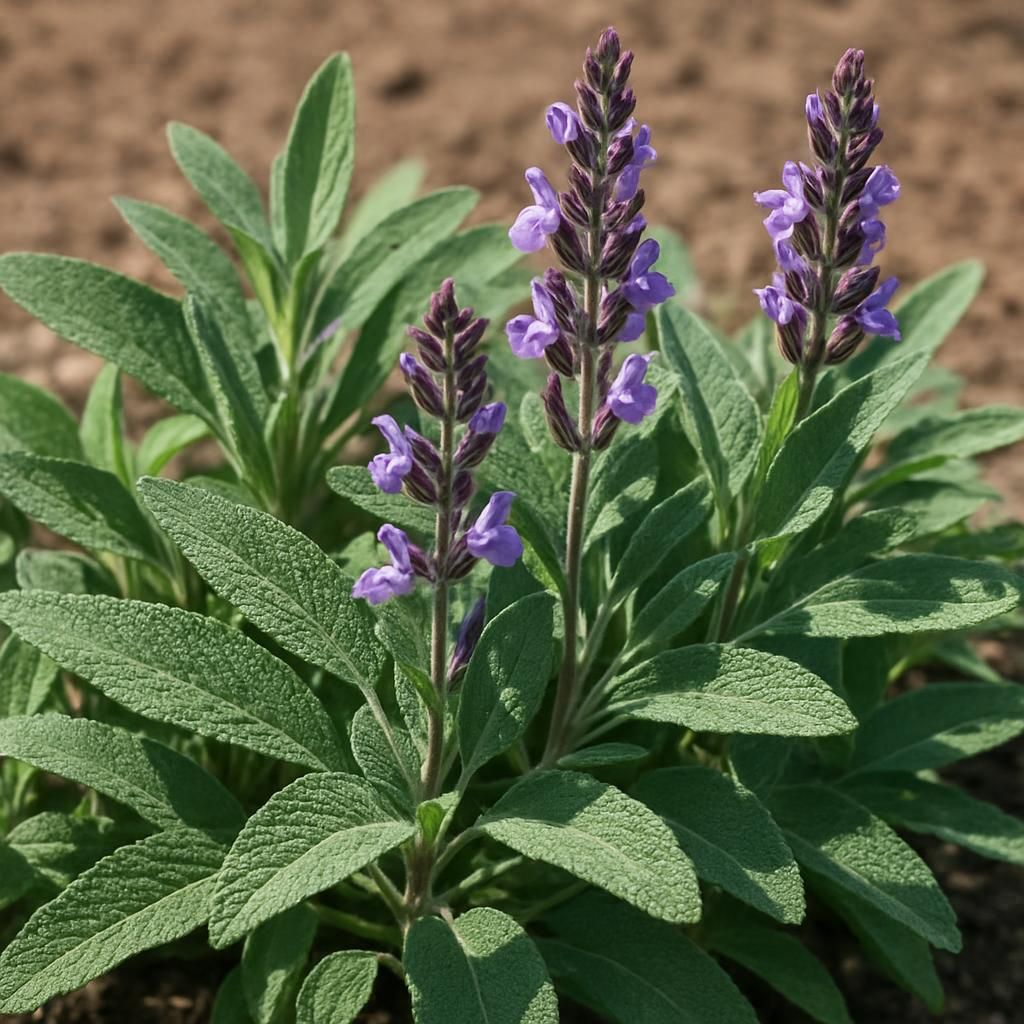
Introduction to Sage
Sage (Salvia officinalis) is a woody, evergreen perennial herb belonging to the mint family (Lamiaceae). Native to the Mediterranean region, it has been cultivated for thousands of years for its culinary flavor, medicinal properties, and ornamental appeal. The plant produces gray-green, textured leaves and spikes of purple, blue, or white flowers that attract pollinators. As a low-maintenance crop, sage is prized by small-scale farmers and commercial growers alike for its drought tolerance and versatility in both fresh and dried markets.
Botanical Profile of Sage
Sage is a subshrub that typically reaches 12–36 inches in height and spread. Its square stems support opposite, lance-shaped leaves covered in fine hairs that give them a silvery appearance. The plant produces tubular flowers in late spring to early summer, primarily in shades of violet-blue. Sage is a long-lived perennial in USDA zones 5–9, though it may be treated as an annual in colder climates. Its essential oils, including thujone and cineole, contribute to its distinctive aroma and flavor profile.
Soil, pH, and Climate Requirements for Sage
Sage performs best in sandy loam or well-drained soils with moderate fertility. Heavy clay soils should be amended with organic matter or raised beds to prevent waterlogging. The ideal pH range is 6.0–7.0, though sage tolerates slightly alkaline conditions up to 8.0.
| Parameter | Ideal Range | Notes |
|---|---|---|
| Soil Type | Sandy loam to loam | Excellent drainage essential |
| Soil pH | 6.0–7.0 | Tolerates up to 8.0 |
| Temperature Range | 60–80°F (15–27°C) | Frost hardy to 10°F (-12°C) |
| Sunlight | Full sun (6–8+ hours) | Partial shade reduces oil content |
| Annual Rainfall | 12–20 inches | Supplemental irrigation in dry periods |
| USDA Hardiness Zones | 5–9 | Protect young plants in zone 5 winters |
Step-by-Step Planting & Propagation
Sage is most commonly propagated from stem cuttings, division, or seed. For cuttings, select 4–6 inch healthy stems in spring or early summer, remove lower leaves, and root in moist perlite or sand. Division of established clumps should occur in early spring. Seeds can be started indoors 6–8 weeks before the last frost, though germination is slower and less uniform than vegetative methods. Transplant seedlings or rooted cuttings outdoors after hardening off when soil temperatures reach at least 55°F. Space plants 18–24 inches apart in rows 24–36 inches wide to allow for air circulation and mature spread.
Care & Maintenance regimes for Sage
Established sage plants require minimal intervention. Mulch with gravel or coarse organic matter to suppress weeds and retain soil warmth. Avoid over-fertilization, which can lead to leggy growth and reduced essential oil concentration.
| Task | Schedule | Details |
|---|---|---|
| Watering | Every 7–10 days once established | Deep, infrequent watering; allow soil to dry between irrigations |
| Fertilizer | Early spring and mid-summer | Light application of balanced organic fertilizer (5-5-5) or compost tea |
| Pruning | Spring and after flowering | Cut back one-third of growth to maintain shape and encourage bushiness |
| Mulching | Spring and fall | 2–3 inch layer of gravel or bark to control weeds and moderate soil temperature |
| Winter Protection | Late fall | Apply evergreen boughs or straw in zone 5–6; remove in spring |
Pests, Diseases & Organic Management
Sage is relatively resistant to pests but can be affected by Aphids, Spider Mites, and Thrips. Root rot caused by Pythium or Phytophthora occurs in poorly drained soils. Powdery mildew may appear in humid conditions with poor airflow. Organic controls include insecticidal soap for aphids and mites, neem oil for thrips, and cultural practices such as proper spacing and drip irrigation to reduce fungal pressure. Remove and destroy infected plant material promptly.
Harvesting, Curing & Optimal Storage
Harvest sage leaves once plants reach 8–12 inches tall, ideally in the morning when essential oil content is highest. For fresh use, cut stems just above a leaf node. For drying, harvest in mid-summer before flowering and hang bundles in a warm, dark, well-ventilated area for 1–2 weeks. Once fully dry, strip leaves from stems and store in airtight glass jars away from light and heat. Properly dried sage retains flavor for up to 12 months. Fresh leaves can be refrigerated in a damp paper towel for up to one week.
Companion Planting for Sage
Sage is an excellent companion for brassicas such as Cabbage, Broccoli, and Cauliflower, where it helps deter cabbage worms and imported cabbageworms. It also pairs well with Carrot, Strawberry, and Tomato, improving flavor and repelling certain pests. Avoid planting near Cucumber or Onion, as sage can inhibit their growth. Consider interplanting with Rosemary and Thyme for a Mediterranean herb bed that maximizes pollinator attraction and space efficiency.