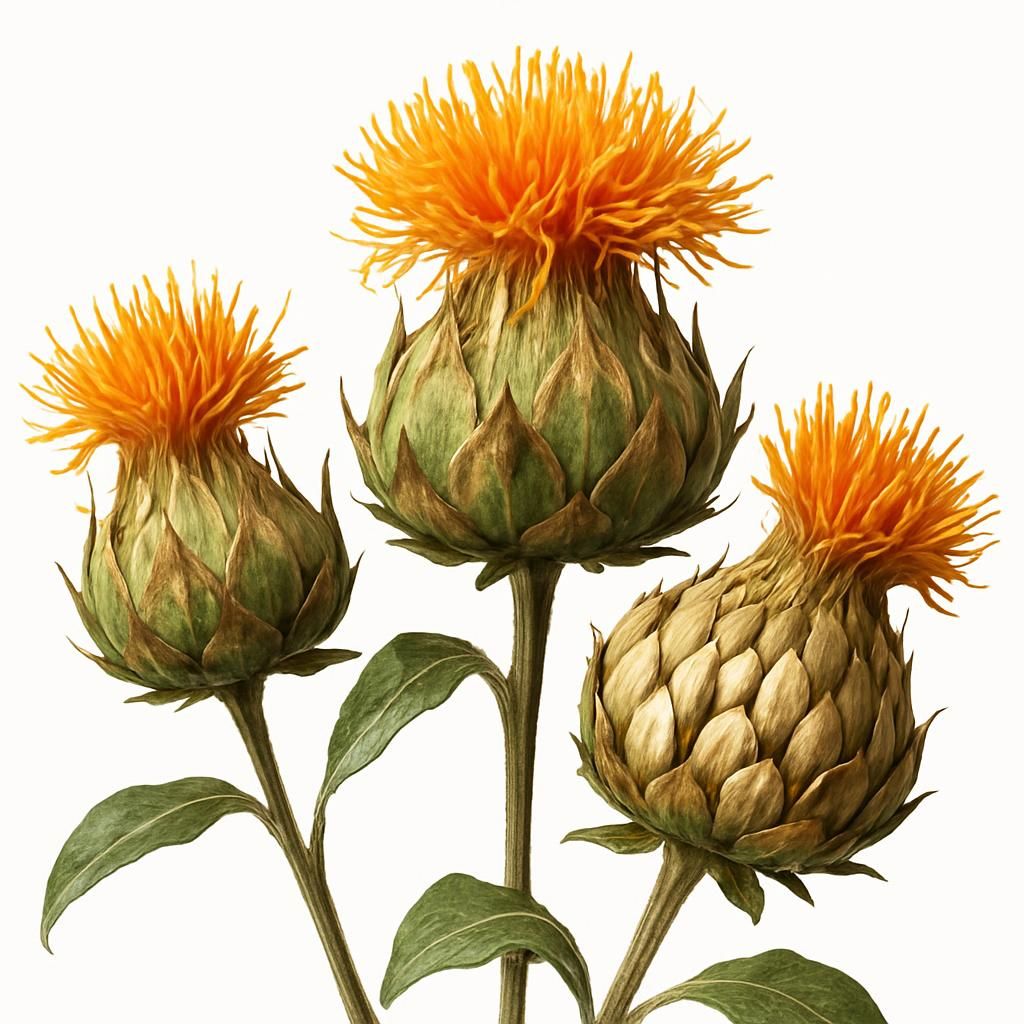
Introduction to Safflower Seed
Safflower (Carthamus tinctorius) is an ancient oilseed crop cultivated for its seeds, which yield a premium, high-oleic edible oil, and for its dried florets historically used as a saffron substitute. Modern production focuses on safflower seed oil for cooking, cosmetics, and biofuel, while the remaining meal serves as a high-protein livestock feed. The crop thrives in semi-arid regions where few other oilseeds can compete due to exceptional drought tolerance and heat resistance.
Commercial growers value safflower for its ability to break disease cycles in cereal rotations and its relatively low input requirements once established. Global production centers include India, the United States, Mexico, Kazakhstan, and Ethiopia. Whether grown for oil extraction, birdseed markets, or as a rotational cover, safflower delivers reliable returns on marginal lands when agronomic practices are optimized.
Botanical Profile of Safflower Seed
Safflower belongs to the Asteraceae family and exhibits a deep taproot system that can penetrate 1.5–2 meters, conferring excellent drought resistance. The plant produces multiple branching stems reaching 30–150 cm in height with spiny or spineless leaf margins depending on cultivar. Flower heads consist of numerous tubular florets that transition from yellow to orange-red as they mature.
Each capitulum contains 15–60 seeds with hull percentages ranging from 30–60% depending on variety. Seed oil content typically varies between 30–50%, with modern high-oleic cultivars exceeding 75% oleic acid. The crop is predominantly self-pollinating, although bees can enhance seed set in low-density plantings.
Soil, pH, and Climate Requirements for Safflower Seed
Safflower performs best on well-drained loam or sandy loam soils with good structure. It tolerates alkaline conditions but suffers under waterlogging or heavy clay soils that restrict root development.
| Parameter | Ideal Range | Notes |
|---|---|---|
| Soil pH | 6.0–8.0 | Tolerates up to 8.5; avoid below 5.5 |
| Soil Type | Loam to sandy loam | Requires excellent drainage |
| Temperature (Optimal) | 15–30 °C daytime | Frost sensitive below –2 °C |
| Annual Rainfall | 300–600 mm | Irrigation needed if <250 mm |
| Altitude | 0–1500 m | Higher altitudes delay maturity |
Step-by-Step Planting & Propagation
Select certified seed of regionally adapted varieties such as spineless types for easier harvest. Prepare a firm, weed-free seedbed by plowing or disking followed by harrowing. Sow when soil temperature at 5 cm depth reaches 10 °C or higher, typically 2–3 weeks after the last spring frost.
Drill seed 2.5–4 cm deep at rates of 15–25 kg/ha for oilseed varieties and 10–15 kg/ha for birdseed types. Row spacing of 30–45 cm allows mechanical cultivation while maintaining plant populations of 200,000–400,000 plants per hectare. In dryland systems, wider rows (50–75 cm) conserve moisture.
Care & Maintenance regimes for Safflower Seed
Safflower requires minimal intervention after establishment but benefits from timely weed control and balanced fertility. The following table outlines standard management schedules.
| Growth Stage | Irrigation Schedule | Fertilizer Application | Pruning / Other Care |
|---|---|---|---|
| Pre-plant | None | 40–60 kg N/ha + 20–30 kg P2O5 | Incorporate residue; apply pre-emergence herbicide |
| Vegetative (0–45 days) | 1–2 light irrigations if rainfall <20 mm/week | Side-dress 20–30 kg N at 4–6 leaf stage | Scout for weeds; cultivate between rows |
| Flowering (45–75 days) | Avoid stress; maintain 50% field capacity | Minimal additional N; foliar micronutrients if deficient | Monitor for aphids and thrips |
| Seed Fill (75–110 days) | Reduce irrigation 2 weeks before harvest | None | Cease cultivation; prepare harvest equipment |
Pests, Diseases & Organic Management
Major insect pests include Aphids, Thrips, cutworms, and capsule borers. Cultural controls such as early planting, crop rotation with cereals, and destruction of crop residues reduce populations. Beneficial insects including lady beetles and lacewings provide natural suppression; neem-based sprays offer organic knockdown when thresholds are exceeded.
Key diseases encompass Alternaria leaf spot, Fusarium wilt, charcoal rot, and root rots. Use certified seed, avoid planting into fields with known history of these pathogens, and maintain 3–4 year rotations. Resistant cultivars and seed treatments with Trichoderma or Bacillus subtilis further limit incidence.
Harvesting, Curing & Optimal Storage
Safflower reaches physiological maturity 110–140 days after planting when seed moisture drops to 12–15%. Harvest when 90% of heads turn brown and seeds rattle inside the capitulum. Combine settings should use low cylinder speed (400–600 rpm) to minimize seed cracking.
Immediately dry seed to 8–10% moisture using forced air at 35–40 °C. Store in cool, dry facilities with relative humidity below 65%. Use sealed bins or bags to prevent moisture re-absorption and protect against Storage Beetles and Bruchids. Properly cured safflower seed maintains viability and oil quality for 12–18 months.
Companion Planting for Safflower Seed
Safflower integrates well with cereal rotations including Wheat, Barley, and Sorghum. Intercropping with Chickpeas or Lentils can improve land-use efficiency while providing nitrogen fixation benefits. Avoid planting near Sunflower to reduce shared disease pressure. Border plantings of Marigold or Coriander attract beneficial insects that suppress aphids and thrips.
For additional insights on building resilient rotations, read Crop Rotation Realities: 6 Organic Patterns That Deliver for Small Farms.