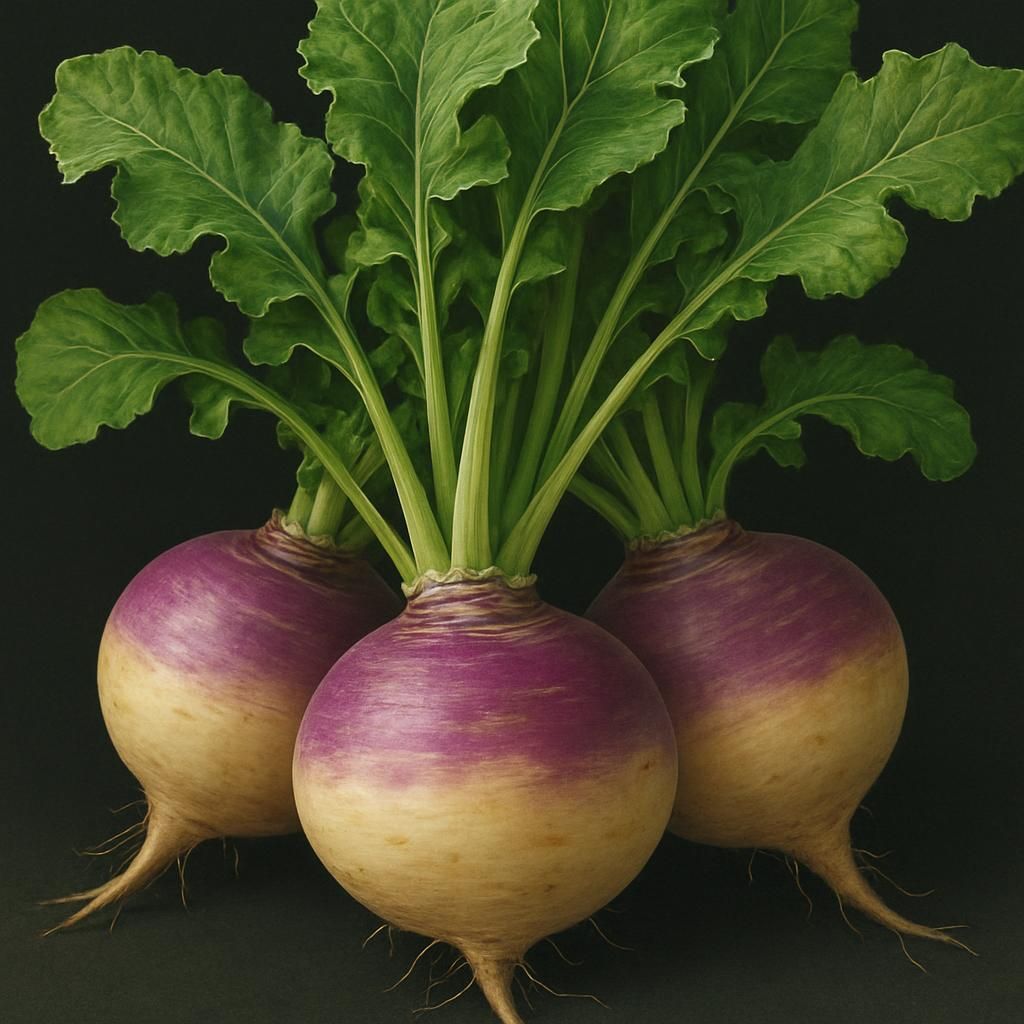
Introduction to Rutabaga (Joan)
Rutabaga (Joan) is a modern hybrid cultivar of the brassica family that delivers exceptional uniformity, flavor, and storage performance for commercial and home growers alike. Developed for consistent root shape and mild sweetness, 'Joan' matures in approximately 90-100 days and produces smooth, round roots with minimal side shoots. Its yellow flesh remains tender even after extended storage, making it a top choice for overwintering markets and CSA boxes. This guide provides professional-grade, field-tested advice for maximizing yield and quality with Rutabaga (Joan) in any temperate production system.
Botanical Profile of Rutabaga (Joan)
Rutabaga (Joan) belongs to the Brassicaceae family and is a cross between Turnip and Cabbage. The plant forms a swollen hypocotyl that develops into the edible root, typically reaching 4-6 inches in diameter with smooth, purple-topped skin. Leaves are glaucous, deeply lobed, and arranged in a basal rosette that can reach 18 inches across. The cultivar is biennial but grown as an annual for root harvest. Its mild flavor results from lower glucosinolate content compared to older rutabaga varieties, making it more palatable for fresh eating and processing.
Soil, pH, and Climate Requirements for Rutabaga (Joan) (MUST INCLUDE A MARKDOWN TABLE OF IDEAL CONDITIONS)
Rutabaga (Joan) thrives in well-drained, fertile loamy soils with consistent moisture. Heavy clay soils should be amended with organic matter to prevent forking and cracking. The crop prefers cool temperatures between 50-65°F (10-18°C) during root development, with full sun exposure of at least 6 hours daily.
| Parameter | Ideal Range | Notes |
|---|---|---|
| Soil Type | Loam or sandy loam | Well-drained to avoid root rot |
| Soil pH | 6.0-6.8 | Slightly acidic to neutral |
| Temperature | 50-65°F (10-18°C) | Cool season crop; tolerates light frost |
| Spacing | 12-18 inches between plants | Rows 24-30 inches apart |
| Sunlight | Full sun (6+ hours) | Partial shade reduces root size |
| Soil Organic Matter | 3-5% | Incorporate compost or aged manure |
Step-by-Step Planting & Propagation
- Begin sowing seeds 2-3 weeks before the last spring frost or in late summer for fall harvest. Direct seed ½ inch deep in prepared beds.
- Thin seedlings to 12-18 inches apart once they reach 2-3 inches tall to ensure proper root development.
- Maintain even soil moisture during germination; use row covers to protect young plants from flea beetles.
- For succession planting, sow every 3 weeks until 90 days before first expected hard frost.
- Avoid transplanting; rutabagas develop best when sown in place to prevent root disturbance.
Care & Maintenance regimes for Rutabaga (Joan) (MUST INCLUDE A MARKDOWN TABLE OF WATER, FERTILIZER, AND PRUNING SCHEDULES)
Consistent moisture and balanced nutrition are essential for sweet, crack-free roots. Mulch with 2-3 inches of straw or shredded leaves to conserve moisture and suppress weeds. Side-dress with nitrogen at 4-6 weeks after emergence if leaf color is pale. Remove any yellowing outer leaves to improve airflow and reduce disease pressure.
| Growth Stage | Water Schedule | Fertilizer Schedule | Pruning/Maintenance |
|---|---|---|---|
| Seedling (0-3 wks) | Keep soil evenly moist | Light compost tea every 10-14 days | Thin to final spacing |
| Vegetative (3-6 wks) | 1 inch per week | Balanced NPK (10-10-10) at 4 weeks | Remove damaged leaves |
| Root Bulking (6-12 wks) | 1-1.5 inches per week | Low-nitrogen, high-potassium at 8 weeks | Minimal pruning; weed regularly |
| Pre-Harvest (last 3 wks) | Reduce to 0.75 inch/week | No additional fertilizer | Remove competing weeds |
Pests, Diseases & Organic Management
Common pests include flea beetles, cabbage loopers, and root-knot nematodes. Use floating row covers early in the season and apply Bacillus thuringiensis for caterpillar control. Diseases such as clubroot, Alternaria leaf spot, and powdery mildew can be managed through crop rotation, resistant varieties, and proper spacing. Maintain soil pH above 6.8 and avoid planting in fields with a history of clubroot.
Harvesting, Curing & Optimal Storage
Harvest when roots reach 4-6 inches in diameter, typically 90-100 days after sowing. Pull gently or use a garden fork to avoid damaging the skin. Trim tops to 1 inch and allow roots to cure in a shaded, well-ventilated area for 1-2 days. Store at 32-38°F (0-3°C) with 90-95% humidity for up to 6 months. Do not wash roots before storage to prevent rot.
Companion Planting for Rutabaga (Joan)
Rutabaga (Joan) benefits from pairing with Onion, Garlic, and Dill to deter pests. Avoid planting near Potato or other brassicas to reduce shared disease pressure. Interplant with Lettuce or Radish for efficient space use and to mark rows. Nasturtium serves as a trap crop for aphids while Clover provides living mulch and nitrogen fixation. See Summer Companion Planting: 10 Organic Pairings to Boost Small Farm Resilience for expanded strategies.