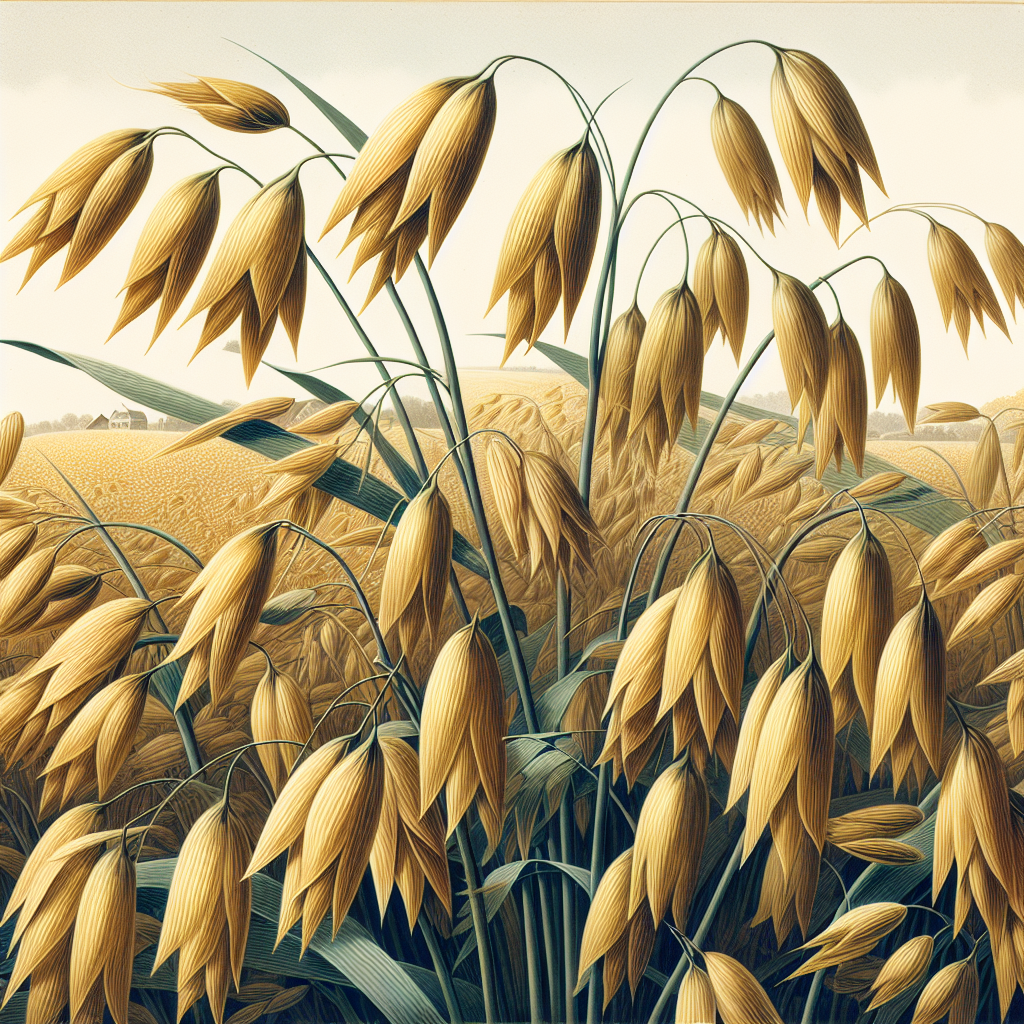
Introduction to Rolled Oats
Rolled oats, a staple in breakfast bowls worldwide, originate from the versatile cereal crop oats (Oats), scientifically known as Avena sativa. While rolled oats are the processed product—whole oat groats that are steamed and flattened to preserve freshness and speed up cooking—growing your own oats allows you to produce premium, chemical-free grains for custom rolling, steel-cutting, or flour milling. This comprehensive guide demystifies oat cultivation, from seed to harvest, empowering small-scale farmers, homesteaders, and gardeners to achieve bountiful yields of this resilient, cool-season annual.
Oats stand out for their adaptability, nutritional profile (rich in beta-glucan fiber, protein, and antioxidants), and multifunctional uses: human food, animal fodder, cover cropping, and green manure. Unlike wheat or barley, oats tolerate acidic soils and poor conditions, making them forgiving for novice growers. Expect 40-60 bushels per acre under optimal management, with home gardens yielding 1-2 pounds per 100 square feet. For small farms, integrating oats into rotations boosts soil health and profitability—check out this insightful guide on Why Companion Planting Feels Like Guesswork for Small Farms - And How AI Makes It Foolproof.
Key benefits include nitrogen fixation support via companions, erosion control, and weed suppression. Whether spring-planted or fall-sown for winter cover, oats deliver reliable results with low pest pressure. This deep-dive covers every aspect, ensuring your rolled oat production journey is efficient and rewarding.
Botanical Profile of Rolled Oats
Avena sativa, a member of the Poaceae (grass) family, is an annual cool-season cereal originating from the Fertile Crescent around 10,000 years ago. Domesticated from wild red oats (Avena fatua), modern cultivars like 'Jerry', 'Forage Plus', or hulless varieties (e.g., Naked Oats) are bred for hulled or hulless grains ideal for rolling. Plants grow 2-4 feet tall, with fibrous roots extending 3-4 feet deep, tillering into 3-5 stems per plant.
The life cycle spans 90-120 days: germination in 7-10 days, vegetative growth (tillering, stem elongation), booting (panicle formation), heading (flowering), and milk-to-dough grain fill. Inflorescences are loose panicles bearing 20-100 spikelets, each with 2-3 florets producing caryopses (grains) averaging 30-50 mg. Rolled oats derive from dehulled groats, retaining the bran and germ for superior nutrition over instant varieties.
Oats excel in cool (50-65°F) conditions, photosynthesizing efficiently below 75°F. They are self-pollinating, with minor outcrossing, and photoperiod-sensitive in some cultivars. Varieties differ: hulled for storage stability, hulless for easier processing into rolled oats. Seed viability lasts 2-3 years under cool, dry conditions. Botanically, oats improve soil structure via extensive roots, suppressing weeds and scavenging nutrients.
Soil, pH, and Climate Requirements for Rolled Oats
Oats thrive in well-drained loams or silt loams with 4-6% organic matter, tolerating heavier clays better than other cereals. Optimal pH is 5.5-7.0, with remarkable acidity tolerance down to 4.5—far superior to wheat or corn. Avoid waterlogged soils prone to root rots; raised beds or ridges suit heavy soils.
Climate-wise, oats demand 16-32 inches annual rainfall, with critical 12-16 inches during growth. Ideal temperatures: 50-65°F daytime, tolerating light frosts to 20°F post-emergence. Spring oats suit USDA zones 3-8 (plant March-May); winter oats (zones 6-8, plant Sept-Oct) overwinter for early harvest. Day lengths of 12-15 hours trigger heading. Drought tolerance is moderate, but supplemental irrigation (1 inch/week) during tillering boosts yields 20-30%.
Soil prep: Till to 6-8 inches, incorporate 2-4 tons/acre compost or green manure. Test for N (60-80 lbs/acre), P (40-60 lbs), K (40-80 lbs); oats efficiently uptake residual fertility from legumes like clover or peas. For small plots, amend with bone meal (P) and wood ash (K, pH). Explore Soil Health Mastery: 5 Proven Strategies for Small Farms to Build Fertile Ground Without Breaking the Bank for long-term fertility.
Step-by-Step Planting & Propagation
Seed Selection: Choose certified, disease-free seed (95%+ germination). Rates: 80-120 lbs/acre (2-3 lbs/1000 sq ft) for drilled; double for broadcast. Hulless types yield 20% less seed but simplify rolling.
Timing: Spring: soil 45-55°F; winter: 4-6 weeks pre-hard freeze.
Seedbed Prep: Disk/plow, harrow smooth, firm with roller. No-till into soybean stubble works well.
Planting: Drill 1-2 inches deep, 6-7 inch rows. Broadcast, incorporate 1 inch, cultipack. Inoculate if mixing legumes.
Inoculation/Growth Aids: Optional rhizobia for N-fix companions.
Emergence: 7-14 days; thin to 15-20 plants/ft row if needed.
Propagation is seed-based; no vegetative methods. Cover crops: sow 160 lbs/acre pure stand.
Care & Maintenance regimes for Rolled Oats
Irrigation: 1-1.5 inches/week post-emergence, focus on tillering/boot stages. Mulch conserves moisture.
Fertilization: 40-60N/acre total; split applications. Sidedress 30N at tillering. Manure: 10-20 tons/acre pre-plant.
Weeding: Competitive once established; early cultivation or mulch. Pre-emergent herbicides if conventional.
Growth Monitoring: Scout for lodging risk at soft-dough; avoid excess N.
Rotation: Follow legumes, precede corn/potatoes. Oats excel as cover post-soybeans.
Minimal inputs yield success; scout weekly.
Pests, Diseases & Organic Management
Pests: Armyworms (/wiki/armyworms), aphids (/wiki/aphids), Hessian fly (/wiki/hessian-fly). BT sprays, row covers, beneficials (ladybugs, birds).
Diseases: Crown rust (/wiki/crown-rust), Fusarium head blight (/wiki/fusarium-head-blight), BYDV. Resistant varieties, 7-14 day rotations, seed treatment. Organic: potassium bicarbonate for rust, trichoderma for rots.
Integrated Management: Scout thresholds, diversify rotations, cover cropping. Learn more in Spring Pest Patrol: Organic AI Strategies to Shield Your Crops from Common Invaders.
Harvesting, Curing & Optimal Storage
Harvest at physiological maturity (dough stage, 35-45% moisture): green stems, hard grains. Swath windrows 7-10 days pre-combine to dry evenly. Direct combine at 14% moisture.
Threshing: Stationary thresher or combine. Clean to 2% dockage.
Drying/Curing: Field-dry or forced-air to 13%. Condition at 18% 1 week for hulless.
Rolling: Dehull, kiln 220°F/30min, steam, roll to 0.3-1mm flakes.
Storage: 13% moisture, 40-60°F, airtight bins. Lasts 2+ years; watch weevils (/wiki/weevils).
Yields: 2,500-5,000 lbs/acre grains.
Companion Planting for Rolled Oats
Oats pair excellently with legumes (peas, clover) for N-fixation, boosting yields 20-40%. Avoid potato (disease carryover). Benefits: weed suppression, biodiversity. Post-harvest, undersow hairy vetch for green manure. Dive deeper with Fall Companion Planting Guide: Boost Yields and Soil Health for Small Farms and Gardens.