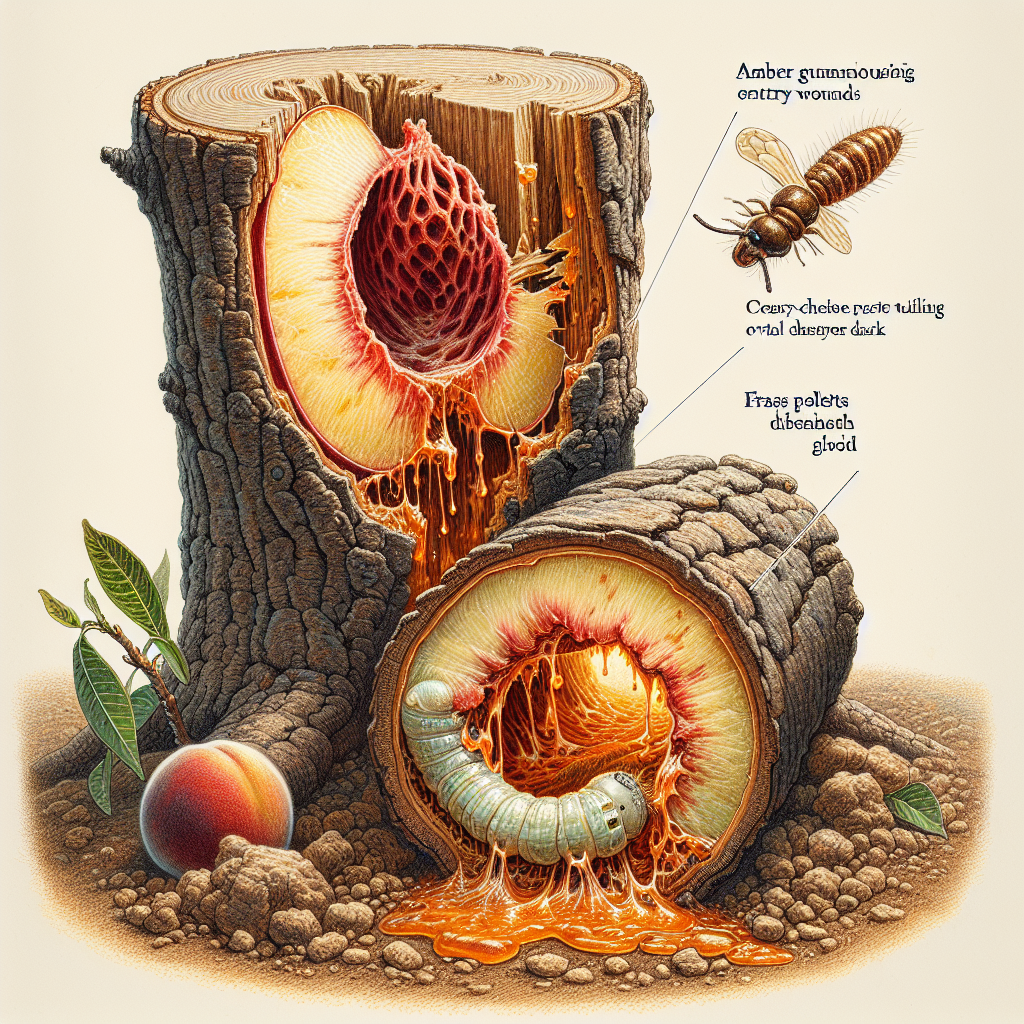
Introduction to Peach tree borer
Peach tree borers, primarily Synanthedon exitiosa (peach tree borer) and Synanthedon pictipes (lesser peach tree borer), are among the most devastating pests affecting peach trees and other stone fruits. These clearwing moths mimic wasps in appearance, laying eggs at the base of trees where larvae tunnel into the bark and cambium layer, disrupting nutrient flow and often leading to tree decline or death. Home gardeners and commercial growers alike face significant yield losses, with infested trees showing reduced vigor, gummosis (sap oozing), and branch dieback. Understanding this pest's biology is crucial for timely intervention, as unchecked infestations can wipe out entire orchards. This definitive guide covers identification, lifecycle, risk factors, organic management, prevention, and affected crops, empowering growers with professional-grade strategies to protect their investments.
In regions with warm summers, such as the southeastern U.S., peach tree borers complete one to two generations per year, amplifying damage potential. Early symptoms mimic rodent chewing or mechanical injury, delaying detection. Proactive scouting and integrated pest management (IPM) are essential, combining cultural, biological, and targeted organic controls to minimize chemical reliance. By mastering these techniques, growers can sustain healthy Elberta Peach and Redhaven Peach varieties while boosting long-term productivity. For more on organic pest strategies, check this Spring Pest Patrol guide.
Identifying Symptoms & Damage
Diagnosing peach tree borer infestations requires keen observation of both above- and below-ground signs. The hallmark symptom is gummosis: a sticky, amber-colored sap exuding from oval-shaped wounds at the tree's base, often 1-6 inches above the soil line. This 'gummy' residue hardens over time, and frass (sawdust-like insect waste) may appear nearby, indicating active larval tunneling.
Larvae create galleries under the bark, girdling the trunk and roots, which leads to canopy wilting, yellowing leaves, and premature leaf drop. Severely infested trees exhibit longitudinal cracks in the bark, exposed white larvae (up to 1 inch long with brown heads), and a characteristic 'chewing' pattern resembling rodent damage—but closer inspection reveals smooth tunnels rather than jagged bites. In young trees, swelling at the graft union or trunk base signals heavy borer activity, often resulting in sudden death.
Damage progresses from entry holes (pinhead-sized) to extensive cankers. Differentiate from borers in other crops or diseases like crown rot by probing wounds with a knife: live larvae and clean frass confirm borers. Monitor in late summer when adults emerge, as egg-laying follows. Use a flashlight to inspect soil line crevices at dusk for moth activity. Early detection via these symptoms prevents 80-90% of yield loss, making weekly inspections critical during peak seasons.
Lifecycle and Progression of Peach tree borer
Peach tree borers overwinter as partially grown larvae in tunnels beneath the bark, resuming feeding in spring as temperatures rise above 50°F (10°C). Pupation occurs in May-June inside cocoons within galleries, with adults emerging 2-4 weeks later. Female moths, steel-blue with orange bands, lay 200-300 eggs singly or in clusters near wounds or bark crevices over 1-2 weeks.
Eggs hatch in 7-10 days, and neonate larvae bore into the cambium, feeding on inner bark and creating resin canals. First-generation larvae develop through summer, reaching full size by fall. In southern areas, a partial second generation may occur, with smaller 'lesser' borers (S. pictipes) targeting roots more aggressively. The full cycle spans 1 year, synchronized with tree phenology: egg-laying peaks post-bloom, larval damage during shoot growth.
Adults are diurnal, resembling paper wasps, active for 4-6 weeks. Pheromone traps track emergence for precise timing. Lifecycle progression ties to degree-days (base 50°F): adults at 800-1200 DD, peak egg-lay at 1400 DD. This knowledge enables targeted treatments, disrupting vulnerable neonate stages.
Environmental Triggers & Risk Factors
Warm, humid conditions accelerate borer development, with optimal larval growth at 77-86°F (25-30°C). Drought-stressed trees are prime targets, as weakened vigor reduces resin defenses. Poor drainage, compacted soil, or mechanical injuries (e.g., from mowers) at the trunk base invite egg-laying. New transplants and trees under 4 years old suffer most, lacking bark thickness.
Over-fertilization with nitrogen promotes succulent growth, attracting moths. Proximity to wild Prunus species or infested debris harbors overwintering larvae. Climate change extends generations in northern latitudes, increasing risk. Risk factors compound with secondary pests like ants farming aphid honeydew near wounds or diseases such as Phytophthora root/crown rot, exacerbating girdling. Assess site history: orchards near rivers face higher humidity-driven infestations.
Organic Control & Treatment Plans
Organic management emphasizes IPM: scout weekly, use pheromone traps for monitoring, and apply treatments at egg-hatch (700-1000 DD). Beneficial nematodes (Heterorhabditis bacteriophora) target soil-dwelling larvae; drench trunks with 1-2 million nematodes/gallon water in late summer, achieving 70-90% control. Reapply after heavy rain.
Neem oil or spinosad sprays (OMRI-listed) target young larvae; apply at dusk to cover crevices, repeating every 10-14 days for 3 applications. Bacillus thuringiensis (Bt) var. kurstaki offers limited efficacy against lepidopteran borers but suppresses early instars. Physical removal—scraping larvae with a wire or knife followed by sealing wounds with tree paint—works for light infestations.
Introduce parasitic wasps (Braconidae) via commercial releases. For severe cases, systemic organics like potassium salts of fatty acids disrupt feeding. Avoid trunk wraps, as they trap moisture. Treatment plans: Year 1 (infested): nematodes + scraping; Year 2+: preventive drenches. Monitor efficacy with trap counts <5 moths/tree. Combine with mulching to exclude adults. Success rates exceed 85% with consistent application. See Peach for variety-specific tips.
Preventing Peach tree borer in the Future
Prevention hinges on cultural practices: maintain trunk vigor with balanced irrigation and avoid spring nitrogen. Weed whack guards or hardware cloth shields young trunks from injury. Clean cultivation removes pupal cases and wild hosts. Plant resistant rootstocks like Lovell or Guardian, which exhibit tolerance.
Timing is key: apply preventive nematode drenches in July-August. Use reflective mulches or kaolin clay barriers to deter egg-laying. Promote biodiversity with cover crops attracting predators. Rotate insecticides if needed, but prioritize organics. Annual inspections and degree-day modeling predict outbreaks. Long-term, select borer-resistant varieties like Redhaven Peach. Integrated prevention reduces populations by 95% over 3 years, ensuring sustainable orchards.
Crops Most Affected by Peach tree borer
Primarily stone fruits: peach, nectarine (implied via peach pages), plum like Santa Rosa Plum, cherry such as Bing Cherry, and prune. Apricot and wild black cherry serve as reservoirs. Ornamental Prunus exacerbate spread. Focus protection on commercial Elberta Peach blocks.