Introduction to Brown rot
Brown rot stands as one of the most destructive fungal diseases plaguing stone fruit orchards worldwide, capable of annihilating entire crops in mere days under favorable conditions. Caused primarily by the fungi Monilinia fructicola, Monilinia laxa, and Monilinia fructigena, this pathogen targets blossoms, twigs, fruit, and spurs, leading to significant economic losses for growers. In commercial peach and cherry production, brown rot can render up to 90% of fruit unmarketable if unchecked, making early detection and proactive management essential.
The disease manifests as soft, brown rot on ripening fruit, often accompanied by a velvety spore growth that spreads rapidly via wind and rain splash. Beyond fruit decay, brown rot induces blossom blight, where infected flowers turn brown and shrivel, and twig cankers that girdle branches, reducing tree vigor over seasons. This guide provides professional-grade diagnostic criteria, lifecycle insights, organic control strategies, and prevention tactics optimized for small farms and commercial operations. By understanding brown rot's biology and implementing integrated management, growers can safeguard yields and maintain orchard health. For real-world applications, check out this Soil Health Mastery blog post on building resilient soils that resist disease pressure.
Identifying Symptoms & Damage
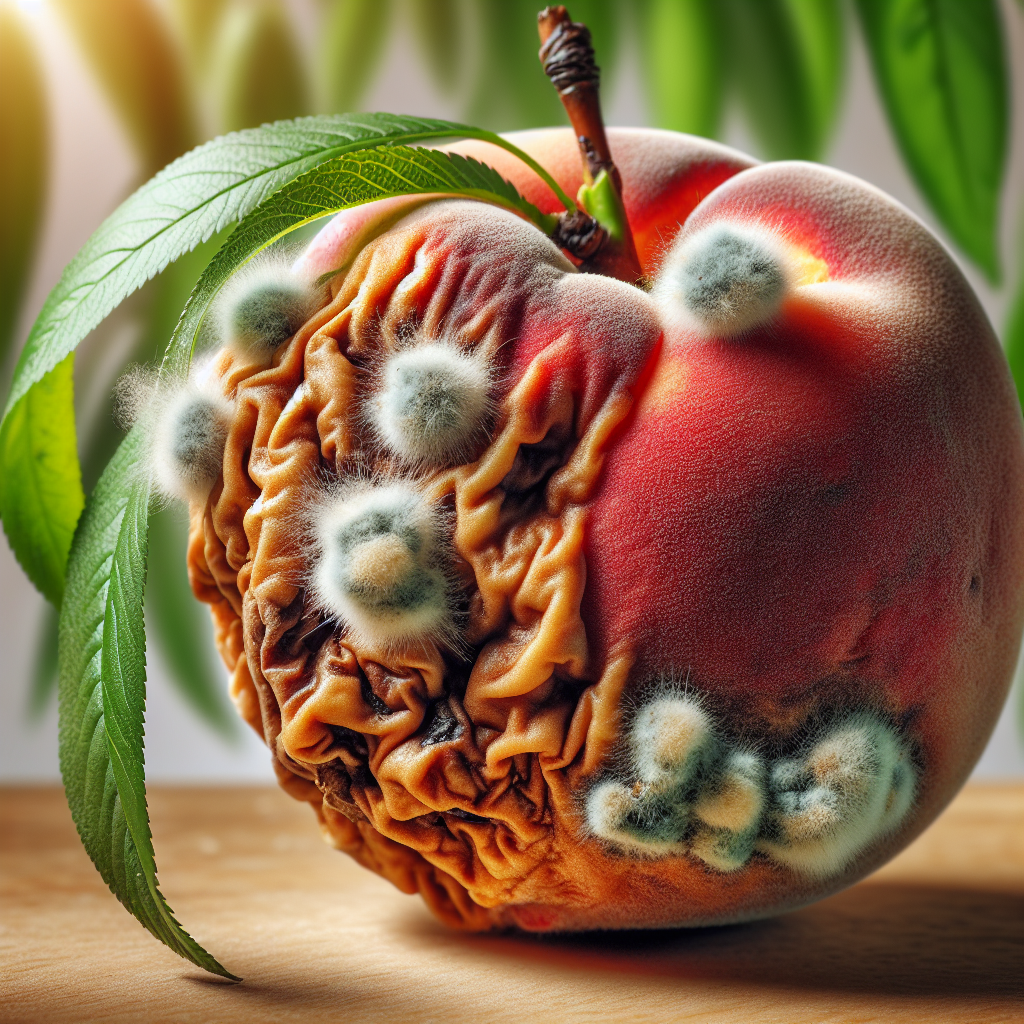
Accurate diagnosis begins with recognizing brown rot's distinctive symptoms across plant parts. On fruit, initial infections appear as small, light brown spots that expand rapidly into soft, mushy rots covering the entire fruit surface. These lesions develop a tan-to-brown discoloration, often with concentric rings, and in humid conditions, produce abundant grayish-white spore tufts resembling cotton candy—conidia masses that are diagnostic for Monilinia.
Blossom blight strikes early spring, turning petals brown and causing them to wilt while still attached, with infected peduncles developing brown cankers. Twigs show sunken, elliptical lesions with darkened bark that cracks longitudinally, sometimes girdling the branch and causing shoot dieback. Spurs and leaves may exhibit small brown spots that coalesce, leading to leaf shot-hole symptoms. Late-season 'mummies'—shriveled, brown fruits clinging to trees—serve as primary inoculum sources.
Damage quantification reveals brown rot's severity: in plum orchards, a single infected fruit can produce millions of spores, infecting nearby healthy fruit within 24-48 hours during rain events. Differentiate from similar diseases like bacterial canker (bacterial-canker) or Botrytis by the spore tufts and rapid tissue breakdown. Use a hand lens to confirm mycelial growth under lesions. Economic impact includes not just yield loss but post-harvest rot, affecting 20-50% of stored stone fruits without proper sanitation.
Lifecycle and Progression of Brown rot
Monilinia spp. overwinter as mummies on trees, in fallen fruit, or in twig cankers, releasing ascospores from apothecia in spring or conidia from mummies during wet weather. Primary infections occur on blossoms when spores land on senescing petals, germinating in 4-6 hours at 18-25°C (65-77°F) with free moisture. Hyphae penetrate directly or via wounds, spreading systemically to peduncles and spurs.
From blossoms, the fungus moves to developing fruit, remaining latent until near maturity when sugar levels rise, triggering symptom expression. Conidia from blighted blossoms or early fruit rots disseminate via wind/rain, causing secondary epidemics during pre-harvest rains. Each infection cycle lasts 12-24 hours, with optimal sporulation at 20-25°C and >90% humidity. In apricot (related to peaches), progression from 10% bloom infection can lead to 100% fruit loss by harvest.
Cankers expand slowly over winter, producing gum exudate and serving as perennial inoculum. In temperate regions, apothecia form under mummies on the orchard floor, discharging ascospores up to 10-15 cm high. Understanding this polycyclic lifecycle—multiple generations per season—emphasizes the need for early-season disruption. For more on disease forecasting, see powdery-mildew management parallels.
Environmental Triggers & Risk Factors
Brown rot epidemics hinge on warm, wet springs and summers. Infection requires leaf wetness >6-12 hours at 15-27°C, with spore germination peaking at 22°C. Frequent rain during bloom (petal fall) and pre-harvest (2-4 weeks before harvest) drives outbreaks, as conidia splash up to 30 cm or blow kilometers. High humidity (>90%) post-rain favors sporulation.
Risk factors include dense canopies trapping moisture, excessive nitrogen promoting succulent growth, and poor air circulation in valleys or low-lying orchards. Susceptible varieties like Elberta peach or Bing cherry amplify damage. Overwintering inoculum from unremoved mummies multiplies risk 10-fold. Soil with high clay retains humidity, while irrigation overhead exacerbates splash dispersal. Climate change extends wet periods, increasing incidence in marginal areas.
Organic Control & Treatment Plans
Organic management integrates sanitation, cultural practices, and approved fungicides. Sanitation: Remove and destroy all mummies (double-clip or burn), prune cankers 10-15 cm below lesions, and disk orchard floor to bury debris. Target 90-95% inoculum reduction pre-bloom.
Cultural Controls: Prune for open canopies (20-30% light penetration), space trees 5-7 m apart, and apply 4-6 kg/N/ha balanced fertilizers avoiding lush growth. Use reflective mulches to deter spores. Biologicals: Apply Bacillus subtilis or Trichoderma at bloom for antagonism; copper hydroxide (pre-bloom only) at 2-3 kg/ha.
Organic Fungicides: Sulfur (3-5 kg/ha, 3-4 apps at 7-10 day intervals) during bloom; potassium bicarbonate for mid-season. Timing via rainfast models: apply within 2 hours post-rain. Rotate modes of action to prevent resistance. For nectarine, integrate kaolin clay barriers. Monitor with spore traps; threshold: 1-5% blighted blossoms triggers spray. In trials, this IPM reduces incidence 70-90%. Learn companion strategies in this Companion Planting blog.
Preventing Brown rot in the Future
Long-term prevention builds resilient orchards. Select resistant rootstocks (e.g., Lovell for peaches) and varieties like Redhaven peach. Plant in well-drained sites with >200 chill hours matching cultivar. Annual pruning removes 20-30% wood, improving drying.
Implement cover crops (clover) to suppress splash and enhance soil microbiology. Drip irrigate, avoiding wet canopies. Scout weekly from pink bud, using UC IPM risk indices (e.g., blossom blight risk >50% RH + rain). Post-harvest, strip-pick and sanitize. Rotate with non-hosts every 3-5 years. Soil solarization in summer kills overwintering sclerotia. Monitor weather for 'infection periods' (wetness hours). These steps cut incidence <5% annually. Address related anthracnose proactively.
Crops Most Affected by Brown rot
Brown rot devastates stone fruits: peaches (80% global incidence), nectarines, apricots, plums, and cherries top the list, with Bing cherry and Elberta peach highly susceptible. Sweet cherries suffer blossom blight losses up to 100%; European plums show canker dominance. Almonds experience hull rot; rarely, apples (apple-scab differential) and pears. In warm climates, mango reports minor fruit rot. Focus protection on Prunus spp. during bloom/harvest.