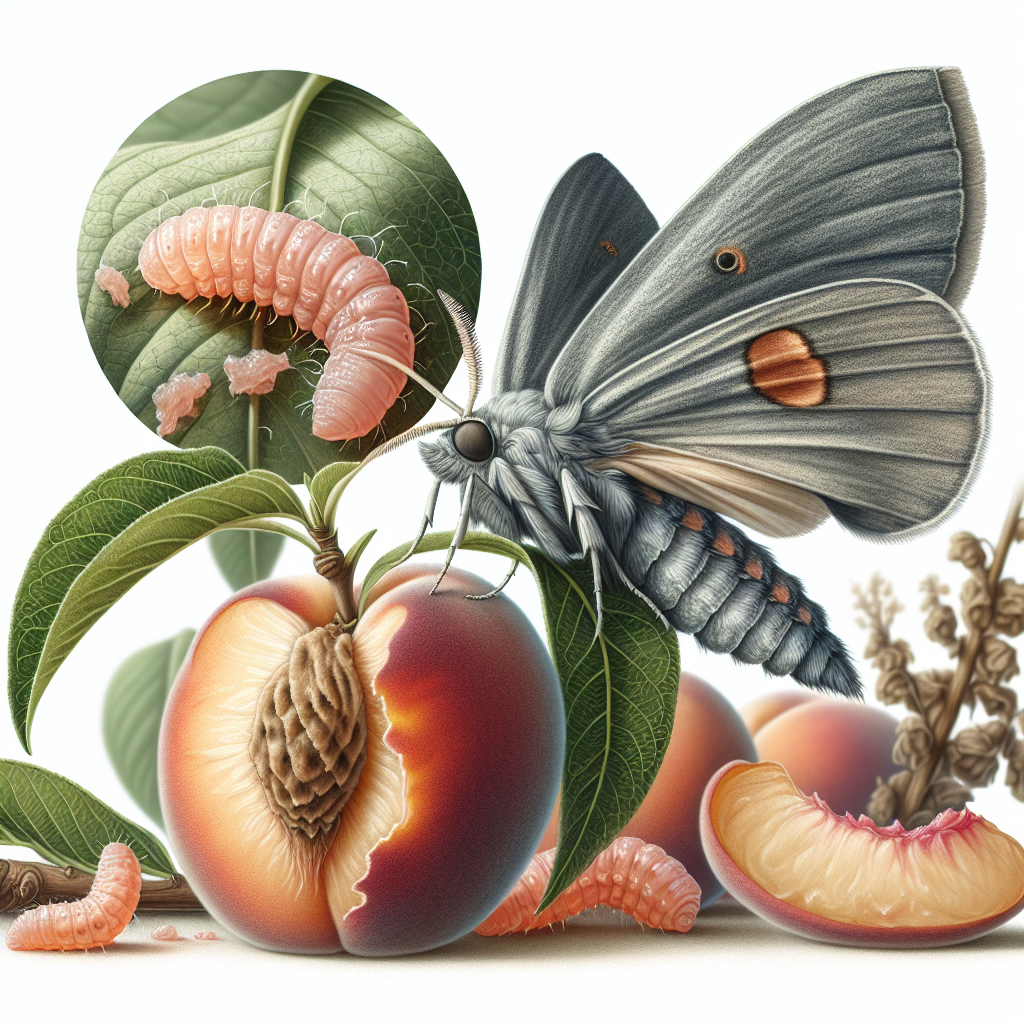
Introduction to Oriental fruit moth
The Oriental fruit moth, scientifically known as Grapholita molesta, is one of the most notorious pests in fruit orchards worldwide, particularly devastating to stone fruits such as peach and plum, as well as pome fruits like apple. Native to Asia, this small moth was first detected in the United States in 1916 and has since spread across North America, Europe, and other regions, causing billions in crop losses annually. Larvae bore into tender shoots, causing 'flagging'—wilting and dieback—and later infest developing fruits, creating entry points for pathogens like brown rot blossom blight.
Adult moths are grayish-brown with a wingspan of 10-13 mm, marked by a distinctive coppery spot on the forewings. Females lay up to 100-200 eggs on leaves or fruit, leading to multiple generations per season—up to 5-7 in warmer climates. Early detection is crucial as unchecked infestations can reduce yields by 50-80% in susceptible orchards. This guide equips growers with diagnostic tools, lifecycle insights, organic management plans, and prevention strategies to minimize damage while adhering to sustainable practices. For small farms, integrating these methods with tools like those in Spring Pest Patrol: Organic AI Strategies to Shield Your Crops from Common Invaders can optimize control efforts.
Understanding the pest's behavior is key: it thrives in humid, warm conditions, overwintering as mature larvae in cocoons under bark or debris. Integrated Pest Management (IPM) is the gold standard, emphasizing monitoring with pheromone traps, biological controls, and targeted treatments over broad-spectrum sprays. Recent studies show that combining mating disruption with sanitation reduces populations by over 90% without residues.
Identifying Symptoms & Damage
Oriental fruit moth damage manifests in distinct stages, making accurate diagnosis essential for timely intervention. On shoots and twigs, larvae tunnel internally, producing reddish-brown frass (excrement) at entry holes. Affected terminals wilt, droop, and turn black—a classic 'flagging' symptom visible from afar in spring. In severe cases, multiple flags per tree signal heavy first-generation pressure.
Fruit damage appears as small, pinkish-white entry holes near the stem end, often with silken webbing and frass. Larvae feed internally, creating brown tunnels that lead to fruit drop, rot, or deformed marketability. Unlike codling moth, which targets seeds, Oriental fruit moth bores randomly, making fruits unmarketable even if larvae exit before harvest. Secondary infections from anthracnose or bacterial rots exacerbate losses.
Examine trees weekly: look for pinhole-sized eggs on leaves, crawling larvae (0.5-1 cm, cream-colored with brown head), and pupae in rolled leaves. Differentiate from leafrollers by frass consistency—Oriental fruit moth produces drier, granular pellets. Use a 10x hand lens for confirmation. Economic thresholds: 5-10 moths per trap per week warrant action. Document with photos for IPM records.
Lifecycle and Progression of Oriental fruit moth
Grapholita molesta completes 4-7 generations yearly, depending on degree-days (base 10°C). Overwintering occurs as diapausing larvae in bark crevices. In spring (April-May, 100-200 DD), adults emerge, mate, and females oviposit on new shoots. Eggs hatch in 5-10 days into larvae that bore terminals, pupating after 2-3 weeks.
Second generation (June-July, 400-600 DD) shifts to fruits; subsequent broods overlap, with peak activity in late summer. Larvae have five instars, molting from tiny translucent forms to robust 1 cm feeders. Pupae (6-10 mm, brown) form in fruit or cocoons on leaves. Adults live 1-2 weeks, with females dispersing up to 1 km.
Track with pheromone traps: first catch indicates egg-lay timing. Biofix (first sustained trap catch) plus DD models predict flights accurately. In temperate zones, generations span: 1st (shoot), 2nd-3rd (fruit), 4th (mixed). Tropical areas see continuous cycles. Lifecycle knowledge enables precise timing for controls, reducing sprays by 70%.
Environmental Triggers & Risk Factors
Warm temperatures (20-30°C) and humidity >60% accelerate development, with optimal egg hatch at 25°C. Proximity to unmanaged orchards or wild hosts like cherry heightens invasion risk. Poor pruning creates shaded, humid microclimates favoring survival.
Susceptible varieties (e.g., early peach cultivars) face higher pressure; drought-stressed trees attract egg-laying. Overwinter survival spikes in mild winters (< -10°C rare). Wind currents spread adults; landscape features like hedgerows act as reservoirs. Soil types matter little, but heavy clay retains pupae moisture.
Risk assessment: High in regions with >1500 DD (e.g., California Central Valley); moderate in cooler areas. Monitor weather data—prolonged rain delays flights but boosts fungal epizootics against larvae.
Organic Control & Treatment Plans
Organic management prioritizes non-chemical tactics. Monitoring: Deploy 2-4 delta traps per hectare with commercial lures; replace every 4 weeks. Treat at 10 moths/trap/week.
Mating Disruption: Hang 200-500 dispensers/ha of >95% pure (Z)-8-dodecenyl acetate. Reduces mating >90%; reapply mid-season. Read more on effective IPM.
Biologicals: Release Trichogramma wasps (100,000/ha) for egg parasitism; Bacillus thuringiensis (Bt) kurstaki at 1-2 L/ha targets larvae (apply evenings). Conserve predators like lacewings via reduced tillage.
Cultural: Prune for open canopy; remove flags weekly, destroy debris. Kaolin clay (Surround) barriers deter oviposition. Neem oil (0.5-1%) or spinosad (organic-approved) for spot treatments.
Treatment Timeline:
- Biofix +150 DD: Bt or spinosad.
- Fruit stages: Disruption + clay. Rotate modes to prevent resistance. Scout post-treatment; expect 80-95% control.
Preventing Oriental fruit moth in the Future
Prevention starts with resistant rootstocks and early-maturing cultivars. Plant windbreaks to block migration. Sanitation: Shred prunings, till orchard floors to expose pupae to predators.
IPM thresholds guide actions. Calendar sprays obsolete—use DD models. Neighbor cooperation via area-wide disruption amplifies efficacy. Cover crops like clover suppress weeds hosting alternate pests like aphids. Annual trap counts track trends; below 2 moths/trap signals success.
Long-term: Breed for antibiosis (e.g., glandular-haired peaches). Quarantine new plantings. Integrate with broader programs against navel orangeworm for synergy.
Crops Most Affected by Oriental fruit moth
Primary hosts: Peach (80% losses), nectarine (similar), plum, apricot, cherry, pear, apple. Secondary: quince, persimmon, fig. Prefers stone fruits early season, shifting to pome later. Avoid interplanting with wild Prunus. In Asia, attacks mango marginally.