Introduction to Pythium-related root problems
Pythium-related root problems represent one of the most pervasive challenges in modern agriculture, affecting crops worldwide by causing severe root rot, seedling damping-off, and overall plant stunting. Caused by various species of the oomycete genus Pythium, these pathogens are not true fungi but water molds that exploit excessive soil moisture to infect plant roots. Farmers and growers often encounter these issues in greenhouses, nurseries, and field settings where poor drainage or overwatering creates ideal conditions for proliferation.
Unlike many foliar diseases, Pythium attacks below ground, making early detection tricky and allowing infections to spread silently through splashing water, contaminated tools, or infected transplants. Annual economic losses from Pythium root rots exceed billions globally, particularly in high-value crops like vegetables, ornamentals, and turf. Understanding Pythium's biology is crucial: it produces swimming zoospores that swim through water films in soil pores, encysting on root surfaces to penetrate and colonize tissues. This guide provides definitive diagnostic criteria, lifecycle insights, and proven management strategies to safeguard yields. For more on Pythium pathology, see the detailed entry on Pythium.
In containerized production, Pythium can wipe out entire seedling trays overnight, while in fields, it leads to patchy stands and reduced harvestable plants. Climate change exacerbates risks with increased rainfall intensity and prolonged wet periods. Successful management hinges on integrated approaches combining cultural practices, resistant varieties, and targeted biological controls, especially in organic systems where chemical fungicides are limited.
Identifying Symptoms & Damage
Diagnosing Pythium-related root problems requires careful inspection of roots and soil conditions. Above-ground symptoms include wilting during the day with partial recovery at night, yellowing lower leaves progressing upward, and stunted growth. Plants often appear 'off-color' with sparse foliage, mimicking nutrient deficiencies or drought despite adequate water.
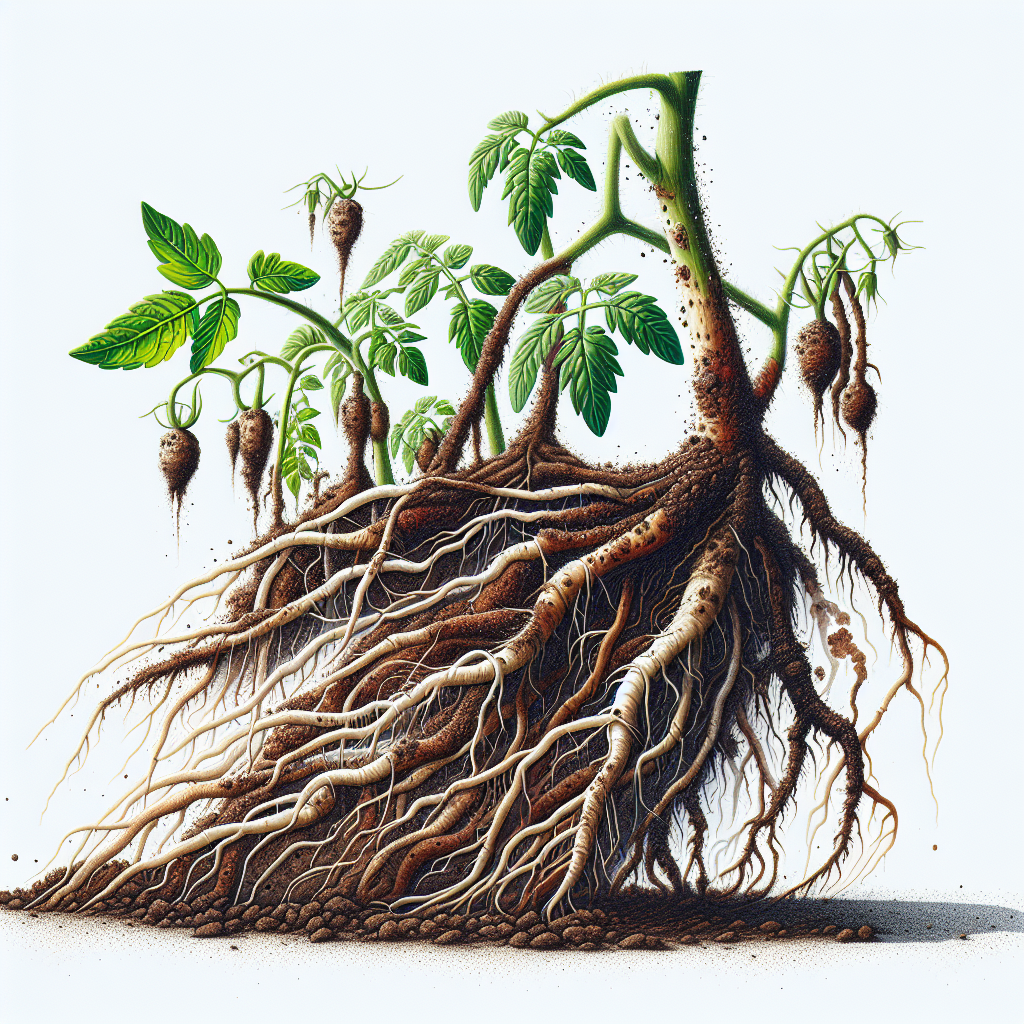
The hallmark is root damage: healthy roots are white and firm, while Pythium-infected roots are dark brown to black, mushy, and emit a foul odor from secondary bacterial invasion. Seedlings show classic damping-off—pre-emergence rot where seeds fail to sprout, or post-emergence collapse at the soil line with water-soaked lesions. Older plants exhibit girdling rots at the crown, leading to sudden collapse.
To confirm, gently wash roots under running water. Pythium causes sparse, stubby lateral roots with a 'honeycomb' appearance from cortical rot. Differentiate from Phytophthora (firmer lesions) or Rhizoctonia (dry, sunken cankers). Lab diagnosis via selective media (e.g., V8 agar) reveals characteristic sporangia and oospores. In advanced stages, entire root systems slough off, leaving bare crowns vulnerable to further pathogens like root-knot nematodes.
Damage severity correlates with infection timing: seedlings suffer 80-100% mortality, while mature plants show 20-50% yield loss. In hydroponics, symptoms include tip burn and root slime. Always check for environmental stressors like compaction or high soluble salts exacerbating issues.
Lifecycle and Progression of Pythium-related root problems
Pythium's lifecycle is rapid, completing in 48-72 hours under optimal conditions (20-30°C, saturated soils). It survives as thick-walled oospores in soil or plant debris for years, germinating when moisture activates them. Hyphae grow toward roots, producing biflagellate zoospores that motile-swim to host tissues.
Zoospores encyst, germinate germ tubes penetrating root epidermis, often via wounds or natural openings. Inside, mycelium colonizes cortex, producing toxins that cause tissue liquefaction. New sporangia form, releasing more zoospores in standing water. Sexual reproduction yields durable oospores during cooling.
Progression: Day 1-2, initial infection; Day 3-5, visible rot and wilting; Week 2+, plant death or chronic decline. Multiple cycles per season amplify spread. Cool, wet springs favor seedling infections, while summer heat stresses promote root rots in perennials. Learn more about predictive modeling in Why 80% of Small Farms Battle Weather Disasters - And How Hyper-Local AI Forecasts Can Save Your Harvest.
Environmental Triggers & Risk Factors
Pythium thrives in waterlogged, poorly aerated soils with temperatures 15-35°C. Compacted soils reduce oxygen, favoring pathogen over plant roots. High nitrogen fertility promotes succulent roots susceptible to infection.
Key triggers: overwatering, heavy rains, inadequate drainage, and prolonged leaf wetness. Acidic soils (pH <6) enhance sporulation. Contaminated potting mixes, reused trays, or flood-irrigated fields spike outbreaks. Crop rotation gaps allow oospore buildup; continuous susceptible crops like cucurbits amplify risks.
Risk soars in greenhouses with high humidity (>90%) and no airflow. Cold soils delay root growth, prolonging vulnerability. Assess sites: clay soils, low spots, or fields near creeks are hotspots. Integrated with root rots, Pythium often co-occurs with Fusarium.
Organic Control & Treatment Plans
Organic management emphasizes prevention, but active infections demand swift action. Remove and destroy infected plants to curb spread. Improve drainage by tilling, adding organic matter (compost at 5-10 tons/acre), or installing raised beds.
Biologicals shine: Trichoderma harzianum and Bacillus subtilis outcompete Pythium; apply as seed treatments (10^9 CFU/g) or drenches (1-2 L/ha). Streptomyces lydicus boosts systemic resistance. Gliocladium virens colonizes roots protectively.
Plant biofumigants like mustard or Thai basil suppress via glucosinolates. Hydrogen peroxide (3%, 1:10 dilution) drenches oxygenate soil, killing anaerobes. Phosphites (mono-potassium phosphite, 2-4 qt/acre) induce defenses without residues.
Step-by-step plan: 1) Scout weekly; 2) Drench with Trichoderma (preventive) or phosphite (curative); 3) Aerate soil; 4) Mulch with solarized straw. Rotate with brassicas. In nurseries, steam pasteurize media to 70°C for 30 min. Monitor via baiting assays.
Preventing Pythium-related root problems in the Future
Prevention outperforms cure: select resistant varieties (e.g., grafted tomatoes) and certified pathogen-free seed. Use well-drained media (50% peat, 30% perlite, 20% compost). Water early morning, avoiding foliage; maintain 60-70% moisture.
Solarize soil in summer (clear plastic, 4-6 weeks) to kill oospores. Crop rotate 3-4 years with non-hosts like grains. Disinfest tools with 10% bleach. Promote beneficial microbes via compost teas (aerated, 1:100 dilution weekly).
Site selection: avoid low-lying areas; amend with gypsum for sodic soils. pH to 6.5-7.0 with lime. Cover crops like mustard trap pathogens. Early season fungicide-exempt bio-controls build resilience. Track via soil tests for Pythium levels.
Crops Most Affected by Pythium-related root problems
Pythium strikes a broad spectrum, but seedlings universally suffer. Top victims: cucurbits (cucumber, squash), tomato, potato, lettuce, and ornamentals. Turfgrasses show patch dieback.
Perennials like avocado (Hass avocado) endure chronic decline. Turf, green beans, peas, and corn seedlings face damping-off. In rice paddies, it causes bakanae-like symptoms. Turf pros battle Pythium blight in hot, humid summers.
Susceptibility rankings: highly (lucerne, poinsettia); moderate (soybeans, peppers); low (cereals post-emergence). Ornamental bedding plants lose 30% in propagation. Tailor strategies per crop.