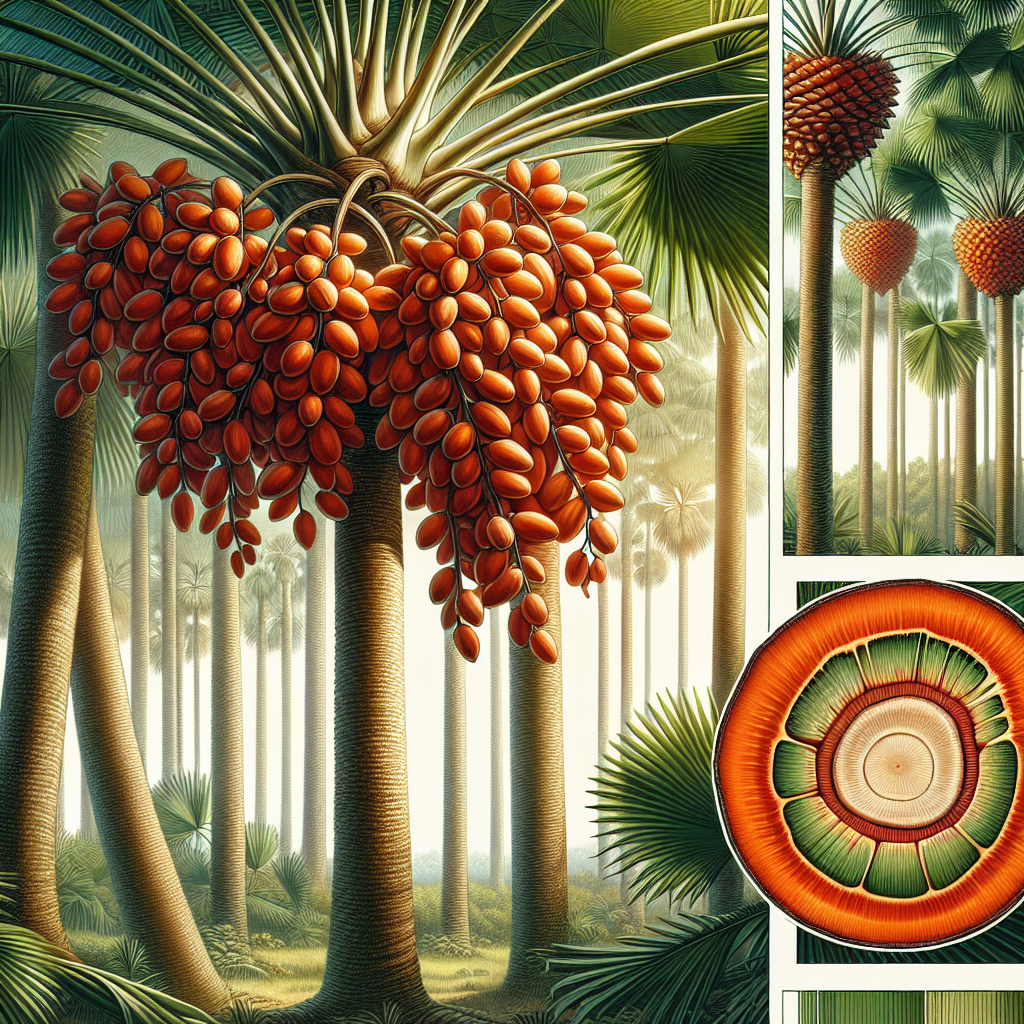
Introduction to Pupunha (Spineless)
Pupunha (Spineless), scientifically known as Bactris gasipaes, represents a breakthrough in tropical agriculture as a domesticated, thornless cultivar of the peach palm. Native to the Amazon basin and widely cultivated across Central and South America, this perennial palm delivers multiple harvests from its tender heart-of-palm (palmito) and clustered, starchy fruits that resemble peaches in flavor and texture. Unlike its wild counterparts armed with sharp spines, the spineless varieties like 'Puyuhal' or 'Bocadillo' enable safer, more efficient cultivation, making it accessible for small-scale farmers and commercial operations alike.
This crop excels in agroforestry systems, providing shade for understory crops while fixing nitrogen and preventing soil erosion on sloping lands. Fruits yield up to 10-15 kg per bunch, with hearts weighing 1-2 kg each, harvestable year-round after 18-24 months. Nutritionally, pupunha fruits boast high beta-carotene, fiber, and energy content, positioning them as a staple in local diets and emerging export markets. With proper management, plants reach 10-15 meters tall, producing for 20-30 years. For growers seeking sustainable, high-value perennials, pupunha (spineless) offers resilience against climate variability and low maintenance once established. Cassava (crop) pairs excellently as an intercrop during early years.
Botanical Profile of Pupunha (Spineless)
Pupunha (Spineless) belongs to the Arecaceae family, characterized by its solitary or clustered stems with a pinnate leaf structure. Mature plants feature 8-12 meter trunks (up to 15m in optimal conditions), with a girth of 20-40 cm, crowned by 20-30 large fronds spanning 3-5 meters. The spineless trait, selected through generations of cultivation, eliminates the hazardous spines found on petioles and trunks of wild types, reducing injury risks by over 90% during harvest.
Inflorescences emerge from lower trunk nodes, developing into dense bunches of 50-200 orange-red fruits, each 3-6 cm long, weighing 20-50g. Fruits have a fibrous, starchy mesocarp surrounding a single oily seed, ripening 4-6 months post-flowering. The edible heart-of-palm consists of the apical meristem and youngest leaf bases, creamy white and crunchy. Root systems are extensive, with fibrous laterals and pneumatophores in waterlogged soils, aiding drought tolerance. Flowering begins at 12-18 months, with peak productivity from year 3 onward. This variety demonstrates hybrid vigor from B. gasipaes x B. doriae crosses, enhancing fruit size and yield. For detailed propagation insights, see Why Companion Planting Feels Like Guesswork for Small Farms - And How AI Makes It Foolproof.
Soil, pH, and Climate Requirements for Pupunha (Spineless)
Pupunha (Spineless) thrives in fertile, well-drained loamy soils rich in organic matter, with pH 5.5-7.0 optimal for nutrient uptake. It tolerates clay loams and poor sands if amended with compost, but avoids heavy clays prone to waterlogging. Soil depth should exceed 1 meter for robust root development; test for aluminum toxicity below pH 5.0, common in tropical acid soils—lime to 6.0 if needed. Annual rainfall of 2000-4000 mm suits it best, with dry spells under 3 months; supplemental irrigation boosts yields in semi-arid zones.
Ideal temperatures range 24-30°C daytime, not dropping below 15°C; frost intolerance limits it to USDA zones 10-12. High humidity (70-90%) promotes growth, but windbreaks are essential in exposed sites to prevent frond damage. Elevations up to 1000m work, with lower altitudes yielding larger fruits. Mulch with banana leaves or legume prunings to retain moisture and suppress weeds. Soil preparation involves deep tillage (50cm) and incorporation of 20-30 kg/m³ manure, ensuring tilth for straight bole development.
Step-by-Step Planting & Propagation
Propagation primarily uses seeds for genetic diversity, though clonal micropropagation exists for elite spineless lines. Collect ripe fruits, extract seeds, and soak in water 24-48 hours, discarding floaters. Sow in shaded nursery beds (50% shade cloth) at 5-10 cm depth, 20x20 cm spacing, germinating in 20-40 days at 28-32°C. Transplant seedlings at 15-20 cm height (3-4 months) to polybags with 1:1:1 topsoil:sand:compost.
Site preparation: Clear land, plant contour lines on slopes (3x3m or 4x4m spacing, 400-1000 plants/ha). Dig pits 50x50x50 cm, fill with 10 kg compost + 200g superphosphate + 100g wood ash. Plant during rainy season, staking if windy. For clumps, use 2-3 seedlings/pit. Initial shading with pigeon pea aids establishment. Harden off over 2 months before field planting. Vegetative propagation via shoot tip culture yields 95% true-to-type spineless plants, ideal for commercial uniformity.
Care & Maintenance regimes for Pupunha (Spineless)
Young plants demand 200g NPK 10-30-10 monthly for first year, transitioning to 500g/palm annually split into 3 applications. Intercrop with short-cycle crops like maize or beans years 1-2, then shade-tolerant species. Prune dead fronds and inflorescence stalks post-harvest to reduce disease. Mulch heavily (15-20 cm) with palm residues to conserve water and add potassium. Irrigate 20-30 L/week in dry periods via drip systems for 20% yield gains.
Weed control: Manual slashing first 2 years, then cover crops like clover. Monitor for nutrient deficiencies—yellowing indicates potassium lack, addressed with ash or potash. Thin clumps to 1-2 stems at year 3 for optimal light penetration. Annual inspections ensure bole straightness; prop if leaning. Mature maintenance focuses on harvest access paths and rodent barriers. Yields stabilize at 10-20 tons/ha hearts or 15-25 tons/ha fruits by year 5.
Pests, Diseases & Organic Management
Common pests include rhino beetles boring into crowns—use pheromone traps and neem oil drenches. Mealybugs on inflorescences: Introduce lady beetles or 2% neem spray weekly. Leaf-cutting ants attack seedlings; bait with boric acid-sugar mixes. Rodents gnaw fruits; install trunk bands or predator perches.
Diseases: Phytophthora root rot in wet soils—improve drainage, apply Trichoderma biofungicide. Leaf spot diseases from Cercospora: Copper sprays and airflow pruning. Bud rot (Phytophthora): Remove infected hearts, drench with bio-control agents. Organic IPM emphasizes monitoring, marigold borders for nematodes, and neem for broad-spectrum control. Refer to Why 90% of Small Farms Fail at Pest Management - And 8 Organic Fixes That Actually Work for advanced strategies. Resistant spineless cultivars minimize losses to under 5%.
Harvesting, Curing & Optimal Storage
Harvest hearts when inflorescences emerge (18-24 months), cutting bole at 1-1.5m with chainsaw, yielding 1-2 kg/plant. Fruits ready when fully orange, 4-6 months post-anthesis; cut bunches with pole pruners. Regrowth yields new hearts in 12-18 months, fruits annually.
Cure hearts by blanching 5-10 min at 90°C, then ice-slurry cool; vacuum-pack for 30-day shelf life at 4°C. Fruits store at 10-13°C, 85-90% RH for 2-3 weeks; process into flour or freeze for 12 months. Dry fruits at 60°C for 48 hours into peach palm flour, stable 6-12 months. Postharvest losses drop to 5% with proper handling. Market fresh hearts yield $2-5/kg, fruits $1-2/kg.
Companion Planting for Pupunha (Spineless)
Pupunha (Spineless) shines in agroforestry, providing dappled shade for understory crops. Year 1-2: Intercrop cassava, sweet potato, or beans at 2m alleys. Mid-term: Cacao, coffee, or black pepper vines on trunks. Long-term: Shade-tolerant ginger, turmeric, or vanilla.
Nitrogen-fixers like pigeon pea or gliricidia as hedges boost fertility 20-30%. Repel pests with thai basil or marigold borders. Avoid water-hungry crops like sugarcane. This system yields 2-3x land efficiency, enhancing biodiversity and resilience.