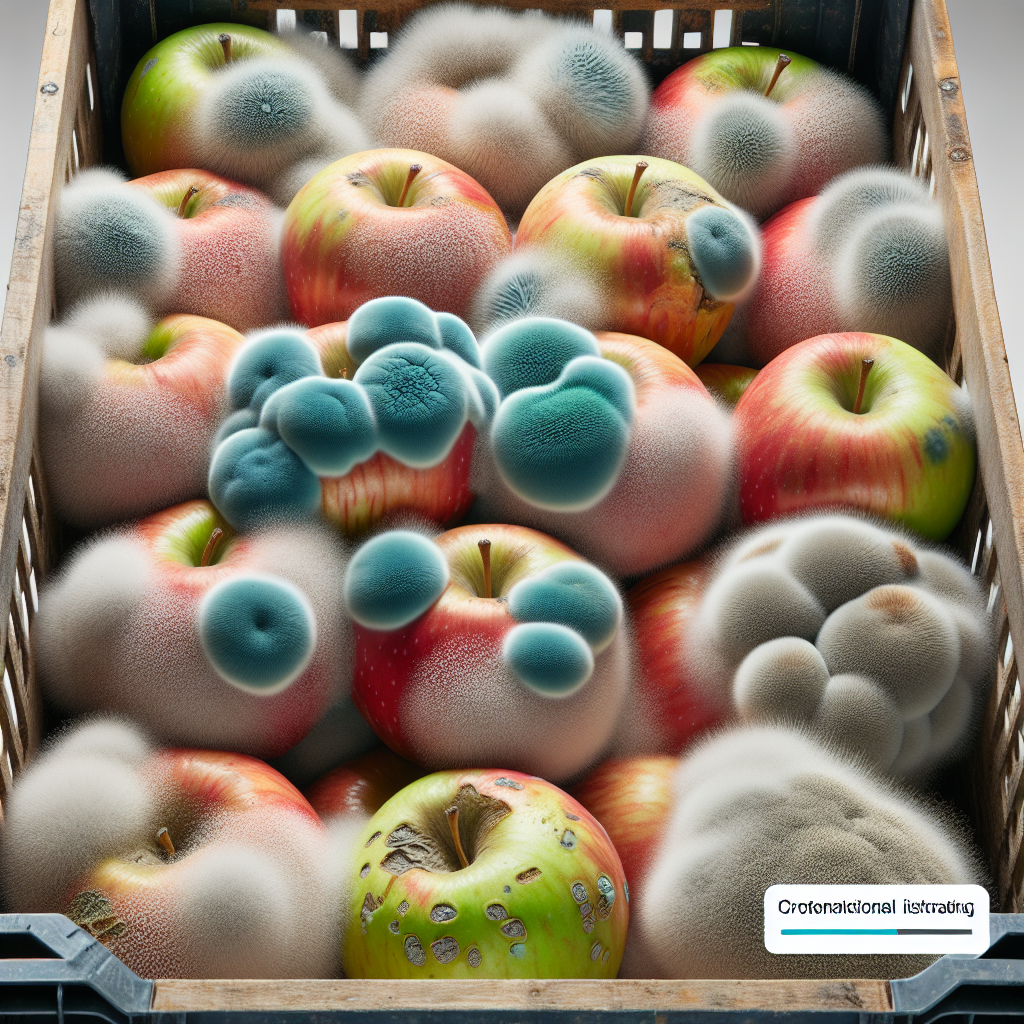
Introduction to Post-harvest fungal decay
Post-harvest fungal decay represents one of the most critical challenges in modern agriculture, leading to billions in annual global losses for farmers, distributors, and retailers. This condition encompasses a range of fungal pathogens that infect harvested crops during storage, transportation, or marketing, rapidly deteriorating quality and marketability. Unlike field diseases, post-harvest decay exploits wounds, physiological stress, and suboptimal storage environments to proliferate, often turning prime produce into unsellable waste within days.
Understanding post-harvest fungal decay is essential for sustainable farming. Common culprits include Botrytis (gray mold), Penicillium (blue mold), Fusarium spp., and Rhizopus (black mold), each with distinct signatures but unified by their opportunistic nature. These fungi enter through harvest bruises, cuts, or latent field infections, accelerating under high humidity (>85% RH), temperatures above 10°C (50°F), and poor ventilation. In developing regions, losses can exceed 30-50% of yields, while optimized systems reduce this to under 5%. This guide provides professional-grade diagnostics, organic management, and prevention tailored for small to medium-scale operations, drawing from entomological, botanical, and agronomic expertise to safeguard your harvest.
Identifying Symptoms & Damage
Accurate identification is the cornerstone of managing post-harvest fungal decay, as early intervention can salvage entire batches. Symptoms typically appear 2-7 days post-harvest, starting at injury sites like stem ends, bruises, or abrasions. Visual cues vary by pathogen but share hallmarks: water-soaked lesions that expand rapidly, often with fuzzy mycelial growth, spore masses, and off-odors.
Gray Mold (Botrytis cinerea): Grayish-white fuzz on fruits like strawberries, grapes, or tomatoes; lesions start tan and become necrotic with profuse sporulation under humid conditions. Affected strawberry berries collapse into mush.
Blue Mold (Penicillium expansum): Blue-green spores on apples, citrus, or pears; soft, watery rot with earthy smell. Common in apple storage, where it spreads via airborne conidia.
Fusarium Rot: Pinkish-white mycelium on bananas or potatoes; dry, leathery decay with vascular discoloration. Often linked to pre-harvest Fusarium infections.
Rhizopus Rot (Black Mold): Coarse black whiskers on melon or tomato wounds; leaks ammonia, causing rapid breakdown. Prevalent in cantaloupe.
Damage extends beyond aesthetics: mycotoxins like patulin from Penicillium pose health risks, while decay spreads contagiously in bins or pallets, amplifying losses by 10-20x. Use a hand lens to spot sporangia or mycelia; odor and tissue texture (soft vs. firm) differentiate from bacterial rots. For confirmation, plate samples on potato dextrose agar—colony morphology reveals the culprit within 48 hours. Economic impact: a 10% decay rate in a 10-ton mango shipment equates to $2,000+ losses at $0.20/lb wholesale.
Lifecycle and Progression of Post-harvest fungal decay
Post-harvest fungal pathogens follow a rapid lifecycle optimized for storage exploitation. Most are necrotrophs, producing millions of conidia (asexual spores) that remain dormant on crop surfaces or debris until harvest stress activates them. Infection begins with spore germination on moist wounds (optimal at 20-25°C, 90-100% RH), mycelial penetration within 12-24 hours, and enzymatic tissue breakdown.
Key Stages:
- Dormancy/Latent Phase: Spores overwinter in soil, senesced plant parts, or on unripe fruit. Field exposure via rain splash or wind sets latent infections.
- Activation: Harvest ethylene burst and mechanical injury lower defenses (cuticle breaches, phytoalexin depletion).
- Infection & Colonization: Hyphae invade, producing pectinases and cellulases for rot. Incubation: 1-3 days.
- Sporulation: Visible mold forms, releasing 10^6-10^9 spores/mycelium daily, infecting neighbors via air currents or contact.
- Mycotoxin Production: Secondary metabolites accumulate, rendering produce toxic.
Progression accelerates in ethylene-rich atmospheres (from ripening fruits), with chain reactions: one decayed Hass Avocado can spoil a crate. Lifecycle completes in 3-7 days, but sclerotia (survival structures) persist years in storage debris. Temperature gradients in piles exacerbate spread—cool cores delay, warm peripheries explode. Learn more about Why Misidentifying Plants Costs Small Farms Thousands - And How AI Camera Diagnosis Fixes It Fast for tech-aided ID.
Environmental Triggers & Risk Factors
Post-harvest fungal decay thrives under predictable conditions, making risk assessment straightforward. Primary triggers: high relative humidity (RH >90%), temperatures 15-30°C (59-86°F), poor airflow (<10 m/min), and ethylene >1 ppm. Mechanical damage during harvest (e.g., drop heights >0.5m) creates entry points, while overripe or immature fruit are most susceptible.
Key Risk Factors:
- Pre-Harvest: Late-season rains promote latent infections; nutrient imbalances (high N) weaken cell walls.
- Harvest Practices: Dirty bins, overcrowding, delayed cooling (>24 hours to <10°C).
- Storage: Inadequate ventilation, condensate on walls, mixed loads (e.g., apples with citrus).
- Crop-Specific: Thin-skinned cherry tomato or high-sugar grapes rot fastest.
Data shows 1°C rise doubles decay rate; RH fluctuations cause wetting/drying cycles that crack skins. Pests like fruit flies vector spores, compounding risks. Monitor with data loggers—action thresholds: RH>85%, temp>15°C, O2<2%.
Organic Control & Treatment Plans
Organic management emphasizes sanitation, biocontrols, and barriers—no synthetic fungicides needed. Act within 24 hours of detection for 80% salvage rates.
Immediate Response:
- Isolate: Remove affected produce; cull >5% rot.
- Sanitize: 1% H2O2 or 200 ppm chlorine dips (5 min), rinse thoroughly.
- Dry & Cool: Forced-air cooling to 0-4°C, 85-90% RH.
Organic Treatments:
- Biofungicides: Bacillus subtilis (e.g., Serenade) or Trichoderma harzianum sprays pre/post-harvest; apply 10^9 CFU/L.
- Essential Oils: Thyme oil (1-2 mL/L) or cinnamon extracts inhibit spore germination by 90%.
- Coatings: Chitosan (1-2%) or beeswax emulsions seal wounds.
- Ozone: 0.1-0.5 ppm in storage rooms kills surface spores.
Integrated Plan: Weekly inspections, UV-C light (254 nm, 10 kJ/m²), and antagonistic yeasts (Candida oleophila). For potato, cure at 12-15°C/95% RH 3-5 days before storage. Track efficacy: <2% decay target. Pair with Spring Pest Patrol: Organic AI Strategies to Shield Your Crops from Common Invaders for holistic defense.
Preventing Post-harvest fungal decay in the Future
Prevention outperforms cure, targeting the lifecycle from field to fork. Start with resistant varieties (e.g., 'Gala Apple' over 'Red Delicious'), optimal harvest timing (firm, pre-ethylene peak), and gentle handling (foam liners, padded bins).
Best Practices:
- Pre-Harvest: Fungicide rotations (organic copper pre-harvest), canopy management for dry fruit.
- Harvest: Field-clean, hydrocool immediately, sort by maturity.
- Storage Tech: CA storage (3-5% O2, 1-3% CO2), dynamic RH control.
- Monitoring: IoT sensors for real-time alerts.
- Sanitation Protocols: Bleach-wash bins (200 ppm), footbaths, pest exclusion nets.
Long-term: Compost cull piles away from fields, rotate crops, enhance soil microbiome with compost teas. ROI: Prevention cuts losses 70-90%, per USDA data. For small farms, Soil Health Mastery: 5 Proven Strategies for Small Farms to Build Fertile Ground Without Breaking the Bank builds resilience.
Crops Most Affected by Post-harvest fungal decay
Citrus, pome fruits, berries, and tropicals suffer highest losses (20-40%). Top victims:
| Crop | Primary Pathogens | Loss Potential |
|---|---|---|
| Apple | Penicillium, Botrytis | 15-25% |
| Orange | Penicillium, Diplodia | 20-30% |
| Strawberry | Botrytis, Rhizopus | 30-50% |
| Banana | Fusarium, Colletotrichum | 10-20% |
| Tomato | Alternaria, Fusarium | 15-25% |
| Potato | Fusarium, Rhizoctonia | 10-15% |
| Mango | Colletotrichum, Alternaria | 25-40% |
Grains like wheat face Fusarium head blight carryover. Tailor strategies per crop—e.g., ethylene absorbers for bananas.