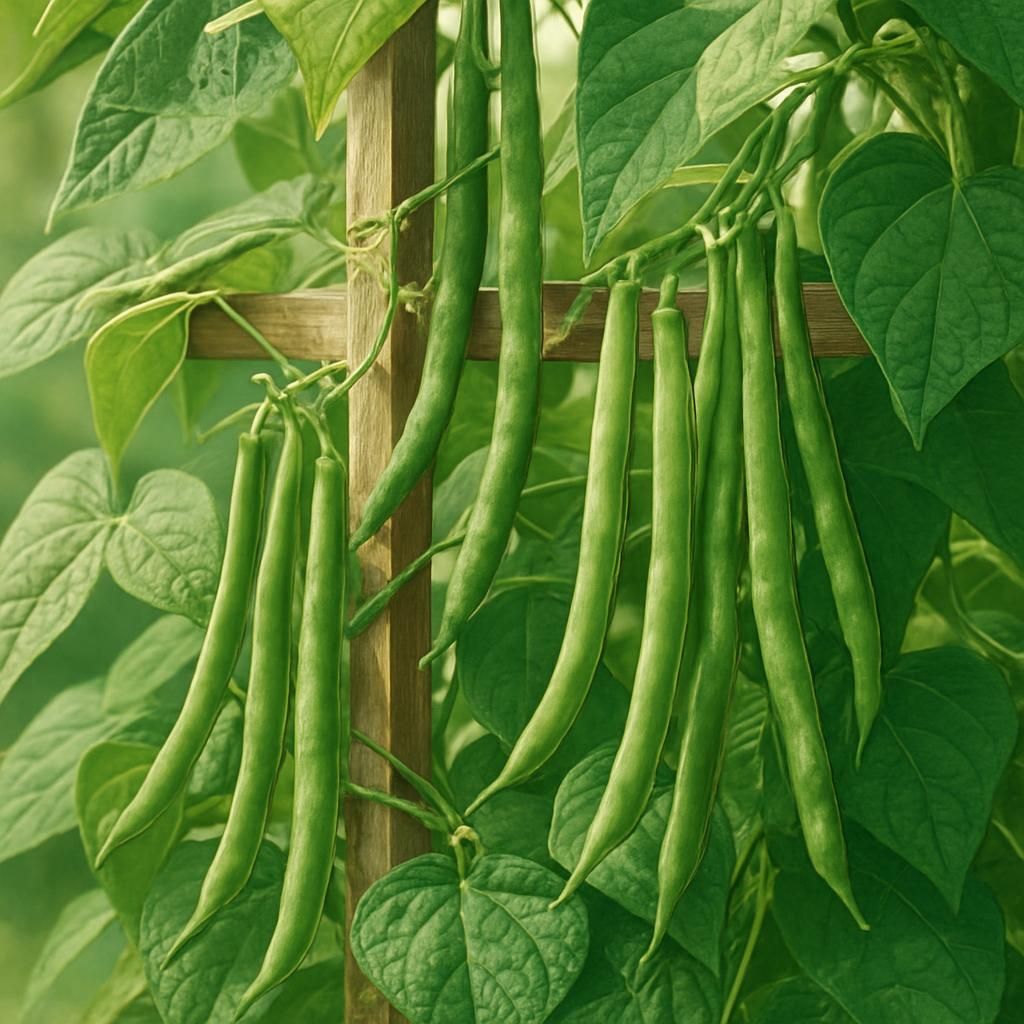
Introduction to Pole Beans
Pole beans (Phaseolus vulgaris) are indeterminate climbing legumes prized for their extended harvest window and space-efficient vertical growth. Unlike determinate bush beans, pole types continue producing pods for 6–10 weeks when properly supported and maintained. Their twining habit makes them ideal for small gardens, urban farms, and intensive cropping systems where ground space is limited.
Growers favor pole beans for superior flavor, higher total yields, and the ability to harvest at multiple maturity stages—from tender filet pods to mature shelling beans. Varieties such as Kentucky Wonder Pole Bean and Blue Lake have become standards due to their disease resistance and consistent performance across climates.
Botanical Profile of Pole Beans
Pole beans belong to the Fabaceae family and exhibit compound trifoliate leaves, papilionaceous flowers, and elongated pods containing 4–8 seeds. The indeterminate growth habit allows plants to reach 6–12 feet when trained on trellises, producing axillary flower clusters throughout the season. Root systems develop extensive nodules housing Rhizobium bacteria that fix atmospheric nitrogen, enriching the soil for subsequent crops.
Flowers are typically white, pink, or purple and self-pollinating, though insect visitation can increase pod set. Seed color varies from white and cream to black, red, and mottled patterns depending on cultivar. The crop cycle from sowing to first harvest ranges from 50–70 days, with continued production until frost.
Soil, pH, and Climate Requirements for Pole Beans
Pole beans thrive in well-drained, fertile loams with high organic matter. They perform best in slightly acidic to neutral soils and require consistent warmth for germination and growth.
| Parameter | Ideal Range | Notes |
|---|---|---|
| Soil Type | Loam, sandy loam | Avoid heavy clays; improve drainage |
| Soil pH | 6.0–7.0 | Test and lime if below 5.8 |
| Soil Temperature | 60–85°F (16–29°C) | Minimum 55°F for germination |
| Air Temperature | 65–85°F (18–29°C) day | Sensitive to frost; protect below 50°F |
| Spacing | 4–6 inches between plants | Rows 18–36 inches apart on trellis |
| Organic Matter | 3–5% | Incorporate compost or aged manure |
| Drainage | Excellent | Raised beds recommended in wet climates |
Step-by-Step Planting & Propagation
- Site Selection: Choose a full-sun location with at least 6–8 hours of direct light and protection from strong winds.
- Soil Preparation: Till or fork the bed to 12 inches, removing rocks and weeds. Incorporate 2–3 inches of compost and a balanced organic fertilizer (5-5-5 or similar).
- Support Installation: Erect sturdy trellises, teepees, or cattle-panel arches before planting to avoid root disturbance later.
- Sowing: Plant seeds 1 inch deep and 4–6 inches apart once soil reaches 60°F. Inoculate seeds with Rhizobium leguminosarum if the bed has not hosted legumes in the past three years.
- Succession Planting: Sow new rows every 2–3 weeks until 8 weeks before first frost for continuous harvest.
- Transplant Option: Start seeds indoors in biodegradable pots 2–3 weeks before last frost; transplant at the 2-true-leaf stage without disturbing roots.
Care & Maintenance regimes for Pole Beans
Consistent moisture, balanced nutrition, and regular training keep vines productive and disease-free.
| Task | Frequency | Details |
|---|---|---|
| Watering | 1–1.5 inches/week | Deep soak at base; avoid overhead to reduce disease. Mulch to retain moisture. |
| Fertilizer | At planting + mid-season | Side-dress with compost tea or fish emulsion at first flowers; avoid excess nitrogen. |
| Pruning | Weekly | Remove lower leaves touching soil; pinch tips at 7–8 ft to encourage branching. |
| Mulching | Once at 6-inch height | 2–3 inches straw or shredded leaves to suppress weeds and moderate soil temp. |
| Training | As needed | Gently wrap new growth around supports; tie with soft twine if necessary. |
Pests, Diseases & Organic Management
Common insect pressures include bean leaf beetles, Mexican bean beetle, and aphids. Fungal issues such as rusts, powdery mildew, and bacterial blight can reduce yields if humidity is high.
Organic controls begin with cultural practices: crop rotation (minimum 3 years), resistant varieties, and proper spacing for airflow. Handpick beetles and larvae; apply neem or insecticidal soap for aphids. Use floating row covers until flowering for beetle exclusion. Copper-based sprays or Bacillus subtilis products manage early bacterial and fungal outbreaks. Beneficial insects such as lady beetles and lacewings provide natural aphid suppression.
Harvesting, Curing & Optimal Storage
Harvest pods when they reach 4–7 inches and before seeds bulge for fresh eating. Pick every 2–3 days to maintain production. For dry beans, allow pods to yellow and rattle on the vine, then harvest entire plants and hang in a warm, dry location for 1–2 weeks. Shell and winnow seeds, then store in airtight containers at 50–60°F with low humidity. Properly dried beans remain viable for 2–3 years.
Companion Planting for Pole Beans
Pole beans pair exceptionally well with corn and winter squash in the traditional Three Sisters system, where corn provides support, beans fix nitrogen, and squash suppresses weeds. Other beneficial companions include carrot, radish, and cucumber. Aromatic herbs such as rosemary and thyme deter pests, while marigold and nasturtium attract beneficial insects. Avoid planting near onion, garlic, or chives as alliums can inhibit bean growth.
For additional organic soil-building strategies, see The Hidden Power of Mulching: 8 Organic Strategies to Transform Small Farm Soil.