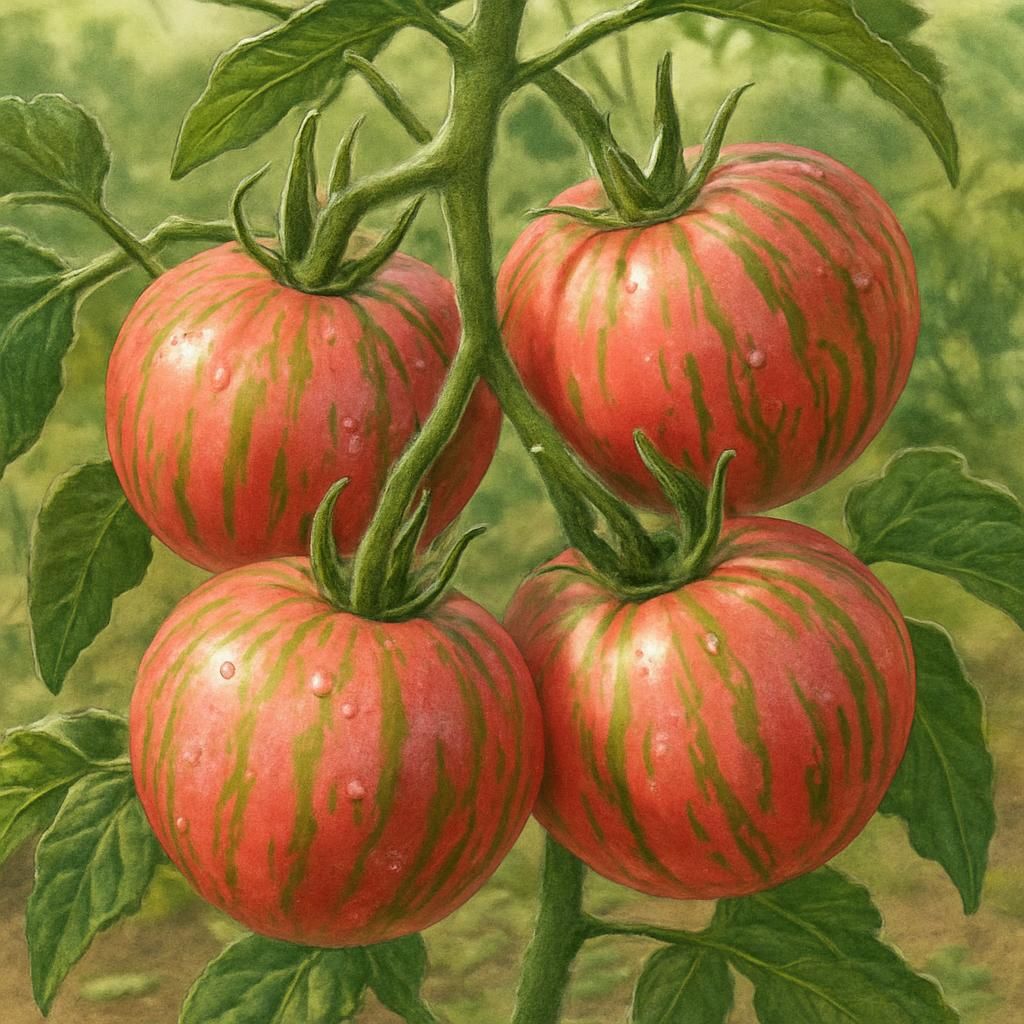
Introduction to Pink Tiger Tomato
Pink Tiger Tomato stands out among specialty cherry tomatoes for its elongated fruits, striking pink-and-green striping, and balanced sweet-tart flavor. Developed as an open-pollinated variety, it combines the productivity of cherry tomatoes with the visual appeal of striped heirlooms. Gardeners prize it for fresh eating, gourmet salads, and high-value market sales.
The variety typically produces clusters of 1.5–2.5 inch fruits on indeterminate vines that reach 5–7 feet. Fruits ripen in 65–75 days from transplant. Its thin skin and juicy texture make it a favorite for both culinary professionals and home cooks.
Botanical Profile of Pink Tiger Tomato
Pink Tiger Tomato belongs to the nightshade family (Solanaceae) and shares the standard tomato growth habit. It is an indeterminate cultivar, meaning it continues vegetative growth and fruit production throughout the season until frost. Vines develop compound leaves with serrated margins and produce yellow flowers in racemes.
The fruit is classified as a cherry-type elongated plum. Immature fruits show prominent green striping that intensifies to pink-red at maturity while retaining darker green tiger stripes. Average fruit weight ranges from 15–25 grams. Seeds are small, flat, and pale tan with typical tomato morphology.
Soil, pH, and Climate Requirements for Pink Tiger Tomato (MUST INCLUDE A MARKDOWN TABLE OF IDEAL CONDITIONS)
Pink Tiger Tomato performs best in well-drained, fertile loam soils rich in organic matter. Consistent moisture and moderate fertility support vigorous growth without excessive foliage at the expense of fruit.
| Parameter | Ideal Range | Notes |
|---|---|---|
| Soil Type | Sandy loam to loam | Excellent drainage prevents root diseases |
| Soil pH | 6.2 – 6.8 | Slightly acidic optimizes nutrient uptake |
| Temperature (Day) | 70–85 °F (21–29 °C) | Optimal photosynthesis and fruit set |
| Temperature (Night) | 60–70 °F (15–21 °C) | Prevents blossom drop |
| Spacing | 18–24 inches between plants | 4–5 ft between rows for indeterminate vines |
| Sunlight | Full sun, minimum 8 hours | Maximizes sugar development |
| Soil Organic Matter | 3–5% | Improves water retention and fertility |
Step-by-Step Planting & Propagation
Start seeds indoors 6–8 weeks before the last expected frost. Sow seeds ¼ inch deep in sterile seed-starting mix at 75–80 °F. Germination occurs in 5–10 days. Provide 14–16 hours of supplemental light daily to prevent legginess.
Harden seedlings for 7–10 days by gradually exposing them to outdoor conditions. Transplant after soil temperature reaches 60 °F and all frost risk has passed. Set plants deeply, burying the stem up to the first true leaves to encourage adventitious roots. Install sturdy 6–8 ft stakes or cages at planting time.
Direct seeding is possible in warm climates once soil reaches 70 °F, but transplanting yields earlier and more uniform crops.
Care & Maintenance regimes for Pink Tiger Tomato (MUST INCLUDE A MARKDOWN TABLE OF WATER, FERTILIZER, AND PRUNING SCHEDULES)
Consistent care ensures maximum yield and disease resistance. Mulch with 2–3 inches of organic material after soil warms to conserve moisture and suppress weeds.
| Growth Stage | Watering Schedule | Fertilizer Application | Pruning & Training Schedule |
|---|---|---|---|
| Transplant to 2 weeks | 1–1.5 inches/week; keep soil evenly moist | None; transplant solution optional | Remove lower leaves touching soil |
| Vegetative (weeks 3–6) | 1.5–2 inches/week; deep infrequent watering | Side-dress with balanced organic fertilizer (NPK 4-4-4) at 2-week intervals | Remove suckers below first flower cluster; tie vines weekly |
| Flowering & Fruit Set | Maintain even moisture; avoid fluctuations | Switch to high-phosphorus fertilizer (e.g., 2-5-3) every 3 weeks | Continue sucker removal; prune to 1–2 main stems |
| Fruit Ripening | Reduce slightly; avoid overhead watering | Optional light potassium boost (0-0-5) | Maintain airflow; remove diseased foliage |
Pests, Diseases & Organic Management
Common tomato pests include Aphids, Hornworms, Spider Mites, and Whiteflies. Scout weekly and use insecticidal soap or neem oil for soft-bodied insects. Handpick hornworms and destroy egg masses.
Major diseases include Early Blight, Late Blight, Septoria Leaf Spot, and Tomato Spotted Wilt Virus. Practice crop rotation, use disease-resistant rootstock when available, and remove lower leaves to improve airflow. Apply copper-based fungicides preventively during humid periods.
Harvesting, Curing & Optimal Storage
Harvest Pink Tiger Tomatoes when fruits reach full pink color with distinct stripes and slight give under gentle pressure. Pick clusters or individual fruits with a twisting motion to avoid stem damage. Frequent harvest encourages continued production.
Store ripe fruits at room temperature away from direct sun for 3–5 days. For longer storage, pick at breaker stage and ripen indoors at 65–70 °F. Avoid refrigeration below 55 °F as it causes flavor loss and mealy texture. Excess harvest can be dried, canned, or frozen for winter use.
Companion Planting for Pink Tiger Tomato
Strategic companions enhance growth and deter pests. Basil planted nearby repels Aphids and improves flavor. Marigold and Nasturtium deter nematodes and whiteflies. Garlic and Onion provide allium-based pest protection.
Avoid planting near Fennel or Walnut trees, which release growth-inhibiting compounds. Lettuce and Carrot make excellent understory companions that utilize different root zones.
For deeper guidance on seasonal planning, read The Overlooked Art of Seasonal Harvest Timing for Small Farm Profit.