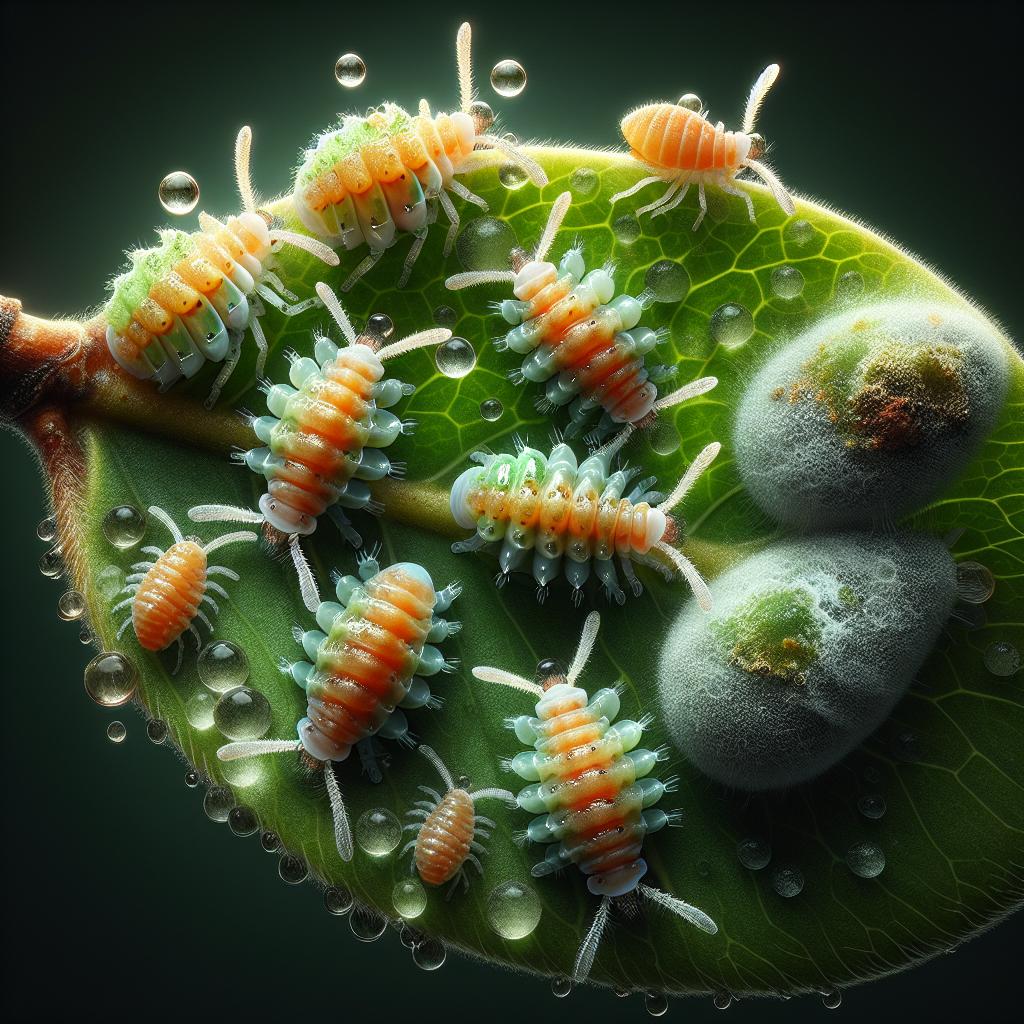
Introduction to pear psylla
Pear psylla, scientifically known as Cacopsylla pyricola, stands as one of the most destructive pests in pear orchards worldwide, particularly in regions like the Pacific Northwest, Europe, and parts of Asia where Pear cultivation thrives. This tiny insect, resembling a miniature cicada, feeds on plant sap from leaves, shoots, and fruits, leading to significant economic losses through reduced photosynthesis, deformed fruits, and secondary infections from sooty mold. Unlike broader pests such as aphids or scale insects, pear psylla has evolved a specialized relationship with pear trees, making it notoriously challenging to control without integrated strategies.
The pest's impact extends beyond direct feeding damage; its honeydew secretions foster sooty mold fungi, which blacken foliage and impair marketable fruit quality. In severe infestations, psylla can cause tree defoliation, weakening overall vigor and predisposing trees to diseases like fire blight. Growers report yield reductions of up to 50% in unmanaged orchards, underscoring the need for proactive management. This definitive guide draws from entomological research and field trials to equip pear producers—from commercial operations to small-scale Bartlett Pear growers—with practical diagnostics and organic solutions. Early detection is key, as populations explode rapidly under favorable conditions. For real-world insights, check this Spring Pest Patrol: Organic AI Strategies to Shield Your Crops from Common Invaders for complementary tactics.
Understanding pear psylla's biology is foundational to control. Adults are 2-3 mm long, with mottled brown wings and a distinctive jumping ability. Nymphs are flat, orange to green, and covered in waxy filaments. Overwintering adults emerge in early spring, laying eggs that hatch into nymphs causing the most damage during bloom and shoot growth. With 8-12 overlapping generations per year, timing interventions precisely is critical for success.
Identifying Symptoms & Damage
Diagnosing pear psylla infestations starts with keen observation of telltale signs on Bosc Pear and other varieties. The primary symptom is glistening honeydew droplets on leaves, stems, and fruit—often described as 'rain' from dry trees. This sticky exudate promotes sooty mold (Capnodium spp.), creating black, velvety coatings that reduce photosynthetic efficiency by up to 30%.
Examine undersides of leaves for nymphs: tiny, pear-shaped crawlers with white wax tubes, clustered along veins. Severe feeding causes leaf cupping, yellowing, and premature drop, especially on new growth. Fruits develop russeting, scarring, and misshapen calyces, rendering them unmarketable. Differentiate from mites by the presence of honeydew and psylla's jumping behavior when disturbed.
Damage escalates in summer; nymphal secretions form 'honeydew rivers' dripping from trees, contaminating harvest bins. Trees exhibit stunted shoots, sparse foliage, and dieback, mimicking nutrient deficiencies. Use a hand lens (10x) for confirmation: look for cast nymphal skins and white summerform adults. Thresholds for action: 1-2 nymphs per leaf pre-bloom, 5+ post-bloom. Scout weekly from green tip stage, tapping branches over white paper to count dislodged insects. Secondary signs include ant attendance on honeydew and predaceous mite scarcity due to psylla outcompetition.
In young orchards, psylla weakens root establishment, mimicking root rot. Track damage progression: early-season nymphs cause 'bloomtime psylla' russet; midsummer waves lead to 'sticky fruit.' Economic injury varies by variety—susceptible Anjou Pear suffers most. Photograph symptoms for records and consult extension services for verification.
Lifecycle and Progression of pear psylla
Pear psylla's lifecycle is multivoltine, with 8-12 generations annually, tightly synced to pear phenology. Overwintering adults (winterform: dull green-brown, 2.5 mm) shelter in bark crevices, emerging at green tip (March-April). Females lay 200-600 yellow eggs singly or in clusters on buds, petioles, and veins—hatching in 7-10 days into first instar nymphs.
Nymphs progress through five instars over 2-3 weeks: instars 1-2 are mobile crawlers; later stages are sessile, producing honeydew via stylet penetration into phloem. Summer adults (summerform: yellow-green, winged) disperse within orchards, reproducing parthenogenetically under stress. Development accelerates with temperatures: optimal 24-27°C, with diapause cues below 10°C triggering winterform morph.
Progression: Eggs (5-10 days) → Nymphs (14-21 days) → Adults (live 1-2 months). Peak populations align with shoot growth; midsummer 'hot spots' on water sprouts. Monitor with beat sheets: 0.5 nymphs/leaf triggers action. Lifecycle disrupts naturally via predators like lacewings and spider mites predators, but broad sprays harm these allies.
Environmental Triggers & Risk Factors
Pear psylla thrives in mild winters (minimal mortality below -15°C) and warm springs, with RH >60% favoring egg hatch. Risk spikes in humid valleys with poor air drainage, abandoned orchards harboring reservoirs, and dense plantings exceeding 1,000 trees/ha. Susceptible varieties like Bartlett and high-nitrogen soils (excess >150 kg/ha) promote tender growth, ideal for feeding.
Triggers include delayed dormant sprays missing overwinterers, irrigation-induced humidity, and nearby apple blocks sharing psyllids. Climate change extends generations, with models predicting 20% population rise per 1°C warming. Assess risk via overwintering adult counts: >1/tree signals high threat.
Organic Control & Treatment Plans
Organic management hinges on IPM: dormant oils (2-3% superior oil) smothering 80-90% adults; timed horticultural oils/insecticidal soaps (1-2% at nymph hatch) suffocating soft-bodied stages without residues. Kaolin clay (Surround WP) deters feeding, reducing populations 50-70%. Release predators: lacewings (200/acre), minute pirate bugs.
Treatment plans: 1) Dormant: 2 gal/100 gal oil + 1 gal/100 gal lime sulfur. 2) Pre-bloom: Soap at 1-2% when eggs hatch. 3) Summer: Alternate oils, soaps, with pyrethrins sparingly. Disrupt with reflective mulches and yellow sticky traps (20/acre). Biologicals: Beauveria bassiana fungi target nymphs. Rotate modes to prevent resistance. For scouting tips, see Spring Pest Patrol.
Preventing pear psylla in the Future
Prevention emphasizes sanitation: remove wild pears, strip mummies, prune for airflow (20% canopy removal). Plant resistant rootstocks (OHxF 87), space 3-4m, and time irrigation to dry foliage. Dormant monitoring and early oils cut carryover 95%. Cover crops like clover suppress weeds hosting predators. Long-term: diversify with peach interplants diluting populations.
Annual IPM audits and resistance monitoring ensure sustainability. Educate crews on thresholds to avoid over-spraying.
Crops Most Affected by pear psylla
Primarily pear varieties: Bartlett, Bosc, Anjou, Comice. Minor hosts: quince, wild pears. No significant impact on apple despite family ties.