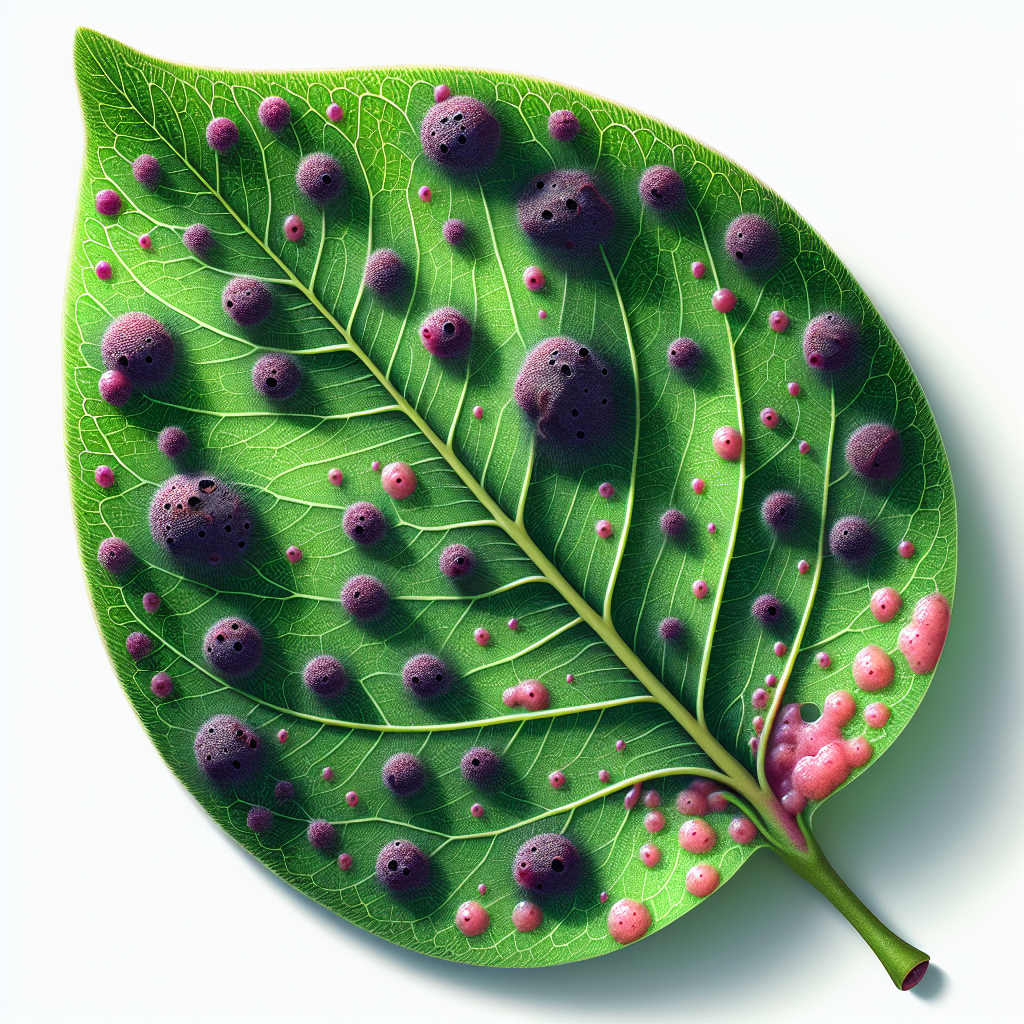
Introduction to Fabraea leaf spot
Fabraea leaf spot, also known as pear leaf blight or black spot, represents one of the most significant foliar diseases challenging pear growers worldwide. This fungal infection, driven by Fabraea maculata (with its anamorph stage Entomosporium mespilicola), targets pear trees and certain stone fruits, manifesting as distinctive dark spots that compromise photosynthesis, weaken tree vigor, and diminish yields. In commercial orchards and home gardens alike, early detection and proactive management are crucial to mitigate losses, which can exceed 50% defoliation in severe epidemics.
First identified in the early 19th century, Fabraea leaf spot has become increasingly problematic due to changing climate patterns favoring prolonged leaf wetness. Unlike broad-spectrum leaf spot diseases, Fabraea is host-specific, primarily assaulting Pyrus species such as Bartlett, Bosc, and Anjou pears. Symptoms often mimic other issues like Septoria leaf spot or Alternaria leaf spot, underscoring the need for precise diagnosis. This guide equips agricultural professionals, orchard managers, and small-scale farmers with comprehensive strategies for identification, lifecycle understanding, organic control, and prevention. By integrating these practices, growers can sustain healthy canopies and optimize fruit production. For small farms battling multiple threats, tools like those in Why Misidentifying Plants Costs Small Farms Thousands - And How AI Camera Diagnosis Fixes It Fast can accelerate accurate spotting.
Identifying Symptoms & Damage
Recognizing Fabraea leaf spot begins with observing small, purple to black spots (1-3 mm) on the upper leaf surfaces, typically appearing in spring after petal fall. These lesions expand to 1/4 inch, developing feathery margins and straw-colored centers with a purple-black border. Undersides reveal acervuli—fungal fruiting bodies—that ooze pinkish spore masses in wet conditions, a hallmark for confirmation.
As infection progresses, spots coalesce, causing leaves to yellow, brown, and shrivel, often curling upwards before premature drop. Severe cases lead to 70-100% defoliation by midsummer, exposing fruit to sunburn and reducing carbohydrate reserves for next year's growth. New shoots exhibit black, elliptical lesions (1-2 inches long) with wrinkled, necrotic tissue, sometimes girdling twigs and causing dieback.
Fruit damage includes superficial russeting or corky spots near the calyx end, lowering market value. Differentiate from powdery mildew (white powdery growth) or fire blight (oozing cankers on branches). Use a hand lens to spot the diagnostic pink spores. Damage extends to tree health: defoliated trees produce smaller, softer fruit prone to storage rots, with yield losses up to 30-50% in unmanaged orchards. Young trees suffer most, stunted by repeated stress.
Lifecycle and Progression of Fabraea leaf spot
Fabraea maculata overwinters as stromata in fallen leaves and twig lesions, releasing ascospores in spring during rain events when temperatures hit 50-75°F (10-24°C). Primary infections occur on emerging leaves post-bloom, with lesions forming in 7-10 days under wet conditions (>9 hours leaf wetness).
The anamorph stage produces conidia in acervuli, splashing to nearby leaves via rain or overhead irrigation, fueling secondary cycles every 7-14 days. Optimal spread happens at 65-70°F with prolonged moisture, completing 5-10 cycles per season. By late summer, pseudothecia mature in debris, ensuring overwinter survival.
Progression accelerates in dense canopies with poor air circulation, where humidity lingers. Spores remain viable for months in leaf litter, necessitating thorough sanitation. Understanding this polycyclic nature explains explosive epidemics in wet years, emphasizing timing interventions before secondary spread.
Environmental Triggers & Risk Factors
Fabraea thrives in cool, humid climates with frequent spring rains, common in the Pacific Northwest, Northeast U.S., and Europe. Temperatures of 55-75°F combined with >8 hours daily leaf wetness are ideal; prolonged dry spells halt spread but don't eradicate inoculum.
Key risks include overhead irrigation, dense planting (retaining moisture), susceptible cultivars like Bartlett or Bosc, and neglected sanitation (infected debris). Susceptible apple varieties nearby can serve as bridges, though pears are primary. Poor vigor from nutrient deficiencies or root rot exacerbates susceptibility. High nitrogen promotes lush growth prone to infection. Climate change intensifies risks with erratic wet springs, demanding adaptive management.
Organic Control & Treatment Plans
Organic management hinges on an integrated approach starting with sanitation: rake and destroy fallen leaves in fall/winter, reducing inoculum by 90%. Mulch debris to accelerate decomposition or shred via mower (avoid composting).
Prune for airflow: remove 10-20% canopy annually, focusing on crossing branches and watersprouts. Apply dormant lime sulfur (1-2% solution) at bud swell to suppress overwintering structures.
Foliar sprays: Begin at petal fall with copper-based fungicides (e.g., fixed copper at 1-2 lbs/100 gal) or OMRI-listed sulfur (6-8 lbs/100 gal), repeating every 7-10 days during wet periods (up to 6 applications). Serenade (Bacillus subtilis) or Regalia (Reynoutria extract) offer biological control, applied preventively. Timing aligns with phenology models: first spray at 75% bloom scatter, protect tight cluster through shuck split.
Resistant varieties like Harrow Sweet, Moonglow, or Potter Selection reduce reliance on sprays. For outbreaks, strip-pick infected leaves and apply potassium bicarbonate. Monitor with sticky traps for spore detection. Rotate modes of action to prevent resistance. In severe cases, combine with spring pest patrol for holistic defense.
Preventing Fabraea leaf spot in the Future
Long-term prevention builds resilient orchards. Select resistant rootstocks and scions: interplant with fire blight-resistant varieties. Site selection avoids low-lying frost pockets; ensure well-drained soils to combat secondary Phytophthora.
Cultural practices: Drip irrigate to keep foliage dry; space trees 12-15 ft apart. Fertilize balanced (avoid excess N); maintain pH 6.0-6.5. Fall urea sprays (5%) hasten leaf drop and decomposition.
Scout weekly post-bloom using 20-leaf samples/tree; threshold: 1% incidence triggers sprays. Destroy wild cherry or hawthorn nearby harboring inoculum. Annual pruning enhances penetration of sprays/UV. For small farms, predictive tools from Why 80% of Small Farms Battle Weather Disasters - And How Hyper-Local AI Forecasts Can Save Your Harvest forecast wet windows. Rotate with non-hosts like garlic in understories.
Crops Most Affected by Fabraea leaf spot
Primarily Pyrus communis (European pear): Bartlett, Bosc, D’Anjou, Comice suffer most, with losses up to 50%. Asian pears (P. pyrifolia) show moderate resistance. Quince (Cydonia oblonga) and hawthorn (Crataegus spp.) serve as symptomless carriers. Rare on apple (minor spotting). No reports on stone fruits like peach despite family ties. Focus protection on commercial pear blocks; ornamentals like ornamental pears amplify regional inoculum.