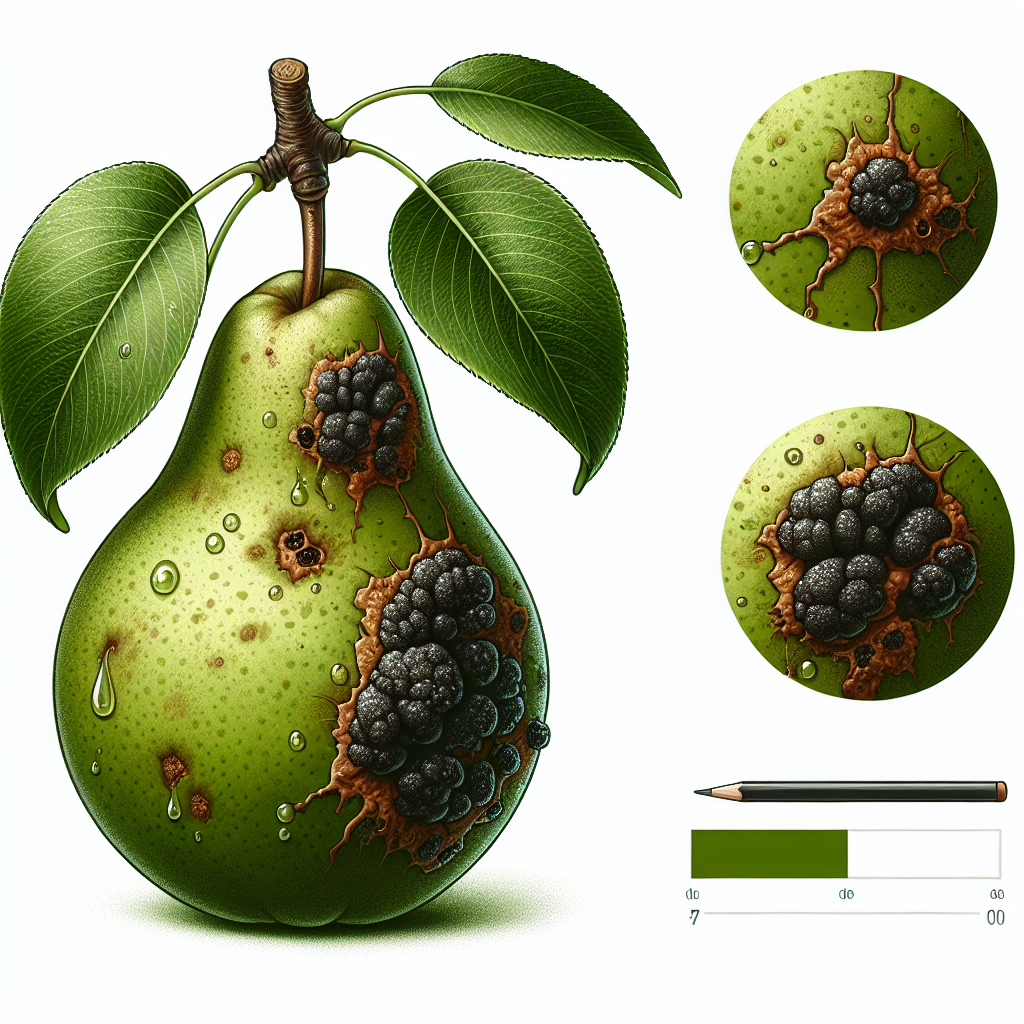
Introduction to pear scab
Pear scab, scientifically known as Venturia pirina, is one of the most destructive fungal diseases impacting pear orchards worldwide. This pathogen closely resembles the infamous apple scab but targets pear trees, causing significant cosmetic and structural damage to fruits, leaves, and young shoots. First identified in Europe in the early 19th century, pear scab has spread globally, particularly in temperate regions with high humidity and moderate temperatures.
The disease manifests as dark, olive-green to black scab-like lesions that crack and flake, rendering fruits unmarketable and weakening tree vigor over time. In commercial settings, pear scab can lead to 20-50% yield losses if unmanaged, while home gardeners often see deformed or dropped fruit. Understanding its biology is crucial for effective control, as the fungus overwinters in fallen leaves and twig infections, releasing spores in spring rains.
This comprehensive guide covers symptoms, lifecycle, risk factors, organic treatments, and prevention strategies, empowering growers to safeguard their Bartlett Pear and Bosc Pear varieties. With integrated approaches, pear scab can be minimized, ensuring healthy trees and high-quality harvests. Recent studies from agricultural extensions highlight that timely sanitation reduces spore loads by up to 90%, making proactive management essential.
Identifying Symptoms & Damage
Recognizing pear scab early is vital for limiting spread. Initial symptoms appear on leaves as small, circular, olive-green spots (1-2 mm) with a velvety surface, often on the underside. These spots expand to 5-10 mm, turning dark brown to black with a corky, raised texture. Severely infected leaves yellow, curl, and drop prematurely, leading to defoliation by mid-summer.
On fruits, lesions start as dark, velvety patches near the calyx end or stem, enlarging into rough, scabbed areas that crack as the pear grows. This cracking exposes flesh to secondary rots like Botrytis, exacerbating damage. Young fruits may abort entirely, while mature ones show black, sunken lesions reducing size and market value.
Twigs and shoots develop elongated, sunken cankers with fringed margins, sometimes girdling branches and causing dieback. Buds may blacken and fail to open. Damage severity varies: mild infections cause aesthetic issues, but heavy ones reduce photosynthesis, weaken trees, and lower next season's yields. Differentiate from powdery mildew (white coating) or fire blight (oozing cankers) via the scab's distinct texture and color.
In Anjou Pear orchards, fruit lesions are most common, impacting fresh market sales. Scout weekly from bud break, using a 10x hand lens to confirm fungal spores. Economic thresholds suggest action when 5-10% of leaves show symptoms.
Lifecycle and Progression of pear scab
Venturia pirina follows a complex lifecycle synchronized with pear phenology. The fungus overwinters as pseudothecia in fallen leaves, infected twigs, and fruit mummies. In spring (10-15°C, wet conditions), ascospores are ejected during rain, infecting expanding leaves and shoots during the primary infection phase (green tip to petal fall).
Ascospores germinate in 6-12 hours on wet surfaces, penetrating via stomata or wounds. Incubation lasts 2-3 weeks, producing conidia (summer spores) on lesion surfaces. These conidia spread via rain splash up to 30 cm, causing secondary infections from late spring through autumn. Multiple cycles (4-6 per season) amplify epidemics.
By autumn, conidia produce pseudothecia for overwintering. Progression accelerates in prolonged leaf wetness (>9 hours) at 15-20°C. In severe cases, trees enter dormancy stressed, with reduced bud set. Lifecycle mirrors apple scab, but V. pirina has fewer ascospore cycles and prefers slightly warmer conditions.
Monitoring with trap trees or spore samplers helps predict outbreaks. In the Pacific Northwest, primary infections peak at pink bud stage, while Eastern U.S. sees extended secondary spread.
Environmental Triggers & Risk Factors
Pear scab flourishes in cool (12-21°C), humid climates with frequent rain. Leaf wetness duration >8 hours is critical for infection; overhead irrigation exacerbates spread. High-risk areas include the U.S. Pacific Northwest, New Zealand, and Europe, where spring rains coincide with bud break.
Susceptible varieties like Bartlett Pear and Anjou are most vulnerable; resistant ones like Harrow Sweet or Moonglow fare better. Dense canopies trap moisture, increasing risk—prune for airflow. Poor sanitation (unremoved debris) builds inoculum; planting near wild apple trees introduces spores.
Soil pH >7 reduces fungicide efficacy; nitrogen excess promotes lush growth ideal for infection. Climate change extends wet periods, heightening threats. Risk models (e.g., RIMpro) integrate temperature, wetness, and phenology for spray timing.
Organic Control & Treatment Plans
Organic management emphasizes prevention but includes curative options. Sanitation: Rake and destroy fallen leaves (reduces ascospores 70-90%); flail mow orchard floor. Cultural: Prune for 20-30% sunlight penetration; space trees 4-6 m. Avoid overhead watering; use drip irrigation.
Resistant Varieties: Plant El Dorado, Seckel, or Harrow Delight. Biologicals: Apply Bacillus subtilis (Serenade) or Trichoderma pre-bloom for antagonism.
Organic Fungicides: Sulfur (4-6 kg/ha, 3-5 apps from green tip) is standard; copper (e.g., Bordeaux mix) at dormancy/delayed dormancy. Potassium bicarbonate for conidial control. Rotate to prevent resistance. Timing: Mills Table or Ascospore Maturity models guide sprays.
Integrated plan: Dormant copper + 4-6 sulfur apps + sanitation. For outbreaks, read our blog on Spring Pest Patrol for enhanced monitoring. Efficacy reaches 85% with compliance.
Preventing pear scab in the Future
Long-term prevention builds resilient orchards. Select scab-resistant rootstocks and varieties; certify planting stock disease-free. Implement 2-year rotation with non-hosts like garlic.
Annual sanitation: Shred leaves, apply urea (5%) to hasten decomposition. Prune annually post-harvest; thin fruits for drier canopies. Mulch with compost suppresses splash dispersal.
Monitor via weather stations; delay sprays until 70% ascospore discharge. Foliar nutrients (calcium, potassium) bolster resistance. Cover crops like clover improve soil health, reducing stress.
For small farms, check Soil Health Mastery. Quarantine new trees; scout neighbors. These steps sustain yields >20 tons/ha organically.
Crops Most Affected by pear scab
Primarily Pear species: European (P. communis) like Bartlett, Bosc, Anjou; Asian (P. pyrifolia) less susceptible. Oriental hybrids vary. Wild pears serve as reservoirs.
Rarely affects apple (different Venturia nashicola strains possible), quince minimally. No impact on stone fruits like peach or plum. Focus protection on commercial pears; backyard quince safe.