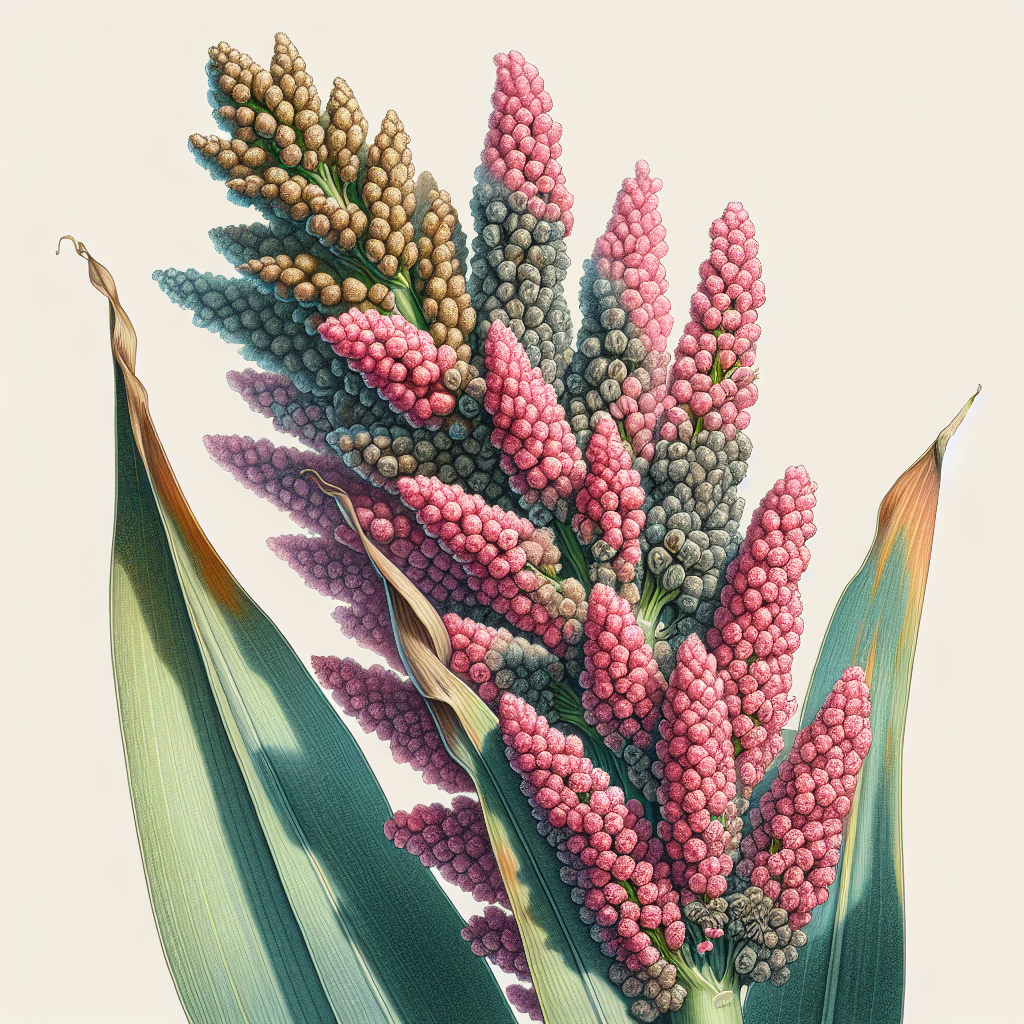
Definitive Diagnostic and Management Guide for Panicle Molds
Introduction to Panicle molds
Panicle molds represent a complex of fungal diseases that severely impact grain-producing crops, particularly in tropical and subtropical regions. These molds primarily affect the panicles—the seed-bearing heads of grasses—leading to widespread grain contamination and yield reductions of up to 50% in severe cases. Caused by a consortium of opportunistic fungi such as Fusarium spp., Curvularia lunata, Alternaria alternata, and Helminthosporium spp., panicle molds thrive in environments with high humidity and temperature fluctuations during the critical grain-filling stage.
Unlike single-pathogen diseases, panicle molds are often a symptom of stressed plants rather than a primary infection. They are especially problematic in rice, sorghum, and millet production, where delayed maturity exposes panicles to prolonged moisture. Farmers often mistake early symptoms for insect damage or nutrient deficiencies, leading to misdiagnosis and ineffective control. This guide provides professional-grade diagnostic criteria, lifecycle insights, and integrated management strategies to minimize losses. Understanding panicle molds is crucial for sustainable cereal farming, as they not only reduce yield but also produce mycotoxins that pose health risks in food chains. For small-scale growers, early detection through field scouting can preserve profitability. Read our comprehensive blog on why misidentifying plants costs small farms thousands to enhance your diagnostic skills.
The economic impact is staggering: in Asia and Africa, panicle molds contribute to post-harvest losses exceeding millions annually. Climate change exacerbates the issue by increasing erratic rainfall patterns, making proactive management essential. This definitive guide equips botanists, agronomists, and farmers with evidence-based tools for diagnosis, organic treatments, and prevention.
Identifying Symptoms & Damage
Accurate identification of panicle molds begins with recognizing distinct visual cues on affected panicles. Initial symptoms appear as small, discolored spots on glumes (the protective bracts around grains), progressing to a powdery or velvety fungal growth in shades of pink, gray, black, or green. In rice, infected panicles show salmon-pink molds from Fusarium moniliforme, while sorghum panicles develop dark gray sporulation from Curvularia species.
Grains become shriveled, lightweight, and chalky-white or blackened, often failing to fill completely. Severe infections cause panicle blanching, where entire heads turn white and sterile. Damage assessment involves checking for mycotoxin contamination—use blacklight tests for aflatoxins or lab analysis for fumonisins. Yield losses correlate with infection severity: 10-20% discoloration reduces grade 1 grain to feed quality, slashing market value by 30-50%.
Differentiate from similar issues like grain mold (pre-harvest kernel infection) or downy mildew (systemic with white growth on leaves). Use a 10x hand lens to spot fungal spores and mycelia on glumes. Field diagnostics include the 'shake test': vigorously shaking infected panicles releases spore clouds. Economic thresholds: control if >10% panicles show symptoms. Document with photos for insurance claims or extension services.
Lifecycle and Progression of Panicle molds
Panicle molds follow an opportunistic lifecycle tied to host susceptibility and weather. Fungi overwinter as mycelia or spores in crop residue, soil, or alternate hosts like wheat or corn stubble. Primary inoculum spreads via wind, rain splash, or insects during anthesis (flowering).
Infection initiates on senescing glumes when relative humidity exceeds 90% for 8-12 hours at 25-35°C. Spores germinate, penetrate via wounds or natural openings, and colonize developing grains. Progression accelerates post-anthesis: day 0-7 (latent), day 8-14 (sporulation), day 15+ (grain fill disruption). Under prolonged wetness, secondary cycles produce conidia, amplifying spread within fields.
Mycotoxin production peaks during late grain fill, rendering grains toxic. Harvested residue perpetuates the cycle unless managed. Lifecycle duration: 10-20 days per cycle, with 2-3 cycles possible in wet seasons. Understanding this progression allows timed interventions, such as fungicide sprays at 50% anthesis.
Environmental Triggers & Risk Factors
Panicle molds flourish under specific microclimates: high humidity (>85%), temperatures 25-32°C, and cloudy weather during grain fill. Prolonged leaf wetness from rain, dew, or irrigation canopy closure heightens risk. High nitrogen fertilization promotes lush growth, delaying maturity and exposing panicles longer.
Risk factors include dense planting (>80% canopy closure), poor air drainage in low-lying fields, and delayed harvesting. Varietal susceptibility varies: long-duration hybrids like certain basmati rice are prone due to extended fill periods. Preceding droughts stress plants, making them vulnerable upon rain resumption. Soilborne inoculum from root rots or Fusarium further predisposes crops. Climate models predict 20-30% increased incidence with erratic monsoons.
Organic Control & Treatment Plans
Organic management emphasizes cultural and biological tactics. Crop Rotation: Alternate cereals with legumes or clover for 2-3 years to break residue cycles. Resistant Varieties: Select hybrids like Co-43 rice or hybrid sorghum with compact panicles and quick maturity.
Sanitation: Destroy volunteer plants and deep-plow residue post-harvest. Biologicals: Apply Trichoderma viride or Pseudomonas fluorescens at boot leaf stage (5-10 kg/ha) to outcompete pathogens. Biopesticides: Neem oil (2-5 ml/L) or potassium bicarbonate sprays at early bloom suppress sporulation.
Treatment Timeline:
- Pre-flowering: Balanced NPK, silicon supplements (50 kg/ha).
- Flowering: Biocontrol drench, prune for airflow.
- Grain fill: Early harvest at 20% moisture. Integrated plans reduce incidence by 60-70%. Monitor with traps for spore counts.
Preventing Panicle molds in the Future
Prevention hinges on IPM: Scout weekly from boot stage, using apps for humidity alerts. Planting Strategies: Sow early-maturing varieties, space 20-25 cm for ventilation. Fertility: Split nitrogen (avoid late top-dress), incorporate potassium for glume strength.
Irrigation: Avoid overhead; use drip to minimize wetness. Harvest Timing: Cut at physiological maturity (18-22% moisture), dry to <14% immediately. Residue Management: Shred and incorporate or bale-burn under regulations. Resistant cultivars and forecast-based sprays prevent 80% losses. Long-term: Breed for QTLs conferring mold tolerance.
Crops Most Affected by Panicle molds
Panicle molds predominantly strike panicle-bearing cereals:
- Rice (Rice, Basmati Rice): 20-40% losses in rainfed lowlands.
- Sorghum (Sorghum, Grain Sorghum): Hybrid heads most vulnerable.
- Pearl Millet (Pearl Millet): Smallholder staple in Africa/India.
- Finger Millet (Finger Millet), Foxtail Millet (Foxtail Millet), Barnyard Millet. Minor impacts on corn, wheat ears. Global hotspots: South Asia, Sub-Saharan Africa.