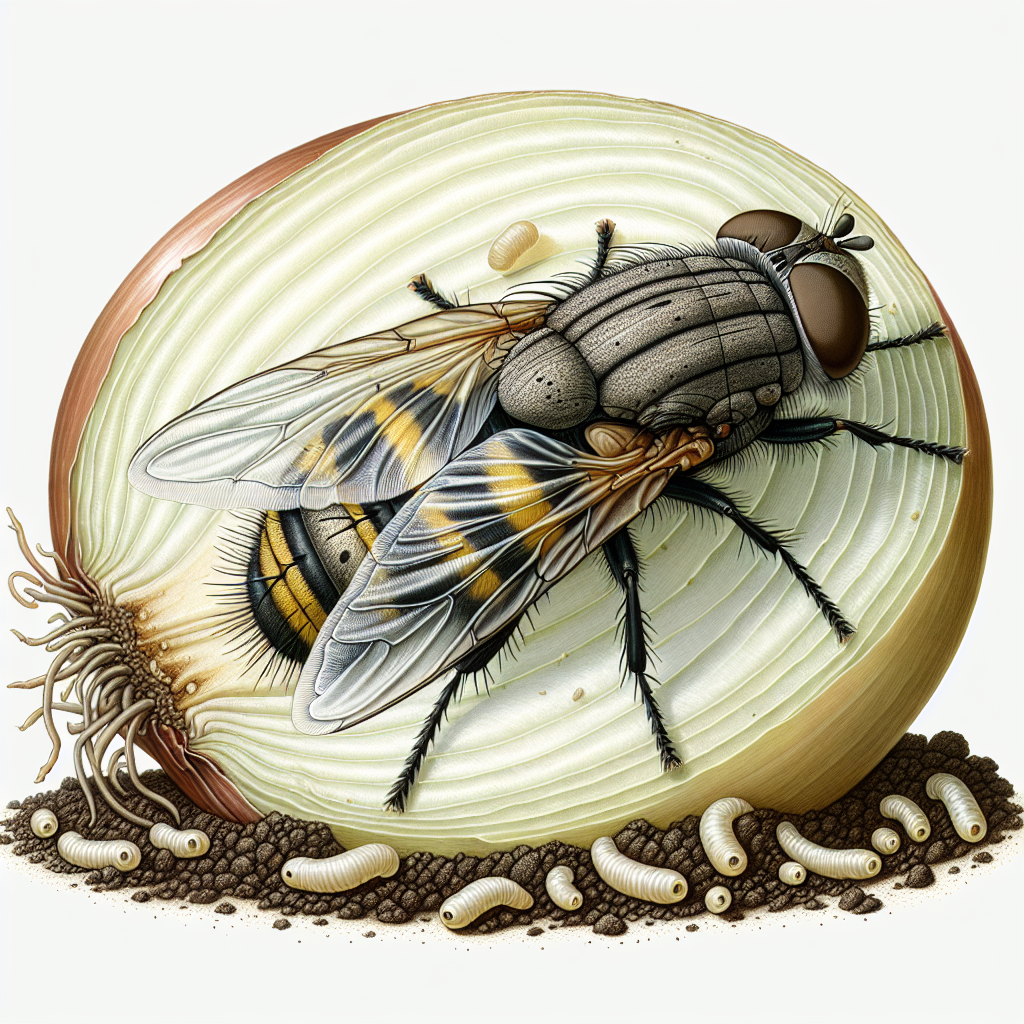
Introduction to Onion fly
The onion fly, scientifically known as Delia antiqua, is one of the most notorious pests affecting allium crops worldwide. Native to Europe but now cosmopolitan, this small, grayish fly resembles a housefly but poses a significant threat to onions, leeks, garlic, and shallots. Adult flies lay eggs near the base of young plants in spring, and the emerging maggots tunnel into roots and bulbs, causing rapid plant decline. This pest completes multiple generations per season, making it a persistent challenge for growers in temperate climates.
Onion fly infestations can devastate up to 100% of seedlings in untreated fields, particularly in cool, moist conditions. Early detection is crucial, as symptoms mimic root rot or nutrient deficiencies. This guide provides professional-grade diagnostics, lifecycle insights, organic treatments, and prevention strategies to safeguard your onion crops. By understanding its biology and implementing integrated pest management (IPM), farmers can minimize losses without synthetic chemicals. For small-scale operations, timing and soil hygiene are key to breaking the pest's cycle.
Identifying Symptoms & Damage
Onion fly damage is often mistaken for other issues like damping-off or cutworms. Key symptoms include:
- Seedling Stage: Young plants (2-4 weeks old) suddenly wilt and collapse, with thin, weak stems. Roots appear shredded or honeycombed with fine tunnels filled with creamy-white maggots (3-8 mm long).
- Bulb Stage: Mature bulbs show brown, decaying centers with maggot galleries. Outer skins may split, and a foul odor emerges from secondary bacterial infections.
- Above-Ground Signs: Yellowing or purpling leaves, stunted growth, and plants toppling over. In severe cases, entire rows die off.
To diagnose, gently uproot suspect plants. Look for legless, tapered maggots with black mouth hooks near the bulb base. Adult flies (5-7 mm, humpbacked, dark with light abdomen stripes) may be seen hovering low over crops on warm days. Differentiate from seedcorn maggot by host specificity—onion flies ignore non-alliums. Use a 10x hand lens to confirm maggot presence. Economic thresholds: 5-10% seedling loss warrants action.
Cross-sections of infested bulbs reveal meandering tunnels radiating from the base, often with pupae (brown, barrel-shaped). Secondary damage from slugs or fungi accelerates rot. Monitor with yellow sticky traps baited with onion juice to quantify fly populations.
Lifecycle and Progression of Onion fly
Delia antiqua has 2-4 generations annually, depending on climate. Understanding this cycle is vital for timing interventions.
- Eggs (1-3 days): Tiny (1 mm), white, cigar-shaped, laid in clusters (up to 100 per female) in soil cracks near plant bases. Hatching in 3-6 days at 15-20°C (59-68°F).
- Larvae/Maggots (2-4 weeks): Three instars feed voraciously on roots/bulbs. First instars mine epidermis; later ones bore deeply. Full-grown (9 mm) drop to soil to pupate.
- Pupae (10-20 days): In earthen cases 5-10 cm deep, overwintering in colder regions.
- Adults (3-4 weeks): Emerge in spring (April-May in northern hemispheres), live 3-4 weeks, feeding on nectar. Peak flight coincides with onion emergence.
Overwintering pupae cue to first generation adults when soil hits 7°C (45°F). Second generation peaks in June-July, third in August. In mild winters, partial fourth generation occurs. Lifecycle completes in 4-8 weeks; 21-day generation time at 20°C. Flies overwinter as pupae, with 80-90% survival in undisturbed soil.
Environmental Triggers & Risk Factors
Onion flies thrive in cool (15-22°C), humid conditions with moist soils. Key triggers:
- Temperature: Adults active above 10°C; optimal larval development at 18-22°C.
- Soil Moisture: High organic matter, poorly drained soils retain pupae moisture, boosting survival.
- Crop History: Continuous allium monoculture increases risk 10-fold. Volunteer onions or garlic debris harbor pupae.
- Weeds: Grasses and clovers shelter flies; clean cultivation reduces populations.
- Proximity: Infestations spread from nearby fields; wind aids adult dispersal up to 1 km.
Risk is highest in heavy clay-loam soils, pH 6.0-7.0, with >5% organic matter. Early planting (before soil warms) synchronizes seedlings with fly emergence. Over-fertilization with nitrogen promotes lush growth attractive to egg-laying females. Climate change extends generations in warming regions, per studies in the UK and US. Avoid planting near previous allium sites for 3 years.
Organic Control & Treatment Plans
Prioritize IPM: cultural, biological, then targeted organics. Avoid broad-spectrum sprays to preserve predators.
Cultural Controls:
- Crop Rotation: 3-4 years out of alliums. Plant non-hosts like potato or cabbage.
- Sanitation: Destroy volunteers; deep plow (20 cm) post-harvest to expose pupae to predators.
- Timing: Delay planting until after first fly peak (use traps to monitor).
Biological Controls:
- Nematodes: Steinernema feltiae (e.g., Scanmask) applied as soil drench (1 billion/ha) targets larvae. Effective at 15-25°C.
- Predators: Ground beetles, rove beetles, and birds consume maggots/pupae. Encourage with mulch borders.
Organic Treatments:
- Diatomaceous Earth (DE): Dust bases at first signs (reapply after rain). Abrades maggots.
- Neem Oil: 0.5% foliar/soil drench disrupts larval feeding. Spring Pest Patrol: Organic AI Strategies to Shield Your Crops from Common Invaders
- Spinosad: OMRI-approved (e.g., Entrust), targets adults/larvae. Apply evenings to spare bees.
- Trap Crops: Sow early onions as borders; destroy infested plants.
Treatment Plan:
- Scout weekly with traps.
- At 5% damage: Apply nematodes + DE.
- Follow-up: Spinosad if >10% infested.
- Post-season: Till + solarize soil.
Efficacy: Rotation + nematodes reduce populations 70-90%. Integrate with Elephant Ear Garlic companion planting—its volatiles repel flies.
Preventing Onion fly in the Future
Prevention beats cure. Long-term strategies:
- Resistant Varieties: Choose hybrids like 'Ailsa Craig' or 'Red Baron' with tougher skins. Red Onion (Red Baron)
- Soil Solarization: Cover moist soil with clear plastic (6 weeks summer) kills 90% pupae.
- Mulching: Straw barriers deter egg-laying; interplant marigold as trap/repellent.
- Row Covers: Fine mesh (0.5 mm) excludes adults from emergence to bulb formation.
- Biofumigation: Mustard cover crops release isothiocyanates toxic to pupae.
- Monitoring: Pheromone traps forecast flights; act pre-egg lay.
Farm-wide IPM: Map fields by risk, rotate systematically, and audit sanitation. For organics, certify practices to access premiums. Annual pupae counts guide replanting decisions. Success stories from organic farms show <2% loss with vigilant prevention.
Crops Most Affected by Onion fly
Primary hosts are Allium genus:
- Onions (most vulnerable; 50-100% loss possible): All varieties, especially seedlings.
- Garlic and Elephant Garlic: Bulb miners in fall plantings.
- Leeks, Shallots (Shallots (Zebrune)), Chives: Secondary hosts.
Minor: Bunching onions, scallions. Non-hosts: Brassicas, legumes. Global impact: Major in Europe, North America, Asia; yields drop 20-80% untreated. Protect high-value Yellow Onion (Walla Walla) with vigilance.