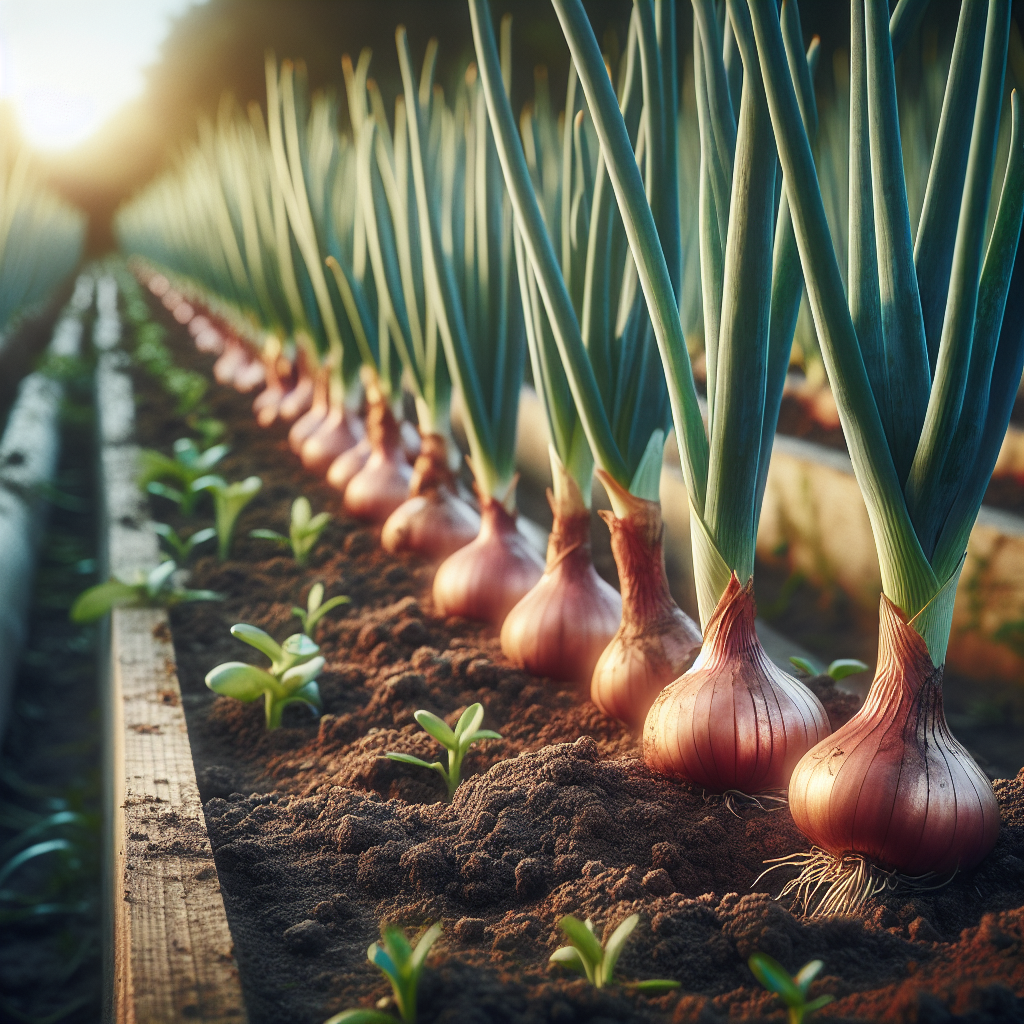
Introduction to Shallots (Zebrune)
A renowned French banana shallot, 'Zebrune' is grown primarily for its long, torpedo-shaped bulbs, pink-tinged flesh, and rich, balanced flavor that sits between a mild onion and a fine garlic note. It belongs to the shallot class of cultivated onions and is especially valued by market growers and cooks because it combines culinary elegance with practical field performance.
Unlike many round multiplying shallots, 'Zebrune' tends to produce elongated bulbs with a handsome copper to bronze skin and a notably uniform shape when grown under consistent conditions. That form is not only attractive for bunching and premium fresh sales, but also useful in the kitchen because the bulbs peel relatively cleanly and slice into long, even segments. Flavor develops best when bulbs mature slowly in cool to mild conditions and are cured thoroughly.
Historically, banana shallots became associated with French market gardening traditions, where selection emphasized storage quality, sweetness, and bulb regularity. 'Zebrune' fits that heritage well. It is often grown from sets in home gardens, but professional growers also raise it from seed for disease management, better uniformity, and lower risk of carrying over pathogens in planting stock.
For growers familiar with Onion, the cultural requirements will feel broadly similar, but shallots generally demand greater attention to spacing, nitrogen restraint late in the cycle, and careful curing. If pushed too hard with fertility or water, they produce oversized necks, delayed ripening, and poorer storage. When grown correctly, however, 'Zebrune' is one of the finest long-keeping alliums for temperate gardens and diversified farms.
Botanical Profile of Shallots (Zebrune)
This cultivar is part of the species Allium cepa, specifically the Aggregatum Group, which includes shallots and other multiplying onions. Botanically, shallots are not a separate species from bulb onions; instead, they are a specialized cultivated group selected for clustering behavior, bulb shape, flavor chemistry, and storage performance.
'Zebrune' is typically described as a banana shallot because of its elongated bulb shape. Mature bulbs are usually 10-18 cm long under favorable conditions, with dry skins ranging from golden tan to coppery brown. Internally, the flesh is whitish with pink or lilac rings, especially near the basal plate. The leaves are hollow, tubular, and waxy blue-green, arising from the basal plate in fans.
Plants are shallow rooted compared with many vegetable crops. The majority of feeder roots occupy the top 15-20 cm of soil, which explains why even brief moisture stress or crusted soil can reduce bulb sizing. The crop transitions from vegetative growth to bulbing largely in response to daylength and temperature. 'Zebrune' generally performs best in long-day to intermediate-long-day conditions, depending on region, and is better adapted to cool-season production than hot tropical climates.
The flavor profile is a key varietal characteristic. Compared with standard storage onions, 'Zebrune' develops lower harsh sulfur intensity and more aromatic sweetness after curing. The elongated cloves or segments inside the bulb are compact and dense, making it excellent for roasting, confit, vinaigrettes, and fine slicing.
Although often propagated vegetatively from sets, true seed production is possible under appropriate vernalization and flowering conditions. Commercially, seed-grown crops are often preferred where soilborne disease pressure is high because vegetative sets can transmit Basal rot, Downy mildew inoculum, or latent bulb pathogens from one generation to the next.
Soil, pH, and Climate Requirements for Shallots (Zebrune)
This crop performs best in fertile, well-drained, friable soil with high biological activity and excellent surface structure. Sandy loams and silt loams are ideal because they allow bulb expansion while draining fast enough to limit rot. Heavy clay can be used if deeply amended and formed into raised beds, but dense, compacted ground often produces misshapen bulbs, shallow rooting, and higher disease incidence.
A target pH of 6.2-6.8 is optimal. Growth usually remains acceptable down to about 6.0, but below that range phosphorus availability declines, root growth weakens, and alliums become more vulnerable to nutrient imbalance. In alkaline soils above 7.2, micronutrient tie-up, especially zinc and manganese, can subtly reduce vigor. If liming is required, incorporate it several weeks to months ahead of planting rather than immediately before.
Shallots are moderate feeders, but they are sensitive to fresh manure and excessive ammoniacal nitrogen. The best results come from soil rich in mature compost and balanced mineral nutrition rather than raw organic matter. A preplant target in field soils is roughly moderate available nitrogen with adequate phosphorus and high potassium. Potassium is especially important for bulb density, skin finish, and storage quality.
Climate matters greatly. 'Zebrune' prefers cool establishment temperatures, ideally 10-20°C, followed by mild bulbing weather around 18-24°C. Persistent heat above 30°C during active vegetative growth can stunt plants, accelerate stress, and cause smaller bulbs. Excess humidity combined with warm nights sharply increases the risk of foliar disease.
Consistent moisture is critical, but waterlogged soil is one of the fastest ways to lose the crop. The root zone should remain evenly moist, roughly comparable to a squeezed sponge: cool and damp but not dripping. In practical terms, when you insert a finger 5-7 cm into the soil, it should feel moist and cohesive, not muddy. If soil smears, shines, or emits a sour smell, it is too wet. If it feels powdery at 5 cm depth or leaf tips begin to gray and lose turgor by midday, irrigation is overdue.
Raised beds are strongly recommended, especially in regions with spring rainfall. Beds 10-20 cm high improve drainage, soil warming, and bulb uniformity. Wind exposure should be moderate; enough airflow to dry foliage after dew is helpful, but severe wind can desiccate shallow roots and twist leaves.
For broader bed management and organic fertility planning, growers may benefit from principles outlined in soil health strategies.
Step-by-Step Planting & Propagation
Propagation can be done from sets or from seed, and the best method depends on disease pressure, regional climate, and whether the goal is home use or commercial uniformity.
For planting from sets:
- Select firm, disease-free bulbs with intact skins and no soft neck tissue, mold, or basal plate discoloration. Small to medium sets usually produce the most uniform harvest.
- Prepare beds at least 20-25 cm deep, removing stones and clods. Work in finished compost at a modest rate, not excessive, and avoid undecomposed manure.
- Create rows 25-30 cm apart. In beds, use a grid at 15 cm between plants for standard bulbs; widen to 18 cm if targeting larger market-size banana shallots.
- Plant each set with the basal plate down and pointed tip up. The tip may sit just at soil level or be lightly covered with 1-2 cm of fine soil. Deep planting delays emergence and can encourage rot.
- Water immediately after planting to settle the soil, then allow the surface to dry slightly before the next irrigation.
For planting from seed:
- Sow indoors 8-10 weeks before transplanting, or direct sow where seasons are long and spring conditions are reliable.
- Use a fine, sterile seed-starting medium and sow shallowly, about 0.5-1 cm deep.
- Maintain germination temperatures around 18-22°C. Once emerged, grow seedlings cool and bright to prevent weak, floppy growth.
- Harden off thoroughly before transplanting. Seedlings should be pencil-thin or slightly less, with stocky leaves and white roots.
- Transplant at the same spacing as sets, taking care not to bury the neck too deeply.
Timing is region-specific. In temperate climates, plant sets in late winter to early spring as soon as the soil is workable, or in mild-winter areas plant in autumn for overwintering. Autumn planting often gives larger bulbs, but it also increases exposure to winter wet, frost heave, and disease in poorly drained sites.
A useful preplant trick is stale seedbedding: prepare the bed 10-14 days early, irrigate lightly to germinate weeds, then flame or shallowly hoe before planting. Because shallots compete poorly during early growth, clean establishment can significantly improve yield.
Care & Maintenance regimes for Shallots (Zebrune)
Successful management depends on balancing steady early vegetative growth with a gradual dry-down as bulbs mature. The crop should never be forced through extremes.
Watering should be regular but measured. During establishment, provide enough moisture to keep the top 8-10 cm of soil uniformly damp until roots extend. This may mean light irrigation 2-3 times per week in sandy soils, or once weekly in heavier but well-structured soils. Once plants are actively growing, a general target is about 25 mm of water per week from rainfall plus irrigation, increasing slightly in hot, breezy conditions. However, frequency matters more than volume in shallow-rooted alliums. Long dry gaps followed by heavy soaking encourage splitting and uneven bulb sizing.
Overwatering signs in 'Zebrune' include pale leaves despite adequate fertility, thick succulent necks, slowed bulbing, algae or moss on the soil surface, and bulbs with soft outer scales. Underwatering usually appears first as bluish cast to leaves, tip dieback, reduced leaf number, and slender bulbs that begin maturing prematurely.
Fertilization should be front-loaded. Apply a balanced preplant fertility base, then side-dress lightly with nitrogen when plants have 3-4 true leaves and again 2-3 weeks later if growth is pale or slow. Stop high-nitrogen feeding once bulbing begins in earnest. Late nitrogen leads to thick necks, delayed curing, and poor storage. Potassium and sulfur support flavor and bulb quality, but sulfur should not be supplied in excessive late doses if the goal is refined sweetness over pungency.
Weed control must be diligent and shallow. Shallots do not tolerate root disturbance well because their feeder roots are close to the surface. Hand hoeing at 1-2 cm depth or fine wheel hoe work while weeds are thread-stage is ideal. Mulch can help suppress weeds, but it must be used carefully. Heavy, wet mulch against the neck can increase rot risk; a thin, airy mulch between rows is safer than piling material at bulb level.
Do not hill soil around bulbs as one might with potatoes. In fact, slight shoulder exposure near maturity often helps skins dry and color properly. If bulbs are deeply buried late in the season, neck drying can be delayed.
Scape formation is uncommon in properly handled stock but may occur if sets experienced cold stress that triggered premature reproductive behavior. Remove any flower stalks as soon as they appear to redirect energy into the bulb, though such plants may still store less well.
Crop rotation is essential. Avoid planting shallots or related alliums in the same bed more than once every 3-4 years. This reduces buildup of White rot, Fusarium, Onion maggot, and nematodes. Follow with unrelated crops such as cereals, legumes, or leafy greens rather than onions or garlic.
Pests, Diseases & Organic Management
The most serious problems in shallot production usually arise from excess moisture, poor rotation, and infested planting stock rather than from random insect pressure. Prevention is far more effective than rescue treatment.
Onion thrips are among the most common insect pests. They rasp leaf surfaces, causing silvery streaking, reduced photosynthesis, and smaller bulbs. Damage often intensifies in hot, dry weather. Encourage predatory insects, maintain even irrigation to reduce plant stress, and use reflective mulches where practical. If pressure rises, insecticidal soap or neem-based products can suppress populations when directed thoroughly into leaf axils, but repeated applications may be needed.
Onion maggot is especially damaging in cool spring soils rich in undecomposed organic matter. Adults lay eggs near the base, and larvae tunnel into the bulb. Avoid fresh manure, rotate fields, destroy cull piles, and consider fine insect mesh or row cover immediately after planting where this pest is established. Covers must be placed before egg-laying begins.
Downy mildew causes pale elongated lesions, leaf collapse, and grayish-violet sporulation under humid conditions. It is favored by cool, damp nights and crowded foliage. Improve spacing, water early in the day, and avoid overhead irrigation if evening drying is poor. Remove infected debris and maintain long rotations.
Purple blotch and Botrytis leaf blight can also reduce leaf area. These diseases spread fastest where foliage remains wet for long periods. Good airflow, drip irrigation, and sanitation are the primary organic controls.
Basal rot and Fusarium are often introduced through infected sets or stressed by warm soil and injury. Symptoms include yellowing, root loss, basal plate browning, and soft decay. Prevention depends on clean planting material, excellent drainage, and avoiding mechanical damage during cultivation and harvest.
White rot is one of the most feared allium diseases because its sclerotia can persist in soil for many years. Look for yellowing plants, white fluffy growth at the bulb base, and black pinhead-like survival bodies. If confirmed, do not move soil or bulbs from the area, and avoid all allium cropping there for the long term.
Nematodes, especially Stem and bulb nematodes, may cause distortion, soft bulbs, and poor stand establishment. Seed-grown plants, clean stock, sanitation, and strict rotation are the main defenses.
Organic management rests on six pillars: clean planting stock, long rotation, excellent drainage, weed control, careful irrigation timing, and immediate removal of diseased plants. Once a bulb rot is widespread, salvage options are limited.
Harvesting, Curing & Optimal Storage
Harvest timing determines both flavor and shelf life. Bulbs are usually ready when 50-80% of tops have yellowed and begun to fall naturally, while skins have developed color and the neck starts to soften and constrict. Harvesting too early gives thin skins and poor storage; waiting too long risks splitting, disease, and weather damage.
To harvest, loosen the soil gently with a fork well outside the row and lift bulbs by hand. Avoid pulling forcefully on tops if the soil is tight, as neck tearing invites rot. Shake off loose soil, but do not wash bulbs intended for storage.
Curing should begin immediately in a warm, dry, shaded, well-ventilated area. Ideal curing conditions are roughly 24-30°C with active airflow and low ambient humidity. Spread bulbs in a single layer on mesh racks or hang in small bunches. Cure for 2-3 weeks, or longer in humid weather, until outer skins are papery, roots are dry and wiry, and necks are fully sealed.
Do not rush trimming. If necks are still fleshy when cut, storage losses rise sharply. Once thoroughly cured, trim roots close to the base and cut tops to about 2-3 cm above the bulb, unless braiding or bunching.
For storage, keep bulbs cool, dry, and dark with steady ventilation. The best long-term conditions are near 0-4°C with relative humidity around 60-70%. In home settings, an airy room around 10-15°C can still work well if humidity is low. Avoid refrigeration with high humidity unless airflow is good, because condensation can trigger mold. Never store near potatoes, which release moisture and can accelerate spoilage.
Inspect stored bulbs monthly. Remove any with soft spots, sprouting, mold, or neck breakdown. Properly grown and cured 'Zebrune' often stores for several months, and its keeping quality is one of the main reasons it is so widely admired.
Companion Planting for Shallots (Zebrune)
This allium pairs best with crops that appreciate similar soil conditions, benefit from its pest-confusing aroma, and do not directly compete for the same shallow root zone. Good companions include Carrot, Beet, and Lettuce. These combinations are especially useful in intensively managed beds where space efficiency matters.
Carrots are a classic partner because the scent of alliums may help disrupt carrot rust fly, while carrot foliage and root architecture differ enough from shallots to reduce direct competition when spacing is planned carefully. Beets also work well because they occupy a different rooting depth and can share evenly fertile beds without excessive nitrogen. Lettuce is an efficient short-cycle intercrop planted between rows early in the season; it shades soil lightly, suppresses weeds, and is usually harvested before shallot bulbs fully size.
Avoid pairing closely with vigorous legumes that create dense shade, or with crops requiring heavy irrigation late into summer, since prolonged surface moisture near maturity undermines bulb curing and storage quality. Also avoid repeated association with other alliums in the same area under the name of companion planting, as that can intensify disease carryover rather than improve system health.
In diversified market gardens, the best use of companion planting with 'Zebrune' is not random mixing but deliberate spatial design: shallow-rooted quick crops between rows early, pest-disruptive pairings on borders, and good airflow throughout the block. Done this way, companion planting supports weed suppression, beneficial insect activity, and more efficient bed turnover without compromising bulb quality.