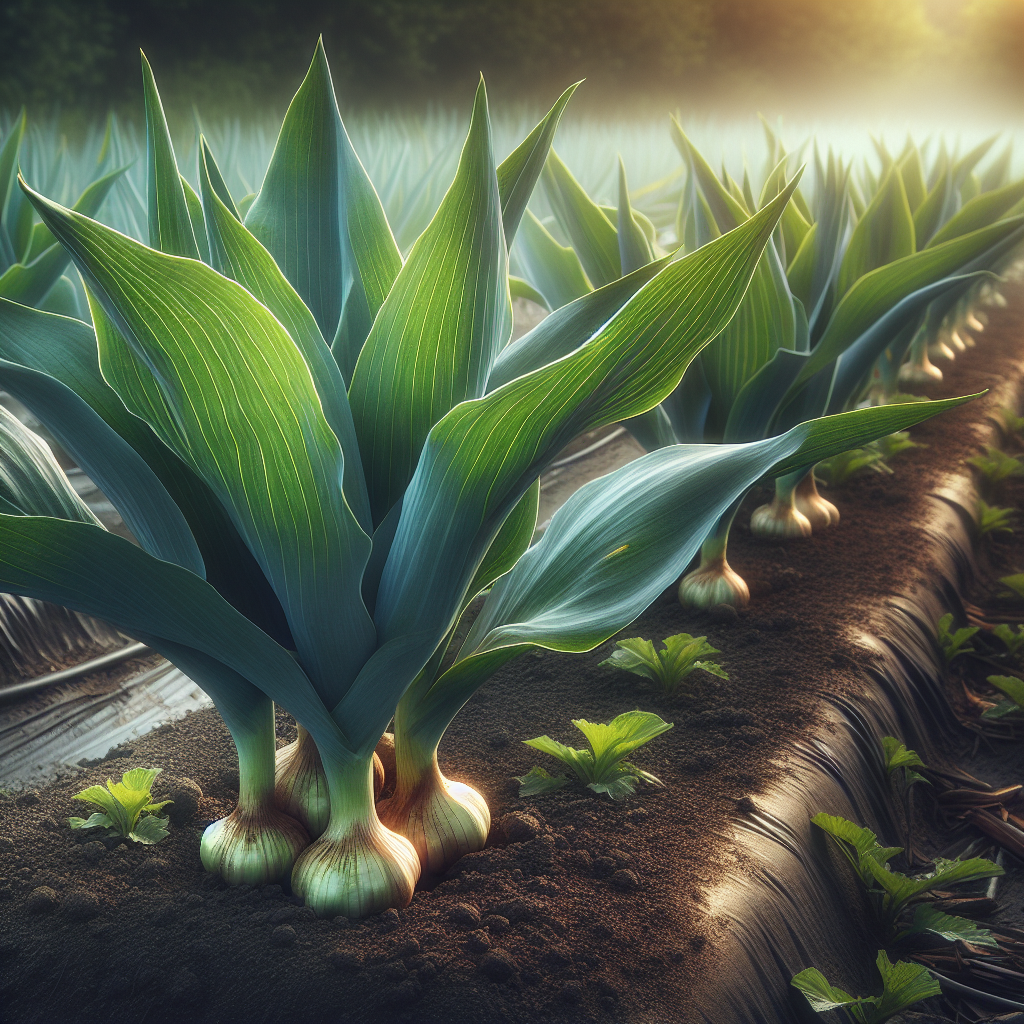
Introduction to Elephant Ear Garlic
Despite its common name, this crop is not a true garlic in the same species as hardneck or softneck garlic. Elephant Ear Garlic is generally classified with Allium ampeloprasum, the same broader group that includes leeks, which explains several of its growth habits: broad blue-green leaves, giant cloves, and a flavor that is noticeably milder and less pungent than common garlic. For growers, that distinction matters because it influences cold tolerance, bolting behavior, and the way the plant responds to fertility and moisture.
Its major appeal is size. A mature bulb can produce very large cloves, often 4 to 6 per bulb, each large enough to slice like a shallot. Culinary users appreciate the gentler flavor, especially for roasting, grilling, pickling, and using raw in dishes where standard garlic might be overpowering. From a market-garden perspective, it is a visually striking specialty allium that can command premium prices when bulbs are well cured and cleaned.
Historically, elephant garlic has been cultivated in Mediterranean and West Asian regions for a long time, likely moving through traditional leek and garlic growing systems before becoming popular in North America and Europe as a novelty crop. It behaves as a cool-season bulb crop and is best treated as a fall-planted allium in most temperate climates. In some regions it may also produce round, unsegmented bulbs in its first cycle from small offsets or seed-like side bulblets, then form full segmented bulbs after replanting.
For growers seeking another cool-season allium with ornamental and culinary appeal, see Saffron Crocus as a contrasting specialty fall-planted crop.
Botanical Profile of Elephant Ear Garlic
This plant forms a basal rosette of wide, strap-like leaves with a waxy, blue-green cast. Compared with common garlic, the foliage is broader and often more leek-like, with a thicker pseudostem and a more robust overall architecture. Plants can reach 60 to 120 cm in height depending on climate, fertility, and whether a flower stalk develops.
The underground bulb is covered in papery white to cream wrappers. Inside, the cloves are oversized and usually fewer in number than common garlic. A high-quality market bulb often weighs several times more than a standard garlic bulb. Small side bulblets may also form externally near the bulb base. These can be used for propagation, but they usually require an extra season or more to become full-sized segmented bulbs.
In many environments, elephant garlic may send up a tall flowering scape topped with an umbel. Some strains are more likely to do this under stress or after strong vernalization. The scapes are edible when young, though they are usually less tightly curled than hardneck garlic scapes. Whether removing them increases bulb size depends on timing and growing conditions, but in general, early scape removal redirects energy toward bulb filling.
One important nuance for professional growers is plant uniformity. Because elephant garlic is often propagated vegetatively from cloves of varying size, field stands can become uneven if planting stock is not graded. Large cloves usually produce stronger, more vigorous plants and larger final bulbs. Small cloves and bulblets often lag behind and may only produce rounds. For consistent production, separate planting stock by size class.
Its flavor profile is also distinctive: sulfur compounds are present, but at lower intensity than in true garlic. That mildness makes it attractive to consumers who enjoy garlic aroma without the biting heat. However, that same trait means market education can help, because customers expecting strong garlic may perceive it differently unless labeled and presented well.
Soil, pH, and Climate Requirements for Elephant Ear Garlic
This crop performs best in loose, friable, fertile soil with excellent drainage and high organic matter. A sandy loam or silt loam is ideal. Heavy clay can work only if it is deeply amended and shaped into raised beds, because compacted, wet soils dramatically increase the risk of basal rot, slow root expansion, and misshapen bulbs. A target organic matter content of roughly 4% to 6% supports steady nutrient release and moisture buffering without causing waterlogging.
The preferred soil pH is slightly acidic to neutral, ideally 6.2 to 7.0. Below about pH 6.0, nutrient availability becomes less favorable and root growth can be less efficient. Strongly acidic soils may also predispose plants to stress and lower bulb quality. If soil tests show pH under 6.0, apply agricultural lime well in advance of planting. If pH is above 7.5, micronutrient issues such as reduced iron or manganese availability may appear, especially in calcareous soils.
Drainage is non-negotiable. Elephant garlic roots need oxygen in the rhizosphere. If the top 5 to 8 cm of soil remains saturated for more than 24 to 48 hours after rain or irrigation, the site is too wet unless beds are raised. The ideal moisture condition is evenly moist but never sticky or anaerobic. When squeezed in the hand, soil should hold together lightly, then crumble with a touch rather than forming a dense, shiny mass.
Cool-season growth is preferred. The crop establishes best when planted before winter in climates with a cold period, then resumes vigorous leaf growth in late winter or spring. Optimal vegetative growth generally occurs around 10 to 20°C, with bulb enlargement improving as day length increases and temperatures remain moderate. Excessive spring heat, especially sustained temperatures above 29 to 32°C, can shorten the growth cycle and reduce bulb size.
Elephant garlic benefits from winter chilling in many regions. This cold exposure helps trigger proper bulb differentiation. In mild-winter climates, bulbs may still grow, but clove segmentation can be less reliable, and plants may produce more rounds. In very cold climates, heavy mulching helps protect young roots and reduce freeze-thaw heaving.
Full sun is best: at least 6 hours daily, with 8 or more preferred for top bulb production. Shading during the main spring bulbing phase reduces photosynthesis and usually leads to smaller bulbs, thinner wrappers, and lower storage quality.
Good soil preparation has outsized benefits. Incorporate fully finished compost before planting, but avoid fresh manure, which can stimulate excessive top growth, increase disease risk, and contribute to uneven bulbs. For broader principles on building resilient allium soils, read Soil health strategies.
Step-by-Step Planting & Propagation
Start with high-quality, disease-free bulbs from a reputable source. Do not use grocery bulbs of unknown origin, especially if they may carry fungal pathogens, nematodes, or growth-inhibiting treatments. Choose large, well-formed bulbs with intact wrappers and no soft spots, mold, or sunken lesions.
Separate bulbs into cloves just before planting. Leaving cloves attached until planting helps protect them from dehydration and mechanical injury. Peel only the outer dirty wrapper if needed; keep the clove skins intact.
Grade cloves by size. Large outer cloves are best for production beds because they typically produce the largest saleable bulbs. Small cloves and side bulblets should be planted separately in a nursery bed if you want to grow future seed stock.
Plant in fall in most temperate regions, typically 4 to 6 weeks before the ground freezes. This gives roots time to establish without encouraging too much top growth before winter. In very mild climates, late fall to early winter planting often works best.
Prepare beds 15 to 20 cm high if drainage is imperfect. Broadforking or deep loosening to 20 to 30 cm improves root penetration and bulb shape.
Space cloves 15 to 20 cm apart within rows, with 25 to 35 cm between rows. Elephant garlic needs more room than standard garlic due to its larger mature bulb and wider foliage. Dense planting reduces air flow and increases disease pressure.
Plant each clove upright, pointed end up, with the base firmly contacting the soil. Set cloves 5 to 8 cm deep from clove top to soil surface in mineral soils. In lighter sandy soils or colder regions, a little deeper placement can improve winter stability.
Water immediately after planting to settle soil around the clove and initiate rooting. The goal is uniform moisture through the top 10 to 15 cm of soil, not saturation.
Mulch after planting with 5 to 10 cm of clean straw, shredded leaves, or other weed-free organic material. Mulch moderates temperature swings, suppresses weeds, reduces crusting, and helps keep bulbs clean. In wet climates, avoid overly dense mulches that trap excessive moisture against the crown.
Propagation is almost always vegetative. The main methods are:
- Large cloves: fastest route to market bulbs in one season.
- Small cloves: may produce smaller bulbs or rounds.
- Side bulblets/corms: often need 1 to 2 additional seasons to reach full bulb size.
- Rounds: replant unsegmented rounds to obtain large segmented bulbs the following year.
For commercial consistency, keep propagation lines clean and rogue out weak, diseased, or off-type plants. Rotate seed stock beds regularly and never save planting stock from fields that showed rot, severe rust, or nematode damage.
Care & Maintenance regimes for Elephant Ear Garlic
Successful management centers on three things: even moisture, moderate but steady fertility, and low competition from weeds. Elephant garlic has a relatively shallow root system, especially early in growth, so stress in the topsoil quickly affects plant vigor.
Watering should keep the root zone consistently moist to a depth of about 15 to 20 cm during active growth. A practical target is roughly 2.5 cm of total water per week from rain plus irrigation in cool weather, rising slightly on sandy soils or during warm spring winds. Rather than watering on a rigid schedule, monitor soil by touch. If the top 2 to 3 cm are dry but the soil below is still cool and lightly moist, conditions are usually acceptable. If the top 5 cm are powdery and leaves begin losing turgor by midday, the crop is entering stress.
Signs of underwatering include narrow leaves, premature yellowing of lower foliage, reduced scape growth, and bulbs that stop sizing early. Signs of overwatering include persistently pale foliage, slow growth despite adequate fertility, sour-smelling soil, algae or moss on the bed surface, and bulbs with soft necks or early rot. Overwatered plants may also show leaf tip yellowing that can be mistaken for nutrient deficiency.
Irrigate in the morning when possible. Drip irrigation is preferable to overhead watering because it keeps foliage drier and lowers the risk of rust and foliar diseases. As bulbs approach maturity and lower leaves begin to senesce, reduce irrigation. Excess late-season water can split wrappers, increase staining, and shorten storage life. Usually, watering is cut back significantly 1 to 2 weeks before harvest, depending on soil type and weather.
Fertility should be guided by a soil test, but elephant garlic generally responds well to a balanced fertility program with adequate nitrogen early and sufficient potassium for bulb quality. Nitrogen is most important during leaf production because bulb size is strongly linked to the amount of healthy leaf area before bulbing. Too little nitrogen produces weak plants with limited canopy; too much late nitrogen delays maturity and can reduce storage quality.
A common professional approach is:
- Pre-plant: incorporate compost plus phosphorus and potassium according to soil test.
- Early spring: apply a moderate nitrogen side-dress when growth resumes.
- Mid-spring: a second light side-dress if plants are pale or growth is slow.
- Stop high-nitrogen feeding once bulbs begin swelling noticeably.
Visual cues matter. Healthy plants should carry a sturdy, upright, blue-green canopy. If leaves are overly lush, floppy, and dark green late in the season, nitrogen may be too high. If foliage is uniformly light green from the base upward and growth is stalled, nitrogen may be insufficient.
Weed control is critical because alliums compete poorly. Keep beds clean, especially from planting through the start of bulb enlargement. Hand weeding, shallow stirrup hoeing, stale seedbed techniques, and mulch are effective. Avoid deep cultivation, which damages roots and reduces bulb size.
Scape management depends on your market goal. If the plants send up flower stalks, removing them while young and tender usually helps preserve bulb size. Cut or snap the scape once it elongates but before flowering fully develops. Do not remove leaves, as they are essential for carbohydrate production.
Pests, Diseases & Organic Management
Although generally hardy, elephant garlic is vulnerable to many of the same issues that affect garlic, leeks, and onions. Prevention is more effective than rescue treatment.
Key insect pests include onion thrips, bulb mites, and occasionally leafminers in some regions. Thrips rasp leaf surfaces, causing silvering, stippling, and reduced photosynthesis. Severe infestations lead to weakened plants and smaller bulbs. Dry, dusty conditions favor thrips, so adequate irrigation, mulching, and good field sanitation reduce pressure. Organic control options include insecticidal soap, neem-based products where permitted, and encouragement of natural predators, but timing is important because sprays work best on young populations.
bulb mites are more likely in soils rich in undecomposed organic matter or where alliums are repeatedly grown. They feed on the basal plate and cloves, often entering through wounds. Infested bulbs become soft, stunted, and prone to secondary rot. Use clean planting stock, avoid damaged cloves, and rotate away from alliums for at least 3 to 4 years if infestations occur.
Common diseases include white rot, Fusarium basal rot, downy mildew, rust, and bacterial soft rots. white rot is among the most serious because the fungus can persist in soil for many years. Symptoms include yellowing, wilting, root decay, and white fluffy fungal growth with tiny black sclerotia at the bulb base. There is no practical cure once a site is contaminated; strict sanitation and long-term rotation are essential.
Fusarium basal rot usually appears as browning and decay of the basal plate, often worsening in warm soils or with injured planting stock. rust appears as orange pustules on leaves, reducing plant vigor and bulb size. downy mildew can cause elongated pale lesions, grayish growth under humid conditions, and canopy collapse.
Organic management principles include:
- Rotate out of alliums for at least 3 years, longer if disease pressure is severe.
- Plant only firm, clean cloves from healthy stock.
- Improve drainage and avoid overwatering.
- Maintain spacing for air flow.
- Remove and destroy diseased plants promptly.
- Sanitize harvest and curing areas.
- Avoid overhead irrigation late in the day.
Nematodes, especially stem and bulb nematodes, can also devastate plantings. Symptoms include distorted growth, soft bulbs, and poor emergence. The best defense is certified clean stock, hot-water treatment only where protocols are well established, and long rotations with non-host crops.
Harvesting, Curing & Optimal Storage
Harvest timing determines both bulb size and storage quality. Elephant garlic is usually ready when roughly one-third to one-half of the leaves have yellowed or browned, while several upper leaves remain green. Harvesting too early gives undersized bulbs with thin wrappers. Harvesting too late increases the risk of split bulbs, detached wrappers, and reduced shelf life.
Do not pull bulbs directly by the leaves, especially in heavier soils. Use an undercutter, digging fork, or broadfork to loosen soil beneath the row, then lift bulbs gently. Handle with care because bruising can shorten storage life and open the door to rot organisms.
After lifting, keep bulbs out of direct hot sun. Cure them in a well-ventilated, shaded, dry space for 2 to 4 weeks. Ideal curing conditions are around 24 to 30°C with strong air movement and low to moderate humidity. Spread bulbs in a single layer on mesh racks or hang them in bundles if airflow is excellent. Do not wash bulbs before curing; simply brush off loose soil after they dry.
A properly cured bulb has dry wrappers, a firm neck, and cloves that feel solid when pressed. Once cured, trim roots and cut stems, leaving a short neck unless bulbs are being braided for display. Grade out any bulbs with soft spots, mold, split wrappers, or insect damage and use those first rather than storing them.
For storage, maintain cool, dry, airy conditions. Ideal long-term storage is often around 0 to 4°C with 60% to 70% relative humidity, though household growers frequently store them at cool room conditions with good air circulation. Avoid sealed containers and high humidity, which promote mold. Because elephant garlic has larger cloves and often a shorter storage life than some standard garlic types, plan to market or use it within several months for best quality.
If bulbs begin sprouting, softening, or developing translucent clove tissue, storage conditions are too warm or too moist, or the bulbs were harvested immature. Always reserve the best-shaped, healthiest bulbs for replanting stock.
Companion Planting for Elephant Ear Garlic
This crop fits well into diversified gardens and small farms because its upright habit and sulfur-rich foliage can help confuse or deter some pests around nearby crops. Good companions include leafy greens, beets, carrots, brassicas, and many herbs that do not heavily compete for root space. It can work especially well on bed edges where its vertical foliage leaves room for low-growing companions.
Carrots and beets are common partners because they occupy different canopy layers and benefit from similar cool-season conditions. Brassicas also pair well, provided spacing remains generous for airflow. Herbs such as chamomile and certain low-growing flowering plants can help support beneficial insects in adjacent strips.
Avoid pairing elephant garlic too closely with legumes such as peas and beans if space is tight, as traditional observations and some grower experience suggest alliums may suppress legume performance. Also avoid planting near areas where irrigation needs are very different; elephant garlic dislikes the constant saturation favored by some leafy or shallow-rooted intercrops.
As part of a rotation, place it after a well-composted crop and before a heavy summer feeder if possible. It also integrates neatly into fall-planted systems with mulched pathways and low spring weed pressure. Interplanting should never compromise sunlight or airflow, because shaded, crowded alliums are much more vulnerable to rust and weak bulb formation.
For best companion results, think in terms of shared management rather than folklore alone: crops should match in season, moisture demand, fertility level, and harvest timing. When those factors align, elephant garlic can be both productive and visually impressive in mixed plantings.