Introduction to Olive psyllid
The olive psyllid, scientifically known as Eugenioza olivi, is a pervasive pest in olive orchards worldwide, particularly in Mediterranean climates, California, and Australia. This tiny insect, belonging to the Psyllidae family, feeds on the sap of olive leaves and shoots, leading to significant physiological stress on trees. While not as devastating as some fungal diseases or the olive fruit fly, olive psyllids can reduce photosynthesis, stunt growth, and lower fruit yields if populations explode.
Adult olive psyllids are about 2-3 mm long, with a pear-shaped body, translucent wings, and a distinctive jumping ability reminiscent of miniature grasshoppers. Nymphs are flat, scale-like, and often found clustered on new growth. Infestations typically peak in spring and fall, coinciding with tender flush periods. For olive growers, understanding this pest is crucial: early intervention can prevent honeydew buildup that fosters sooty mold, a secondary issue that blackens leaves and branches, further impairing tree health.
This definitive guide covers identification, lifecycle, triggers, organic controls, prevention, and affected crops. With climate change expanding suitable habitats, proactive management is more important than ever for sustainable olive production. Whether managing a small Kalamata olive grove or a commercial operation, these strategies will help safeguard your harvest.
Identifying Symptoms & Damage
Spotting olive psyllid damage early is key to minimizing losses. Begin with visual scouting: look for curled, cupped, or distorted young leaves on terminals and shoots. This cupping is a hallmark symptom, caused by the psyllid's saliva, which acts as a phytotoxin during feeding. Affected leaves often appear thickened and leathery, with reduced expansion.
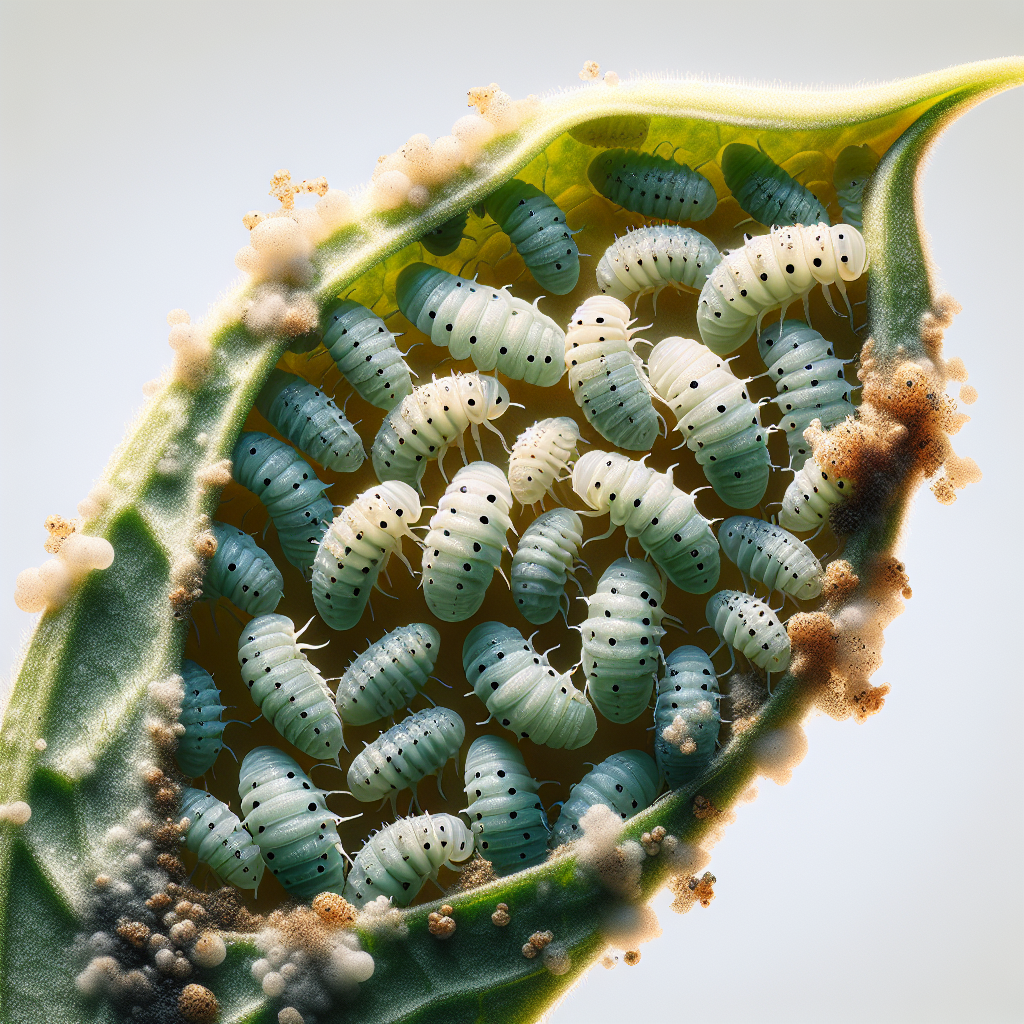
Nymphs cluster on the undersides of leaves in colonies, secreting honeydew—a sticky, sugary exudate that drips onto lower leaves and fruit. This honeydew promotes sooty mold fungi, creating black, unsightly coatings that block sunlight and reduce photosynthetic efficiency. Severe infestations lead to premature leaf drop, twig dieback, and weakened trees more susceptible to scale insects or drought stress.
Inspect for the pests themselves: adults are pale yellow-green, highly mobile, and flush when disturbed. Use a hand lens to confirm nymphs, which have wing pads in later instars. Damage is most evident on new growth of young trees or heavily pruned mature ones. Yield impacts include smaller olives with lower oil content; studies show 20-50% reductions in heavy infestations. Differentiate from mites (stippling without cupping) or aphids (less distortion, more ant attendance). Regular monitoring with sticky traps helps quantify populations.
Lifecycle and Progression of Olive psyllid
Olive psyllids complete multiple generations per year—up to 6-8 in warm climates—making lifecycle knowledge essential for timed interventions. Adults overwinter in sheltered spots on trees or nearby vegetation. In spring (March-May), as olives flush, females lay yellow eggs singly on tender leaves. Eggs hatch in 5-10 days into nymphs, which pass through 5 instars over 2-4 weeks, feeding voraciously.
Nymphs produce honeydew throughout development, molting as they grow. Third-instar nymphs develop 'white caps' (empty exuviae), a diagnostic sign. Adults emerge, mate, and restart the cycle. Summer generations are faster in heat, while fall cohorts produce tougher adults for overwintering. Total cycle: 3-6 weeks, influenced by temperature (optimum 20-25°C).
Progression varies: light infestations cause cosmetic damage; heavy ones defoliate trees. Monitor degree-days (base 10°C) for predictions—first generation peaks at 300-400 DD. Related to citrus psyllid, olive psyllids share psyllid yellows transmission risks, though less common in olives. Understanding this allows targeting eggs/nymphs when vulnerable.
Environmental Triggers & Risk Factors
Olive psyllids thrive in mild, humid conditions with temperatures 15-30°C and low wind. Spring flushes trigger egg-laying; excessive nitrogen promotes succulent growth, ideal for nymphs. Poor pruning leaves dense canopies, harboring pests. Drought-stressed trees attract adults seeking moisture-rich shoots.
Risk factors include nearby unmanaged olives or ornamentals, windbreaks blocking predators, and ant presence farming honeydew. Climate shifts extend seasons; irrigated groves see higher populations. Susceptible varieties like young Arbequina olive trees suffer most. Read Spring Pest Patrol: Organic AI Strategies to Shield Your Crops from Common Invaders for tech-enhanced monitoring tips.
Organic Control & Treatment Plans
Organic management emphasizes integrated pest management (IPM). Cultural: Prune for open canopies, time irrigation to avoid flush during peaks, and destroy debris. Biological: Encourage predators like ladybugs, lacewings, and parasitic wasps (Tamarixia sp.). Release if needed.
Physical: High-pressure water blasts dislodge nymphs; yellow sticky traps capture adults (10-20/tree). Organic sprays: Insecticidal soaps (1-2% potassium salts) or neem oil (0.5-1%) target nymphs—apply evenings, 7-10 day intervals, 3x. Horticultural oils smother all stages in dormancy. Kaolin clay barriers deter feeding.
Treatment plan: Scout weekly; treat at 1-5 nymphs/leaf. Rotate modes to prevent resistance. For outbreaks, spinosad (OMRI-listed) as last resort. Combine with reflective mulches. Efficacy: 80-95% with diligence. Avoid broad-spectrum sprays preserving predators.
Preventing Olive psyllid in the Future
Prevention beats cure. Plant resistant rootstocks/varieties like mature Frantoio olive. Maintain vigor with balanced fertility—avoid excess N. Prune annually for airflow/sunlight penetration. Monitor with traps; act at low thresholds.
Perimeter sprays or trunk barriers limit migration. Cover young trees with fine mesh. Enhance biodiversity: interplant with marigold or thyme repellents. Clean equipment between groves. Long-term: scout neighbors, use degree-day models. Annual audits ensure low populations year-round.
Crops Most Affected by Olive psyllid
Primarily olives (olive), all varieties: table (Kalamata, Manzanilla), oil (Arbequina, Frantoio), young trees worst hit. Rare on related almond or pistachio, but monitor. No major impact on non-Oleaceae. Focus protection on olive blocks near wild hosts.