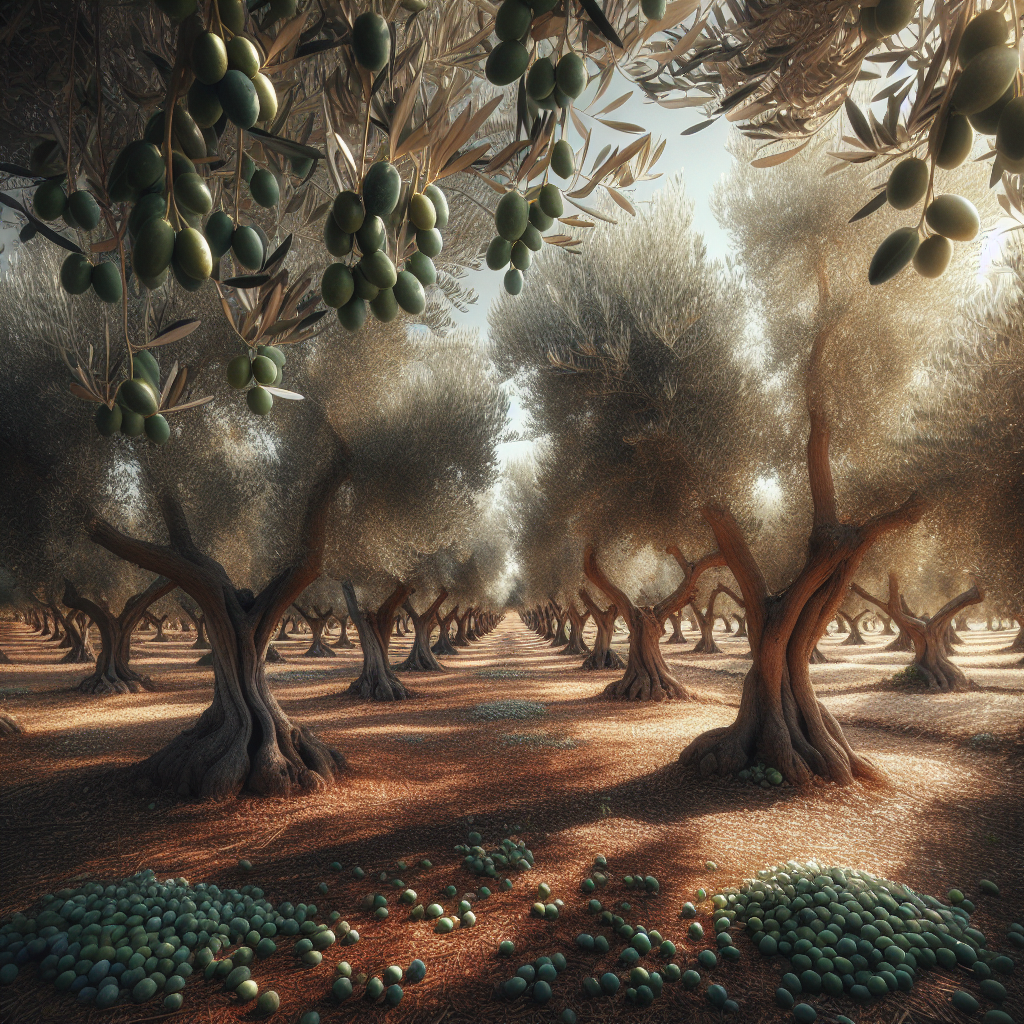
Introduction to Olive (Frantoio)
Originating in central Italy, especially Tuscany, this cultivar is one of the benchmark oil olives in the world. It has long been valued not just for yield, but for oil quality: Frantoio commonly produces aromatic oil with green fruit notes, herbaceous complexity, and a distinct peppery finish associated with higher polyphenol content when harvested at the right maturity stage.
In the orchard, it is typically considered a vigorous, somewhat upright to spreading tree with good adaptability and reliable bearing under suitable conditions. It is often grown in traditional groves, modern medium-density plantings, and mixed-variety orchards where pollination can be improved. Although somewhat self-fertile, fruit set is usually more dependable with compatible pollinizers nearby.
Frantoio is especially important for growers focused on premium oil rather than dual-purpose fresh use. Fruit size is generally medium, flesh-to-pit ratio is acceptable, but the main commercial value is pressing. Compared with some other cultivars, it can show good tolerance to certain environmental stresses, yet it still demands excellent drainage and a dry, sunny growing season. For general olive culture comparisons, see the broader Olive guide.
Botanical Profile of Olive (Frantoio)
This evergreen tree belongs to the Oleaceae family. Leaves are opposite, narrow-lanceolate, leathery, and gray-green above with a silvery underside, a structural adaptation that reduces water loss and reflects excess solar radiation. Mature trees can reach 5-8 meters tall in unmanaged conditions, though commercial orchards usually maintain them at 2.5-4.5 meters for harvest efficiency, canopy penetration, and spray coverage.
Frantoio tends to produce a vigorous canopy with a dense framework if left unpruned. One of its important botanical behaviors is that flowering and fruiting occur primarily on one-year-old shoots borne from the previous season's growth. That means poor pruning can remove too much fruiting wood, while insufficient pruning can lead to overcrowding, shading, and reduced flower bud differentiation.
Bloom typically occurs in spring after adequate winter chilling. Olives do not need extreme cold, but they benefit from cool winter periods to break dormancy and synchronize flowering. Flowers are small, creamy white, and borne in panicles. As with many olives, a significant percentage of flowers are staminate or imperfect, and only a fraction set fruit. Heavy bloom does not always translate to heavy crop.
Frantoio is known for relatively high-quality oil chemistry, often with strong aroma and desirable stability. Depending on climate, irrigation, crop load, and harvest timing, oil accumulation can vary substantially. Fruit color transitions from green to yellow-green, then reddish-purple, and finally dark purple-black as ripening advances. For top-tier oil, growers usually harvest before full black maturity, when aroma and phenolic intensity remain high.
Like many olives, Frantoio may exhibit alternate bearing if crop load, irrigation, nutrient supply, and pruning are poorly managed. A heavy crop year can suppress vegetative growth and next year's flower initiation. Professional growers try to balance canopy growth and crop load to reduce this tendency.
Soil, pH, and Climate Requirements for Olive (Frantoio)
This cultivar performs best in classic Mediterranean conditions: hot, dry summers and cool, relatively mild winters. Ideal annual conditions include abundant sunshine, low summer humidity, and limited rainfall during bloom and ripening. Daytime temperatures of 25-35°C during active growth are highly favorable. Prolonged heat above 40°C can reduce fruit set, especially if it coincides with bloom or severe water stress. Winter temperatures below about -7 to -9°C can injure wood, while younger trees may suffer at even milder freezes.
Chilling needs are modest compared with temperate deciduous fruit trees, but some winter cool is useful. Warm winter zones with insufficient chill can lead to erratic flowering. Conversely, humid subtropical environments can grow Frantoio, but disease pressure generally rises and oil quality may be less consistent without excellent airflow and sanitation.
Soil is often the decisive factor in long-term success. Frantoio tolerates relatively poor soils better than many fruit trees, but it does not tolerate waterlogging. The best soils are well-drained loams, sandy loams, gravelly loams, or calcareous hillside soils with good internal drainage. A depth of at least 1-1.5 meters is ideal for root exploration, although olives can survive in shallower soils if drainage is excellent.
Preferred soil pH is about 6.0-8.5, with optimal performance commonly seen around 6.5-7.8. It tolerates moderately alkaline soils better than many orchard crops. In acidic soils below pH 5.8, calcium and magnesium may become limiting and root performance often declines; liming is usually warranted after soil testing. In very alkaline soils above pH 8.3, iron chlorosis can occur, especially in young trees on poorly aerated ground. Symptoms include yellow young leaves with green veins, reduced shoot growth, and weak canopy fill.
Salinity tolerance is moderate, but not unlimited. Frantoio can handle some dissolved salts better than sensitive fruit crops, yet high sodium or chloride in irrigation water still suppresses growth and reduces productivity. Electrical conductivity of the saturated paste extract below roughly 4 dS/m is safer for sustained productivity; beyond that, monitoring is essential.
Moisture management is more nuanced than simply keeping the soil wet. Established olive roots prefer cycles where the upper soil dries somewhat between irrigations while the active root zone remains moderately moist. Aim to wet the soil deeply to roughly 45-90 cm depending on tree age and soil type, then allow partial drying before irrigating again. In loamy soils, the target is often to irrigate when 35-50% of available water in the effective root zone has been depleted. In sandy soils, smaller, more frequent irrigations may be needed because water drains quickly; in clay loams, less frequent but carefully measured irrigations are safer.
Overwatering signs include persistently soft, lush pale growth, yellowing older leaves, leaf drop despite wet soil, poor flowering, surface algae or moss near emitters, sour-smelling soil, and in severe cases root rot symptoms. Underwatering signs include dull gray-green leaves, curling or folding leaves during heat, tip burn, fruit shrivel, reduced shoot extension, and excessive June drop or summer fruit drop.
Step-by-Step Planting & Propagation
Begin with certified disease-free nursery stock. For commercial or serious home orchard establishment, one-year-old container trees or well-rooted liners are preferable to random seedlings. Seed-grown olives are genetically variable and unsuitable if you want true-to-type Frantoio performance.
Site selection: Choose full sun with at least 8 hours of direct light daily. Avoid frost pockets, poorly drained valley bottoms, or spots where water stands after rain for more than 24 hours.
Soil preparation: Test soil before planting. Correct major pH issues and phosphorus or potassium deficiencies in advance because these nutrients are harder to adjust once trees are in place. Deep rip compacted soil if a hardpan restricts drainage or root penetration.
Spacing: Traditional orchards may use 6 x 6 m to 8 x 8 m spacing. Medium-density systems often use about 5 x 7 m or similar, depending on vigor and training system. Frantoio's vigor means overcrowding quickly creates shade problems if spacing is too tight.
Planting hole: Dig a hole two to three times the width of the root ball, but no deeper than the root ball height. Planting too deeply is a common failure point. The upper root flare should sit at or slightly above surrounding soil grade.
Backfilling: Use mostly native soil rather than highly amended backfill. Excessively rich backfill can create a bathtub effect or discourage roots from moving outward.
Initial watering: Water thoroughly after planting to settle soil around roots. This first irrigation should wet the entire root ball and surrounding soil, eliminating air pockets.
Mulching: Apply 5-8 cm of coarse organic mulch in a broad ring, but keep it 10-15 cm away from the trunk to prevent crown rot and rodent damage.
Staking: Stake only if wind is severe or the nursery tree is unstable. Remove supports as soon as possible so the trunk can strengthen naturally.
Propagation is usually by semi-hardwood cuttings, rooted under mist with bottom heat and hormone treatment. Hardwood cuttings can also be used, though rooting percentages vary. Commercial nurseries may propagate on own roots rather than by grafting, since olives root reasonably well and own-rooted trees can recover from freeze damage by resprouting true to type.
Pollination deserves attention. Frantoio is often considered partially self-fertile, but cross-pollination generally improves set. Compatible olive cultivars planted nearby can increase productivity, especially where spring weather is marginal during bloom. Avoid relying on isolated single-tree plantings if consistent cropping is a priority.
Care & Maintenance regimes for Olive (Frantoio)
The first three years are about root establishment, framework development, and avoiding excessive stress. During establishment, irrigate deeply and regularly enough to keep the root ball and surrounding soil from fully drying out. In the first summer, young trees in warm climates often need water once or twice weekly in sandy soil, or every 7-10 days in heavier loam, always adjusted to actual moisture conditions.
After establishment, irrigation should match the production goal. For oil olives, regulated deficit irrigation can sometimes enhance oil quality and improve water-use efficiency, but severe stress reduces both yield and next year's return bloom. As a practical guide, maintain moderate moisture from budbreak through pit hardening, then avoid extreme stress during oil accumulation. A mature tree may require anywhere from 1,500 to 4,000 liters of water over a season depending on climate, canopy size, soil texture, and rainfall. Drip irrigation is strongly preferred because it keeps the canopy dry and delivers water precisely.
Fertilization should be based on leaf analysis and soil tests, not guesswork. Nitrogen is typically the main driver of vegetative growth and yield. Mature orchards commonly split nitrogen applications from late winter through early summer. Too much nitrogen produces rank vegetative growth, lowers light penetration, and can worsen some pest and disease issues. Deficiency appears as pale leaves and weak shoot extension. Excess appears as overly vigorous water sprouts and delayed hardening of tissue.
Potassium is important for fruit size, oil formation, and stress tolerance. Deficiency may show as marginal leaf scorch on older leaves and poor fruit fill. Boron, though needed in tiny amounts, is critical for flowering and fruit set; deficient orchards may have heavy bloom with disappointing set. Foliar boron is sometimes applied pre-bloom where tissue tests support it.
Pruning is one of the most important cultural practices for Frantoio. Train young trees to a vase or modified central open structure with 3-4 main scaffold branches, depending on orchard style. The goal is to admit light into the canopy center, reduce humidity, and keep fruiting wood renewed. Mature pruning should remove dead wood, crossing branches, low suckers, interior congestion, and excessively tall uprights. Since fruiting occurs on one-year wood, avoid stripping the canopy of all younger growth. The best rule is to prune enough that dappled light reaches much of the canopy interior.
Pruning timing is usually late winter to early spring after severe frost danger has passed but before full bloom. In high-disease climates, removing dense interior growth is especially important. For a broader soil fertility perspective relevant to orchard floors and cover crops, see soil health strategies.
Weed control around young trees is essential. Maintain a weed-free strip at least 60-100 cm around the trunk for the first several years. Grasses are particularly competitive for shallow soil moisture and nitrogen. Mechanical cultivation should be shallow to avoid damaging feeder roots.
Orchard floor management can include mowed native vegetation or sown beneficial covers between rows. In dryland systems, however, cover crops must be managed carefully so they do not rob trees of spring moisture. Mow before seed set and before soil water becomes limiting.
Pests, Diseases & Organic Management
The most serious issues vary by region, but several recur across olive-growing areas. Olive fruit fly is often the key pest in humid or moderate climates. Females lay eggs in ripening fruit, and larvae tunnel through the pulp, reducing oil quality, increasing acidity, and predisposing fruit to rot. Monitor with pheromone or food-bait traps beginning before fruit softening. Organic management includes sanitation, timely harvest, mass trapping, kaolin clay barriers, and approved protein bait sprays where permitted.
Scale insects, including Black scale, weaken trees by sucking sap and promoting sooty mold on honeydew-coated leaves and twigs. Natural enemies often suppress them if broad-spectrum insecticides are avoided. Heavy infestations are favored by dense, shaded canopies and excess nitrogen. Prune for airflow and use horticultural oils during dormant or crawler stages as locally appropriate.
Olive psyllid can damage flower clusters and reduce set in some regions. Monitoring at prebloom is useful. Avoiding excessive lush growth helps reduce attractiveness to sap-feeding pests.
Peacock spot, caused by a fungal pathogen, produces circular dark leaf lesions and premature defoliation, especially in wet, humid conditions. Frantoio's tolerance can vary by site and disease pressure; no cultivar is immune under sustained favorable conditions for the pathogen. Good airflow, sunny planting positions, sanitation, and copper-based preventive sprays timed to rainfall periods are standard organic-compatible tools.
Anthracnose affects ripening fruit, causing soft rot and severe oil quality decline. It is especially problematic in rainy autumn conditions. Prompt harvest, removal of mummified fruit, and open canopies reduce risk.
Verticillium wilt is a major soilborne disease in some olive areas, especially where olives are planted after susceptible hosts such as Tomato, potato, eggplant, or cotton. Symptoms include sudden branch wilt, one-sided canopy dieback, leaf retention on dead twigs, and vascular discoloration. There is no easy curative treatment. Prevention is critical: avoid contaminated sites, improve drainage, do not overirrigate, and remove severely affected wood.
Root rots caused by Phytophthora or related pathogens are almost always linked to poor drainage or chronic overwatering. Once established, recovery is difficult. The organic answer is preventive culture: raised planting on mounds in heavy soil, careful emitter placement, no standing water, and mulch kept away from the crown.
Bird damage can be relevant near harvest, especially in small orchards. Netting, reflective deterrents, and synchronized harvest reduce losses.
Harvesting, Curing & Optimal Storage
For oil production, harvest timing is one of the most consequential decisions in Frantoio management. Early harvest fruit, usually green to turning color, often yields less oil by weight but gives more intense aroma, bitterness, pungency, and oxidative stability. Later harvest fruit gives higher extraction yields but often softer flavor and reduced phenolic concentration. Premium producers usually target a maturity index that balances oil accumulation with flavor integrity.
Fruit should be hand-picked, raked onto nets, or mechanically harvested with minimal bruising. Avoid letting olives sit in deep piles or warm bins, as respiration and fermentation begin quickly. Ideally, fruit is milled within 6-24 hours of harvest; the sooner the better for top-quality extra virgin oil.
If fruit is intended for table use rather than oil, Frantoio is less famous than some dedicated table cultivars, but it can still be processed. Fresh olives are too bitter to eat because of oleuropein and related phenolics. Curing methods include brine curing, dry salt curing, or lye treatment followed by brining. For small-scale traditional brining, sound fruit is slit or cracked, soaked, then fermented in salt brine under clean, submerged conditions until bitterness drops and flavor develops.
For oil storage, use clean stainless steel or food-grade opaque containers filled as full as possible to reduce oxygen contact. Store oil in darkness at about 14-18°C. Heat, light, and oxygen rapidly degrade sensory quality. Filtered oil generally stores more cleanly, while unfiltered oil may have attractive early character but shorter shelf stability if sediment and moisture remain.
Whole fresh olives are not a long-storage commodity at room temperature. If they cannot be milled immediately, hold them in shallow, ventilated crates in a cool environment and never in sealed plastic bags. Process them fast.
Companion Planting for Olive (Frantoio)
In olive systems, companion planting works best when it supports pollinators, improves soil structure, moderates erosion, or suppresses weeds without creating excess humidity around the trunk. The most effective companions are usually low-growing insectary plants or managed cover crops rather than tall, competitive species.
Thyme is excellent beneath or near orchard rows where summers are dry. It attracts beneficial insects, tolerates lean soils, and does not create dense shade around the trunk. Its low habit also makes mowing and access easier.
Clover is useful in row middles or wider orchard alleys where additional nitrogen cycling and soil cover are desired. It can reduce erosion, improve soil aggregation, and feed pollinators when managed correctly. In dry climates, mow or terminate early so it does not compete heavily for spring moisture.
Yarrow provides strong ecological value by attracting predatory insects and parasitoids that help regulate small pest populations. It is also drought tolerant once established and fits well into low-input Mediterranean-style orchard margins.
Nasturtium can be used in smaller orchards or diversified plantings as a living attractant for beneficial insects and as a visual indicator plant for aphid pressure. It is better suited to irrigated edge zones than to the driest tree basins.
Avoid planting thirsty annual vegetables directly in the root zone of olives. Intensive companions close to the trunk increase irrigation demand and can promote humidity-related disease. Keep the area immediately around the trunk clean, dry, and well ventilated, and place companion species farther out where they deliver ecological benefits without competing with the tree.