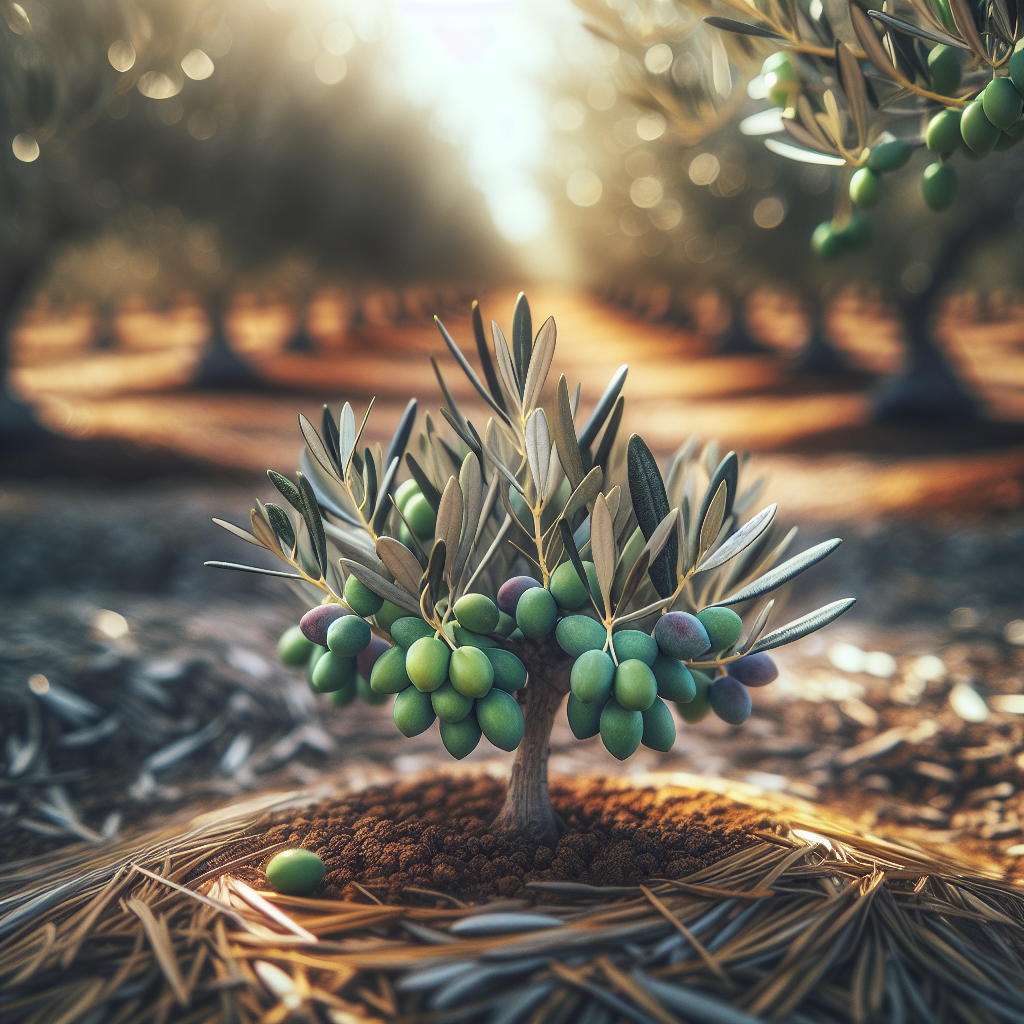
Introduction to Olive (Arbequina)
Originating from Arbeca in Catalonia, Spain, Arbequina has become one of the most important olive cultivars in modern commercial production because it combines precocity, manageable vigor, and consistently high-quality oil. Trees typically begin bearing earlier than many traditional olive cultivars, often producing a light crop within 2 to 3 years after planting under good management, with meaningful commercial yields following soon after. The fruit is small, but the tree compensates through heavy cropping and suitability for dense plantings.
Its oil is especially valued for a fruity, mild, often buttery profile with green almond, apple, and herbaceous notes. Because of that sensory profile, Arbequina is popular with small growers, estate mills, and large mechanized orchards alike. It is also among the most widely planted cultivars in super-high-density systems, where its naturally compact architecture and early production are major advantages. Growers comparing orchard designs may also find useful context in the broader Olive guide.
Arbequina is not without challenges. Its heavy-bearing tendency can lead to branch bending, alternate bearing if crop load is unmanaged, and increased disease risk if grown in humid climates or poorly drained soils. It is more cold-tender than the hardiest olives, yet more adaptable than many growers expect if planted in a protected, sunny site with excellent air drainage. In the right environment, it is one of the most forgiving and profitable olives for small-scale and professional production.
Botanical Profile of Olive (Arbequina)
This cultivar belongs to Oleaceae, the olive family, and is an evergreen, long-lived subtropical to warm-temperate fruit tree. Arbequina generally has a compact to moderately spreading habit, with shorter internodes and finer branching than vigorous cultivars such as many table olives. Mature height varies by root system, climate, pruning style, and planting density, but in open-grown orchards it commonly reaches 12 to 20 feet (3.5 to 6 m), while remaining smaller under intensive management.
Leaves are opposite, narrow-lanceolate, leathery, and gray-green above with a silvery underside adapted to limit water loss. That silvery cast is not merely ornamental; it reflects light and helps the tree tolerate hot, dry conditions. Flowering typically occurs in spring on one-year-old wood. The inflorescences bear many small, cream-white flowers, but only a small percentage set fruit. Fruit set is strongly influenced by temperature during floral initiation, spring weather during bloom, tree nutrition, and cultivar pollination dynamics.
Arbequina is considered partially self-fertile, meaning it can crop on its own, which is one reason it is so widely planted. However, cross-pollination from compatible cultivars can improve fruit set and yield stability in some sites, particularly where spring weather is erratic or temperatures during bloom are suboptimal. Wind is the primary pollination agent, not insects.
The fruit is small, typically round to slightly ovoid, with a relatively high flesh-to-pit ratio for its size and a good oil percentage when harvested at the correct maturity stage. Ripening usually progresses from green to yellow-green, then reddish-purple, and finally dark purple to black. Oil chemistry can vary by region, irrigation regime, and harvest timing, but Arbequina is famous for high sensory quality and relatively soft bitterness and pungency compared with more robust cultivars.
A key botanical nuance is its tendency toward precocity and abundant flowering, which is agronomically useful but can encourage biennial or alternate bearing if the tree overcrops one season and lacks sufficient carbohydrate reserves the next. Skilled pruning, balanced fertility, and consistent soil moisture are central to keeping the tree in annual production.
Soil, pH, and Climate Requirements for Olive (Arbequina)
Arbequina thrives in full sun and performs best where summers are warm to hot, rainfall is low to moderate during the growing season, and winters are cool enough to support floral induction without severe freeze injury. Ideal climates resemble the Mediterranean basin: mild, wetter winters and dry summers. Trees generally need a period of winter chilling for reliable flowering, but not deep prolonged cold. Exact chilling response varies by region, yet many productive groves experience cool winter nights and moderate winter days rather than extreme freezing.
For temperature, active growth is strongest around 68 to 86°F (20 to 30°C). Flowering and fruit set can be impaired by cold snaps, prolonged rain, or hot desiccating winds during bloom. Mature trees may survive short drops below 20°F (-6 to -7°C), but young trees and actively growing tissues are more vulnerable. Damage becomes more likely as temperatures approach the mid-teens °F (-9 to -12°C), especially if cold follows warm weather. In marginal climates, choose south-facing slopes, avoid frost pockets, and protect trunks of young trees.
Soil drainage matters more than soil richness. Arbequina can tolerate relatively poor, stony, calcareous soils, but it does poorly in compacted, waterlogged ground. The ideal soil is a well-drained sandy loam, loam, gravelly loam, or light clay loam with at least 3 to 4 feet (0.9 to 1.2 m) of penetrable depth. Shallow soils can still produce olives, but drought stress arrives faster and nutrition management becomes less forgiving.
Preferred soil pH is about 6.0 to 8.5, with best performance often seen around 6.5 to 8.0. Arbequina tolerates mild alkalinity better than many fruit crops, but severe calcareous conditions may induce iron chlorosis, especially where bicarbonates are high and drainage is poor. Symptoms include yellowing young leaves with green veins. In such cases, foliar iron treatments may help temporarily, but the real solution is improving root-zone conditions and choosing appropriate sites.
Salinity tolerance is moderate, not extreme. Compared with some orchard crops, olives handle salinity reasonably well, but Arbequina yield and oil quality decline when sodium and chloride accumulate excessively in the root zone. If irrigating with marginal water, periodic leaching in well-drained soils and regular water analysis are important.
For soil moisture, think in terms of deep, infrequent replenishment rather than constant wetness. The upper 2 to 3 inches of soil can dry between irrigations, but the active root zone should not remain bone-dry for extended periods during bloom, fruit set, pit hardening, and oil accumulation. A simple field test: take soil from 6 to 10 inches deep. It should feel cool and slightly cohesive, not muddy and not powder-dry. Chronic saturation causes reduced vigor, yellow foliage, sparse new growth, root decline, and increased susceptibility to Phytophthora. Chronic drought causes curled or dull leaves, shortened shoot growth, fruit drop, reduced fruit size, and lower oil yield.
If you are also improving long-term orchard ground structure, the principles in soil health strategies are especially relevant to perennial systems like olives.
Step-by-Step Planting & Propagation
Most growers establish Arbequina from nursery-raised rooted cuttings rather than seed. Seedlings are genetically variable and unsuitable when uniform oil quality, tree habit, and productivity are important. Clonal plants preserve cultivar identity and usually enter bearing faster.
Start with certified, disease-free nursery stock 1 to 2 years old. Choose plants with a sturdy central stem, healthy gray-green foliage, no girdling roots, and a well-developed root ball that holds together but is not rootbound. Avoid trees with blackened roots, mushy crown tissue, or severe chlorosis.
Site preparation should begin months before planting. Deep-rip compacted zones if needed, correct major drainage issues, and remove perennial weeds in a 3- to 6-foot strip or circle. In heavy soils, planting on raised berms or mounds 12 to 18 inches high can significantly improve survival. Do not over-amend the planting hole with compost or rich media; this can create a bathtub effect and discourage roots from moving outward. Instead, improve the broader site if improvement is necessary.
Plant in early spring after severe frost danger has passed, or in mild-winter climates in autumn where roots can establish before summer heat. Dig a hole only as deep as the root ball and 2 to 3 times as wide. Set the tree so the top of the root ball is level with or slightly above the surrounding soil. Backfill with native soil, firm gently, and irrigate thoroughly to settle the soil.
Spacing depends on system. For backyard or low-density orchards, 15 to 20 feet (4.5 to 6 m) between trees is common. For hedgerow or mechanized high-density systems, spacing may be far tighter, but such systems require specialized pruning, irrigation, and harvesting strategies. Arbequina is particularly well suited to intensive layouts because of its compact habit.
After planting, create a shallow irrigation basin if the soil is well drained, or avoid basins in heavier soils where water pooling is risky. Apply 2 to 4 inches of coarse organic mulch around, but not touching, the trunk. Keep a 4- to 6-inch mulch-free ring at the stem to prevent crown rot and rodent damage.
For propagation, semi-hardwood cuttings taken from healthy current-season shoots are the standard. Cuttings 4 to 8 inches long, treated with rooting hormone and placed in a sterile, well-aerated medium under intermittent mist and bottom heat, root reliably in professional settings. Layering is possible but less efficient. Grafting is less common for olive than for many fruit trees, though it may be used where rootstock adaptation is needed.
Care & Maintenance regimes for Olive (Arbequina)
The first two years are about root establishment and canopy framework. Irrigate young trees deeply enough to moisten the root zone, then allow partial drying before the next irrigation. In warm conditions on sandy soil, this may mean watering once or twice weekly; on heavier soils, every 7 to 14 days may be enough. The target is moisture at 8 to 12 inches deep without prolonged saturation. If leaves look limp in afternoon heat but recover by evening, that can be normal transpirational stress; if they remain dull, cupped, or begin shedding, the tree is too dry.
Mature trees are drought-tolerant but not drought-optimal. For commercial yields, regulated irrigation is valuable. Critical periods are spring flush and bloom, fruit set, and late summer to early autumn oil accumulation. Severe water stress during bloom and fruit set reduces crop load. Severe water stress during fruit enlargement shrinks fruit size. Moderate deficit later in the season can sometimes improve oil concentration, but overdoing it reduces total yield and next year's return bloom.
A practical schedule is to irrigate when 40 to 60% of the available water in the active root zone has been depleted. In field terms, irrigate before soil at 12 inches becomes hard and dusty. Drip irrigation is ideal because it limits trunk wetting and can deliver precise amounts. Expand emitters outward as the canopy grows, since most active feeder roots sit near the drip line rather than right at the trunk.
Fertilization should be guided by leaf analysis and, ideally, soil testing. Nitrogen is the nutrient most often limiting olive growth and yield. Young trees benefit from light, split applications through the growing season. Mature bearing trees typically require annual nitrogen, but excess creates overly vegetative growth, shading, softer tissues, and poorer balance between shoot growth and fruiting. A common sign of nitrogen deficiency is pale green foliage and weak shoot extension; excess nitrogen often gives lush, dark growth with reduced fruitfulness and increased pest susceptibility.
Potassium is important for fruiting and oil production, especially in heavy-cropping years. Boron also matters for flowering and fruit set, and deficiencies can be subtle. Foliar nutrient sprays are often used to correct micronutrient issues quickly, but they should complement, not replace, root-zone management.
Pruning should begin with structure. Train to a single trunk or a low multi-scaffold form depending on harvest method. Remove suckers from the base, eliminate crossing or inward-growing shoots, and maintain a canopy that admits light and air. Since olives bear on the previous year's growth, indiscriminate shearing can reduce production. Arbequina responds well to light annual pruning that renews fruiting wood while preserving leaf area.
In mature trees, focus on: removing dead or diseased wood, thinning crowded interior shoots, keeping the canopy accessible for harvest, and preventing excessive height. If alternate bearing becomes pronounced, prune more assertively after a heavy crop year to stimulate balanced renewal, but avoid severe cuts that trigger excessive watersprouts.
Weed control is particularly important in young plantings. Grass and broadleaf weeds compete strongly for water and nitrogen in the topsoil. Keep a weed-free strip around young trees at least 3 feet wide. Mulch, shallow cultivation, grazing with caution, or cover-crop alleyways are all used depending on system.
Pests, Diseases & Organic Management
Arbequina shares the common pest and disease complex of Mediterranean olives, though local pressure varies enormously by climate. The first rule of organic management is prevention through airflow, drainage, sanitation, and balanced nutrition.
Olive fruit fly is among the most serious pests in many regions. Adults lay eggs in the fruit, and larvae feed inside, reducing table quality and harming oil quality by increasing acidity and off-flavors. Monitoring with traps is essential. Early harvest, sanitation of fallen fruit, mass trapping, kaolin clay, and spinosad-based organic bait strategies are common tools. Infestation tends to worsen where autumns are mild and humid.
Black scale and related Soft scales can colonize twigs and leaves, producing honeydew that encourages sooty mold. Heavy infestations reduce vigor. Encourage natural enemies, avoid excessive nitrogen, prune for airflow, and use horticultural oils during dormant or low-risk periods, ensuring thorough coverage and appropriate temperatures.
Olive psyllid, Mites, and Caterpillars can also appear, but these are usually secondary when orchard balance is good. Ant control may be necessary where ants protect scale insects.
Peacock spot, caused by Venturia oleaginea, is a major foliar disease in humid or rainy climates. It produces circular dark lesions on leaves followed by defoliation. Repeated leaf loss weakens the tree and lowers yield. Prevention depends on open canopies, reduced leaf wetness, and copper-based sprays timed to infection periods in susceptible areas. Arbequina can be quite productive, but dense canopies in damp climates raise risk.
Anthracnose affects ripening fruit, especially during wet weather, causing rot, mummification, and serious oil quality defects. Sanitation, pruning, and preventive fungicidal programs acceptable in organic systems are important in high-risk regions.
Verticillium wilt is particularly concerning where olives are planted in soils with a history of susceptible hosts. The fungus enters through roots and can cause shoot dieback, wilting, and decline. Avoid planting after highly susceptible crops such as Tomato, potato, eggplant, and cotton if Verticillium is known in the field. Use clean nursery stock, avoid root injury, and do not overirrigate.
Root and crown rots caused by Phytophthora are usually management-induced. Symptoms include dull foliage, reduced shoot growth, leaf drop, darkened bark near the crown, and sudden collapse in poorly drained sites. The cure is mostly preventive: plant high, irrigate correctly, and never let water stand around trunks.
Bird damage is usually minor for oil olives but can be significant in small plantings as fruit ripens. Netting or timely harvest may be needed.
Harvesting, Curing & Optimal Storage
Arbequina can be harvested green, turning color, or fully dark depending on intended use. For oil, harvest timing is a balance between yield, flavor, and stability. Early harvest fruit generally gives greener, more pungent, more phenolic oil with lower extraction yield. Later harvest raises oil yield but can soften flavor and increase pest or weather exposure. Many premium growers harvest when fruit is transitioning from green to purple, but the ideal point depends on region, irrigation, and desired oil style.
Fruit for oil should be milled as quickly as possible, ideally within 24 hours and certainly within 48 hours. Holding fruit in deep piles generates heat, bruising, and fermentation, which degrade oil quality. Use shallow crates, keep fruit shaded and cool, and avoid damaged or rotten olives in the lot.
Arbequina is also used for table olives, though it is better known as an oil cultivar. Fresh olives are too bitter to eat directly because of oleuropein and related phenolic compounds. They must be cured. Common methods include brine curing, dry salt curing, and water curing followed by brining. Small Arbequina fruit are often well suited to dry curing or natural brine fermentation.
For natural brining, sort sound fruit, wash well, and place in a 8 to 10% salt brine by weight. Fermentation proceeds best at moderate temperatures with fruit fully submerged. Replace or adjust brine as needed, skim surface growth, and allow several weeks to months for bitterness to mellow. For dry curing, layer ripe olives with coarse salt, drain regularly, and later rinse lightly and pack with oil or seasonings.
Freshly extracted oil should be settled or filtered, then stored in clean stainless steel or dark glass containers filled as full as possible to minimize oxygen exposure. Ideal storage is cool, dark, and stable, around 57 to 65°F (14 to 18°C). Avoid light, heat, and repeated opening. Even excellent Arbequina oil is relatively delicate compared with more robust cultivars, so careful storage is especially important to preserve aroma.
Companion Planting for Olive (Arbequina)
In olive systems, companion planting works best when it supports pollinators and beneficial insects, suppresses weeds, protects soil, and avoids excessive competition for water near young trees. Because olives are wind-pollinated, companions are not mainly about fruit set; they are about orchard ecology and soil function.
Low-growing, drought-tolerant companions are best. Thyme is a strong option beneath or near tree rows in dry climates because it attracts beneficial insects, tolerates lean soils, and does not usually create dense, humid conditions around the trunk. Yarrow is useful on margins and between rows for attracting predatory insects and improving biodiversity. Clover can function as a nitrogen-contributing living cover in alleyways where rainfall or irrigation is sufficient, though it should be managed carefully around young trees so it does not compete for moisture. Nasturtium can be used in more intensively managed or irrigated mixed plantings to attract beneficial insects and serve as a visual indicator of water and nutrient status.
Keep all companions at least 12 to 18 inches away from the trunk of young olives to preserve a dry crown zone. In arid regions, prioritize sparse understory and seasonal cover crops rather than dense permanent groundcovers. In heavier or wetter soils, avoid companions that trap humidity around the base of the tree. The best olive companions are those that improve the orchard floor without turning the root zone into a competitive, damp microclimate.