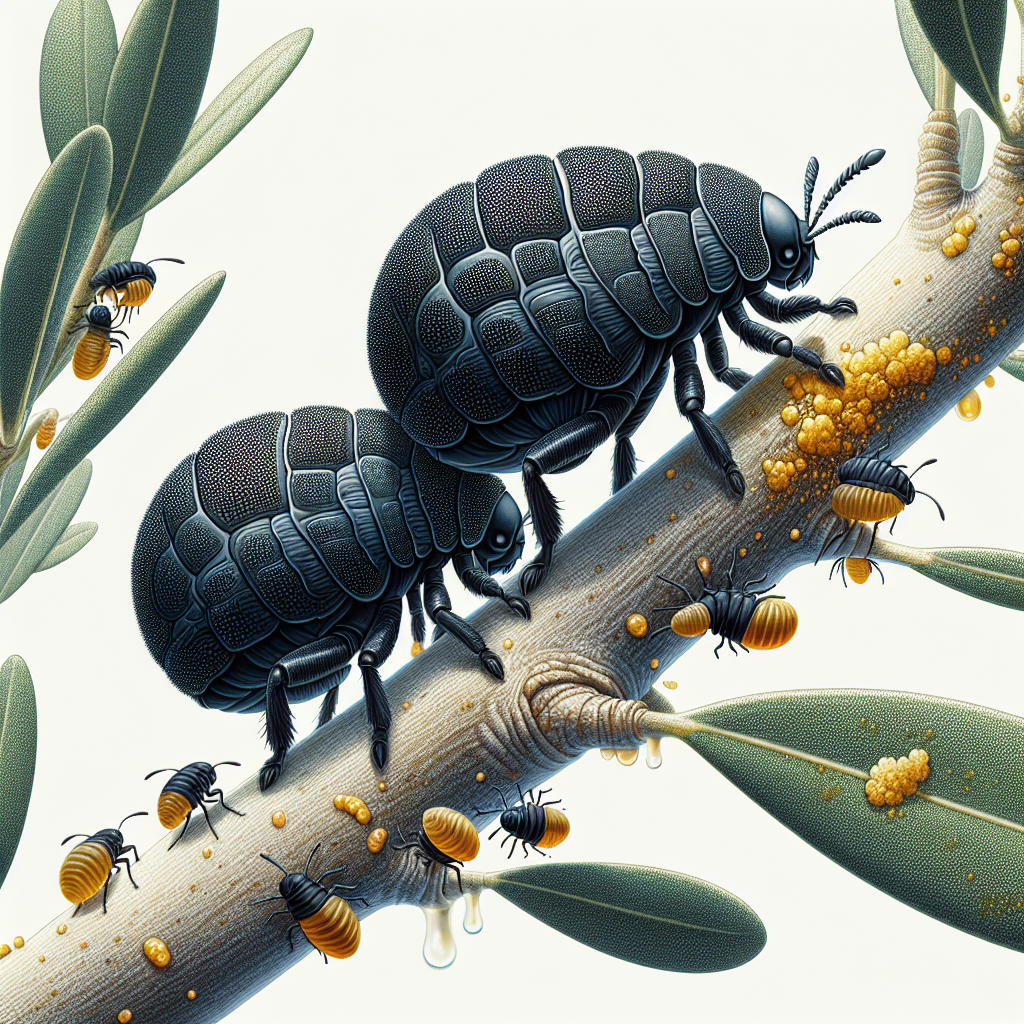
Introduction to Black scale
Black scale, scientifically known as Saissetia oleae, is one of the most destructive soft scale insects affecting orchards and landscapes worldwide. Native to the Mediterranean region, it has spread globally through international trade, becoming a major pest in citrus groves, olive orchards, and various ornamental trees. This armored pest attaches firmly to stems, leaves, and fruit, feeding on plant sap and excreting honeydew that fosters sooty mold, a black fungal growth that disfigures plants and interferes with photosynthesis.
Farmers and gardeners often overlook black scale in early infestations because females resemble small black bumps, blending seamlessly with bark. However, unchecked populations can defoliate trees, reduce fruit quality, and even kill young plants. In commercial settings, black scale causes significant economic losses, with infestations linked to up to 50% yield reductions in severe cases. Understanding its biology is crucial for timely intervention. This guide provides professional-grade diagnostics, lifecycle insights, and organic management strategies to protect your crops effectively.
Identifying Symptoms & Damage
Diagnosing black scale starts with spotting the insects themselves: mature females are dome-shaped, up to 1 cm in diameter, with a characteristic H-shaped ridge on their back when fully grown. They appear as shiny, black or dark brown convex bumps on twigs, branches, leaves, and fruit. Crawlers, the mobile juvenile stage, are tiny (1-2 mm), orange-pink, and legless but active, often found on new growth during summer.
Key symptoms include:
- Honeydew production: Sticky secretions coat leaves and fruit, attracting ants and promoting sooty mold.
- Sooty mold: Black, powdery fungal growth on honeydew-covered surfaces, reducing photosynthetic efficiency.
- Leaf yellowing and drop: Heavily infested leaves turn yellow, curl, and abscise.
- Branch dieback: Severe sap loss causes twig tips to wilt and die.
- Stunted growth and poor fruit set: Trees appear sparse, with small, deformed fruits.
Damage is most evident on undersides of leaves and along veins. Differentiate from similar pests like mealybugs (fluffy white wax) or other scale insects (harder shells). Use a magnifying glass or 10x hand lens for confirmation—scrape a bump; if it reveals a soft, yellow body, it's black scale. Early detection via regular scouting prevents explosive outbreaks.
Lifecycle and Progression of Black scale
Black scale completes one to three generations per year, depending on climate. Females overwinter as partially grown nymphs or mature adults on bark. In spring (March-May in temperate zones), they swell, molt, and produce crawlers from April to July. These tiny nymphs settle within hours, lose legs, and secrete a waxy cover.
Summer sees rapid development: crawlers mature in 6-8 weeks at 25-30°C. Peak crawler activity aligns with flush growth, making new shoots prime infestation sites. Males are rare, winged, and short-lived; reproduction is mostly parthenogenetic (females produce females). Full lifecycle: egg (internal), crawler (mobile), settled nymph, mature female (up to 6 months).
Progression varies by host and temperature:
- Cool climates: 1 generation/year, slower buildup.
- Warm regions: 2-3 generations, rapid population explosions. Monitor with double-sided tape traps or beat sheets to time treatments for vulnerable crawler stage, when scales are unprotected.
Environmental Triggers & Risk Factors
Black scale thrives in warm, dry conditions (20-32°C optimal), with populations surging during mild winters (<10°C minimum). High nitrogen fertilization promotes tender new growth, ideal for crawlers. Poor irrigation stresses trees, making them susceptible—drought weakens defenses, while overwatering favors fungal associates.
Key triggers:
- Ant presence: Ants farm scales for honeydew, protecting them from predators.
- Dust and smoke: Reduces natural enemy efficacy.
- Overcrowded canopies: Shady, humid microsites harbor infestations.
- Weed hosts: Nearby oleander, ivy, or pittosporum serve as reservoirs.
Risk is highest in coastal areas with minimal frost. Infested nursery stock introduces it; wind disperses crawlers short distances. Avoid broad-spectrum insecticides that kill parasitoids like Metaphycus helvolus. Integrate with aphids management, as mixed infestations compound damage.
Organic Control & Treatment Plans
Organic management emphasizes integrated pest management (IPM), targeting crawlers when 80% are vulnerable. Avoid adult scales' waxy armor.
Cultural Controls:
- Prune infested branches (burn debris).
- Enhance airflow to dry honeydew.
- Balance fertilization; avoid excess N.
Biological Controls:
- Release parasitoids (Metaphycus spp., Coccophagus spp.): 10-20 adults/tree.
- Encourage lady beetles, lacewings.
- Banish ants with Tanglefoot barriers or boric acid baits.
Organic Treatments:
- Horticultural oils: Dormant (3-4% v/v) or summer (1-2%) sprays smother crawlers. Apply at crawler hatch (twilight scouting).
- Insecticidal soaps: 1-2% solutions, weekly for 3 applications.
- Neem oil: 0.5-1%, disrupts molting; rotate to prevent resistance.
- Spinosad (OMRI-listed): For crawler flushes.
Treatment Plan:
- Scout weekly; treat at first crawler sighting.
- Reapply every 7-10 days (3x).
- Monitor efficacy with 25-tap samples/acre.
For Hass Avocado or citrus, combine with summer pruning. Success rates exceed 90% with timely IPM.
Preventing Black scale in the Future
Prevention beats cure. Start with certified pest-free stock. Implement Spring Pest Patrol: Organic AI Strategies to Shield Your Crops from Common Invaders for monitoring tips.
- Sanitation: Remove wild hosts; mulch to suppress weeds.
- Resistant varieties: Choose scale-tolerant rootstocks.
- Irrigation: Drip systems avoid wet foliage.
- Monitoring: Yellow sticky traps, degree-day models (base 10°C).
- Beneficial habitats: Plant yarrow, fennel for predators.
- Quarantine: Inspect new plants.
Annual dormant oil + spring checks keep populations below thresholds. Long-term, biodiversity trumps chemicals.
Crops Most Affected by Black scale
Black scale attacks over 100 hosts, preferring woody perennials:
- Citrus (orange, lemon, lime): Fruit soiling, drop.
- Olives: Major yield losses.
- Avocados (avocado): Defoliation.
- Ornamentals: Ivy, boxwood, pittosporum.
- Fruit trees: Fig, pomegranate, mango.
In California, it devastates 20% of citrus acreage yearly. Prioritize high-value crops like olive.