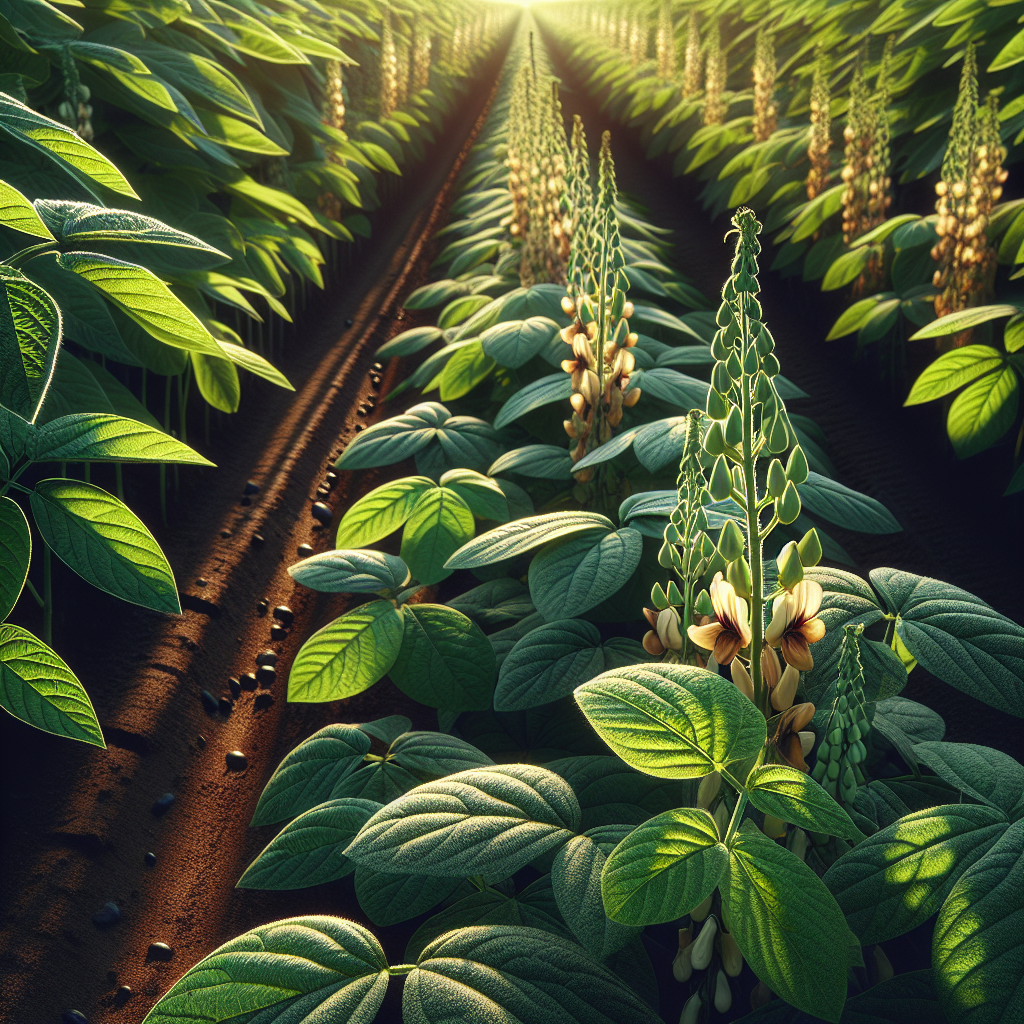
Introduction to Navy Bean
A classic small-seeded dry bean, this crop has been cultivated for centuries as part of the broader common bean species, Phaseolus vulgaris, which originated in the Americas and spread globally after the Columbian exchange. The name “navy bean” is widely associated with its historic use as a staple ration by the United States Navy because the seeds store exceptionally well, cook into a creamy texture, and provide dense nutrition in a compact form.
Unlike snap beans grown for immature pods, navy beans are produced for fully mature, dry seeds. They are typically bush-type plants bred for concentrated pod set, short to medium maturity, and machine harvest compatibility. Seed size is smaller than many other white beans such as Great Northern, and this small seed class often translates to faster cooking and strong market demand for baked beans, soups, purees, and canning.
From a grower’s perspective, navy bean is a profitable rotational legume in temperate farming systems. It contributes biologically fixed nitrogen through symbiosis with rhizobia, breaks some cereal disease cycles when used after grains, and fits well into diversified dryland or irrigated production. For rotational context in mixed farms, compare timing and residue management with wheat. For broader fertility strategies, see soil health basics.
Botanical Profile of Navy Bean
This species is a frost-sensitive, warm-season annual dicot in the Fabaceae family. Most commercial navy bean cultivars are determinate or semi-determinate bush beans, usually reaching 30-60 cm tall, though growth habit depends on breeding line, soil fertility, and moisture conditions. The root system is relatively shallow compared with deeper-rooted field crops, with most active feeder roots concentrated in the upper 20-45 cm of soil. That root architecture makes the crop responsive to both shallow compaction and short-term moisture stress.
Leaves are trifoliate, medium green, and moderately pubescent in some lines. Flowers are typically white to pale cream, self-pollinating, and borne in clusters. Pollination usually occurs before flowers fully open, so cross-pollination is limited. Pods are slender, often 7-12 cm long, and mature from green to straw-colored or tan. Each pod usually contains 4-7 seeds, though pod fill varies strongly with moisture and heat during flowering and early seed development.
The seeds themselves are small, oval to slightly oblong, white, and smooth-skinned. Thousand-seed weight is much lower than larger dry bean classes, which influences seeding rate calculations. Compared with Great Northern Bean or kidney bean types, navy bean plants often have a more compact canopy and somewhat different disease sensitivities, especially where dense canopies trap humidity.
As a legume, navy bean forms nodules on roots when properly inoculated with compatible Rhizobium leguminosarum biovar phaseoli strains. These nodules should be pink to reddish internally when active; white, greenish, or brown nodules are less effective or inactive. Despite its nitrogen-fixing ability, the crop still requires careful early nutrition because nodulation does not fully support plant demand during establishment.
Soil, pH, and Climate Requirements for Navy Bean
This crop performs best in fertile, well-drained loam or sandy loam soils with good tilth and low cRusting tendency. Heavy clay is possible if structure is excellent and drainage is rapid after rain, but poorly drained soils sharply increase risks of seed rot, Damping-off, root diseases, and uneven stands. Navy bean is notably intolerant of prolonged saturated conditions. If water stands for more than 24-48 hours in warm soil, stand losses and root stress can become severe.
The ideal soil pH is 6.0-7.2, with the strongest performance commonly seen around 6.2-6.8. Below pH 5.8, nutrient availability and rhizobial activity often decline, while manganese and aluminum toxicity can impair roots. Above about pH 7.5, iron and zinc deficiencies may appear, especially in calcareous soils. If correcting pH with lime, do so several months before planting rather than immediately before sowing.
Navy beans need warm soil for rapid germination. Minimum soil temperature is about 15°C, but more uniform emergence occurs at 18-24°C. Cold, wet seedbeds are one of the most common causes of poor establishment because the seed imbibes water quickly, then sits vulnerable to fungi if germination is delayed. Air temperatures of 20-28°C are ideal during vegetative growth. Flowering and pod set are best when daytime temperatures remain under about 32°C and nighttime temperatures are moderate. Extended heat above 34°C, especially with hot nights, can reduce pollen viability, increase flower abortion, and shorten the seed-fill period.
The crop is sensitive to frost at all stages. Even a light frost can injure seedlings or damage mature foliage before dry-down is complete. It is therefore best suited to temperate or warm-summer regions with a frost-free window of roughly 85-110 days, depending on cultivar maturity.
Moisture management is critical. A seasonal water requirement of about 300-450 mm is common, though this varies by soil type, evaporative demand, and crop duration. The most important period is from first bloom through pod fill. Soil should ideally remain at roughly 60-80% of field capacity in the active root zone during this time. If soil drops below about 50% of field capacity at bloom, flower drop and reduced pod set become likely. Conversely, if pore spaces remain waterlogged and oxygen is excluded, roots become stubby, yellowing appears in the canopy, and nodulation declines.
Step-by-Step Planting & Propagation
Propagation is by seed only. Direct sowing is standard because common beans do not transplant well; root disturbance slows growth and reduces final yield.
Select certified, disease-free seed. This is especially important for dry bean production because seedborne bacterial and fungal pathogens can devastate entire fields. Choose a cultivar adapted to your local maturity window, disease pressure, and harvest system.
Prepare a fine, firm seedbed. Aim for a surface that allows uniform seed depth and close seed-to-soil contact. Avoid overworking soil into powder, which encourages cRusting after rain.
Test soil and correct major imbalances. Base phosphorus, potassium, sulfur, and pH adjustments on a recent analysis. Avoid heavy fresh manure immediately before planting because it can drive lush foliage, delay maturity, and increase disease pressure.
Inoculate seed if beans have not been grown recently. Use a fresh inoculant specific to common beans. Coat seed shortly before planting and protect inoculated seed from sun and heat. In fields with no recent bean history, inoculation can significantly improve nodulation and reduce the need for supplemental nitrogen.
Plant after frost danger has passed and soil is warm. Sow when the top 5-7 cm of soil is consistently at least 15°C, preferably warmer.
Use proper depth. Plant 2.5-5 cm deep. In heavier, cooler soils stay shallower, around 2.5-3 cm. In lighter, drier soils, 4-5 cm may be appropriate if moisture is deeper. Uneven depth leads to uneven emergence and irregular maturity.
Set row and in-row spacing according to system. For garden or hand-scale production, rows 45-60 cm apart with plants 5-10 cm apart work well. For field production, narrower rows such as 18-38 cm are common where equipment and disease management allow. Higher populations can suppress weeds, but overly dense stands increase White mold risk.
Calculate seeding rate by seed size and target stand. Because navy beans are small-seeded, rates are usually expressed by seeds per meter or plants per square meter rather than by volume. A common field target is roughly 20-30 established plants per square meter, adjusted for emergence percentage and local disease pressure.
Irrigate lightly after planting if needed. The goal is to moisten the seed zone without saturating it. If the soil is already adequately moist, avoid unnecessary irrigation that cools the bed and promotes seed decay.
Emergence usually occurs in 7-14 days under favorable conditions. If cRusting forms after a hard rain, seedlings may break hypocotyls trying to emerge. This is one reason lighter-textured soils and residue-managed systems often produce better stands.
Care & Maintenance regimes for Navy Bean
Early weed control is essential because navy bean seedlings are not especially competitive during the first 3-5 weeks. Keep the row zone clean from emergence until canopy closure. Shallow cultivation is effective, but avoid throwing excess soil into the row, which can bury small seedlings. Organic mulches are less common in field-scale dry bean production but can work in garden plots once soil has warmed.
Nutrient management should be conservative and precise. Many growers overapply nitrogen, assuming more fertility means more yield. In navy beans, excessive nitrogen often causes rank vegetative growth, delayed flowering, delayed dry-down, weak pod distribution, and greater disease incidence. If nodulation is good, preplant nitrogen should be minimal to modest. On low-organic-matter soils or where inoculation is uncertain, a starter rate around 15-30 kg/ha actual N may help establishment, but high rates are usually counterproductive.
Phosphorus is important for root growth, nodulation, and early vigor. Potassium supports water regulation, stem strength, and disease resilience. Sulfur deficiencies are increasingly common in low-organic-matter or highly leached soils and may mimic nitrogen shortage with pale younger leaves. Zinc and iron issues may appear in high-pH soils.
Watering should be steady rather than excessive. During vegetative growth, allow the upper few centimeters of soil to dry slightly between irrigations, but do not let the full root zone become droughty. During flowering and pod fill, maintain consistent moisture to roughly 20-30 cm depth. A useful field check is to squeeze soil from the root zone: in loam, it should form a weak ball that crumbles with pressure, not dust apart completely and not smear into a sticky ribbon. Signs of underwatering include midday wilting that persists into evening, dull bluish-green foliage, aborted blossoms, and pods that remain flat. Signs of overwatering include yellow lower leaves, soft stems, stagnant growth, sour-smelling soil, poor nodulation, and higher incidence of root disease.
Irrigation frequency depends on soil. Sandy soils may need smaller, more frequent applications every 3-5 days in hot weather. Loams may need 15-25 mm per week split into one or two irrigations. Clay loams need less frequent but carefully managed watering to avoid saturation. Reduce irrigation as pods reach full size and begin maturing, then stop when the majority of pods are turning yellow-tan and seeds are firm, unless severe drought is causing premature shattering.
Because navy bean plants are bushy and relatively low, lodging can occur if fertility is excessive, wind is severe, or late irrigation keeps soils soft. Good spacing, moderate nitrogen, and avoiding overwatering late in the season reduce lodging.
Pests, Diseases & Organic Management
Seedcorn maggot, Bean leaf beetle, Aphids, Spider mites, Cutworms, and Mexican bean beetle are among the most common insect issues, depending on region. Seedcorn maggot is most problematic in cool, wet soils rich in fresh organic matter. Avoid planting into undecomposed manure or green residues. Bean leaf beetles chew round holes in leaves and may scar pods; early scouting is important. Aphids distort young growth and can spread viruses. Spider mites flare in hot, dusty, dry conditions, causing stippling and bronzing.
Organic management starts with prevention. Rotate out of beans and other legumes for at least 3 years where disease pressure is high. Use clean seed, destroy crop residues after harvest, maintain field sanitation, and avoid working wet plants, which spreads bacterial diseases. Balanced fertility matters: lush, nitrogen-driven canopies attract sap-feeding insects and increase humidity for disease.
Important diseases include Damping-off, Root rots, Bacterial blights, Anthracnose, Rust, Halo blight, Bean common mosaic virus, and White mold. Damping-off is usually worst in cold, wet soils and causes rotted seed or seedlings that collapse at the soil line. Root rots produce stunting, patchy growth, and brown lesions on roots and hypocotyls. These problems are aggravated by compaction and poor drainage.
Bacterial blights often begin as water-soaked leaf spots that enlarge, dry, and tear, sometimes with yellow halos. Anthracnose can cause dark, sunken lesions on pods, stems, and seedlings and is strongly associated with infected seed. White mold is a major threat in dense, humid canopies, especially when flowering coincides with cool, moist weather. Look for cottony white fungal growth and black sclerotia on stems and pods.
Organic suppression measures include wide enough spacing for airflow, morning irrigation rather than evening, drip irrigation where feasible, strict crop rotation, and rapid residue decomposition after harvest. Copper-based products may help suppress some bacterial issues when used preventively, though coverage and timing are critical. Biological seed treatments based on Trichoderma or Bacillus species can improve emergence under marginal conditions. In small plantings, insect pests can also be managed with row cover at establishment, hand removal of beetles, strong water sprays for Aphids, and insecticidal soap only when beneficial insect activity is preserved.
Weed control is also a disease-management tool. Dense weeds reduce airflow, increase leaf wetness duration, and shelter insect vectors.
Harvesting, Curing & Optimal Storage
Harvest timing determines both yield and market quality. Navy beans are harvested when pods are mature and dry, seeds are hard, and plant material has largely senesced. In ideal weather, plants dry down naturally in the field. Mature pods turn tan or straw-colored, leaves yellow and drop, and seeds reach a moisture content suitable for harvest, generally around 16-20% for combining, then dried further after harvest.
Waiting too long increases shattering losses, weather staining, and bleaching. Harvesting too early leads to green seed, wrinkling, and costly artificial drying. For hand harvest, pull or cut plants when most pods are dry but before widespread shattering. Bundle and finish drying under cover with good ventilation. For machine harvest, many growers undercut or windrow first where climate or weed pressure makes direct harvest difficult.
Thresh carefully because dry navy beans crack if handled roughly. Seed coat damage reduces grade and shortens storage life. After threshing, clean out chaff, broken seed, soil clods, and diseased material.
For safe storage, dry beans to about 13-14% moisture for short-term storage and closer to 11-12% for long-term storage in warm climates. Storage should be cool, dry, dark, and protected from insects and rodents. Ideal storage temperature is below 15°C with relative humidity under 60%. At higher humidity, beans can reabsorb moisture, encouraging mold and seed coat staining. In sealed containers, ensure beans are fully dry before packing; otherwise condensation may form.
Inspect stored beans monthly for weevils, off odors, caking, or condensation. If beans are intended for seed rather than food, maintain even stricter storage conditions and avoid overheating during drying, as high temperatures reduce germination.
Companion Planting for Navy Bean
This crop is often grown as a stand-alone field planting, but in gardens and diversified plots it benefits from neighbors that improve space use, suppress weeds, or confuse pests without competing too aggressively. Corn is one of the best traditional partners because it shares similar warm-season timing and can provide light structural support in polyculture systems, though navy beans are usually bush rather than climbing types. Carrot is useful nearby because it occupies a different root zone and does not heavily shade the bean canopy. Radish can function as a quick intercrop or border crop, helping break surface cRust and marking rows early. Nasturtium is often planted on plot edges to attract pollinators and distract some chewing insects.
Avoid close association with alliums such as garlic and onion in tight mixed beds, as these combinations are traditionally considered less harmonious and may compete strongly in confined root space. Also avoid letting tall, sprawling companions overshade beans during flowering, since reduced light lowers pod set.
In practical companion systems, the best layout is usually spatial separation rather than intimate mixing: alternate strips, border rows, or staggered blocks. This preserves airflow, simplifies cultivation, and reduces disease carryover in humid canopies while still delivering diversity benefits.