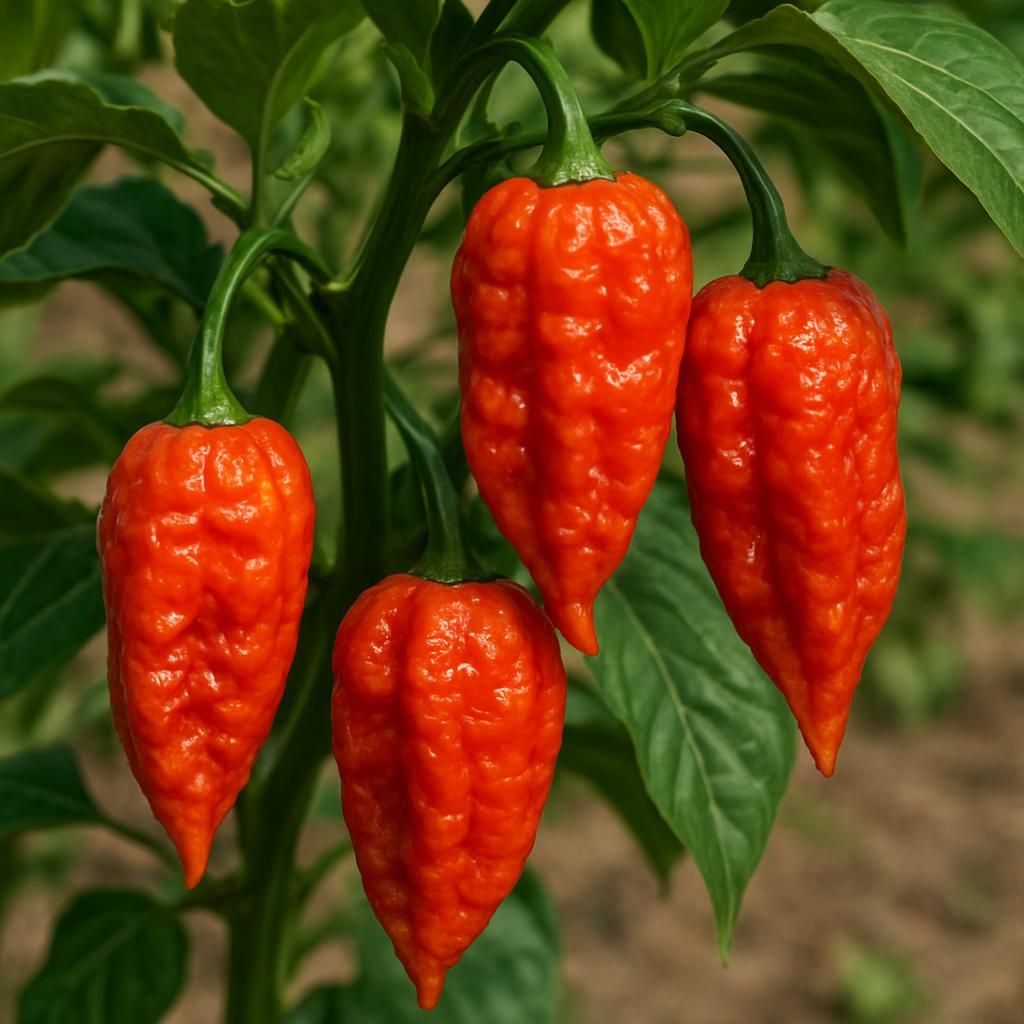
Introduction to Naga Morich
Naga Morich, also known regionally as Naga Jolokia or Bhut Jolokia variants, is one of the world’s hottest chili peppers. It belongs to the species Capsicum chinense and is renowned for its extreme pungency, often exceeding 1,000,000 Scoville Heat Units. Farmers and home gardeners value it for both culinary heat and potential commercial markets in hot sauces, spice blends, and medicinal extracts.
Originating from the humid subtropical hills of Assam, Nagaland, and Bangladesh, this pepper has adapted to monsoon climates with high rainfall followed by drier harvest periods. Its distinctive fruity, citrus, and smoky notes set it apart from other super-hot varieties such as the Ghost Pepper or Carolina Reaper.
Commercial interest has grown rapidly because of demand from the craft hot-sauce industry and export markets. Successful cultivation requires attention to temperature, humidity management, and organic pest control to maintain fruit quality and maximize yield.
Botanical Profile of Naga Morich
Naga Morich plants are vigorous, semi-perennial shrubs that can reach 1.2–1.8 m in height under optimal conditions. Stems are woody at the base with green to purplish branches. Leaves are ovate to lanceolate, dark green, and slightly wrinkled.
Flowers are small, creamy-white with green anthers and appear singly or in small clusters at nodes. Fruits are elongated, wrinkled pods 5–8 cm long that ripen from green to orange-red or chocolate brown depending on the landrace. The placenta contains high concentrations of capsaicinoids responsible for extreme heat.
The plant exhibits strong apical dominance early in growth but branches prolifically after the first pinch. Flowering occurs 70–90 days after transplanting, with fruit set continuing for 4–6 months in frost-free environments.
Soil, pH, and Climate Requirements for Naga Morich
Naga Morich thrives in well-drained, fertile loamy soils rich in organic matter. Heavy clay soils should be amended with compost and coarse sand to improve aeration and prevent waterlogging.
| Parameter | Ideal Range | Notes |
|---|---|---|
| Soil Type | Sandy loam to loam | High organic matter, good drainage |
| Soil pH | 6.0–6.8 | Slightly acidic; avoid below 5.5 |
| Temperature (Day) | 24–32 °C | Optimal fruit set; above 35 °C reduces set |
| Temperature (Night) | 18–22 °C | Cooler nights improve capsaicin levels |
| Relative Humidity | 60–80 % | High humidity favors fungal issues |
| Annual Rainfall | 1200–2000 mm | Supplemental irrigation in dry spells |
| Sunlight | Full sun, 6–8 hours | Afternoon shade in extreme heat |
| Elevation | 0–1200 m | Performs well in lowland and mid-hill zones |
Step-by-Step Planting & Propagation
Start seeds indoors 8–10 weeks before the last expected frost. Soak seeds in warm water or a 3 % hydrogen peroxide solution for 12–24 hours to improve germination rates.
Sow seeds 0.5 cm deep in sterile seed-starting mix. Maintain soil temperature at 28–30 °C using a heat mat. Germination occurs in 7–21 days.
Transplant seedlings into 10 cm pots once they have two true leaves. Harden off plants for 7–10 days before moving outdoors when night temperatures remain above 18 °C.
Space plants 60 cm apart in rows 90–100 cm wide. Raised beds or black plastic mulch help maintain consistent soil moisture and temperature.
Care & Maintenance regimes for Naga Morich
Consistent moisture without waterlogging is critical. Drip irrigation delivering 25–35 mm per week during fruiting prevents blossom drop.
| Growth Stage | Watering Frequency | Fertilizer (NPK) | Pruning Action |
|---|---|---|---|
| Seedling (0–4 wks) | Keep evenly moist | 10-10-10 weekly at ¼ strength | Pinch at 4th node for bushiness |
| Vegetative | 2–3 times weekly | 20-10-10 every 14 days | Remove lower leaves touching soil |
| Flowering | Daily drip or every 2 days | 10-20-20 every 10–14 days | Tip prune to encourage laterals |
| Fruiting | Maintain 60 % field capacity | 5-10-20 every 3 weeks | Remove damaged or diseased fruits |
| Post-harvest | Reduce to prevent rot | Light compost tea monthly | Cut back 30 cm to encourage ratoon |
Apply a 5–8 cm layer of organic mulch to suppress weeds and moderate soil temperature. Side-dress with well-rotted manure or fish emulsion every 3–4 weeks during peak production.
Pests, Diseases & Organic Management
Common insect pests include Aphids, Thrips, and Spider Mites. Monitor weekly and release beneficial insects such as lady beetles and predatory mites at the first sign of infestation.
Fungal diseases such as Anthracnose and Phytophthora can devastate crops in humid climates. Improve airflow by proper spacing and use copper-based organic fungicides preventively during monsoon periods.
Root-knot nematodes are managed by solarizing beds and incorporating neem cake or marigold residues. Crop rotation with non-host plants such as Onion or Garlic reduces nematode populations.
Harvesting, Curing & Optimal Storage
Harvest pods when fully colored and firm, typically 90–110 days after transplanting. Wear gloves and eye protection; capsaicin can cause severe irritation.
For fresh market, cool pods immediately to 10–12 °C. For drying, spread in single layers under shade or use a dehydrator at 45–50 °C until brittle.
Store dried pods in airtight glass jars away from light. Whole dried chilies retain potency for 12–18 months; grind into powder only when needed to preserve aroma.
Companion Planting for Naga Morich
Plant Thai Basil nearby to repel aphids and enhance flavor complexity. Marigold borders deter nematodes and attract pollinators.
Avoid planting near Fennel or members of the brassica family, which can inhibit growth or attract shared pests. Interplant with Tomato or Eggplant at wider spacing to maximize land use while maintaining airflow.
Read more about strategic companion planting pairings that boost small-farm resilience.