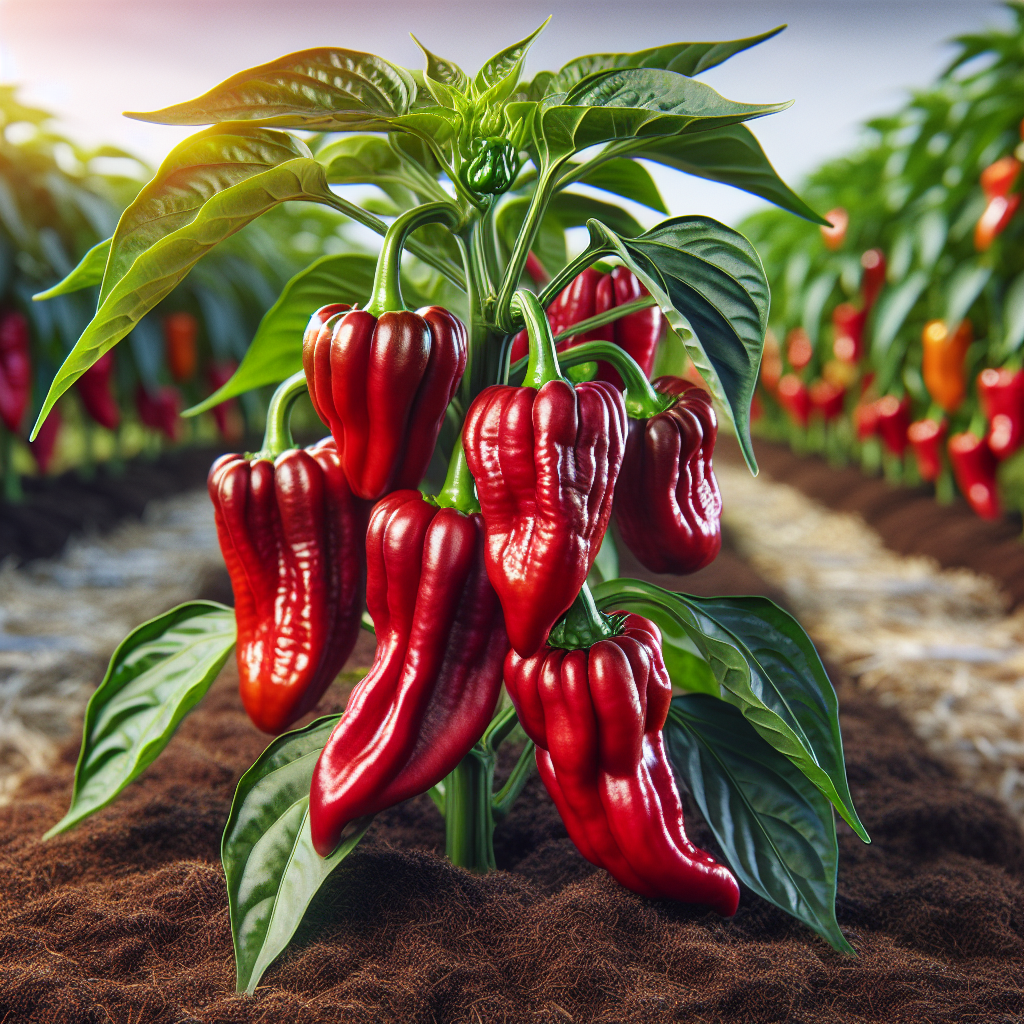
Introduction to Carolina Reaper
Bred in South Carolina by Ed Currie of the PuckerButt Pepper Company, this variety became globally famous for combining extraordinary heat with a surprisingly fruity, floral background flavor. It is not simply a novelty pepper; it is a serious long-season specialty crop with strong market value for fresh sales, hot sauce production, drying, seed saving, and premium niche branding.
This pepper belongs to the same species as habanero, Scotch bonnet, and Ghost Pepper, but it typically develops a more pronounced bumpy surface, thicker placental tissue, and a characteristic pointed or tail-like pod tip. Those structural traits matter agronomically because the fruit takes longer to mature than many standard hot peppers and demands sustained warmth, high light intensity, and a careful fertility program to avoid blossom drop or stalled pod set.
For growers, the central challenge is time. Carolina Reaper is slow to germinate, slow to establish, and slower to ripen than common jalapeño or cayenne types. In warm climates it can behave as a short-lived perennial, but in most temperate zones it is managed as an annual started indoors well before the last frost. Success depends less on luck than on controlling the root zone, avoiding temperature shocks, and preventing stress cycles that lead to undersized fruit or poor capsaicinoid development.
Use gloves for all handling after fruiting begins. The oils can linger on skin, tools, stakes, harvest bins, and drying racks. Dedicated pruning snips, harvest gloves, and washing protocols are highly recommended in commercial or mixed-crop settings.
Botanical Profile of Carolina Reaper
This variety is a member of the Solanaceae family, closely related to tomato, eggplant, and other peppers. Botanically it is Capsicum chinense, though the species name is historical and somewhat misleading, as the crop originated in the Americas rather than China.
Plants are typically upright, branching shrubs reaching 90-150 cm tall in favorable conditions, with a spread of 60-120 cm depending on fertility, container size, and pruning style. Leaves are medium green, smooth, and ovate, with a somewhat drooping habit during midday heat even when plants are adequately watered. That temporary midday wilt can be normal; persistent morning wilt is not.
Flowers are usually small, white to greenish-white, pendant, and self-fertile, though vibration from wind or insect activity improves pollination. High heat above about 32-35°C can reduce pollen viability and cause blossom drop, especially when nights remain above 24°C. Conversely, cool nights below 15°C slow metabolism and delay fruit set.
Fruits begin green and mature to bright scarlet red, though off-type seeds or unstable lines may show shape and color variation. Mature pods are usually 4-7 cm long, heavily rugose, with a lantern-like body and a tapered point or tail. The placental tissue inside the fruit is extensive, which is one reason this pepper reaches such high pungency. Heat intensity is concentrated not only in seeds but especially in the white internal membrane, where capsaicinoids are produced and stored.
Compared with milder peppers, Carolina Reaper has a longer total crop cycle. Germination often takes 10-30 days, transplant-ready seedlings may need 8-10 weeks, and ripe pods may require 90-120 days from transplant depending on climate and management. That long window makes early planning essential. For growers wanting broader context on pepper management, general principles overlap with this pepper article only in organic systems thinking, but Carolina Reaper needs more precise heat and timing than most beginner crops.
Soil, pH, and Climate Requirements for Carolina Reaper
This crop performs best in friable, biologically active, well-drained soil with a pH of 6.0-6.8, with an ideal target around 6.2-6.5. It will tolerate slightly more acidic or slightly more alkaline conditions, but nutrient availability becomes less balanced outside that range. At low pH, calcium and magnesium can become limiting; at high pH, iron, manganese, and phosphorus availability may decline, leading to interveinal chlorosis and weak fruit development.
The ideal field soil is a sandy loam or loam with 3-5% organic matter and excellent drainage. Heavy clay can be used, but only if amended and formed into raised beds. Saturated root zones are one of the quickest ways to stunt Carolina Reaper. Roots require oxygen; when pore spaces stay full of water, plants become pale, growth slows, and roots turn tan to brown rather than bright white.
A useful target is consistent moisture at roughly 60-80% of field capacity in the active root zone. In practical terms, soil should feel cool and slightly moist 5-8 cm below the surface, but not wet enough to smear into a slick ribbon. If squeezed, it should hold lightly then crumble. Waterlogged conditions often show up as yellow lower leaves, edema-like blistering, slow new growth, and an overall drooping appearance that many growers mistakenly treat with more irrigation.
Climate is critical. Carolina Reaper thrives with daytime temperatures of 24-30°C and nighttime temperatures of 18-22°C. Root zone temperature strongly influences establishment; below about 18°C, seedlings often sit still. Frost is lethal, and even non-freezing cold stress can permanently reduce vigor. In regions with short summers, black plastic mulch, low tunnels, or greenhouse production can make the difference between a full red harvest and a crop that never fully matures.
Humidity should be moderate rather than extreme. Very high humidity increases foliar disease pressure and can interfere with pollen shed, while extremely arid conditions raise mite pressure and may cause flower abortion if irrigation is inconsistent. Good airflow is therefore essential, especially in protected culture.
For containers, use a high-drainage medium with composted bark, coco coir or peat, perlite, and a modest amount of mature compost. Final container size should be at least 15-25 liters for serious production; smaller pots sharply limit yield and water buffering capacity.
Step-by-Step Planting & Propagation
Start seeds indoors 10-12 weeks before the intended outdoor transplant date. In cool climates, even 12-14 weeks is justified because this variety is slower than standard peppers. Use fresh, true-to-type seed from a reputable source; unstable seed lots are common in superhot peppers.
- Fill plug trays or small pots with a sterile seed-starting mix that is fine-textured and well aerated.
- Pre-moisten the medium so it is evenly damp but not saturated.
- Sow seeds 0.5-1 cm deep.
- Maintain bottom heat between 28-31°C. This is one of the most important factors for uniform germination.
- Keep humidity moderately high until emergence, but vent daily to prevent fungal growth.
- Provide bright light immediately after emergence: 14-16 hours per day under strong grow lights or in a warm greenhouse.
Germination can be erratic. Do not discard trays too early; some seeds emerge after three to four weeks. A mild chamomile tea soak or diluted hydrogen peroxide seed sanitation is sometimes used by experienced growers, but avoid overly aggressive treatments that damage embryos.
Once seedlings have two to three true leaves, transplant into larger cells or 7-10 cm pots. Bury only to the original media line; unlike tomatoes, peppers do not reliably root along buried stems to the same degree. Feed lightly with a balanced soluble fertilizer at one-quarter to one-half strength after the first true leaves expand.
Before transplanting outdoors, harden plants over 7-10 days. Reduce water slightly, expose plants gradually to wind and sun, and never move them directly from a protected environment into full-day intense sunlight. Leaf scorch and transplant shock can set the crop back for weeks.
Transplant only after all frost risk has passed and soil temperatures are consistently above 18°C, ideally above 20°C. Space plants 45-60 cm apart in rows 75-100 cm apart. Wider spacing improves airflow and disease suppression; tighter spacing can work in high-pruning greenhouse systems.
At planting, incorporate compost plus a balanced starter fertility source, but avoid heavy nitrogen charges in the hole. Excess early nitrogen encourages lush foliage at the expense of root establishment and later flowering. Water transplants deeply once, then allow the top few centimeters of soil to dry slightly before the next irrigation to encourage roots to explore.
Vegetative propagation is possible from cuttings, especially for overwintered mother plants, but seed propagation is standard. Cuttings root best in warm, sterile media under high humidity with bottom heat around 24-27°C.
Care & Maintenance regimes for Carolina Reaper
Irrigation should be steady, not cyclical. The crop performs best when the root zone remains evenly moist but never anaerobic. During early establishment, water deeply every few days rather than shallowly every day, adjusting for soil type. In mature fruiting plants, actual frequency may range from every 1-2 days in hot containers to every 4-7 days in mulched field loam. The right schedule is determined by soil, weather, mulch, and plant size, not by a fixed calendar.
Signs of underwatering include dull leaf color, upward leaf curl, flower drop, small pods, and plants that recover only slowly after sunset. Severe stress can cause corky fruit skin and reduced final heat quality. Signs of overwatering include chlorotic lower leaves, swollen brittle foliage, poor root odor, fungus gnat activity in containers, and plants that wilt despite wet soil.
Mulch is highly beneficial. Apply 5-8 cm of clean straw, shredded leaf mold, or composted mulch after soil has warmed. Mulch stabilizes moisture, lowers splash-borne disease, and protects shallow feeder roots from temperature swings.
Nutrient management should change by growth stage. Early growth benefits from moderate nitrogen, phosphorus, calcium, and magnesium. Once branching is established, shift toward a more balanced or slightly potassium-forward feeding program to support flowering and fruit fill. Excess nitrogen at flowering produces oversized plants with fewer pods and delays ripening.
A practical fertility approach for in-ground plants is:
- Pre-plant: compost plus a balanced organic or conventional fertilizer.
- 2-3 weeks after transplant: light side-dress with nitrogen if foliage is pale.
- At first flowering: side-dress with a lower-nitrogen, higher-potassium input.
- During heavy fruit set: maintain potassium, calcium, and steady moisture.
Calcium disorders in peppers are often irrigation disorders first. Blossom-end rot can appear if soil moisture fluctuates sharply, even when calcium is present in the soil. Keep watering even, avoid salt buildup in containers, and do not overapply ammonium-heavy fertilizers, which compete with calcium uptake.
Support is often overlooked but useful. Heavy fruit load and brittle branching make staking worthwhile, especially in windy gardens or high tunnels. A single stake with soft ties, tomato-style cages, or Florida weave adaptations can all work.
Pruning is optional. Removing the very first crown flower on young transplants can help redirect energy into vegetative growth, producing a larger later canopy. Beyond that, only light pruning is usually needed: remove damaged leaves, weak interior shoots, and any foliage touching wet soil. Overpruning can expose pods to sunscald.
If overwintering, cut plants back by one-third to one-half before bringing them into a frost-free, bright location. Inspect carefully for Aphids and mites. Reduce watering and stop heavy feeding during low-light winter maintenance.
Pests, Diseases & Organic Management
Aphids, Thrips, Whiteflies, Spider mites, Flea beetles, Pepper maggots in some regions, and Broad mites are the most common arthropod problems. Broad mites are especially destructive because they distort new growth, twist leaves, and stunt plants before they are easily visible.
Integrated organic management begins with prevention:
- Use insect netting early where pressure is severe.
- Avoid excessive nitrogen that creates soft, pest-prone growth.
- Maintain weed control around beds.
- Space plants for airflow.
- Scout undersides of leaves at least twice weekly.
Aphids cluster on tender tips and flower stems, producing sticky honeydew. A strong water spray can reduce light infestations. Insecticidal soap works well when coverage is complete, but avoid spraying in intense sun or during peak pollinator activity.
Thrips scar leaves and flowers and can vector viruses. Blue or yellow sticky cards help monitor populations. Spinosad can be effective in organic systems when used responsibly and rotated to reduce resistance.
Spider mites thrive in hot, dusty, dry conditions. Fine stippling, bronzing, and webbing are warning signs. Improve humidity slightly, hose down leaf undersides in the morning, and use horticultural oils carefully when temperatures are not extreme.
Disease pressure includes Damping-off in seedlings, Bacterial leaf spot, Cercospora leaf spot, Anthracnose on ripening fruit, Phytophthora root and crown rot in wet soils, and Mosaic viruses spread by pests or contaminated hands. Clean seed-starting media, crop rotation of at least 3 years away from other solanaceous crops, and dry-leaf irrigation methods are foundational.
Do not work among plants when foliage is wet. Sanitize pruners, especially after removing suspect plants. Remove and destroy virus-infected plants showing mosaic, severe distortion, or unexplained stunting; they will not recover and can become reservoirs for spread.
Beneficial companion insectaries help. Thai Basil can attract pollinators and beneficial insects nearby, while Onion and Nasturtium may contribute to broader pest-disruption strategies in mixed plantings. None are magic shields, but they fit well into a preventive management system.
Harvesting, Curing & Optimal Storage
Harvest begins when pods reach full varietal color, typically a deep bright red, and develop full gloss with slight softening from the immature green stage. For maximum heat and best flavor, allow fruit to fully color on the plant whenever weather permits. Immature fruit can finish coloring off the plant, but capsaicinoid development and aroma are usually superior when ripened attached.
Use nitrile gloves, long sleeves, and eye protection if harvesting large quantities. Do not touch your face, and do not harvest in a way that crushes pods. Cut fruit with pruners or snap carefully with the stem attached to reduce tearing.
Fresh market pods should be sorted immediately. Discard any with sunscald, Anthracnose spotting, soft areas, insect entry holes, or cracks. Sound fruits can be held at about 7-10°C with moderate relative humidity, around 85-90%, for roughly 2-3 weeks, though quality is best sooner. Temperatures much colder can induce chilling injury; much warmer shortens shelf life rapidly.
For drying, wash quickly only if necessary, then dry surface moisture thoroughly. Slice pods for faster dehydration, but remember that cutting releases airborne capsaicin that can irritate lungs and eyes. Dry at 46-57°C in a dehydrator or very low oven with strong ventilation until pods are brittle, not leathery. Properly dried pods should snap cleanly and show no internal dampness.
Condition dried peppers by placing them in a sealed jar for several days and checking for condensation. If moisture appears, return them to the dehydrator. Once fully dry, store in airtight glass jars or vacuum-sealed bags away from light, oxygen, and humidity. Whole dried pods generally retain quality longer than powder.
If grinding into powder, wear a respirator and work outdoors or under strong extraction. Ultra-hot pepper dust is hazardous. Store powder in small airtight containers to limit repeated moisture exposure.
Seeds for saving should come from healthy, fully ripe, true-to-type fruits isolated from other peppers if purity matters. Dry seeds thoroughly before storage and keep them cool, dark, and dry.
Companion Planting for Carolina Reaper
Companion planting is most useful here for ecological support rather than folklore. The best partners are low-competition species that either attract beneficial insects, repel or confuse certain pests, or occupy different root and canopy niches without shading the pepper crop.
Thai Basil is one of the best companions because it tolerates similar heat, does not aggressively compete when spaced properly, and helps draw pollinators and predatory insects into the planting. Its aromatic canopy may also modestly complicate host-finding for some pests.
Onion works well along bed edges because its narrow upright growth does not shade pepper plants. It is especially useful in intensive gardens where space efficiency matters. Keep onion rows far enough away that harvesting or weeding does not disturb pepper roots.
Nasturtium functions as a living insectary and can act as a trap crop for Aphids in some gardens. Let it trail away from the pepper base rather than climb into the canopy, where it could reduce airflow and raise humidity around stems.
A fourth useful option is Marigold only if true marigold pages are unavailable in your system; otherwise use marigold rather than yarrow in practice. In field reality, French marigolds are more commonly used around peppers than yarrow for nematode and beneficial-insect support, while yarrow excels as a pollinator and predator resource on bed margins.
Avoid large, fast-growing companions that cast afternoon shade or demand heavy irrigation. Carolina Reaper fruits best with uninterrupted sun, warm soil, and low root-zone competition. Keep companion plantings peripheral, intentional, and pruned rather than allowing them to crowd the crop.