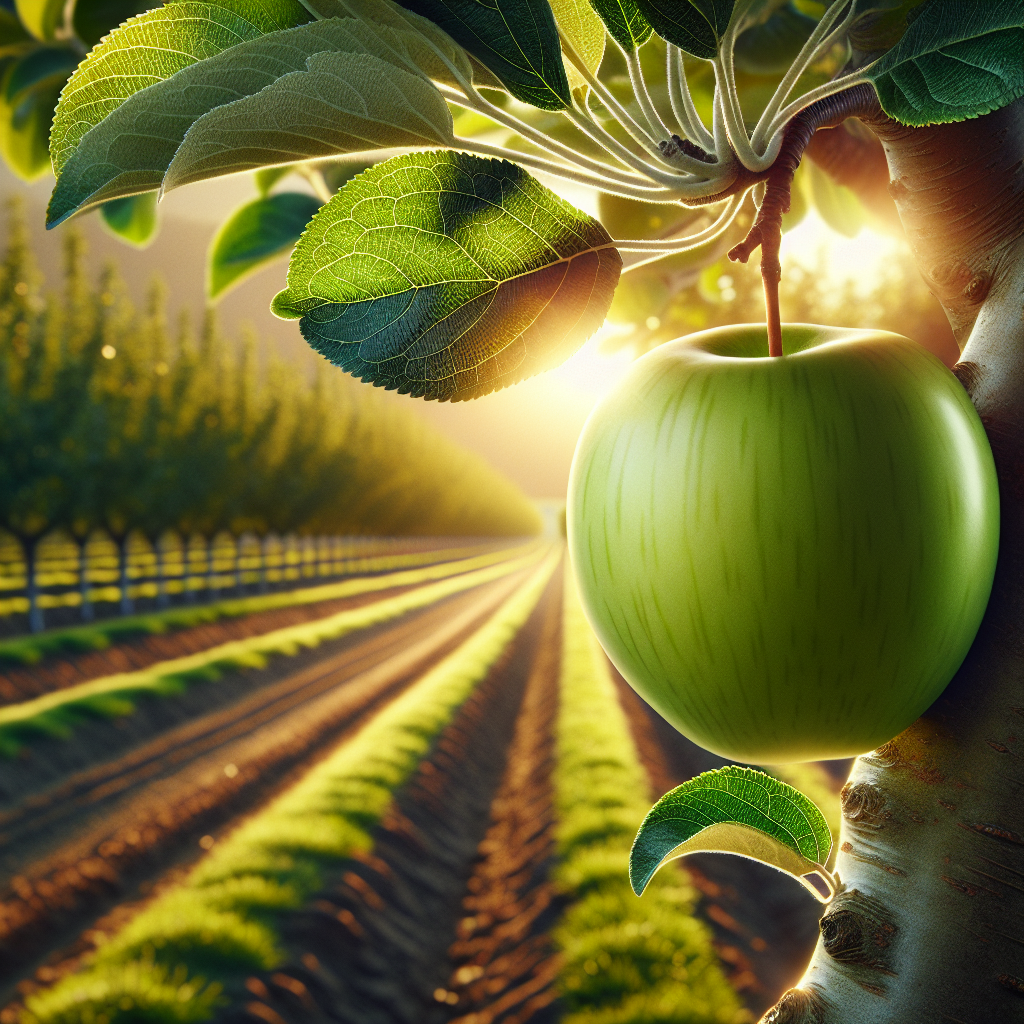
Introduction to Mutsu Apple (Crispin)
Originating in Japan in the 1930s and introduced from Aomori Prefecture, this cultivar was bred from a cross between Golden Delicious and Indo. In many markets it is sold as Crispin, especially where the original cultivar name was considered less familiar to consumers. It is widely regarded as a premium fresh-eating apple because of its very large fruit size, dense crisp flesh, and flavor that can range from honeyed-sweet to briskly aromatic depending on harvest timing and site conditions.
This is a late-maturing apple with strong vigor and a tendency to produce large, handsome fruit with green to yellow-green skin, sometimes with a faint bronze blush or russeting under certain environmental conditions. It is especially valued for fresh eating, baking, and slicing because the flesh holds texture well. Compared with many mainstream dessert cultivars, it can produce notably larger fruit, but that size comes with tradeoffs: limbs may need support, thinning must be done aggressively, and crop load management is essential to prevent biennial bearing and poor return bloom.
One of the most important practical facts for growers is that this variety is triploid. That means its pollen is generally not effective for pollinating other apples, and it also requires pollen from compatible diploid pollinizers nearby. If you are designing an orchard, do not plant it as a stand-alone tree and expect reliable cropping. For broader background on species-level orchard culture, see our Apple guide. If you are interested in orchard floor biodiversity and understory planning, the principles in this companion planting article are also useful.
Because of its size, quality, and storage potential, Mutsu fits well in home orchards, u-pick settings, diversified fruit farms, and cool-climate commercial blocks where growers can provide disease management and proper pollination. It performs best where warm days are followed by cool nights late in the season, allowing sugars, aromatics, and firmness to develop without excessive heat stress.
Botanical Profile of Mutsu Apple (Crispin)
This cultivar belongs to the rose family, Rosaceae, and the species Malus domestica. Trees are typically vigorous, upright to spreading with age, and capable of producing long annual extension growth, especially on fertile soils or vigorous rootstocks. Without training, young trees can become structurally imbalanced, with crowded scaffold development and shaded interior wood.
Fruit are usually very large, round-conic to oblate, with greenish-yellow skin that may turn more golden as maturity advances. The flesh is cream to pale yellow, coarse to moderately fine in texture, very juicy, and notably crisp when harvested at the correct stage. Flavor is often sweeter than sharply acidic, but unlike bland sweet apples, a properly ripened fruit retains enough tartness for complexity.
Bloom time is generally mid to late season, overlapping with many common apple pollinizers. Because it is triploid, orchard design must include at least two compatible diploid cultivars with overlapping bloom windows if no other suitable crabapple or pollinizing apple is nearby. Bees must be active during bloom, and cold, rainy bloom periods can sharply reduce fruit set.
Tree size depends heavily on rootstock. On dwarfing rootstocks such as M.9 or B.9, mature height may remain around 8-12 feet with strong support systems. On semi-dwarf stocks such as M.26 or MM.106, expect around 12-16 feet. On more vigorous rootstocks, the tree can become substantially larger and more difficult to prune, spray, and harvest. Mutsu often benefits from size-controlling rootstocks because its natural vigor can otherwise outpace manageable canopy structure.
Bearing habit is primarily on spurs, though some terminal bearing may occur on young wood depending on pruning history. Spurs should be renewed over time because old, shaded spurs produce smaller, lower-quality fruit. This cultivar can be prone to biennial tendencies when overcropped one year and not sufficiently thinned. Professional growers therefore prioritize annual crop regulation rather than simply accepting whatever set occurs.
Soil, pH, and Climate Requirements for Mutsu Apple (Crispin)
Deep, well-drained loam or sandy loam is ideal. The tree dislikes prolonged root saturation, and heavy clay soils with perched water tables often lead to root stress, low vigor in spring, nutrient lock-up, and greater susceptibility to collar and root diseases. If internal drainage is poor, plant on raised berms 12-18 inches high and improve subsoil permeability before establishment rather than trying to fix the problem later.
The preferred soil pH is about 6.2-6.8, though acceptable performance can occur from roughly 6.0-7.0 if nutrient balance is good. Below pH 5.8, calcium, magnesium, and phosphorus availability often decline, while manganese or aluminum excess may become problematic. Above pH 7.2, iron and zinc deficiencies become more likely, especially on calcareous soils. A pre-plant soil test should guide lime, gypsum, compost, boron, and potassium corrections. Apple trees are long-lived plantings, so correcting pH before planting is far more effective than making small surface corrections after establishment.
This cultivar is best adapted to temperate climates with a clear winter chilling period and a relatively long, mild autumn. Cold hardiness is generally good for many apple-growing regions, but flower buds and blossoms remain vulnerable to spring frost like all apples. Select sites with good air drainage, such as gentle slopes rather than low frost pockets. Avoid enclosed valley bottoms where cold air settles during bloom.
Mutsu requires full sun, meaning at least 8 hours of direct sunlight daily for commercial-quality fruit. In partial shade, trees may survive but will produce more vegetative growth, poorer color development, lower sugar accumulation, and weaker spur formation. Because it is a late-season apple, it particularly benefits from unobstructed autumn sunlight.
Consistent soil moisture is essential, especially from petal fall through fruit expansion. A good target is evenly moist soil in the upper 12-18 inches without chronic saturation. In practical terms, soil should feel cool and slightly moist when squeezed, but not release water or remain sticky for days. Tensiometer readings in the 20-40 centibar range are often appropriate for loam soils during active fruit sizing. Readings much drier than that for prolonged periods can reduce fruit size and contribute to bitter pit risk indirectly through irregular calcium movement. Conversely, staying constantly saturated limits root respiration, promotes pale foliage, encourages Phytophthora problems, and may cause soft, bland fruit.
Heat can be a challenge. In hot inland sites, sunburn and reduced firmness may occur, especially when late summer temperatures stay elevated at night. Where summer highs routinely exceed 95°F (35°C), maintain mulch, reflective orchard floor management, and even irrigation to reduce stress. Cool nights near harvest are especially beneficial for flavor retention.
Step-by-Step Planting & Propagation
Propagation for true-to-type production is done by grafting, not seed. Seedlings from this cultivar will not come true and are unsuitable if you want predictable fruit. Purchase a certified disease-free grafted tree from a reputable nursery, choosing a rootstock suited to your soil, climate, pest pressure, and desired tree size.
Select the site carefully. Choose a location with full sun, good air movement, and no standing water after rain. Allow enough room for pollinizer trees within bee flight range, ideally in the same orchard row pattern or nearby rows.
Test the soil 6-12 months before planting. Correct pH, phosphorus, potassium, and organic matter before the tree goes in. Deep ripping or subsoiling may be worthwhile in compacted ground.
Mark spacing based on rootstock. Dwarf trees may be spaced 4-8 feet in-row and 10-14 feet between rows. Semi-dwarf trees may need 10-16 feet in-row and 14-20 feet between rows. Mutsu's vigor means crowding can quickly create shading and disease pressure.
Plant in dormant season, usually late winter to early spring, once the soil is workable but before bud break. In milder climates, fall planting can also succeed if roots can establish before hard freezes.
Dig a hole wide enough to spread roots naturally, but not excessively deep. The graft union should remain 2-4 inches above final soil grade, especially on dwarfing rootstocks, to prevent scion rooting and loss of size control.
Backfill with native soil rather than a highly amended pocket. Over-amending the hole can discourage roots from moving outward. Water thoroughly after planting to settle soil around roots.
Install support immediately if on dwarf rootstock. A stake or trellis is not optional for many dwarf apples because crop load and wind can uproot them.
Head the tree at planting if it is an unbranched whip, or select and position scaffolds if it is feathered. Early structural decisions strongly influence future yield and fruit quality.
Mulch with wood chips or shredded bark 2-4 inches deep over the root zone, but keep mulch 4-6 inches away from the trunk to reduce rodent and crown rot risks.
Protect the trunk using guards against rodents, rabbits, and southwest injury in exposed sites.
Bench grafting and field grafting are both possible for experienced propagators, commonly using whip-and-tongue or cleft graft techniques onto compatible rootstocks. For orchardists, buying finished nursery trees is usually more efficient and lowers establishment risk.
Care & Maintenance regimes for Mutsu Apple (Crispin)
Training systems should prioritize light penetration and branch strength. Central leader and tall spindle systems both work well, though vigorous trees need disciplined limb positioning. Young branches should be spread to 50-70 degree angles to reduce excessive upright vigor and promote early spur formation. Very upright shoots tend to stay vegetative; wide-angled limbs become fruitful earlier.
Prune during dormancy to remove crossing branches, narrow crotches, diseased wood, and excessive upright growth. Keep the canopy narrow enough that sunlight reaches lower fruiting wood. In summer, light pruning or shoot pinching can help control vigor, improve spray penetration, and reduce shading around fruit.
Nitrogen should be applied cautiously. Overfeeding nitrogen produces lush, disease-prone foliage, poor color, softer fruit, and more bitter pit susceptibility through calcium dilution effects in rapidly expanding tissues. Young non-bearing trees may need modest nitrogen to build structure, but bearing trees should receive only enough to maintain balanced shoot growth. As a rule of thumb, 8-12 inches of annual terminal growth on mature bearing wood often indicates a balanced nutritional state. Far more than that may signal excessive vigor.
Calcium management is especially important because large-fruited cultivars like Mutsu are more prone to bitter pit and internal quality disorders if calcium supply to the fruit is inadequate. Maintain even soil moisture, avoid excessive nitrogen and potassium, and consider foliar calcium sprays through the season where the disorder is common.
Irrigation should be deep and regular rather than shallow and frequent. Young trees may need watering 1-3 times weekly depending on soil type and weather, aiming to moisten the root zone to 12 inches depth. Mature orchard trees often need the equivalent of 1-2 inches of water per week during active growth, adjusted for rainfall, evapotranspiration, and soil texture. Sandier soils require smaller but more frequent applications. Overwatering signs include persistently yellow lower leaves, algae or moss at the soil surface, sour-smelling soil, weak new growth, and reduced fruit flavor. Underwatering signs include midday leaf dullness, curling margins, fruit drop, reduced fruit size, and premature leaf senescence in late summer.
Thinning is non-negotiable with this cultivar. Remove excess fruit when the king fruit and lateral fruitlets are marble sized, ideally within 2-4 weeks after petal fall. Leave one fruit per cluster and generally aim for 6-8 inches between apples on the branch, adjusting for tree vigor and target fruit size. If thinning is delayed, the tree wastes resources, fruit size is reduced, return bloom suffers, and limb breakage becomes more likely.
Pollination management deserves special attention. Because Mutsu is triploid, plant compatible diploid pollinizers nearby, and if orchard diversity is low, include a crabapple or designated pollinizer rows. Avoid heavy insecticide use during bloom and support pollinator activity with flowering groundcovers that do not compete excessively with tree roots.
Pests, Diseases & Organic Management
Apple scab is one of the most significant disease threats in humid climates. It causes olive-brown lesions on leaves and fruit, leading to cracking and poor marketability. Organic management centers on sanitation, resistant pollinizer choices where possible, open-canopy pruning, and preventative sulfur or lime sulfur programs timed to infection periods. Fallen leaves should be shredded or composted hot to reduce overwintering inoculum.
Powdery mildew can affect shoots, leaves, and blossoms, especially where airflow is poor and vigor is high. Prune out infected terminals during dormancy, reduce excess nitrogen, and maintain canopy openness. Organic sulfur materials can help suppress early infections.
Fire blight is a major bacterial risk in warm, wet bloom periods. Mutsu is not among the most resistant cultivars, so avoid overfertilization with nitrogen, do not prune during active wet outbreaks, and remove strikes well below visible symptoms during dry weather. Disinfect tools between cuts when active infection is present.
Cedar apple rust may be an issue where junipers are nearby. Good airflow and preventative organic fungicide timing during vulnerable periods are key where the disease is common.
Among insects, Codling moth is often the primary direct fruit pest. Larvae bore into fruit, leaving frass at the entry hole. Use pheromone traps to monitor flight, bag individual fruits in small plantings, and apply kaolin clay or appropriately timed biological controls such as granulosis virus or spinosad where permitted in your system.
Apple maggot, Plum curculio, Aphids, Leafrollers, Mites, and Scale can also cause losses. Sticky sphere traps help with Apple maggot monitoring. Kaolin clay can deter Plum curculio feeding and egg laying. Predatory Mites, lacewings, hoverflies, and parasitoids are important allies in integrated management.
Rodents and deer should not be overlooked. Voles can girdle trunks under mulch or snow cover. Keep mulch pulled back from the trunk, use guards, and mow or manage vegetation strategically around tree bases.
Organic orchard success depends less on one miracle spray and more on stacking practices: resistant site choice, sanitation, airflow, balanced nutrition, timely thinning, biological monitoring, and narrow intervention windows.
Harvesting, Curing & Optimal Storage
This is a late-harvest apple, typically picked in mid to late autumn depending on region. It should not be harvested solely by skin color, because fruit can remain greenish even as maturity improves. Better indicators include background color lightening from dark green to yellow-green, seed coat darkening, ease of separation when the fruit is lifted and twisted, rising soluble solids, and starch conversion tests where used commercially.
Harvest too early and the fruit may taste starchy, excessively grassy, and less aromatic. Harvest too late and storage life shortens, flesh can lose some of its exceptional crispness, and physiological disorders may increase. Many growers find that Mutsu reaches peak eating quality after a short storage period rather than immediately off the tree.
Handle fruit gently. Despite its firmness, bruising still reduces storage potential and invites rot. Pick into padded bags or bins, avoid dropping fruit, and remove damaged apples from long-term storage lots.
Unlike onions or winter squash, apples are not truly cured, but they do benefit from prompt postharvest cooling. Pre-cool fruit as soon as possible to near 32-36°F (0-2°C) with high relative humidity around 90-95%. High humidity prevents shriveling; low humidity causes weight loss and skin wrinkling. Good airflow in storage reduces condensation and fungal problems.
Mutsu is known for strong storage potential when harvested at proper maturity and grown with good calcium balance. Under ideal cold storage it may keep for several months. In home storage, use perforated plastic bags or humid fruit drawers to limit dehydration. Keep apples away from ethylene-sensitive produce and remove any fruit showing soft spots or decay promptly.
A common storage issue is bitter pit, seen as small sunken dark spots and corky brown tissue beneath the skin, often near the calyx end. This is linked more to calcium imbalance and irregular water relations than to simple soil calcium shortage. Good crop load management, moderate nitrogen, even irrigation, and foliar calcium programs are the main preventive tools.
Companion Planting for Mutsu Apple (Crispin)
The best companions under and around apple trees support pollinators, attract beneficial insects, improve biodiversity, and suppress problem weeds without creating dense, moisture-trapping competition right at the trunk. Keep a vegetation-free ring immediately around young trunks, then establish selected companions in the wider orchard floor.
Clover is one of the most useful understory plants in low-traffic orchard systems. It helps protect soil, feeds pollinators when managed around bloom timing, and can contribute some nitrogen cycling. Mow before seed set if spread is a concern and keep it from growing rank against trunks.
Thyme is valuable in warm, well-drained orchard strips as a low-growing aromatic that attracts pollinators and beneficial insects while minimizing tall competition. Its compact habit makes it especially suitable near pathways and row edges.
Yarrow is excellent for attracting parasitic wasps, hoverflies, and predatory insects. It can also help diversify orchard ecology, but should be placed where it will not dominate young tree basins.
Nasturtium can function as a trap and nectar plant in mixed plantings, drawing in pollinators and sometimes distracting Aphids from more valuable crops. In small orchards it is especially useful on sunny margins rather than directly at the trunk base.
Avoid planting heavy feeders or strongly competitive perennial grasses directly under newly established trees. Also avoid companions that hold excess humidity around the trunk or interfere with irrigation emitters and vole monitoring. The most successful companion schemes for Mutsu are deliberately managed, mowed, and spaced, not allowed to become an unmanaged tangle.