Introduction to Manzano Pepper (Yellow)
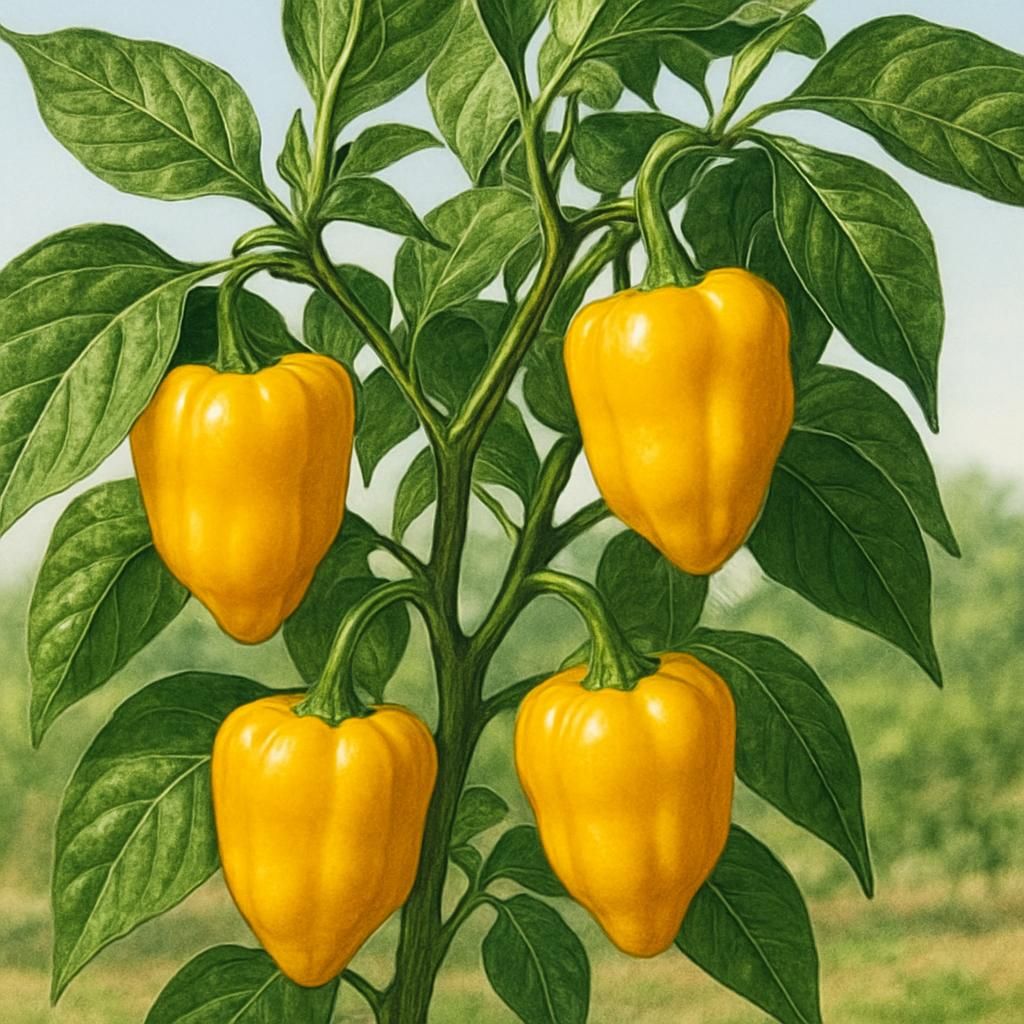
The Manzano Pepper (Yellow) is a distinctive member of the Capsicum pubescens species, known for its cold tolerance, thick fleshy walls, and bright yellow, apple-shaped fruit. Unlike most common peppers, it thrives in cooler highland climates and produces seeds that are characteristically black. Growers value it for both fresh market sales and value-added products such as hot sauces and pickled mixes. Its moderate-to-hot Scoville range (12,000–30,000 SHU) delivers a fruity, citrus-like burn that differentiates it from standard Chili Pepper varieties.
Commercial interest has risen because the plant tolerates temperatures down to 7 °C, allowing extended seasons in subtropical highlands and protected culture in temperate zones. Because it is perennial in frost-free areas, farmers can obtain multiple flushes over two to three years, improving return on labor and inputs. This guide compiles field-tested protocols for soil preparation, propagation, integrated crop management, and post-harvest handling.
Botanical Profile of Manzano Pepper (Yellow)
Manzano Pepper (Yellow) belongs to the family Solanaceae. Plants reach 60–120 cm in height with a compact, bushy habit and pubescent (hairy) stems and leaves. Flowers are purple with distinctive yellow anthers. The fruit is typically 4–7 cm in diameter, oblate to slightly conical, and turns from dark green to golden yellow at physiological maturity. Seeds are wrinkled and jet black, a reliable field marker separating C. pubescens from C. annuum types. The plant exhibits strong branching and can become semi-woody at the base after the first season.
Soil, pH, and Climate Requirements for Manzano Pepper (Yellow)
Successful cultivation begins with well-structured, fertile soil that drains freely yet retains adequate moisture. The species is sensitive to waterlogging and benefits from raised beds or ridges in heavy soils. Ideal conditions are summarized below.
| Parameter | Ideal Range | Notes |
|---|---|---|
| Soil Type | Loamy sand to sandy loam | High organic matter (>3 %) improves structure |
| Soil pH | 6.0–6.8 | Avoid below 5.5; lime if necessary |
| Temperature (day) | 18–26 °C | Growth slows above 30 °C |
| Temperature (night) | 10–15 °C | Tolerates brief dips to 7 °C |
| Altitude | 1,200–2,800 m | Performs well in highland tropics |
| Frost Tolerance | Light frost (−1 °C) | Protect below −2 °C |
| Sunlight | 6–8 hours direct | Afternoon shade beneficial in hot lowlands |
Step-by-Step Planting & Propagation
- Seed Treatment: Soak seeds in 1 % potassium nitrate for 24 h to break dormancy. Surface-sterilize with 10 % bleach solution for 10 min.
- Sowing: Fill 128-cell trays with sterile seed-starting mix. Sow 2–3 seeds per cell at 0.5 cm depth. Maintain 24–26 °C bottom heat; germination occurs in 10–18 days.
- Seedling Hardening: At the two-true-leaf stage, reduce temperature to 18 °C day / 12 °C night and increase airflow over 7–10 days.
- Transplanting: Move seedlings outdoors when they have 6–8 leaves and soil temperature exceeds 15 °C. Space 45 cm between plants in 75 cm rows (≈29,000 plants/ha).
- Perennial Maintenance: In frost-free zones, cut back to 30 cm after the first major harvest; new flushes emerge from the woody base within 4–6 weeks.
Care & Maintenance regimes for Manzano Pepper (Yellow)
Consistent moisture and balanced nutrition are critical. Drip irrigation delivering 3–5 L per plant per day during peak fruiting prevents blossom-end issues. The following schedule outlines weekly actions.
| Growth Stage | Water (L/plant/week) | Fertilizer (NPK) | Pruning & Training |
|---|---|---|---|
| Establishment (0–4 wks) | 10–12 | 10-20-10 @ 2 g/plant | Pinch apical tip at 20 cm to promote branching |
| Vegetative (5–8 wks) | 14–18 | 20-10-10 @ 3 g/plant | Remove basal suckers; stake if >60 cm |
| Flowering (9–12 wks) | 18–22 | 10-10-20 @ 4 g/plant | Light tipping of vigorous laterals |
| Fruiting (13+ wks) | 20–25 | 8-8-20 + Ca @ 5 g/plant | Remove diseased leaves; thin interior canopy |
Mulch with 5 cm of straw or wood chips to stabilize soil temperature and suppress weeds. Side-dress with well-rotted compost every 4 weeks during active growth.
Pests, Diseases & Organic Management
Common threats include Aphids, Spider Mites, Whiteflies, and Thrips. Early detection via yellow sticky traps and weekly scouting prevents outbreaks. Introduce predatory mites (Phytoseiulus persimilis) and lacewing larvae at first sign of mites. For fungal issues such as Powdery Mildew and Phytophthora, maintain airflow, avoid overhead irrigation, and apply compost-tea foliar sprays every 10–14 days. Copper hydroxide (organic formulation) at 2 g/L provides protective control against bacterial spot. Rotate with non-host crops such as Onion or Garlic to break soil-borne pathogen cycles.
Harvesting, Curing & Optimal Storage
Harvest when fruit reach full yellow coloration and the shoulders are firm. Use sanitized shears to cut the pedicel, leaving 1 cm of stem. For fresh market, hydro-cool to 10 °C within 30 min of harvest. Store at 7–10 °C and 90–95 % RH for up to 21 days. For drying, place whole fruits in single layers at 35–40 °C with good airflow until moisture content drops below 12 %. Vacuum-seal dried pods in Mylar bags with oxygen absorbers for 12-month shelf life. Seeds for replanting should be extracted from fully ripe fruit, fermented 48 h, rinsed, and dried to 8 % moisture before storage at 4 °C.
Companion Planting for Manzano Pepper (Yellow)
Pair Manzano Pepper (Yellow) with nitrogen-fixing legumes such as Peas or Beans to improve soil fertility. Aromatic herbs including Thai Basil and Rosemary deter aphids and whiteflies. Marigolds (Marigold) suppress nematodes and attract beneficial insects. Avoid planting near Fennel or Dill, which may inhibit pepper growth through allelopathy. In highland systems, interplant with Strawberry to maximize land use and provide living mulch.
For more on seasonal soil strategies that complement pepper production, see The Hidden Power of Mulching: 8 Organic Strategies to Transform Small Farm Soil.