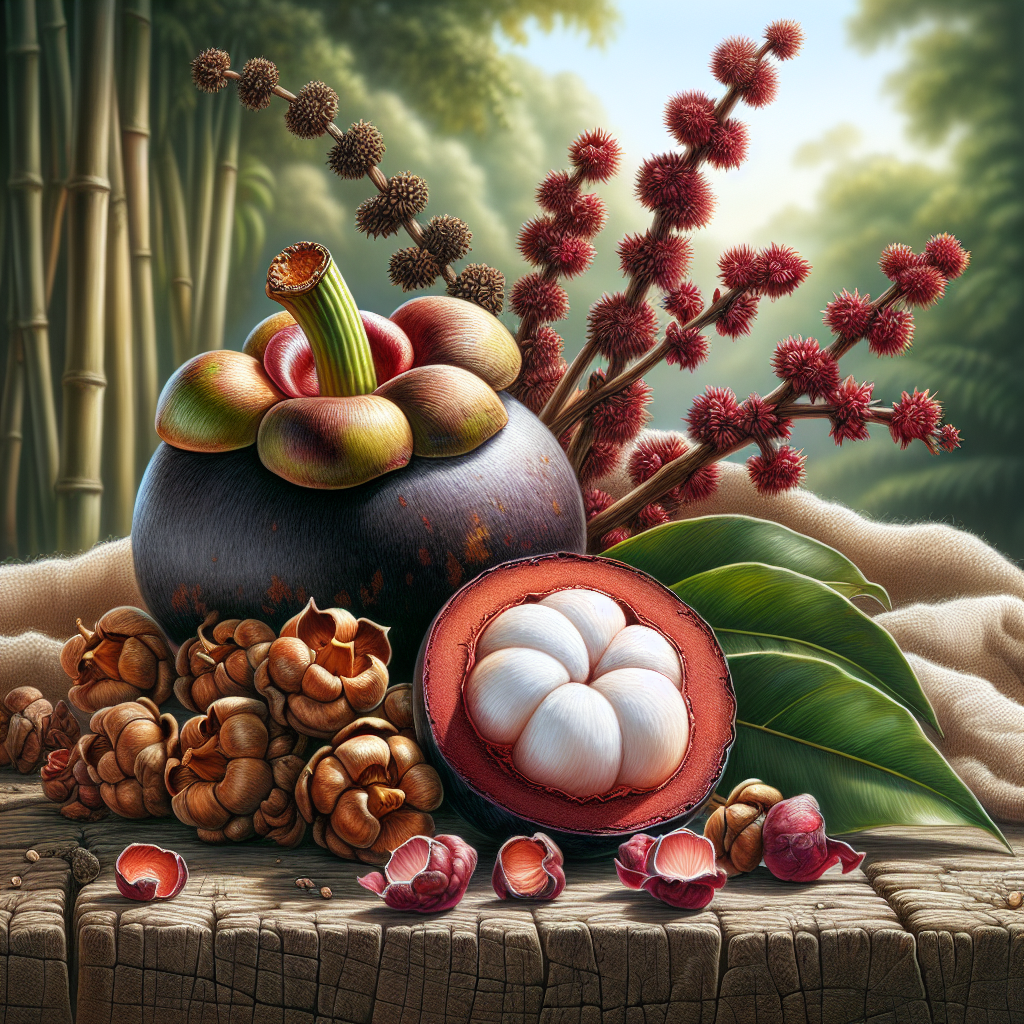
Introduction to Mangosteen (Mesta)
Mangosteen (Garcinia mangostana), often called the 'queen of tropical fruits,' delivers a sweet-tart, creamy white pulp encased in a thick purple rind, prized for its antioxidant-rich profile and medicinal properties. Mesta, or Hibiscus sabdariffa (commonly roselle), complements it as a dual-purpose crop yielding strong bast fibers for jute-like textiles and tangy red calyces for herbal teas and jams. Together, 'Mangosteen (Mesta)' represents a high-value tropical duo for small farms in humid regions, with mangosteen fetching premium prices ($10-50/kg fresh) and mesta offering quick 4-6 month harvests for fiber (up to 2-3 tons/ha) and calyces (1-2 tons/ha). Native to Southeast Asia, mangosteen demands precise tropical conditions but yields for 30+ years per tree; mesta thrives in similar wet climates with low inputs. This guide provides professional-grade protocols for propagation, care, pest management, and harvest to maximize ROI on 1-5 acre plots. Expect first mangosteen fruits in 5-8 years from seed/graft, with mesta cycling annually for cash flow. Mango (crop) shares similar tropical needs, aiding intercropping.
Botanical Profile of Mangosteen (Mesta)
Mangosteen (Garcinia mangostana): Evergreen perennial tree in Clusiaceae family, growing 6-25m tall with smooth, dark green elliptical leaves (15-20cm). Tetramerous flowers are reddish-purple, 4-6cm wide. Fruit is a globose berry (4-7cm diameter), indehiscent purple rind (6-10mm thick) protecting 4-8 white, juicy segments with 1-2 large seeds. Slow-growing, dioecious but functionally parthenocarpic (seedless fruits common). Chromosomes: 2n=76. Rich in xanthones, offering anti-inflammatory benefits.
Mesta (Hibiscus sabdariffa var. altissima): Annual/perennial shrub in Malvaceae, 2-4m tall with palmately lobed leaves and red stems. Flowers are pale yellow with crimson centers; persistent red calyces (sepals) swell post-petal drop for culinary use. Stems yield phloem fibers (1.5-2.5m long, 15-25μm diameter) comparable to jute. Seeds are dark, kidney-shaped. Fast-growing C3 plant, photoperiod insensitive, with fiber quality peaking at 120-150 days.
Both crops feature mycorrhizal associations for nutrient uptake, with mangosteen's deep taproot (to 2m) contrasting mesta's fibrous roots (shallow 0.5-1m). Pollinators: bees for mangosteen, self-fertile for mesta. Learn more in Why Companion Planting Feels Like Guesswork for Small Farms - And How AI Makes It Foolproof.
Soil, pH, and Climate Requirements for Mangosteen (Mesta)
Mangosteen: Thrives in deep, well-drained loamy sands or clay loams (avoid heavy clays). pH 5.0-6.5 (acidic, aluminum-tolerant). High organic matter (>3%) essential; texture: 60-70% sand ideal. Climate: equatorial humid tropics, 25-32°C mean, no month <20°C. Rainfall 1500-2500mm evenly distributed; humidity 75-90%. Frost-intolerant (<5°C kills); wind-sensitive. Elevation <600m. Soil drainage critical—perched water causes root rot.
Mesta: Fertile alluvial loams or sandy loams, pH 5.5-7.0. Tolerates poor soils but fiber yield drops below 1% OM. Climate: tropical/subtropical, 20-35°C optimum, rainfall 1000-2500mm (irrigated 600mm suffices). Drought-tolerant once established but calyx yield needs moisture. Daylength neutral; elevation to 1500m.
Shared Prep: Test soil (N 100-150ppm, P 40-60ppm, K 120-180ppm for both). Amend with compost (10-20 t/ha), lime if pH<5.0 (mangosteen), gypsum for sodic soils. Mulch heavily (15-20cm organic). Avoid waterlogging—raised beds 30-50cm for mangosteen.
Step-by-Step Planting & Propagation
Mangosteen Propagation:
- Seeds (12-18 months to fruit): Extract from ripe fruit, wash, sow fresh in 50% sand:50% compost (25°C germination 20-22 days). Pot in 15-20cm bags, shade 50%. Transplant at 30-40cm (1-2 years).
- Grafting (preferred, fruits 5-7 years): Cleft/wedge on 1-2yr rootstock (e.g., G. mangostana seedlings). Success 70-80% at 25-30°C. Budding in rainy season.
- Planting: 10x10m (100 trees/ha), pits 60x60x60cm, FYM 20kg + superphosphate 500g + neem cake 2kg/pit. Stake, mulch. Intercrop young orchards with banana or mesta.
Mesta Propagation: Direct seed 8-12kg/ha (row 45-60cm, plant 15-20cm) post-monsoon. Transplant seedlings (4-6 weeks, 20cm spacing) for calyx focus. Scarify seeds for uniformity.
Irrigate establishment (weekly 20-40L/tree mangosteen; 25mm/week mesta). Survival >95% with shade cloth 50% first year.
Care & Maintenance regimes for Mangosteen (Mesta)
Irrigation: Mangosteen: Drip 20-40L/tree/week dry spells; deficit for flowering. Mesta: 25-50mm/week fiber stage, flood calyces 40-50 DAS.
Fertilization: Mangosteen: FYM 50kg/tree/yr + NPK 1:0.5:1 (g/tree: 200-500-200 split 3x). Micronutrients: Zn, Fe chelates. Mesta: 80-40-40kg NPK/ha basal + topdress N 40kg at 30/60 DAS.
Pruning: Mangosteen: Train central leader to 3-4m, remove deadwood post-harvest. Mesta: Pinch tops 45 DAS fiber; minimal for calyx.
Weeding/Mulching: Glyphosate spot-treat or mulch 15cm coconut husk. Cover crops like clover year 2+.
Monitoring: pH annually, leaf analysis (N 2.2-2.8% mangosteen). Yield ramp: mangosteen 50-200kg/tree mature; mesta fiber 2-3t/ha.
Pests, Diseases & Organic Management
Common Pests:
- Mealybugs & scale insects on mangosteen: Neem oil 2-3% + soap sprays weekly. Introduce Cryptolaemus montrouzieri.
- Aphids & jassids on mesta: Bt kurstaki 1-2ml/L + sticky traps.
- Fruit flies (mangosteen): Protein baits, cue-lure traps (40/ha).
Diseases:
- Phytophthora & root rot (mangosteen): Metalaxyl drench + drainage. Trichoderma viride 10g/pit.
- Powdery mildew (mesta): Sulfur 0.2% + potassium bicarbonate.
- Leaf spots: Copper oxychloride 0.25%.
IPM: Pheromone traps, yellow sticky cards (20/ha), release Trichogramma (fruit borers). See Why 90% of Small Farms Fail at Pest Management - And 8 Organic Fixes That Actually Work. Organic certification viable with neem/Bt rotations.
Harvesting, Curing & Optimal Storage
Mangosteen: Hand-pick at full purple rind (July-Oct, 40-60 fruits/tree young). 4-6 person teams/ladder. Yield 20-50t/ha mature. Cure: Shade 2-3 days ethylene 100ppm speeds softening. Store 13°C, 85-90% RH (21 days shelf-life). Export: Wax, 1-MCP treated (12°C, 4 weeks).
Mesta Fiber: 120-150 DAS, stems 1.5-2m. Cut 15-20cm above ground, retting water 7-10 days (fiber yield 15-20% stem weight). Strip, wash, sun-dry. Bundle 20kg.
Mesta Calyces: 120-140 DAS, harvest swollen red sepals. Sun-dry or shade-cure (8-10% MC). Store cool/dry (6-12 months).
Post-harvest losses <5% with ventilated crates. Market fiber $400-600/t; calyces $1-2/kg dried.
Companion Planting for Mangosteen (Mesta)
Mangosteen Orchards: Underplant pineapple (year 1-3, suppresses weeds), ginger (shade-tolerant, soil aeration). Nitrogen-fixers like pigeon pea. Avoid legumes near trunks (N competition).
Mesta Fields: Intercrop black pepper vines on poles, turmeric (fiber stage). Repels root-knot nematodes. Rotate with legumes post-harvest.
Benefits: +20-30% land efficiency, pest diversification, microclimate moderation. Benefits detailed in Fall Companion Planting Guide: Boost Yields and Soil Health for Small Farms and Gardens.