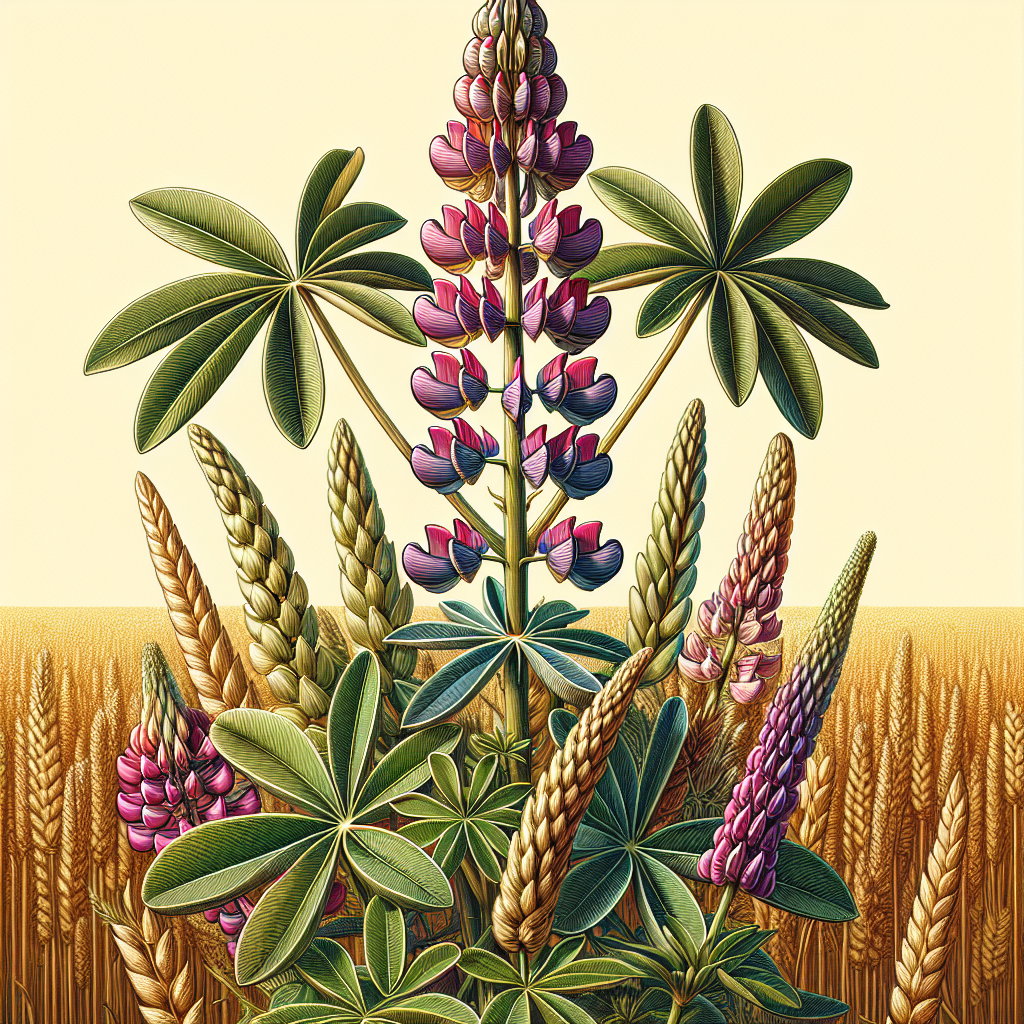
Introduction to lupins
Lupins, scientifically known as Lupinus species, represent a formidable challenge in modern agriculture as highly invasive weeds rather than traditional insect pests. Native to the Mediterranean, North America, and parts of South America, these perennial or annual legumes have naturalized across temperate climates worldwide, thriving in poor, sandy, or acidic soils where many crops struggle. With over 200 species, common invaders include narrow-leafed lupin (Lupinus angustifolius), yellow lupin (L. luteus), and white lupin (L. albus), which fix nitrogen via symbiotic bacteria, giving them a competitive edge over cultivated plants.
In agricultural settings, lupins reduce crop yields by 20-50% through competition for light, water, and nutrients, while their dense stands can harbor pests like aphids and diseases such as root rot. Their deep taproots—up to 2.5 meters—make mechanical removal difficult, and seed pods produce thousands of long-lived seeds per plant, perpetuating infestations for decades. This guide equips farmers, agronomists, and growers with professional-grade diagnostics, lifecycle insights, and organic management protocols to eradicate lupins sustainably. Early intervention is critical, as mature plants are resilient to most controls. For small farms battling invasive weeds, check out this Spring Pest Patrol blog post for integrated strategies.
Lupins' allure as ornamental flowers or livestock forage belies their pest status; escaped cultivars hybridize with wild types, accelerating spread. In regions like Australia, Western Europe, and the Pacific Northwest USA, lupins infest pastures, wheat fields, and potato rotations, costing millions in lost productivity annually. Understanding their biology is the first step toward reclamation of infested lands.
Identifying Symptoms & Damage
Diagnosing lupin infestations requires keen observation of both plant characteristics and crop impacts. Lupins feature palmate leaves with 5-12 narrow leaflets radiating from a central point, resembling fern fronds, in vibrant green to grayish hues. Stems are erect, often hairy, reaching 30-120 cm tall, topped with dense, colorful spikes of pea-like flowers in blue, purple, yellow, or white during spring-summer. Post-flowering, long, fuzzy pods (5-10 cm) mature, each containing 5-12 hard, mottled brown seeds that shatter at maturity, flinging up to 2 meters.
Damage manifests as patchy crop stands where lupins dominate, stunting nearby plants through shading and allelopathy—chemical inhibition via root exudates. In corn fields, lupins cause 15-30% yield losses by competing for nitrogen despite fixation; in soybeans, they trigger early senescence. Visual cues include yellowing crop leaves from nutrient stealage, reduced tillering in cereals, and bare ground post-harvest from lupin seed bank depletion.
Secondary symptoms: Increased flea beetles on lupin hosts spilling over to crops; soil erosion under dense mats; and livestock toxicity from quinolizidine alkaloids in seeds/foliage, causing lupinosis (liver damage). Confirm via seed testa scars (white hilum) and bitter taste. Differentiate from peas (Pisum) by lupins' indehiscent pods and vetch (Vicia) by whorled leaves. Scout at rosette stage (fall-winter) for preemptive action; use 10x magnification for root nodules confirming nitrogen fixation.
Lifecycle and Progression of lupins
Lupins exhibit a complete lifecycle adapted for invasion: seeds germinate in fall or spring under cool-moist conditions (5-15°C), forming rosettes that overwinter as perennials or bolt rapidly as annuals. Vegetative growth peaks in 4-6 weeks, with flowering 8-12 weeks post-emergence, triggered by 14-hour days. Pollination by bees yields 2,000-6,000 seeds/plant; pods dehisce summer, seeds enter 50+ year soil dormancy, scarified by frost/fire.
Progression phases:
- Seedling (0-4 weeks): Hypogeal emergence, cotyledons scale-like, true leaves trifoliate.
- Vegetative (1-3 months): Taproot extends 1m+, lateral branches form.
- Reproductive (3-5 months): Racemes elongate 20-50 cm, self-incompatible flowers set seed.
- Senescence (6+ months): Foliage dies, stems persist, seeds shed.
Perennials regrow from crowns; annuals rely on seed banks (10^5-10^6/m²). One lifecycle infests 1-5 ha/year via seed spread by wind, water, machinery, animals. Monitor progression with phenology models: 50% bloom at 800 GDD (base 0°C). Interrupt at flowering to prevent 90% seed set reduction.
Environmental Triggers & Risk Factors
Lupins exploit disturbed, low-fertility soils (pH 4.5-6.5), sandy loams, roadsides, and overgrazed pastures. Triggers include drought favoring lupins' deep roots over shallow crops; nitrogen-poor fields where fixation provides 100-200 kg N/ha advantage; and mild winters (>-5°C) boosting survival. Risk factors: Crop rotations lacking tillage; proximity to ornamentals; contaminated seed/manure; flooding dispersing seeds.
High-risk zones: Cool-temperate climates (USDA 5-9), coastal dunes, ex-arable land. Compounding issues: Climate change extends range northward; reduced herbicides select resistant biotypes. Soil tests revealing low P/K amplify risks, as lupins tolerate deficiencies. Mitigate by monitoring weather: El Niño rains spike germination 3x.
Organic Control & Treatment Plans
Organic management integrates mechanical, cultural, biological, and thermal tactics for 95% control over 3 years.
1. Mechanical: Mow at bud stage pre-flower (May-June); repeat 2-3x to exhaust reserves. Deep tillage (30 cm) post-harvest buries seeds >10 cm. Hand-pull rosettes (wear gloves—alkaloids irritate skin).
2. Cultural: Crop rotation with smother crops like clover or rye (10^6 plants/m² shade suppression). Solarization: Clear plastic 6 weeks summer (soil 50°C kills 80% seeds). Grazing sheep/goats (lupins toxic to cattle) at vegetative stage.
3. Biological: Release flea beetles (Tychius) or stem weevils (Apion) where approved; inoculate with Fusarium biopesticides targeting lupins selectively. Encourage predators via yarrow borders.
Treatment Timeline: Year 1: Mow + till; Year 2: Smother + graze; Year 3: Monitor/spot-treat. Efficacy: 85% first year, 98% by year 3. Avoid burning—stimulates germination.
Preventing lupins in the Future
Prevention hinges on exclusion: Clean equipment/seeds (hot wash 80°C); 3-year rotation sans legumes; buffer strips of competitive grasses. Soil amendments raising pH >7 suppress germination. Scout annually, rogue seedlings. For detailed zoning strategies, see Why Zoning Your Small Farm Chaos into Profit Zones Feels Impossible. Long-term: Cover crops + no-till minimizes disturbance. Certify seed-free hay; quarantine infested fields.
Crops Most Affected by lupins
Lupins devastate:
- Cereals: Wheat, barley—yield drops 40%.
- Tubers: Potato, sweet potato—competition + root-knot nematodes synergy.
- Legumes: Peas, chickpeas—allelopathy.
- Pastures: Grasses, clovers.
- Vegetables: Carrot, onion. Impacts amplify in low-input systems.