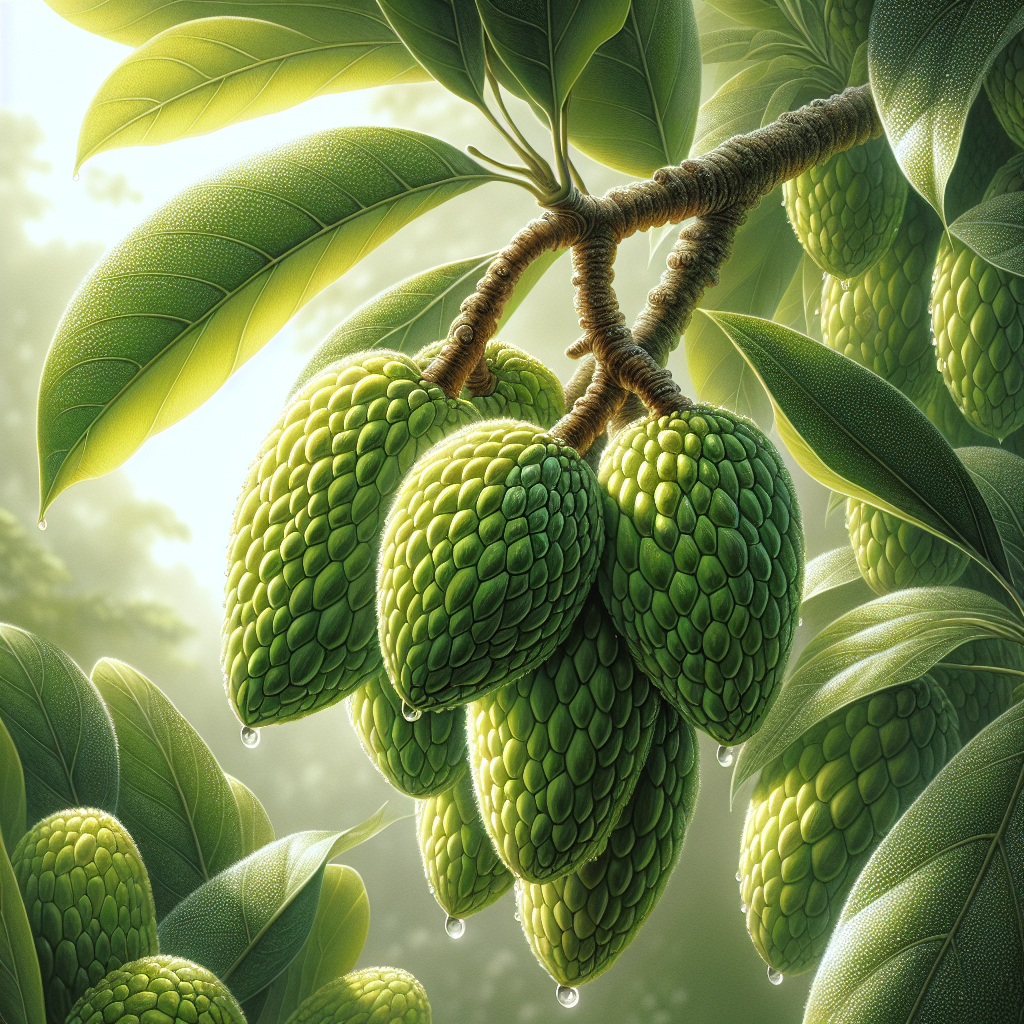
Introduction to Keledang (Artocarpus lanceifolius)
Keledang, scientifically known as Artocarpus lanceifolius, is a majestic tropical evergreen tree native to the rainforests of Peninsular Malaysia, Borneo, and parts of Indonesia and Thailand. Belonging to the Moraceae family alongside breadfruit (Breadfruit) and jackfruit (Jackfruit), it produces clusters of oblong, green-to-yellow fruits that ripen to a sweet, custard-like texture with a unique floral aroma. The seeds are starchy and highly nutritious, often boiled or roasted as a staple food in indigenous communities.
This underutilized crop thrives in humid, lowland tropics and can reach heights of 20-30 meters, making it suitable for home gardens, small farms, and agroforestry. Keledang fruits weigh 1-3 kg each, with a sweet-sour flavor profile reminiscent of jackfruit but milder and less fibrous. Beyond its edible yields, the tree provides timber, shade, and habitat for wildlife. Growers appreciate its low maintenance once established, though successful cultivation requires attention to tropical conditions and pest management. With rising interest in diverse tropical fruits, keledang offers commercial potential in niche markets for fresh produce, seeds, and value-added products like jams or flour. For small-scale farmers, integrating keledang into mixed orchards boosts biodiversity and resilience against climate variability. Why Companion Planting Feels Like Guesswork for Small Farms - And How AI Makes It Foolproof
Botanical Profile of Keledang (Artocarpus lanceifolius)
Artocarpus lanceifolius is a monoecious, evergreen tree characterized by its buttressed trunk and dense canopy. Leaves are large (up to 50 cm long), lanceolate with entire or serrated margins, glossy green above and pale beneath, arranged alternately. Young leaves are reddish and pubescent, maturing to a leathery texture.
Flowers are borne on axillary spikes: female heads are globular (2-3 cm diameter), male catkins elongated (10-15 cm). Pollination occurs via wind and insects, with peak flowering in the rainy season. Fruits develop from fused female flowers, forming syncarps 15-25 cm long, 8-12 cm wide, with a thick, green rind turning yellowish-orange at maturity. The pale yellow flesh surrounds 50-100 large seeds (2-4 cm), embedded in a milky latex. Seeds are ellipsoid, brown-coated, and rich in carbohydrates (70%), proteins (10%), and fats (5%).
The tree exhibits rapid juvenile growth, reaching 5-10 m in 5 years under optimal conditions. Root system is extensive and shallow, aiding drought tolerance once established. Phenologically, it fruits year-round in equatorial zones but peaks twice annually. Genetic diversity is high in wild populations, with cultivated strains selected for larger fruits and higher seed yields. Compared to relatives like Durian, keledang has a smoother fruit surface and less odor. Wood is lightweight, yellowish, used for crafts and pulp. Latex yields natural rubber potential.
Soil, pH, and Climate Requirements for Keledang (Artocarpus lanceifolius)
Keledang demands well-drained, fertile soils rich in organic matter, thriving in loamy or sandy loams with 20-30% clay content. Avoid heavy clays prone to waterlogging, which induce root rot. Optimal pH is 5.5-7.0, slightly acidic to neutral; test soil annually and amend with lime if below 5.5 or sulfur if above 7.5. Incorporate 10-20 kg compost per planting hole for micronutrients.
Climatically, keledang requires tropical lowland conditions: 25-32°C mean temperature, never below 15°C. Annual rainfall of 2000-4000 mm with high humidity (70-90%) is ideal; supplement with irrigation in dry spells exceeding 2 months. USDA zones 10b-12; frost kills seedlings instantly. Full sun (6-8 hours daily) promotes fruiting, though partial shade suits young plants. Windbreaks are essential in exposed sites due to large leaves. Elevations up to 800 m are tolerable, but yields drop above 500 m. Mulch heavily (10 cm organic layer) to retain moisture and suppress weeds. Soil health is paramount—regular additions of green manures like Gliricidia enhance fertility. Monitor for salinity; EC < 2 dS/m.
Step-by-Step Planting & Propagation
Propagation Methods
Seed Propagation (Primary Method): Collect ripe fruits, extract seeds, wash off pulp, and sow fresh (viability drops after 1 week). Soak in water 24 hours. Sow 2-3 cm deep in 50:50 sand-compost mix at 25-30°C. Germination: 10-20 days, 70-90% rate. Transplant seedlings at 20-30 cm height (3-4 months).
Air-Layering (Vegetative, for Clones): Select 2-3 year-old branches (1-2 cm diameter). Girdle 5 cm wide, apply rooting hormone (IBA 5000 ppm), wrap moist sphagnum moss and polythene. Roots form in 2-3 months. Sever and pot.
Cuttings: Semi-hardwood, 15-20 cm, treat with IBA, root in mist chamber (50% success).
Planting Steps
- Site Prep: Clear weeds, dig holes 60x60x60 cm, 8-10 m spacing (100-150 trees/ha).
- Timing: Start rainy season for establishment.
- Planting: Place seedlings at soil mark level, firm soil, stake if needed. Apply 5 kg manure + 100g NPK 15-15-15.
- Initial Care: Shade 50% first 3 months, irrigate weekly (50 L/tree). Mulch. Expect first fruits in 4-6 years from seed, 2-3 from air-layers.
Care & Maintenance regimes for Keledang (Artocarpus lanceifolius)
Irrigation: Deep water young trees weekly (40-60 L); mature trees drought-tolerant but yield better with 1000 mm supplemental rain. Drip systems optimal.
Fertilization: Annual regime: Year 1-3: 200g NPK 16-20-0 + 50g urea/tree, split 3x. Mature: 1-2 kg complete fertilizer + 500g K2SO4 for fruiting. Foliar micronutrients (Zn, B) bi-annually.
Pruning: Train to single trunk, remove deadwood post-harvest. Tip-prune for bushiness if dwarfing desired.
Weeding/Mulching: Maintain 2 m weed-free radius; mulch with leaves/coconut husk.
Training: Support branches laden with fruit. Thin clusters to 4-6 fruits for size.
Monitor growth: 1-2 m/year initially. Integrate legumes for N-fixation.
Pests, Diseases & Organic Management
Pests:
- Aphids: Neem oil sprays (2 ml/L), ladybugs.
- Fruit flies: Bait traps with protein hydrolysate.
- Mealybugs: Alcohol-soap dips, predatory beetles.
- Scale insects: Horticultural oil.
- Shoot borers: Remove infested tips, Bacillus thuringiensis (Bt).
Diseases:
- Phytophthora root rot: Improve drainage, phosphonate drenches.
- Anthracnose: Copper fungicides, prune for airflow.
- Powdery mildew: Sulfur sprays, potassium bicarbonate.
- Leaf spots (Alternaria): Remove debris, neem.
Cultural: Sanitation, resistant rootstocks. Why 90% of Small Farms Fail at Pest Management - And 8 Organic Fixes That Actually Work
Harvesting, Curing & Optimal Storage
Harvest when rind yellows, fruits soften slightly, and aroma peaks (7-9 months post-bloom). Use pole pruners for clusters; yield 50-150 kg/tree at maturity.
Post-Harvest: Cut open, extract seeds, boil 20-30 min to remove sarcotesta. Flesh for fresh eating/juice. Dry seeds at 40°C (3 days) for storage.
Storage: Fresh fruit: 10-15°C, 85% RH, 2-4 weeks. Seeds: Air-dry to 12% moisture, store cool (10°C), 6-12 months viability. Flour: Vacuum-seal, shelf-stable 1 year. Avoid chilling injury below 10°C.
Companion Planting for Keledang (Artocarpus lanceifolius)
Keledang pairs well in agroforestry: Underplant with Ginger, Turmeric for ground cover/shade tolerance. Nitrogen-fixers like Pigeon pea boost soil. Repellents: Marigold deters nematodes, Thyme against soil pests. Avoid water-hungry crops like Watermelon. Tall companions: Mango, Durian at edges. Intercrop legumes early years. Benefits: Pest diversion, microclimate moderation, yield stacking.