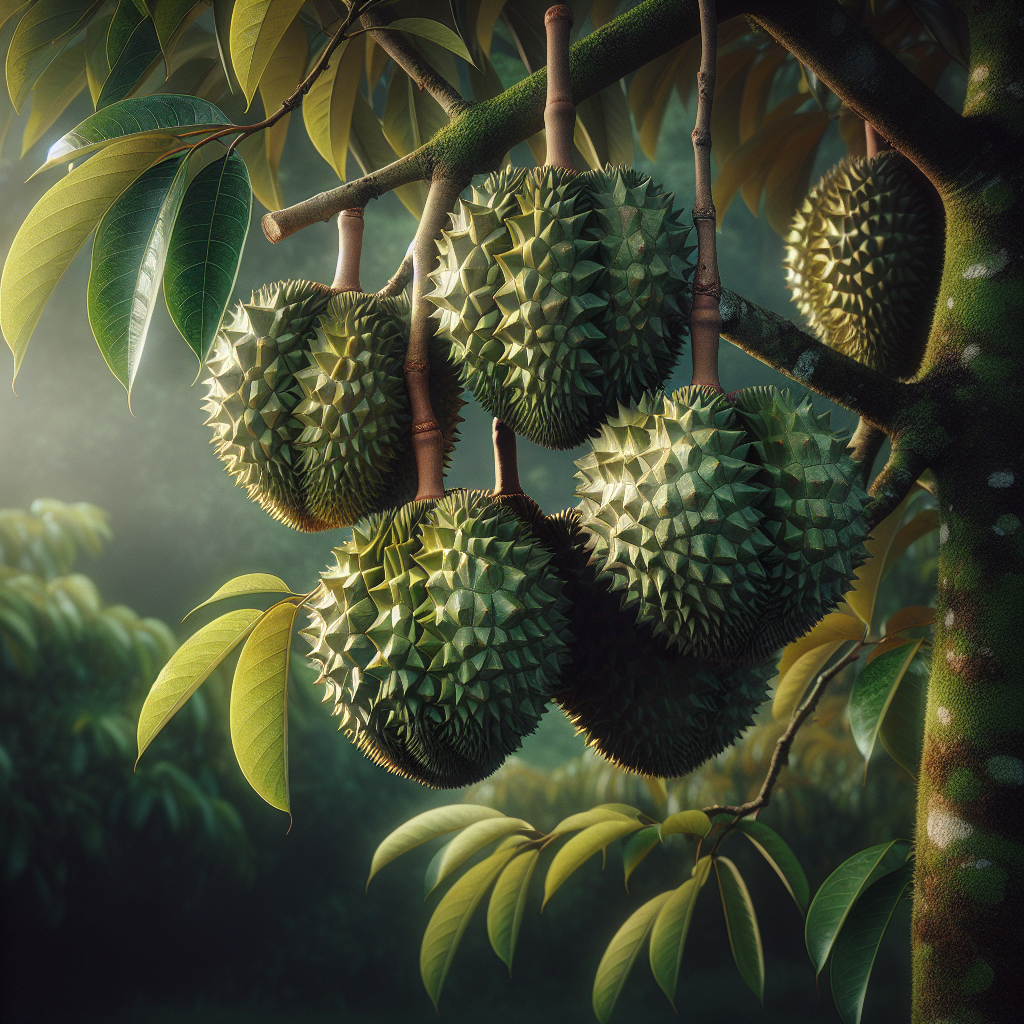
Introduction to Durian
Native to the humid tropical forests of Southeast Asia, this species has been cultivated for centuries in present-day Malaysia, Indonesia, Thailand, Brunei, and the southern Philippines. It is often called the “king of fruits” because of its imposing size, thorn-armored husk, rich nutritional profile, and polarizing aroma. For professional growers, its importance lies not only in premium fresh-fruit markets but also in processed products such as pulp, frozen arils, paste, confectionery, and bakery ingredients.
Commercial production is concentrated in truly tropical belts where temperatures remain high year-round and water stress is carefully managed. Unlike many fruit trees that tolerate periodic drought or mild cold, this crop is physiologically sensitive to both root-zone saturation and prolonged dryness. That combination explains why site selection determines success more than almost any later management decision.
Trees grown from seed can become very large, often exceeding 20-30 m under old orchard or semi-wild conditions, though grafted commercial orchards are usually managed smaller for harvest safety and canopy control. Juvenile periods vary dramatically by propagation method: seedlings may take 7-12 years or longer to bear, while grafted trees may begin producing in 4-6 years under excellent care. Cultivar choice matters greatly because flavor, flesh color, seed size, aroma strength, yield consistency, and disease response differ widely among selections. In Southeast Asian trade, famous cultivar groups include Monthong, Chanee, Musang King, D24, and Kradum, each with distinct pulp texture and market positioning.
If you already grow tropical perennial fruit trees such as Mango, you will recognize some similar orchard principles, but this species is less forgiving of drainage mistakes and wind exposure. Good orchard planning, mulching, nutrition, and pollination support are essential. For broader fertility planning, see soil health strategies.
Botanical Profile of Durian
Belonging to the genus Durio in the family Malvaceae, this species was formerly grouped under Bombacaceae in older literature. The tree is evergreen, upright when young, and gradually develops a dense, spreading canopy with strong scaffold branches if properly trained. Leaves are simple, alternate, elliptic to oblong-lanceolate, glossy green on the upper surface, and often coppery, silvery, or golden-scaled beneath. That contrasting underside is a useful field identifier.
Flowering occurs on older branches and trunks in a cauliflorous to ramiflorous habit, meaning inflorescences can emerge directly from woody tissue rather than only on new terminal growth. The flowers are large, pendulous, cream to yellowish, and rich in nectar. Pollination biology is unusually important: many cultivars set better with cross-pollination, and nocturnal pollinators such as bats can contribute significantly in some regions, though moths and bees may also visit. In orchards with poor pollinator activity or limited cultivar diversity, fruit set may be weak or erratic.
The fruit is botanically a capsule, typically oval to round, 1-4 kg in many commercial types but sometimes larger, with a thick husk covered in sharp pyramidal spines. Inside, several locules hold seeds enveloped by the edible arils. Flesh color ranges from pale cream to deep yellow or orange depending on cultivar. Texture may be dry-creamy, buttery, sticky, or custard-soft. Premium cultivars are judged by pulp recovery, bitterness-sweetness balance, sulfurous aroma complexity, seed abortion rate, and shelf stability.
Root architecture is dominated by a sensitive taproot when young, with laterals forming in the upper, aerated soil profile. This is one reason transplant shock can be severe if seedlings are root-bound or disturbed. The bark is gray-brown and somewhat rough with age, while young shoots may flush bronze. Because flowers and fruits arise on mature wood, pruning must preserve sufficient fruiting framework rather than encouraging excessive vegetative regrowth.
Soil, pH, and Climate Requirements for Durian
This tree performs best in deep, fertile, well-structured soils with high organic matter and excellent drainage. Ideal textures are deep loam, sandy clay loam, or well-drained clay loam with at least 1-1.5 m of penetrable soil depth. Avoid shallow soils over hardpan, compacted subsoil, and areas where the water table rises into the root zone during rainy periods. Even 24-48 hours of standing water around roots can trigger feeder-root dieback, predisposing trees to Phytophthora and chronic decline.
Optimal soil pH is generally 5.0-6.5, with a practical target around 5.5-6.2. Slight acidity favors micronutrient availability and mimics the natural forest environment where the species evolved. At pH above 6.8, iron, manganese, and zinc availability may drop, leading to chlorosis in young leaves. At pH below about 4.5, aluminum toxicity and phosphorus fixation become more likely. Before planting, conduct a full soil analysis including pH, cation exchange capacity, calcium-magnesium balance, organic matter percentage, and drainage behavior after heavy irrigation or rainfall.
Climate requirements are strict. Best performance occurs where average temperatures remain between 24 and 32°C, relative humidity stays above 70%, and annual rainfall is roughly 1,500-3,000 mm, preferably with good distribution. Short dry spells can help synchronize flowering in some regions, but severe drought reduces flushes, causes flower drop, and shrinks developing fruit. Temperatures below 15°C noticeably slow growth; near 5°C, serious injury may occur, and frost is usually fatal.
Young trees require some protection from intense desiccating sun and hot wind, especially in exposed coastal or upland sites. Mature trees need full sun for yield but still benefit from windbreaks because strong wind can shred leaves, reduce pollinator movement, break fruiting wood, and cause preharvest fruit drop. Gentle slopes are often superior to flat low-lying sites because cold air drainage and surface water runoff are improved.
In practical irrigation terms, the root zone should remain evenly moist but never saturated. Field capacity is ideal, while prolonged soil oxygen depletion is highly damaging. If using tensiometers, many growers aim to irrigate before tension rises excessively in the active root zone, often maintaining moderate moisture rather than allowing large wet-dry cycles. Visible signs of underwatering include drooping young leaves during the morning, reduced flush length, marginal scorch, flower abortion, and small fruit. Signs of overwatering include persistently dull or yellowing foliage, slow extension growth despite fertilizer, sour-smelling soil, algae or moss near the trunk, and fine root rot when inspected.
Step-by-Step Planting & Propagation
Commercial orchards should almost always use grafted planting material from reliable nurseries. Seedling trees are genetically variable and delay bearing, though seedlings are valuable as rootstocks. Fresh seed loses viability rapidly and should be sown within days of extraction. Seeds are recalcitrant, meaning they do not tolerate drying. Sow horizontally or slightly angled in a sterile, moist medium such as coarse sand mixed with composted organic matter. Germination typically begins within 1-2 weeks under warm conditions.
Rootstocks are commonly raised in deep polybags to protect the taproot. Once seedlings reach appropriate stem thickness, veneer grafting, cleft grafting, patch budding, or approach grafting may be used depending on nursery practice and cultivar behavior. Grafts should be hardened gradually under 40-60% shade before field planting. Reject nursery plants that are root-circling, chlorotic, weak at the graft union, or taller than necessary for transport stability.
For orchard establishment, prepare land well in advance. Remove perennial weeds, design drainage lines, and if rainfall is intense, establish raised mounds or broad ridges 30-60 cm high in heavier soils. Planting holes are often 60 x 60 x 60 cm or larger, but hole size should reflect soil limitations; in compacted sites, ripping or deep subsoiling between rows can be more important than a large hole. Incorporate well-decomposed compost, never raw manure, and avoid placing concentrated fertilizer directly against new roots.
Spacing depends on cultivar vigor, soil fertility, and pruning intensity. Traditional systems may use 10 x 10 m or wider, while higher-density systems can begin at 8 x 8 m with planned thinning or strict canopy control. In mixed tropical orchards, spacing may be adjusted around nurse trees and windbreaks. Good light penetration is essential because dense shading reduces flowering on interior branches.
Plant at the beginning of the rainy season or in a post-monsoon window when soil moisture is good but waterlogging risk is lower. Carefully slit and remove the bag without disturbing the root ball. Set the tree at the same depth it grew in the nursery; burying the graft union or stem collar increases disease risk. Firm soil gently, water immediately, stake if the site is windy, and mulch a wide circle while keeping mulch 15-20 cm away from the trunk.
Young trees benefit from temporary shade screens or interplanted nurse species for the first 6-18 months, depending on site harshness. Shade should be reduced progressively so the tree transitions toward full-sun production. Early formative training should select 3-5 well-spaced scaffold branches beginning at a workable height for future orchard operations.
Care & Maintenance regimes for Durian
Nutrient management changes as trees mature. In the first 2 years, the goal is steady vegetative establishment, not forcing lush, weak growth. Apply small, frequent doses of balanced fertilizer with emphasis on nitrogen, calcium, magnesium, sulfur, and micronutrients in acidic soils. Organic systems often combine compost, vermicompost, oilseed meals, and mineral amendments such as rock phosphate, gypsum, or kieserite based on soil tests. Split applications are much safer than large doses because feeder roots are sensitive to salt injury.
A useful pattern for young trees is feeding every 6-8 weeks during active growth with modest amounts placed in a ring near the drip area, never against the trunk. As the canopy expands, move fertilizer placement outward to match the feeder-root zone. Mature bearing trees need higher potassium and adequate boron during pre-flowering, fruit set, and fruit fill. Calcium and magnesium must remain balanced; chronic magnesium deficiency often appears as interveinal yellowing on older leaves, while boron shortage may reduce fruit set and deform new growth.
Mulching is one of the most important practices. Maintain an organic mulch layer 8-15 cm thick using chipped prunings, leaf litter, straw, coconut husk fiber, or composted materials. Mulch moderates root temperature, conserves moisture, improves soil biology, and reduces splash dispersal of soilborne pathogens. Replenish regularly as it decomposes.
Irrigation should be adjusted by tree age, soil texture, rainfall, and crop load. Young trees need frequent light-to-moderate irrigation because their root systems are limited. In sandy soils, this may mean 2-4 irrigations per week during dry weather; in loam, 1-2 deep irrigations may suffice. Mature trees benefit from deeper irrigation that wets the main feeder-root zone without creating prolonged saturation. During floral initiation in some climates, a mild reduction in irrigation may help trigger flowering, but this must be done carefully and only where local experience supports it. Severe stress can lead to branch dieback and poor fruit retention.
Pruning should be conservative but regular. Remove dead, crossing, diseased, and excessively vertical shoots. Open the canopy enough to admit filtered light and air movement while retaining a structurally strong framework. Water sprouts and crowded internal shoots should be thinned. Sanitize tools between diseased trees. Because fruit can be heavy, scaffold selection and branch angle are important to reduce splitting and breakage.
Flower and fruit management can strongly influence quality. Trees often set more fruit than they can size well, especially under favorable pollination. Thinning malformed, damaged, or excessive young fruit reduces branch stress and improves size uniformity. In high-value orchards, fruit may be tied or netted to branches to prevent dangerous drops and reduce impact damage. Support poles under laden branches are also used.
Weed control should prioritize a vegetation-free zone around the trunk during establishment, but complete bare soil across the whole orchard is undesirable in humid tropics. Managed groundcovers between rows reduce erosion and improve infiltration. Avoid aggressive climbers or deep-rooted weeds that compete heavily with young trees.
Pests, Diseases & Organic Management
The most serious recurring problems are often disease-related rather than insect-related, particularly in wet soils. Phytophthora palmivora is a major threat, causing root rot, collar rot, stem canker, leaf blight, flower infection, and fruit rot. Symptoms include dark lesions on bark, gumming, canopy thinning, leaf yellowing, and sudden decline in wet periods. Prevention depends on drainage, sanitation, trunk protection from mulch contact, and avoiding mechanical injury. Organic management includes improving aeration, applying mature composts that support antagonistic microbes, and using biologically active mulches rather than keeping soil compact and bare.
Anthracnose and other fungal leaf or fruit diseases may occur in dense, humid canopies, especially where airflow is poor. Prune for ventilation, remove mummified fruit, and avoid overhead irrigation late in the day. Sanitation is often more effective than reactive treatment.
Common insect pests vary by region but can include mealybugs, scale insects, aphids on flush growth, borers, fruit borers, and sap-sucking bugs. Mealybugs and scales often increase where ant populations protect them. Breaking that ant-pest relationship is critical: use sticky trunk barriers where practical, manage alternate hosts, and encourage beneficial predators. Neem-based products, horticultural oils, and insecticidal soaps can suppress soft-bodied pests when coverage is thorough and applications are timed outside the hottest hours.
Fruit flies may attack cracked or overripe fruit in some locations. Orchard hygiene is essential: promptly collect fallen fruit, destroy infested material, and avoid allowing damaged fruit to remain under trees. Bagging fruit clusters can reduce pest pressure in smaller orchards, though this is labor-intensive.
Stem borers and trunk injuries deserve immediate attention because they create infection courts for canker pathogens. Keep trunks protected from machinery, rodents, and sunscald. Whitewashing exposed trunks in very bright sites can moderate bark temperature.
For organic integrated management, combine resistant or locally adapted cultivars, drainage engineering, balanced nutrition, mulch-based soil improvement, biological diversity, and monitoring. Excess nitrogen should be avoided because it encourages soft, disease-prone growth and may worsen sap-sucking pest outbreaks. Many orchards benefit from regular scouting of new flushes, flower clusters, trunk bases, and fallen fruit rather than waiting for visible canopy decline.
Harvesting, Curing & Optimal Storage
Harvest timing strongly affects eating quality. Depending on cultivar and climate, fruits typically mature about 90-150 days after fruit set. External cues include a dulling of husk color from bright green toward olive or brownish-green, widening of spine bases, development of aroma, and subtle line definition along natural sutures. In some cultivars, a hollow sound when tapped can indicate maturity, but this requires experience.
There are two main harvest systems: collecting naturally fallen fruit or cutting fruit just before natural drop. Fruits allowed to fall often achieve superior aroma and full physiological maturity, but impact damage is a major risk. Premium orchards commonly tie fruit to branches or use nets so mature fruit can drop without splitting. Where fruit is cut, skilled workers judge maturity carefully to avoid harvesting immature fruit that will never develop proper flavor.
Handle fruit gently despite the hard shell. Internal bruising can occur even when the husk looks intact. Use padded crates, keep fruit shaded after harvest, and separate damaged fruit from premium lots. Wash only if necessary, and dry surfaces promptly to reduce postharvest rot.
There is no classic “curing” phase like onions or sweet potatoes, but a short equilibration period in shade can help stabilize field heat before grading and transport. Optimal storage is generally at cool, not chilling, temperatures. Whole fruit is commonly held around 12-15°C with high relative humidity, often 85-90%, for short-term storage. Temperatures that are too low can induce chilling injury, leading to poor flavor development, uneven ripening, and flesh disorders.
Once opened, arils are highly perishable. Refrigeration extends life only briefly, while freezing is standard for longer storage and export pulp handling. For fresh local sales, market fruit quickly, ideally within a few days of maturity, because aroma intensifies rapidly and consumer acceptance depends on cultivar and market preference. Keep ethylene-producing fruits separate only if mixed storage creates logistical issues; this crop’s dominant postharvest concerns are mechanical damage, temperature management, and microbial spoilage.
Companion Planting for Durian
In young orchards, companion planting works best when the companion species improves soil cover, organic matter, pollinator activity, or short-term income without aggressively competing for light and root space. Low, manageable species are preferable near the tree row, while taller intercrops should be temporary and carefully spaced.
Peanuts are useful as a nitrogen-contributing groundcover or short-cycle intercrop in early orchard years, especially where erosion control and weed suppression are priorities. They should be kept outside the immediate trunk zone so the base remains dry and inspectable.
Thai Basil can attract beneficial insects and pollinators while providing a marketable understory crop in well-managed young orchards with partial light. It is most practical during establishment before the canopy closes.
Ginger is a classic humid-tropics intercrop where filtered shade, organic mulch, and regular irrigation are already part of the management system. It can help monetize the inter-row space in the pre-bearing years, though it requires careful disease sanitation in wet climates.
Turmeric is similarly well-suited to tropical orchard floors and benefits from the same mulch-rich, moist but well-drained conditions. Both rhizome crops should be planted where soil disturbance will not damage tree roots.
Avoid aggressive vines, tall annuals that compete heavily for moisture, and any intercrop requiring repeated trunk contact, deep cultivation, or prolonged flooding. As the canopy matures, reduce companion density so the main tree crop retains priority for water, nutrients, airflow, and harvest access.