Introduction to June drop beetles
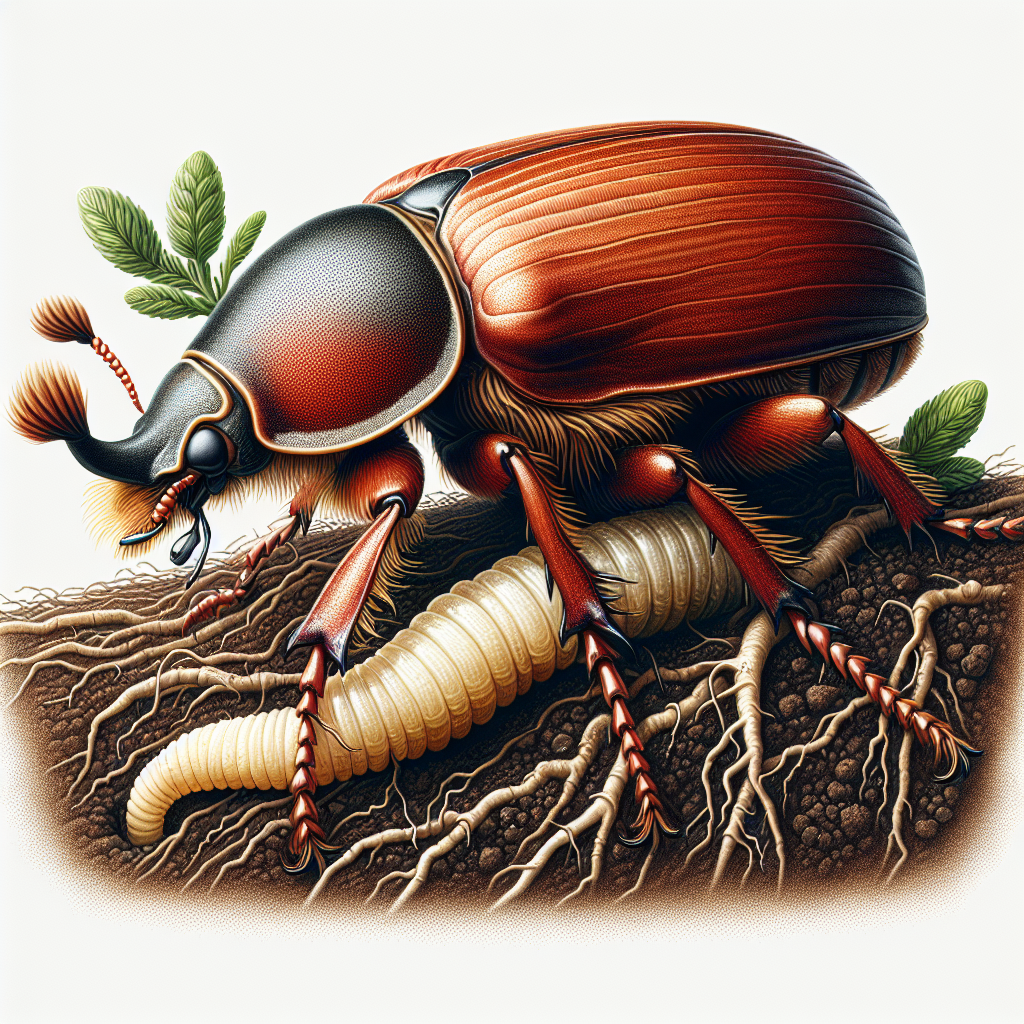
June drop beetles, commonly referred to as June bugs or May beetles (scientific name: Phyllophaga spp.), are a group of robust, brown beetles belonging to the Scarabaeidae family. These pests earn their 'drop' moniker from their habit of clumsily flying into lights, trees, and structures during their adult emergence in late spring to early summer, often plummeting to the ground in droves. Native to North America, they are particularly problematic in temperate regions where their underground larvae—known as white grubs—feed voraciously on plant roots.
Adult June drop beetles measure 0.5 to 1 inch long, with a shiny, reddish-brown exoskeleton and a distinctive curved horn on the front of their heads. They are nocturnal fliers, attracted to porch lights and street lamps, where mating occurs. Females burrow into soil to lay eggs, perpetuating a cycle that can devastate turfgrass, pastures, and agricultural fields. While adults cause minor leaf skeletonization, the real economic damage stems from grub feeding, which can kill large swaths of vegetation. Japanese beetles may sometimes be confused with them due to similar appearance, but June drop beetles are bulkier and lack the metallic sheen.
Farmers and gardeners dread their annual invasion because grubs can persist in soil for 2-4 years, building up to damaging populations. Early detection and integrated management are key to minimizing losses. This guide provides comprehensive diagnostics, lifecycle insights, and proven organic strategies to combat June drop beetles effectively.
Identifying Symptoms & Damage
Spotting June drop beetle activity requires vigilance across life stages. Adult beetles emerge en masse from mid-May to July (hence 'June' beetles), flying clumsily at dusk. Look for them clustered around lights, bumping into windows, or falling from trees onto apple orchards and vegetable patches. Adults chew irregular notches in leaves, preferring tender foliage of deciduous trees, roses, and crops like corn and potato. Damage is cosmetic and rarely severe, but heavy infestations can strip trees bare.
The true devastation occurs underground from white grubs. These C-shaped, creamy-white larvae, up to 1.5 inches long with brown heads, feed on grassroots. Early symptoms include yellowing or wilting patches in turf, pastures, or crop rows, especially during hot, dry spells. Affected plants pull easily from soil, revealing grubs and loose roots. In row crops, you might see 'dead spots' where entire sections fail to thrive. Skunks, birds, or moles digging up lawns signal grub presence as they forage for the soft-bodied larvae.
Differentiate from other pests: Unlike wireworms, grubs are softer and lack a hard, wire-like body. cutworms attack stems above ground, while June drop beetle grubs target roots exclusively. Test for infestation by pouring soapy water (2 tablespoons dish soap per gallon) over suspect areas—if grubs surface within minutes, confirm the diagnosis. Yield losses can reach 30-50% in pastures and turf without intervention.
Lifecycle and Progression of June drop beetles
Understanding the multi-year lifecycle of June drop beetles is crucial for timing controls. Adults emerge from soil in late spring after 2-4 years as grubs. They mate immediately, with females laying 20-50 eggs per night in moist soil near roots of grasses or crops. Eggs hatch in 1-2 weeks into tiny first-instar grubs, which feed on organic matter and fine roots.
Grubs progress through three instars over summer. Second and third instars (larger, more destructive) migrate deeper (6-12 inches) in fall to overwinter. They return to surface layers in spring for renewed feeding before pupating in late spring soil cells. New adults remain underground until the following season, emerging to repeat the cycle. Peak damage occurs in year 2-3 when third-instar grubs are most abundant.
Generations overlap, with populations peaking every 3 years in some areas. Lifecycle duration varies by species and climate—northern Phyllophaga take 3-4 years, southern ones 2. Monitor soil temperatures (above 60°F triggers adult flight) and use soil cores to track grub densities (5-10 per square foot warrants action). This prolonged cycle allows persistent management to disrupt populations over time.
Environmental Triggers & Risk Factors
June drop beetles thrive in specific conditions that growers can mitigate. Moist, well-aerated soils with high organic matter favor egg-laying and grub survival—think irrigated lawns, over-fertilized pastures, or fields following clover rotations. Warm springs (soil temps >55°F) accelerate emergence, synchronizing swarms.
Risk spikes in areas with undisturbed soil, like fencerows or untilled fields, serving as reservoirs. Overuse of broad-spectrum insecticides kills natural predators like birds and parasitic wasps, allowing outbreaks. Drought-stressed turf is vulnerable as weakened roots succumb faster to feeding.
Climate change extends ranges northward, with milder winters boosting survival. Poor drainage exacerbates issues, as grubs prefer saturated soils. Companion planting with deep-rooted perennials can reduce risks, while monitoring Soil Health Mastery: 5 Proven Strategies for Small Farms to Build Fertile Ground Without Breaking the Bank helps optimize conditions against pests.
Organic Control & Treatment Plans
Organic management targets all stages without synthetics. Cultural Controls: Tillage in fall disrupts grubs—deep plowing (8-10 inches) exposes them to predators and desiccation. Rotate crops away from susceptible grasses; plant grub-resistant species like bio-swale fescue in high-risk areas.
Biological Controls: Apply beneficial nematodes (Heterorhabditis bacteriophora) in late summer when grubs are near surface—rates of 1 billion per acre, watered in during cool evenings. Milky spore powder (Paenibacillus popilliae) provides long-term suppression, though slower-acting. Encourage predators: chickens, moles, and ground beetles via habitat strips.
Organic Insecticides: Neem oil or spinosad sprays target adults during evening swarms (apply at dusk, repeat weekly). For grubs, drench with Bt-galleriae or potassium soap solutions. Trap adults with blacklight traps or pheromone lures placed away from crops.
Integrated Plan: Scout weekly from May; treat at 10 grubs/sq ft. Combine nematodes + tillage for 70-90% reduction. Avoid overwatering. For small farms, see Spring Pest Patrol: Organic AI Strategies to Shield Your Crops from Common Invaders. Monitor progress with pitfall traps.
Preventing June drop beetles in the Future
Prevention focuses on breaking the lifecycle long-term. Maintain soil health with cover crops like hairy vetch to suppress grubs naturally. Aerate compacted soils annually to reduce habitat suitability. Time irrigation to keep surface dry during egg-lay (June-July).
Plant trap crops or repellents: garlic borders (garlic) deter adults. Introduce milky spore proactively in low-infestation years for immunity buildup (3-5 years). Solarize soil in summer—clear plastic for 4-6 weeks kills eggs/grubs via heat.
Monitor with regional extension alerts; destroy adults manually at lights. Long-term, diverse rotations with legumes starve grubs. Beneficial insect releases annually sustain populations. Consistent practices yield 80%+ reduction over 3 years.
Crops Most Affected by June drop beetles
June drop beetles plague turf, pastures, and field crops. Grasses like Kentucky bluegrass and fescue suffer most in lawns/pastures, with 50% stand loss possible. Corn, potato, and sweet potato face root pruning, stunting seedlings. Vegetable beds (tomato, cucumber) show wilting rows.
Orchards (apple, peach) endure adult leaf damage; nurseries lose ornamentals. Pastures for livestock decline, impacting forage. Soybeans and small grains occasionally hit. Susceptibility ties to shallow roots in fertile soils.