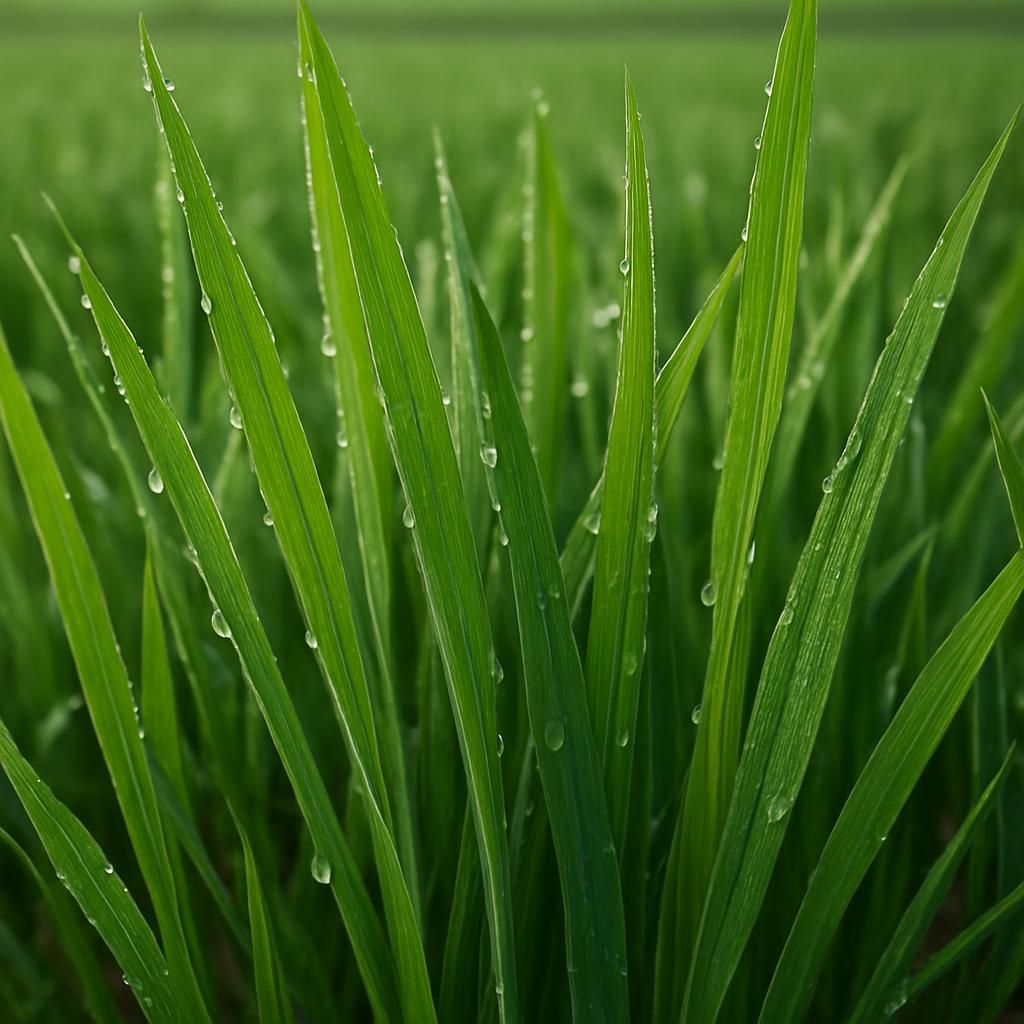
Introduction to fescue
Fescue encompasses several species within the genus Festuca, primarily tall fescue (Festuca arundinacea) and fine fescues (Festuca rubra, Festuca ovina, Festuca brevipila). These cool-season grasses form the backbone of many temperate lawns, pastures, and roadside plantings due to their deep root systems, drought tolerance, and adaptability to varied light conditions. Professional growers value fescue for its persistence, ability to suppress weeds once established, and relatively low nutrient demands compared to warm-season alternatives.
Fescue is a staple in integrated agricultural systems where soil stabilization, livestock forage, and low-input turf management intersect. Its bunch-type growth habit minimizes thatch accumulation while allowing interseeding with clover or other legumes for nitrogen fixation. Whether establishing athletic fields, hillside erosion barriers, or low-maintenance residential lawns, fescue delivers reliable performance across USDA zones 3–8 when site preparation and management follow agronomic best practices.
Botanical Profile of fescue
Fescue species are cool-season bunchgrasses belonging to the Poaceae family. Tall fescue exhibits coarse leaf texture with deep, fibrous roots extending 2–3 feet, while fine fescues display narrower blades and shallower but denser root mats. Both types produce open panicle seed heads in late spring to early summer and reproduce primarily by seed, though some fine fescue cultivars spread slowly via short rhizomes.
The genus displays endophytic fungi associations that confer resistance to certain insects and improve drought tolerance. Leaf blades are rolled in the bud, ligules are short and membranous, and auricles are often present in tall fescue. These morphological traits aid field identification and influence management decisions such as mowing height and grazing intensity.
Soil, pH, and Climate Requirements for fescue (MUST INCLUDE A MARKDOWN TABLE OF IDEAL CONDITIONS)
Successful fescue establishment begins with matching site conditions to species requirements. Tall fescue tolerates heavier soils and moderate compaction, whereas fine fescues excel in sandy, low-fertility sites with partial shade. Soil testing prior to planting identifies deficiencies in phosphorus, potassium, and micronutrients that limit root development.
Fescue performs best in temperate climates with cool nights and moderate summer temperatures. It enters dormancy during prolonged heat above 85 °F (29 °C) or extended drought but recovers rapidly with autumn rainfall. Avoid planting in heavy clay without amendment or in areas with standing water.
| Parameter | Ideal Range | Notes |
|---|---|---|
| Soil Type | Loam to clay loam | Good drainage essential; avoid waterlogging |
| Soil pH | 5.8–7.0 | Lime if below 5.5; sulfur rarely needed |
| Temperature (Optimal) | 60–75 °F (15–24 °C) | Cool-season growth; heat dormancy above 85 °F |
| Annual Rainfall | 25–40 inches (635–1016 mm) | Supplemental irrigation in drought periods |
| Sunlight | Full sun to partial shade | Fine fescues tolerate more shade |
| Soil Fertility | Medium (N 40–80 lbs/acre) | Phosphorus critical at establishment |
Step-by-Step Planting & Propagation
- Soil testing and amendment: Collect composite samples to 6 inches, adjust pH, and incorporate starter fertilizer (N-P-K 10-20-10) at 200–300 lbs/acre.
- Seedbed preparation: Till or aerate to 4–6 inches, remove debris, and firm the surface to eliminate air pockets.
- Seeding rate and timing: Broadcast or drill 8–12 lbs/acre of tall fescue or 4–6 lbs/acre of fine fescue in early spring (soil 50–65 °F) or late summer (6–8 weeks before first frost).
- Seeding depth: Place seed ¼–½ inch deep; light raking or rolling ensures soil-seed contact.
- Irrigation: Apply ¼ inch water daily until germination (7–14 days), then reduce frequency while maintaining surface moisture.
- First mowing: When seedlings reach 3 inches, mow to 2–2.5 inches to encourage tillering.
Care & Maintenance regimes for fescue (MUST INCLUDE A MARKDOWN TABLE OF WATER, FERTILIZER, AND PRUNING SCHEDULES)
Established fescue stands require minimal intervention once roots are developed. Mowing at the correct height prevents scalping and reduces disease pressure. Fertilization timing aligns with active growth periods in spring and fall. Irrigation supplements rainfall only during extended dry spells to maintain green color without promoting shallow rooting.
| Season | Watering Schedule | Fertilizer Application | Mowing Height & Frequency |
|---|---|---|---|
| Spring | 1 inch/week if rainfall <0.5 inch | 0.5–0.75 lb N/1000 sq ft (slow-release) | 2.5–3.5 inches; every 7–10 days |
| Summer | Deep, infrequent (0.75 inch) | Minimal; avoid excess N during heat | 3–4 inches; as needed |
| Fall | 1 inch/week until dormancy | 0.75–1.0 lb N/1000 sq ft (high K) | 2–2.5 inches; every 7–14 days |
| Winter | None (dormant) | None | None |
Pests, Diseases & Organic Management
Fescue is relatively resistant to many pests but can suffer from armyworms, cutworms, and chinch bugs during warm, humid periods. Endophyte-enhanced cultivars deter certain insects. Fungal issues such as brown patch, dollar spot, and red thread appear under prolonged leaf wetness or excessive nitrogen.
Organic management begins with cultural practices: proper mowing height, balanced fertility, and irrigation timing that allows foliage to dry before nightfall. Beneficial nematodes and Bacillus thuringiensis products target larval stages of armyworms and cutworms. Aeration and thatch removal reduce microclimates favorable to fungal pathogens. When disease pressure exceeds thresholds, apply approved organic fungicides such as potassium bicarbonate or neem oil early in symptom development.
Harvesting, Curing & Optimal Storage
For forage production, harvest fescue at the boot to early heading stage for optimal nutritional quality. Cut with a mower-conditioner, windrow, and allow to dry to 15–18% moisture before baling. Store bales under cover on pallets to prevent ground moisture absorption.
Seed production fields are swathed when seed moisture reaches 35–40%, then threshed and cleaned to 12% moisture. Store cleaned seed in cool, dry conditions (below 60 °F and 50% RH) in vapor-proof containers for up to three years with minimal viability loss.
Companion Planting for fescue
Fescue integrates well with nitrogen-fixing legumes such as white clover and hairy vetch to improve soil fertility and reduce synthetic nitrogen inputs. Interseeding these species at 2–4 lbs/acre enhances pasture productivity and provides habitat for beneficial insects.
Avoid planting fescue near shallow-rooted crops that compete for surface moisture. In mixed stands, maintain mowing or grazing heights that favor legume persistence while preventing fescue dominance. This balanced approach supports long-term soil health and reduces pest pressure through increased biodiversity.